
The Quiet Quitting of the Public Internet: Inside the Shift to the Cozy Web
Millions of users are retreating from algorithmic mega-platforms in favor of private micro-communities and curated digital gardens. This mass migration is redefining online culture, prioritizing mental health and authentic connection over viral reach.
By Factlen Editorial Team
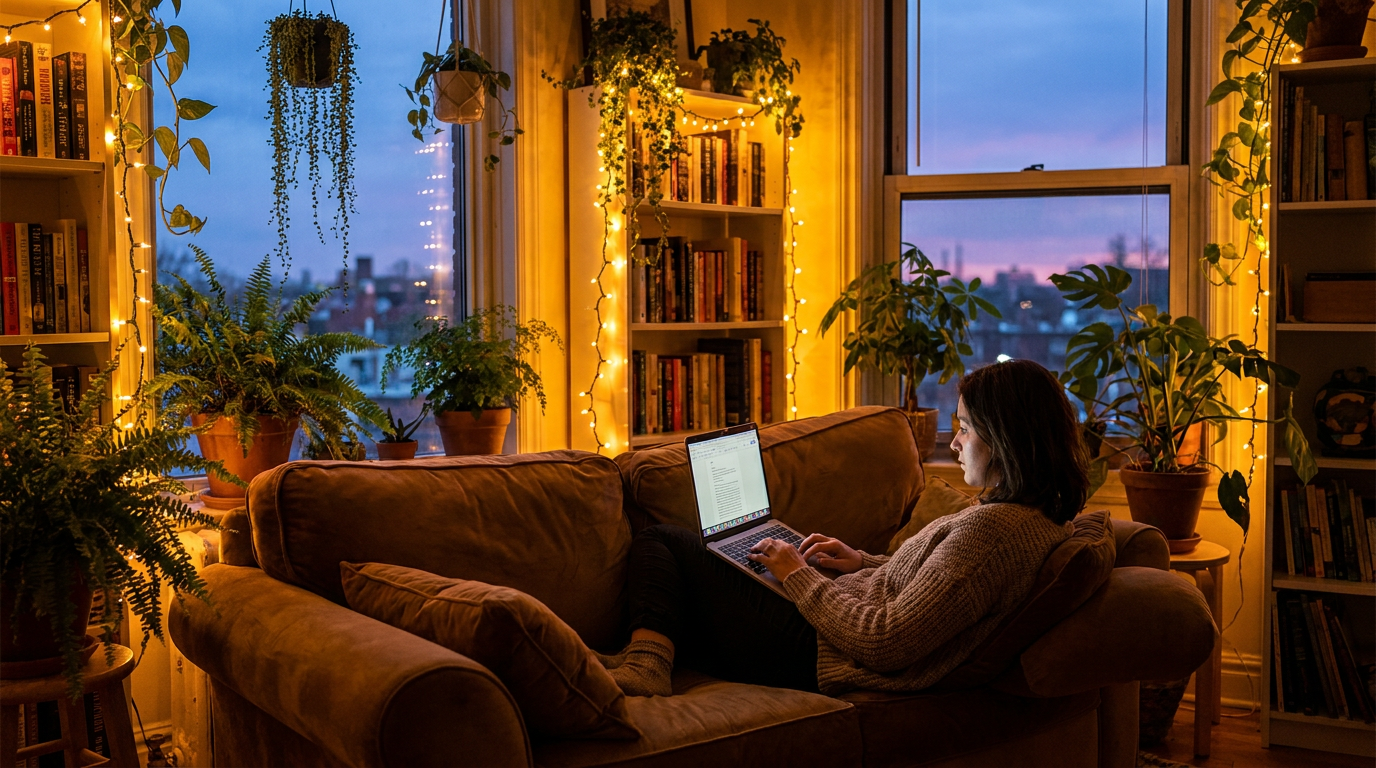
- Digital Minimalists
- Advocating for mental health and intentionality by retreating from algorithmic feeds.
- Community Builders
- Pivoting from mass reach to sustainable, high-trust micro-audiences.
- Digital Marketers
- Struggling to adapt to the untrackable nature of 'Dark Social'.
- Tech Analysts
- Tracking the structural shift away from mega-platforms toward decentralized networks.
What's not represented
- · Platform Executives losing ad revenue
- · Cybersecurity experts monitoring unmoderated private spaces
Why this matters
As the public internet becomes increasingly noisy and algorithmically driven, understanding the shift to micro-communities is essential for anyone looking to build genuine connections, sustain a creative career, or protect their mental health online. This migration fundamentally changes how culture is formed, how information spreads, and where the true value of the internet now lies.
Key points
- Users are experiencing algorithmic fatigue and retreating from public broadcasting on major social media platforms.
- The 'Cozy Web' of private group chats, Discord servers, and invite-only forums is replacing the digital town square.
- Creators are pivoting away from chasing viral reach, focusing instead on monetizing small, highly dedicated micro-communities.
- The rise of 'digital gardens' reflects a desire for curated, evolving personal spaces rather than chronological feeds.
- Up to 84% of digital sharing now happens in 'Dark Social,' forcing brands to rethink how they measure influence.
The era of the digital megacity is quietly drawing to a close. For over a decade, the consumer internet was defined by hyper-connectivity and the promise of the global town square. Success was measured in billions of active users, viral reach, and algorithmic dominance. But as 2026 unfolds, a fundamental shift in user behavior has reached a tipping point. Millions of people are retreating from the sprawling, public feeds of major platforms, choosing instead to log off mentally and migrate toward smaller, closed, or heavily curated digital spaces.[1][4]
This mass migration is not a temporary digital detox, but rather a structural reorganization of how culture is formed and shared online. Industry data highlights this drift: a significant portion of users on major networks have transitioned into 'lurkers.' Studies show that the top 10% of active accounts now generate upwards of 80% of all public posts, leaving the vast majority of the user base silent. People are not necessarily deleting their accounts, but they are reserving their authentic voices for environments that feel safe, intentional, and human.[1][2]
At the heart of this transition is a concept cultural theorists have dubbed the 'Cozy Web.' Unlike the public internet—which is optimized for algorithmic engagement, endless scrolling, and mass broadcasting—the Cozy Web is composed of high-gatekeeping, intimate spaces. These include Discord servers, private WhatsApp groups, invite-only subreddits, and specialized Fediverse instances. In these digital burrows, interaction relies on shared context, inside jokes, and human protocol rather than performative metrics like retweets or likes.[6][7]
The driving force behind this retreat is a profound sense of algorithmic fatigue. According to recent studies, 60% of users now view traditional social media as divisive and overly commercialized. Platforms that originally promised to connect friends and family have evolved into recommendation engines that prioritize sensationalized content from strangers to maximize screen time. Users have grown exhausted by the performance culture of the 2010s, reaching a limit with the demand to be constantly visible and perfectly curated.[1][3]

To understand the psychology of this migration, many technologists point to the 'Dark Forest Theory' of the internet. Adapted from science fiction, the theory suggests that the public web has become a predatory environment filled with bots, bad-faith actors, and aggressive advertising. In a dark forest, the safest strategy is to stay quiet and hidden. Consequently, users are seeking out the digital equivalent of a campfire—small, illuminated spaces where they can let their guard down without the fear of being watched, judged, or monetized by thousands of strangers.[4][7]
This desire for intentionality has also sparked a renaissance in personal web design, most notably through the rise of 'digital gardens.' Unlike traditional blogs or social media feeds, which are bound by the pressure of chronological order, digital gardens are non-linear, continuously evolving spaces. They function as personal knowledge ecosystems where individuals can cultivate ideas, share open-source projects, and link concepts organically.[5]
A digital garden is never truly 'finished.' Readers might start with an essay on cognitive science and find themselves following contextual links to ancient philosophy or coding tutorials, guided by curiosity rather than an algorithm's suggestions. This movement represents a shift away from the ephemeral, time-bound streams of the modern web and a return to the contextual, exploratory spirit of the early internet.[5][8]
This movement represents a shift away from the ephemeral, time-bound streams of the modern web and a return to the contextual, exploratory spirit of the early internet.
The economic implications of this architectural shift are profound, particularly for the creator economy. For years, creators chased viral numbers because mass reach was the only way to sustain a career. Today, the model is inverting. Creators are intentionally building smaller, highly engaged micro-communities around themselves, treating the community itself as the core product.[2]
Platforms like Substack, Patreon, and specialized Discord servers have redefined the relationship between creators and audiences. A tight, dedicated community of a thousand true fans can support a creator more consistently than a million silent followers on a public feed. This insulates creators from the unpredictable whims of recommendation algorithms and fosters longer-lasting, more sustainable careers.[1][2][7]
However, this fragmentation presents a massive challenge for brands and marketers who have spent the last decade optimizing for public visibility. The vast majority of digital influence now occurs in what analysts call 'Dark Social'—private channels where referral data is stripped away. When a user copies a link and pastes it into a private group chat, analytics software misclassifies it as direct traffic, obscuring the true source of engagement.[7]

Estimates suggest that up to 84% of actual sentiment formation and purchasing decisions now happen in these untrackable spaces. Marketing budgets that prioritize visible public engagement are essentially optimizing for the tip of the iceberg. To survive in the era of the Cozy Web, brands are being forced to abandon broadcast strategies in favor of a 'campfire strategy'—earning trust and providing genuine value within niche communities without disrupting their delicate ecosystems.[4][7]
The fracturing of the internet into micro-communities is also fundamentally changing how culture is generated. The era of the digital monoculture—where everyone was talking about the same viral video or meme—is dead. Instead, culture is splintering into hundreds of micro-genres and hyper-specific aesthetics that move parallel to one another.[2]
Each micro-community develops its own distinct language, norms, and rituals. Because these mini-cultures are driven by real human interaction rather than algorithmic amplification, they spread slower but take root more deeply. They feel more authentic, and they last longer because the participants are there out of genuine care, not simply because a topic is trending.[2]

Yet, the shift toward a private internet is not without its drawbacks. The decentralized nature of micro-communities and digital gardens makes discovery inherently difficult. Unlike the algorithmic feeds that effortlessly surface new content, finding high-quality niche spaces often relies on word-of-mouth, serendipity, or exclusive invite links.[5][7]
Furthermore, the retreat into closed spaces raises concerns about the exacerbation of echo chambers. When users only interact with highly curated groups of like-minded individuals, the shared reality of the public square fractures even further. The challenge for the next decade of digital design will be finding ways to bridge these isolated burrows without destroying the safety and intimacy that makes them valuable.[4][8]

Ultimately, the rise of the Cozy Web proves that people are not tired of the internet itself; they are simply tired of the wrong kind of internet. By prioritizing comfort, intentionality, and human connection over performance and scale, users are actively rebuilding the digital world. Once they find the right social environment, the internet becomes warm again—smaller, kinder, and profoundly more familiar.[2][6]
How we got here
Early 2000s
The era of the personal web and chronological forums thrives, characterized by high friction and niche communities.
2009–2016
Major platforms like Facebook and Instagram abandon chronological feeds in favor of engagement-based algorithms, centralizing the internet.
2020–2022
Pandemic-era screen time peaks, leading to widespread algorithmic fatigue and the initial mainstreaming of Discord for non-gaming uses.
2024–2025
The 'Dark Social' attribution crisis hits marketers as users increasingly share content exclusively in untrackable private channels.
2026
The 'Cozy Web' and digital gardens become dominant cultural forces as millions quietly quit public broadcasting in favor of micro-communities.
Viewpoints in depth
Digital Minimalists' view
Advocating for mental health and intentionality by retreating from algorithmic feeds.
For everyday users, the shift to the Cozy Web is fundamentally about self-preservation. After a decade of performative posting and algorithmic manipulation, minimalists argue that the public internet has become actively harmful to mental health. By retreating to private group chats and curated digital gardens, they reclaim control over their attention spans and foster genuine, low-stakes connections without the pressure of public metrics.
Creators & Community Builders' view
Pivoting from mass reach to sustainable, high-trust micro-audiences.
Creators view the algorithmic feeds of mega-platforms as increasingly unreliable and extractive. Instead of running on the treadmill of viral content creation, this camp focuses on building 'campfires'—owned, private spaces like Discord servers or Substack communities. They argue that a small, highly engaged audience that financially supports their work is infinitely more valuable and sustainable than millions of passive, silent followers.
Marketers & Brands' view
Struggling to adapt to the untrackable nature of 'Dark Social'.
For the advertising and marketing industry, the mass migration to private communities represents an attribution crisis. With up to 84% of sharing happening in untrackable channels like WhatsApp and private forums, traditional metrics are failing. Marketers argue that brands must fundamentally change their approach, shifting from broadcast advertising to community collaboration, where they must earn trust and provide real value to be allowed into these gated digital spaces.
What we don't know
- How mega-platforms will successfully monetize users who only use their private messaging features.
- Whether the fragmentation of the internet will permanently worsen political echo chambers and polarization.
- How new users will discover niche communities if algorithmic discovery continues to decline.
Key terms
- Cozy Web
- The private, high-gatekeeping layer of the internet, such as group chats and Discord servers, where users interact away from public algorithms.
- Digital Garden
- A personal, non-chronological website where ideas and notes are cultivated and linked organically over time, rather than posted as a stream.
- Dark Forest Theory
- The concept that the public internet has become a hostile, predatory environment, prompting users to hide in closed, safe communities.
- Dark Social
- Web traffic and content sharing that occurs through private channels and cannot be accurately tracked by traditional marketing analytics.
- Fediverse
- A decentralized network of interconnected servers used for web publishing and social networking, allowing users to interact across different platforms without a central authority.
Frequently asked
Are people actually deleting their social media accounts?
Not entirely. Many users are transitioning into 'lurkers' who consume content but no longer post publicly, saving their active engagement for private group chats and micro-communities.
How do creators make money in micro-communities?
Instead of relying on ad revenue from millions of passive views, creators use platforms like Patreon, Substack, or paid Discord tiers to monetize a smaller, highly dedicated audience directly.
What makes a digital garden different from a blog?
A blog is organized chronologically by publication date, whereas a digital garden is organized by contextual links, allowing ideas to evolve, connect, and update continuously over time.
What is 'Dark Social'?
Dark Social refers to web traffic and content sharing that occurs through private channels—like text messages, emails, or closed groups—which cannot be accurately tracked by traditional analytics software.
Sources
Source coverage
8 outlets
4 viewpoints surfaced








[1]XEO CultureTech Analysts
The Quiet Quitting of the Internet: Rise of Micro-Communities
Read on XEO Culture →[2]Ayerhs MagazineCommunity Builders
The Rise of Micro-Internet Communities
Read on Ayerhs Magazine →[3]The VergeDigital Minimalists
The Internet is Changing: Why Smaller, Focused Communities Are Taking Over
Read on The Verge →[4]SocialWickDigital Marketers
The Shift Toward Private and Niche Online Communities
Read on SocialWick →[5]The ClarionCommunity Builders
Digital gardens: The internet's new personal renaissance
Read on The Clarion →[6]Ad AgeDigital Minimalists
The Rise of the Intentional Internet
Read on Ad Age →[7]MediumDigital Marketers
Dark Matter of the Web: The Architectural Shift Toward Private Community Dynamics
Read on Medium →[8]SubstackCommunity Builders
How Culture Survives the Internet
Read on Substack →

Every angle. Every day.
Get culture stories with full source coverage and perspective breakdowns delivered to your inbox.