
The Perfect Sphere: How the World Cup Match Ball Evolved from Laced Leather to a Connected Supercomputer
From the two-ball dispute of the 1930 final to the sensor-laden spheres of the modern era, the FIFA World Cup match ball has undergone a radical century-long transformation driven by broadcast technology and aerospace engineering.
By Xia Wu

- Sports Engineers & Aerodynamicists
- Focuses on the physical properties of the ball, measuring drag coefficients, surface roughness, and material compression to achieve perfect flight.
- Goalkeepers & Defensive Tacticians
- Demands aerodynamic stability and predictable flight paths, heavily criticizing overly smooth balls that result in erratic 'knuckleball' trajectories.
- Attacking Players & Spectators
- Favors lighter, faster balls with synthetic foam layers that reward technical swerve and produce spectacular, high-speed goals.
Perspectives this story doesn't cover
- Amateur players adapting to pro-level ball physics
- Traditional leather manufacturers
The football is the only strictly mandatory piece of equipment in the world's most popular sport, yet for decades, its design was an afterthought. In the early years of the FIFA World Cup, the ball was a heavy, unpredictable sphere of stitched leather that absorbed water and threatened concussions with every header.[1][4]
Today, the World Cup match ball is a highly engineered aerospace instrument, subjected to wind-tunnel testing and embedded with microprocessors that transmit positional data hundreds of times per second. The journey from a rudimentary cowhide orb to a connected supercomputer mirrors the broader evolution of the sport itself.[1]
The chaos of early ball logistics was famously exposed during the inaugural 1930 World Cup Final in Montevideo. Finalists Argentina and Uruguay could not agree on which ball to use, prompting FIFA to intervene with a diplomatic compromise: Argentina's preferred 'Tiento' ball was used in the first half, and Uruguay's larger, heavier 'T-Model' was used in the second.[2][4]
For the next four decades, World Cup balls remained largely similar: thick leather panels stitched together by hand, featuring a lace-up slit to access the inflatable bladder inside. These balls were notoriously difficult to control, and in wet conditions, the leather absorbed so much rain that the ball's weight could increase by up to 20 percent, fundamentally altering the pace of the game.[2][4]
The watershed moment arrived at the 1970 World Cup in Mexico, driven not by players, but by television broadcasters. With the tournament being broadcast live in color and black-and-white to a massive global audience, FIFA partnered with Adidas to create a ball that would be highly visible on grainy television sets.[2]
The result was the Telstar, a truncated icosahedron consisting of 32 hand-stitched panels—20 white hexagons and 12 black pentagons. This geometric configuration not only created the most perfectly round sphere of its era but also established the universal visual shorthand for a soccer ball that persists in popular culture today.[1][4]
The 1980s introduced the era of synthetic materials. The 1986 Azteca, used in Mexico, was the first fully synthetic World Cup ball. By replacing natural leather with polyurethane coatings, engineers finally solved the water-absorption problem, ensuring the ball maintained its weight and shape regardless of the weather conditions.[3]
The 1986 Azteca, used in Mexico, was the first fully synthetic World Cup ball.
As the 1990s progressed, the focus shifted from durability to speed. The 1998 Tricolore, the first multi-colored ball in tournament history, featured a layer of syntactic foam—a matrix of gas-filled micro-balloons. This innovation allowed the ball to compress and rebound with explosive force, ushering in an era of faster play and spectacular long-range goals.[3]
The 21st century brought radical experimentation with panel geometry, as manufacturers sought to eliminate seams and create a perfectly smooth surface. The 2006 Teamgeist reduced the panel count from 32 to 14, utilizing thermal bonding instead of traditional stitching. While attackers praised its true flight, goalkeepers began to complain about its unpredictable movement in the air.[3]
This aerodynamic tension culminated in the infamous 2010 Jabulani ball in South Africa. Constructed from just eight thermally bonded panels, the Jabulani was the roundest ball ever made—but its extreme smoothness proved to be a critical flaw.[3]
Aerospace engineers and NASA researchers later discovered that the Jabulani's lack of surface seams caused it to experience aerodynamic drag at lower speeds than traditional balls. When struck with little spin, the ball entered a 'knuckleball' trajectory, violently shifting directions mid-air as asymmetrical air currents detached from its smooth surface.[3]
Goalkeepers universally condemned the Jabulani, comparing it to a 'supermarket beach ball,' while researchers noted that the ball's erratic behavior made it nearly impossible to predict on long passes or free kicks. The controversy forced a fundamental rethink in sports engineering: a ball could actually be too perfectly round.[1]
The correction arrived with the 2014 Brazuca, which featured only six panels but utilized deep, elongated seams and a heavily textured surface to reintroduce necessary aerodynamic drag. Wind-tunnel tests confirmed that the Brazuca's engineered roughness stabilized its flight path, restoring the balance between attacking swerve and defensive predictability.[3]
The modern era has transformed the ball from a purely physical object into a node in the Internet of Things. Beginning with the 2022 Al Rihla, World Cup balls now house an Inertial Measurement Unit (IMU) suspended precisely in the center of the bladder by a tensioned network of strings.[2]
This internal sensor transmits spatial data and acceleration metrics 500 times per second to stadium antennas. By instantly detecting the exact millisecond the ball is kicked, this connected technology forms the backbone of FIFA's semi-automated offside system, removing human error from the sport's most contentious margins.[1][2]
As the World Cup prepares for its massive 48-team expansion across North America in 2026, the match ball stands as a testament to a century of scientific iteration. What began as a stitched leather bladder disputed by two nations has evolved into an aerodynamic, data-transmitting marvel that dictates the rhythm of the global game.[1][4]
- 32
- Panels on the iconic 1970 Telstar
- 6
- Panels on the aerodynamically stable 2014 Brazuca
- 500 Hz
- Data transmission rate of modern internal ball sensors
- 20%
- Potential weight increase of early leather balls when wet
Key points
- The 1930 World Cup Final featured two different balls because Argentina and Uruguay could not agree on a single design.
- The iconic black-and-white 32-panel ball was introduced in 1970 specifically to improve visibility for television broadcasts.
- The 2010 Jabulani ball proved that a ball could be 'too round,' as its lack of seams caused erratic, unpredictable flight paths.
- Modern World Cup balls contain suspended sensors that transmit data 500 times per second to assist with semi-automated offside calls.
Sources
Source coverage
4 outlets
3 viewpoints surfaced




- [1]Factlen Editorial TeamGoalkeepers & Defensive Tacticians
Synthesis by Factlen editorial team
Read on Factlen Editorial Team → - [2]FIFA Official ArchiveAttacking Players & Spectators
The History of the FIFA World Cup Official Match Balls
Read on FIFA Official Archive → - [3]Journal of Sports Engineering and TechnologySports Engineers & Aerodynamicists
Aerodynamic properties of modern soccer balls and their effect on flight trajectories
Read on Journal of Sports Engineering and Technology → - [4]National Football MuseumGoalkeepers & Defensive Tacticians
The Evolution of the Football: From Bladders to Synthetics
Read on National Football Museum →
Comments

More in Sports
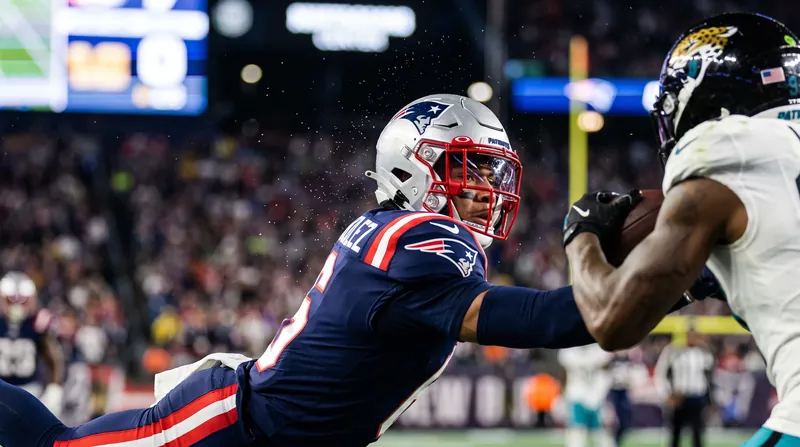
See all →NFL Contracts
Patriots Make Christian Gonzalez the Highest-Paid Cornerback in NFL History
7 sources
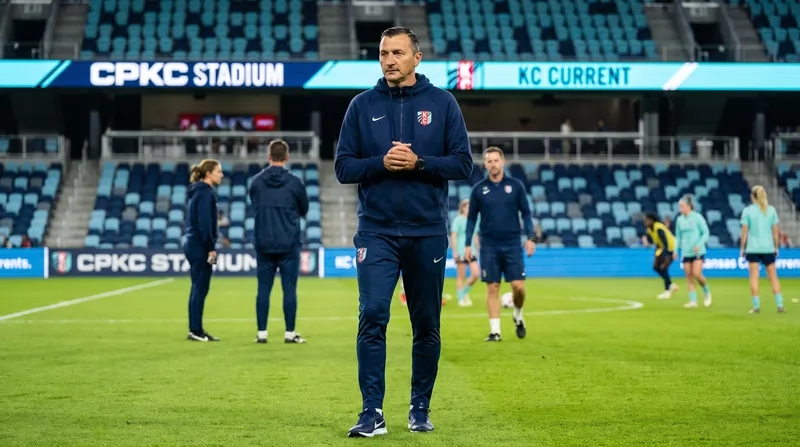
Kansas City Current
Kansas City Current Part Ways With Sporting Director Vlatko Andonovski
6 sources
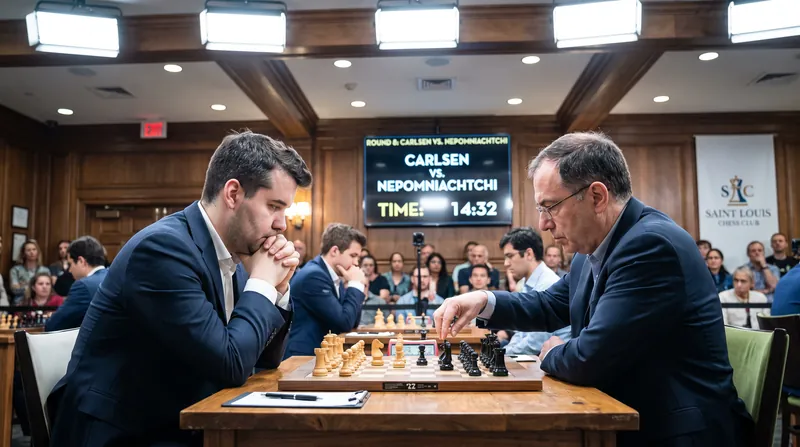
Power ranking
Global Chess Power Rankings: Praggnanandhaa and So Surge Heading Into the Samarkand Olympiad
4 sources
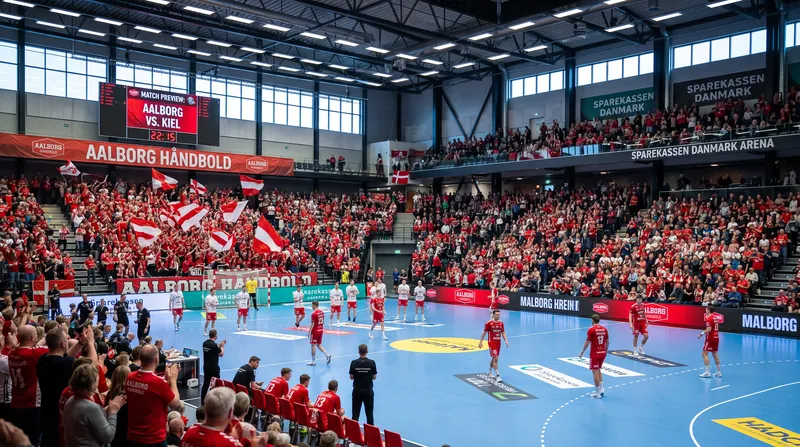
Preview
PSG Head Coach Stefan Madsen Returns to Aalborg as EHF Champions League Enters 24-Team Era
7 sources
Every angle. Every day.
Get Sports stories with full source coverage and perspective breakdowns delivered to your inbox.