
The OTC Glucose Monitor Boom: How CGMs Became Mainstream Biohacking Tools
Over-the-counter continuous glucose monitors are moving from diabetes management to mainstream wellness, allowing anyone to track their metabolic health in real time.
By Factlen Editorial Team
- Proactive Health Advocates
- Believe real-time glucose data empowers individuals to optimize their metabolic health.
- Clinical Educators
- Focus on the physiological mechanisms of glucose spikes and the educational value of the devices.
- Traditional Medical Skeptics
- Warn against the potential psychological and diagnostic pitfalls of over-monitoring healthy bodies.
What's not represented
- · Individuals with insulin-dependent diabetes facing supply shortages
- · Health insurance providers evaluating preventative coverage
Why this matters
Real-time metabolic data is no longer gatekept by prescriptions. By understanding exactly how specific foods, stress, and sleep affect your blood sugar, you can make highly personalized lifestyle changes to improve your energy, weight, and long-term health.
Key points
- The FDA has cleared several continuous glucose monitors for over-the-counter sale to adults without diabetes.
- Devices like the Dexcom Stelo and Abbott Libre Rio allow users to track real-time blood sugar responses to food and exercise.
- Health tech companies are pairing this hardware with behavioral AI to offer personalized weight management and longevity insights.
- While advocates praise the democratization of health data, some medical professionals warn against over-analyzing normal physiological glucose spikes.
The era of the "glucose-curious" has officially arrived. For decades, continuous glucose monitors (CGMs) were strictly medical devices, prescribed exclusively to individuals managing insulin-dependent diabetes. Today, they are the hottest commodity in the mainstream wellness and biohacking spaces.[3][4]
The landscape shifted dramatically when the U.S. Food and Drug Administration cleared the first over-the-counter (OTC) glucose biosensors for adults without diabetes. Devices like the Dexcom Stelo and Abbott's Libre Rio and Lingo have flooded the market, available online and in pharmacies without a doctor's note.[2][5]
The market response has been explosive. In May 2026, health technology company Signos secured $20 million in funding from Google Ventures and Dexcom to accelerate its AI-powered weight management system, which pairs the 15-day Dexcom Stelo sensor with behavioral AI.[1]
This influx of capital reflects a broader cultural shift from reactive medicine to proactive health optimization. The U.S. market for OTC continuous glucose monitoring devices is projected to nearly double by 2033, driven largely by athletes, biohackers, and everyday consumers seeking metabolic self-knowledge.[2][4]

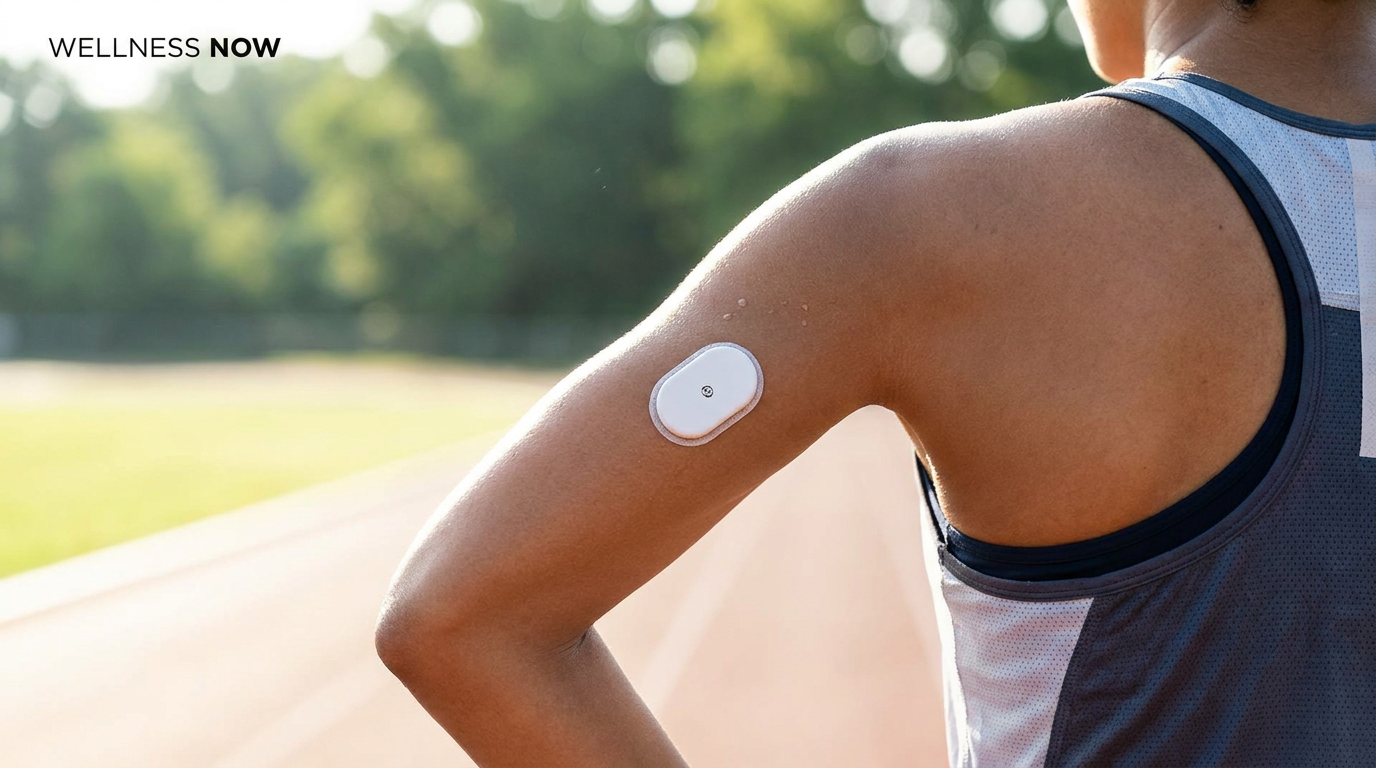
But how exactly do these devices work? A CGM is a small, disc-like wearable typically applied to the back of the upper arm. A tiny, flexible filament sits just beneath the skin, measuring glucose levels in the interstitial fluid—the fluid surrounding the cells—rather than directly in the blood.[3][4]
These sensors continuously transmit data to a smartphone via Bluetooth, providing a new reading every few minutes. Users can wear a single sensor for up to 15 days, showering, sleeping, and exercising with it seamlessly attached.[2][3]
The appeal for non-diabetics lies in the real-time feedback loop. Every body reacts differently to carbohydrates, stress, and sleep. A bowl of oatmeal might cause a massive glucose spike in one person while keeping another's blood sugar perfectly stable.[4][5]
Medical educators emphasize that understanding these personalized spikes is crucial for long-term health. When glucose levels spike sharply, tissues can undergo glycation—a process where sugar molecules bind to proteins, potentially causing cellular damage and accelerating aging over time.[5]
Medical educators emphasize that understanding these personalized spikes is crucial for long-term health.
By monitoring these trends, users can experiment with food combinations to flatten their glucose curves. For instance, pairing carbohydrates with healthy fats or taking a short walk after a meal can significantly blunt the release and absorption of glucose into the bloodstream.[4][5]

However, raw data is only as useful as the insights derived from it. This is where software platforms like Signos, Nutrisense, and Levels step in. They overlay the hardware's data with sophisticated applications that score meals, track exercise, and gamify the user experience.[1][3]
Signos, for example, uses behavioral AI to analyze how a user's specific food choices and stress levels impact their glucose, offering a departure from one-size-fits-all dieting. The app demonstrates how the body is trending toward weight maintenance goals in real time.[1]
Despite the enthusiasm, the mainstreaming of CGMs is not without its critics. The Factlen Editorial Team notes that some traditional medical professionals warn against providing constant, minute-by-minute physiological data to healthy individuals, which could fuel health anxiety or an unhealthy obsession with eating perfectly.[6]
Furthermore, it is entirely normal for blood sugar to rise after a meal or during high-intensity exercise. Skeptics worry that users without medical training might misinterpret these natural, transient spikes as pathological, leading to unnecessary dietary restrictions.[6]
The FDA itself has placed guardrails on these OTC devices. They are explicitly not intended for individuals with problematic hypoglycemia, as the OTC software is not designed to alert users to dangerously low levels the way prescription models do.[5]

Yet, for the estimated 25 million Americans with non-insulin-dependent Type 2 diabetes—and millions more with prediabetes—the accessibility of OTC monitors removes a massive barrier to entry. It bypasses the friction of insurance approvals and doctor visits.[2]
The technology is also evolving rapidly. While the Dexcom Stelo relies on the proven G7 hardware platform, Abbott's Libre Rio is expected to offer the widest glucose reading range on the OTC market, catering to both budget-conscious users and data purists.[2][4]
How we got here
March 2024
The FDA clears the Dexcom Stelo as the first over-the-counter continuous glucose monitor.
Summer 2024
Abbott receives FDA clearance for its Lingo and Libre Rio OTC glucose monitoring systems.
August 2024
The Dexcom Stelo officially becomes available for direct-to-consumer purchase in the United States.
May 2026
Health tech company Signos raises $20 million to integrate behavioral AI with OTC glucose data.
Viewpoints in depth
Proactive Health Advocates
Believe real-time glucose data empowers individuals to optimize their metabolic health.
This camp views the democratization of health data as a monumental leap forward. By removing the gatekeeping of prescriptions, they argue that millions of people can now proactively manage their weight, energy levels, and longevity. They emphasize that understanding one's unique physiological response to different foods and stressors is far more effective than following generic dietary guidelines.
Clinical Educators
Focus on the physiological mechanisms of glucose spikes and the educational value of the devices.
Educators and researchers highlight the underlying science of glycation and metabolic dysfunction. They see OTC CGMs as powerful teaching tools that visually demonstrate the consequences of poor dietary choices. However, they are careful to distinguish between using the devices for lifestyle education versus medical diagnosis, stressing that users should not make medication decisions based on OTC data.
Traditional Medical Skeptics
Warn against the potential psychological and diagnostic pitfalls of over-monitoring healthy bodies.
Some traditional practitioners express concern that providing minute-by-minute data to healthy individuals could do more harm than good. They point out that transient glucose spikes are a normal, healthy response to eating and exercise. There is a fear that misinterpreting these natural fluctuations could lead to orthorexia, unnecessary anxiety, or the elimination of perfectly healthy foods from a user's diet.
What we don't know
- It remains unclear if long-term use of CGMs in healthy individuals leads to sustained behavioral changes or improved clinical health outcomes.
- The psychological impact of constant physiological monitoring on the general public is still being studied.
Key terms
- Continuous Glucose Monitor (CGM)
- A wearable biosensor that continuously tracks glucose levels in the body and transmits the data to a smartphone.
- Interstitial Fluid
- The fluid found in the spaces around cells, where OTC CGMs measure glucose concentrations.
- Glycation
- A process where excess sugar molecules bind to proteins or lipids, potentially causing cellular damage and accelerating aging.
- Hypoglycemia
- A condition characterized by abnormally low blood sugar levels, which OTC CGMs are not designed to diagnose or alert users to.
- Behavioral AI
- Artificial intelligence algorithms used by health apps to analyze a user's habits and provide personalized lifestyle recommendations.
Frequently asked
Do I need a prescription to buy a CGM?
No. As of 2024, the FDA cleared several continuous glucose monitors, such as the Dexcom Stelo and Abbott Lingo, for over-the-counter purchase by adults without diabetes.
Does the sensor measure blood directly?
No. The tiny filament rests just beneath the skin and measures glucose levels in the interstitial fluid, which closely mirrors blood glucose levels.
Can these devices alert me to dangerously low blood sugar?
No. Over-the-counter CGMs are explicitly designed without the low-glucose alarms found in prescription models, making them unsuitable for individuals with problematic hypoglycemia.
How long does a single sensor last?
Depending on the model, a single sensor typically lasts between 14 and 15 days before it needs to be replaced.
Sources
Source coverage
6 outlets
3 viewpoints surfaced





[1]BriefGlanceProactive Health Advocates
Signos Raises $20M to Pair AI with Glucose Data for Weight Management
Read on BriefGlance →[2]HealthBalance360Clinical Educators
Best OTC CGM: FDA-Approved Glucose Sensors Compared
Read on HealthBalance360 →[3]OutliyrProactive Health Advocates
How to Get a CGM as a Healthy Non-Diabetic
Read on Outliyr →[4]Brentwood MDProactive Health Advocates
Top Over-the-Counter CGM Options
Read on Brentwood MD →[5]Dr. Mobeen SyedClinical Educators
FDA Clears First Over-the-Counter Continuous Glucose Monitor
Read on Dr. Mobeen Syed →[6]Factlen Editorial TeamTraditional Medical Skeptics
Synthesis by Factlen editorial team
Read on Factlen Editorial Team →

More in health
See all 6 stories →Metabolic Health
Muscle as an Organ of Longevity: The Science of Myokines and Metabolic Health
0 sources

Clinical Evidence
The Evidence for Exercise as a First-Line Mental Health Treatment
0 sources

Diabetes Research
FDA Approves First Disease-Modifying Therapy for Newly Diagnosed Stage 3 Type 1 Diabetes in Youth
0 sources
Longevity Science
The Science of 'Exercise Snacks': How 1-Minute Bursts of Movement Can Transform Longevity
0 sources

Every angle. Every day.
Get health stories with full source coverage and perspective breakdowns delivered to your inbox.