
The Open Social Web Has Arrived: How Interoperability is Breaking Down the Walled Gardens
Decentralized protocols like ActivityPub and the AT Protocol are finally connecting major platforms, allowing users to own their data and communicate seamlessly across different social networks.
By Factlen Editorial Team
- Open-Web Advocates
- Argue that decentralization is essential for user freedom, data ownership, and censorship resistance.
- Protocol Architects
- Focus on the technical standards required to make interoperability seamless and scalable.
- Network Researchers
- Analyze the behavioral and structural impacts of cross-platform federation on user dynamics.
What's not represented
- · Traditional Social Media Executives
- · Average Non-Technical Users
Why this matters
For the first time in a decade, you no longer have to rebuild your follower list when you switch apps. By shifting power from centralized tech giants back to users, the open social web ensures you permanently own your digital identity and social connections.
Key points
- Decentralized protocols like ActivityPub and the AT Protocol are breaking down social media's walled gardens.
- Users can now communicate seamlessly across different platforms like Threads, Mastodon, and Bluesky.
- Decentralized Identifiers (DIDs) allow users to own their social graph and migrate between apps without losing followers.
- The open social web decouples the user interface from the algorithm, giving users control over their feeds.
- Bridging services translate data between different protocols, creating a truly interconnected digital ecosystem.
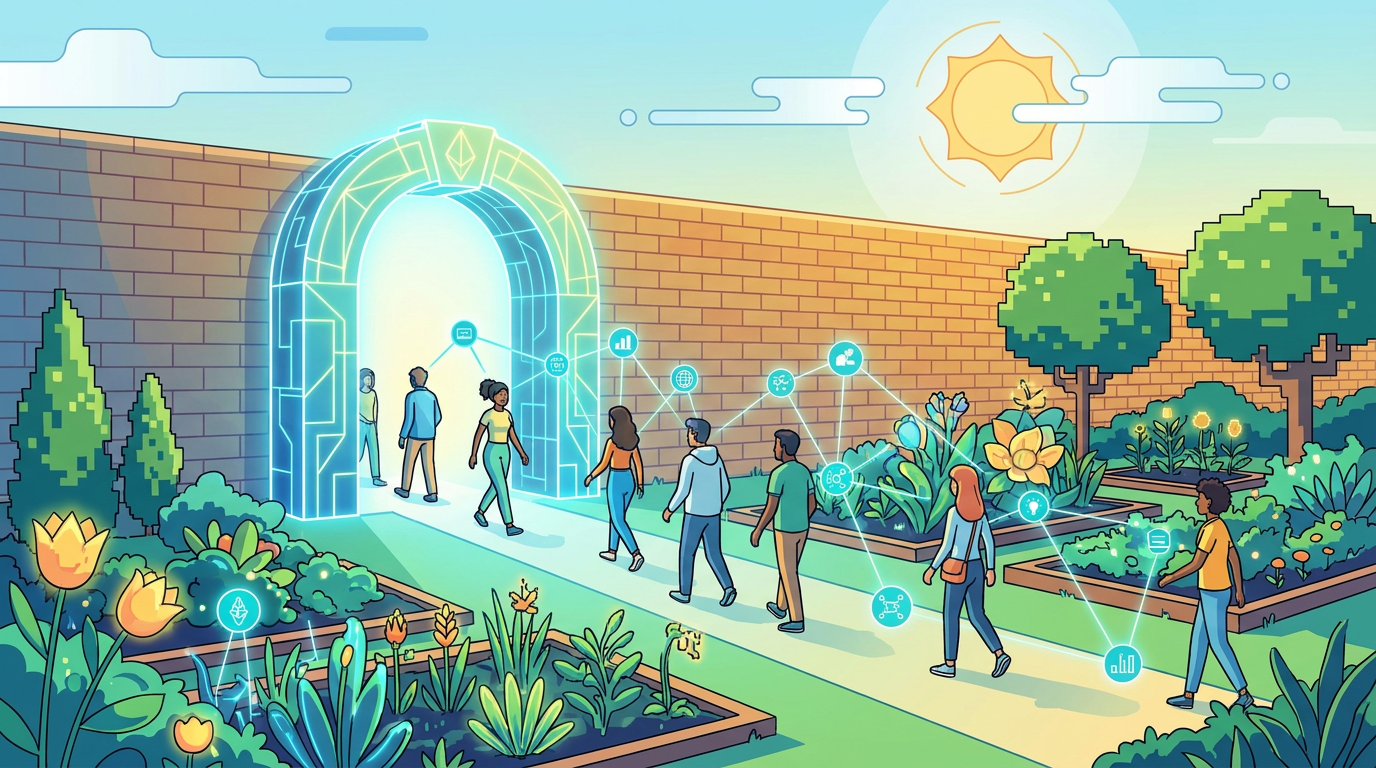
For the better part of two decades, social media has operated on a simple, restrictive premise: the walled garden. If you wanted to talk to your friends on Facebook, you had to be on Facebook. If you built an audience on a specific microblogging site, that audience was locked inside its proprietary servers. Leaving a platform meant abandoning your digital social life and starting entirely from scratch.[4]
But in 2026, the architecture of the internet is undergoing its most significant structural shift since the invention of the smartphone. The "open social web"—powered by decentralized protocols rather than centralized corporate servers—has finally reached critical mass, fundamentally rewiring how digital communication works.[6]
This shift is not just a niche experiment for technologists; it is a practical reality for millions of everyday users. Major platforms like Meta's Threads, the community-driven Mastodon, and the rapidly scaling Bluesky are now interconnected. This allows users to communicate across network boundaries as seamlessly as sending an email from a Gmail account to a Yahoo address.[3][6]
At the heart of this transformation are two primary technologies: ActivityPub and the Authenticated Transfer (AT) Protocol. ActivityPub, a standard established by the World Wide Web Consortium (W3C), powers the "Fediverse"—a sprawling network of independent servers that includes Mastodon and, crucially, Meta's Threads.[1][2]

When Threads integrated ActivityPub sharing, it bridged the gap between a massive corporate platform and the open web. Researchers studying this integration observed tens of thousands of users seamlessly interacting across Threads and Mastodon, proving that cross-platform federation could work at scale without catastrophic friction.[2]
Parallel to the Fediverse is Bluesky, built on the AT Protocol. Originally incubated within Twitter before spinning out as an independent entity, the AT Protocol takes a slightly different approach to decentralization. It focuses heavily on account portability, semantic interoperability, and decentralized identity.[1][5]
Parallel to the Fediverse is Bluesky, built on the AT Protocol.
On the AT Protocol, users are identified by Decentralized Identifiers (DIDs) and cryptographic URLs. This means your identity and your data are stored in self-authenticating data repositories, completely independent of the app you use to view them. If a specific interface or server shuts down, or if you simply dislike their policies, you can plug your identity into a new app and take your entire follower graph with you.[1][5]

The magic of the 2026 social web is that these two parallel universes—ActivityPub and the AT Protocol—are no longer isolated. Bridging services, such as Bridgy Fed, now translate the data between the two protocols. A user on Threads can follow a user on Bluesky, and a Mastodon user can reply to them both, all from their respective apps.[3]
This interoperability solves the "cold start" problem that has plagued new social networks for years. You no longer have to convince your entire friend group to download a new app; you can simply connect to them from wherever you prefer to log in, breaking the monopolistic hold of legacy platforms.[6]
Beyond portability, the open social web fundamentally changes how content is discovered. In the walled-garden era, a single corporate algorithm dictated what millions of people saw, optimizing for engagement and, often, outrage. Decentralized protocols decouple the user interface from the recommendation engine.[4]
On platforms utilizing the AT Protocol, users can subscribe to custom algorithms built by third-party developers. If you want a feed that only shows posts from verified scientists, or a chronological feed of your friends, or a feed optimized for positive news, you simply select that algorithm from a marketplace. The power to curate attention has shifted from the platform to the user.[5]

Moderation, too, has been decentralized. Instead of relying on a single trust-and-safety team in Silicon Valley to police global discourse, communities can establish their own rules. Users can subscribe to independent moderation services—essentially shared blocklists and labeling systems—that filter out spam, harassment, or specific types of content according to their personal preferences.[1][5]
Of course, this decentralized utopia is not without its friction points. Navigating cryptographic identities, choosing servers, and understanding bridging mechanics still present a learning curve for the average user. Furthermore, the open nature of these protocols means that bad actors can also spin up servers, making robust, community-led moderation tools more critical than ever.[6]
Yet, the momentum is undeniable. The era of being locked into a single app, subject to the whims of a single CEO or a proprietary algorithm, is ending. The open social web has proven that digital connection can be built on shared protocols rather than private property, returning ownership of the social graph to the people who actually create it.[6]
How we got here
2016
Mastodon launches, popularizing the concept of the Fediverse for microblogging.
Oct 2022
Bluesky rebrands its underlying technology as the AT Protocol, focusing on account portability.
Mar 2024
Meta's Threads officially introduces Fediverse Sharing, connecting its massive user base to Mastodon.
Early 2026
Bridging services reach maturity, allowing seamless interaction between ActivityPub and the AT Protocol.
Viewpoints in depth
Open-Web Advocates
Argue that decentralization is essential for user freedom and data ownership.
This camp, which includes digital rights groups like the EFF and blockchain enthusiasts, views the open social web as a return to the internet's original promise. They emphasize that users should never be held hostage by a platform's changing policies or algorithms. By owning their cryptographic identities, users gain permanent control over their social graphs, ensuring that no single corporation can sever their connection to their audience.
Protocol Architects
Focus on the technical standards required to make interoperability seamless and scalable.
Developers working on ActivityPub and the AT Protocol are primarily concerned with the mechanics of federation. They highlight the importance of standardized lexicons and self-authenticating data repositories, which allow different applications to understand and verify each other's data. For this group, the success of the open web hinges on reducing latency, managing server costs, and ensuring that cross-platform bridging doesn't degrade the user experience.
Network Researchers
Analyze the behavioral and structural impacts of cross-platform federation.
Academics and data scientists studying the integration of platforms like Threads and Mastodon focus on user dispersion and interaction dynamics. They note that while interoperability solves the "walled garden" problem, it introduces new complexities in how information spreads and how communities form. Their research tracks whether decentralized networks can maintain healthy discourse without the centralized moderation apparatus of traditional tech giants.
What we don't know
- Whether the majority of mainstream users will adopt decentralized identities or find the setup process too complex.
- How effectively decentralized communities will be able to combat coordinated disinformation campaigns without a centralized moderation team.
- If other major walled gardens, like X or TikTok, will ever adopt interoperable protocols.
Key terms
- ActivityPub
- An open, decentralized social networking protocol established by the W3C, used by platforms like Mastodon and Threads.
- AT Protocol
- The Authenticated Transfer Protocol, a federated network framework created by Bluesky that focuses on data portability and custom algorithms.
- Decentralized Identifier (DID)
- A cryptographically secure, portable digital identity that a user owns independently of any specific platform.
- Walled Garden
- A closed technology ecosystem where the provider tightly controls the platform and restricts access to outside systems.
- Interoperability
- The ability of different computer systems, software, or platforms to connect and exchange information seamlessly.
Frequently asked
What exactly is the Fediverse?
The Fediverse is a collection of thousands of independent social media servers that can communicate with each other using a shared open protocol called ActivityPub.
How is Bluesky different from Mastodon?
While both are decentralized, Mastodon uses ActivityPub and focuses on server-based communities, whereas Bluesky uses the AT Protocol, which emphasizes account portability and customizable algorithms.
Can I take my followers with me if I leave a platform?
Yes. On protocols like the AT Protocol, your identity and follower graph are tied to a cryptographic identifier you own, allowing you to migrate to a new app without losing your connections.
Does decentralization mean there is no content moderation?
No. Instead of one central team making the rules, moderation is handled by individual communities and third-party labeling services that users can subscribe to for filtering content.
Sources
Source coverage
6 outlets
3 viewpoints surfaced






[1]WikipediaProtocol Architects
AT Protocol
Read on Wikipedia →[2]arXivNetwork Researchers
Fediverse Sharing: Cross-Platform Interaction Dynamics between Threads and Mastodon Users
Read on arXiv →[3]Electronic Frontier FoundationOpen-Web Advocates
How to Post to Mastodon and Bluesky from Threads
Read on Electronic Frontier Foundation →[4]Ethereum.orgOpen-Web Advocates
Decentralized social networks
Read on Ethereum.org →[5]Bluesky DocsProtocol Architects
The AT Protocol
Read on Bluesky Docs →[6]Factlen Editorial Team
Synthesis by Factlen editorial team
Read on Factlen Editorial Team →

Every angle. Every day.
Get technology stories with full source coverage and perspective breakdowns delivered to your inbox.