
The New Rules of Tipping in 2026: Navigating Digital Screens and Service Fees
As digital payment screens prompt higher gratuities everywhere from coffee shops to retail stores, etiquette experts and financial data offer clear guidelines on when to tip, how much, and when it is perfectly acceptable to skip it.
By Kabir Mehra

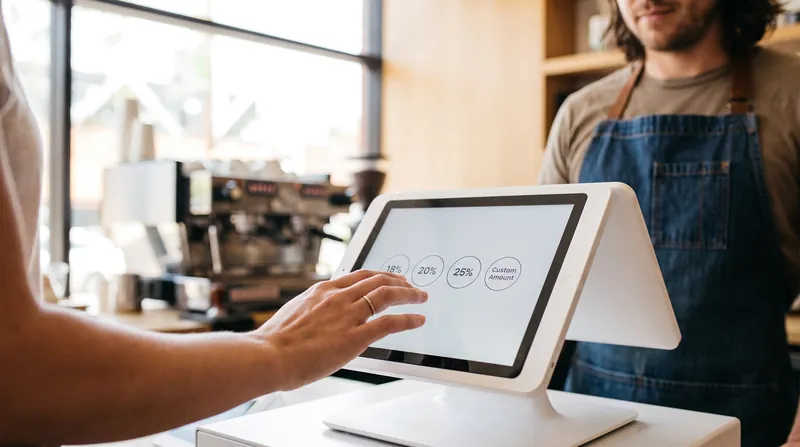
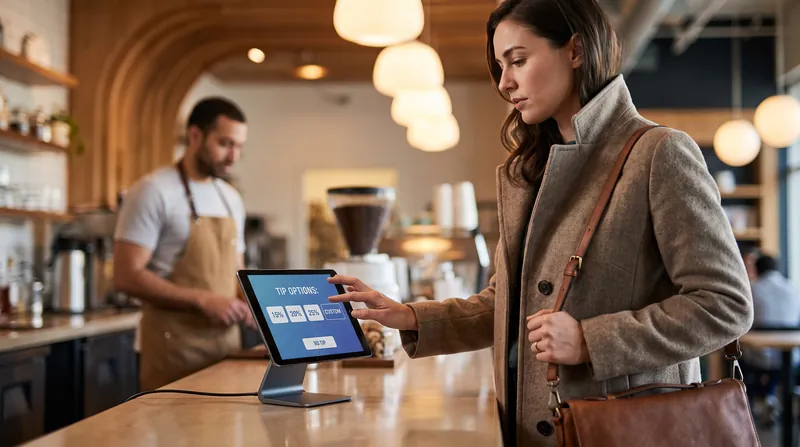
The swivel of the tablet has become one of the most fraught moments in modern retail. You order a simple $4 drip coffee, the barista flips the screen toward you, and you are suddenly confronted with three bold options: 20%, 25%, or 30%. With the employee standing just inches away, the social pressure to tap a high percentage is immense and immediate.
This phenomenon, driven by the rapid adoption of cashless point-of-sale systems across the service industry, has left consumers bewildered about where the boundaries of gratuity actually lie. What was once a quiet, private decision made with spare change has transformed into a public transaction, sparking widespread anxiety and a phenomenon broadly known as tip fatigue.
The confusion consumers feel is entirely by design. Point-of-sale software companies have heavily utilized behavioral psychology to increase transaction values, finding that pre-set on-screen tipping options can drive total tip volume up by 20% to 40%. By removing the friction of doing mental math and introducing the social pressure of a public choice, the digital screen has fundamentally altered the market for everyday purchases.
Humans are naturally inclined to take the path of least resistance, and pressing a brightly colored button for 20% is significantly easier than manually navigating to a 'custom tip' screen to enter a smaller amount or zero. This frictionless design has successfully normalized tipping in environments where it was historically never expected.
However, etiquette experts are stepping in to offer a collective sigh of relief for anxious consumers. The consensus for 2026 is clear: you do not need to tip a percentage for a transaction that involves no actual service. Diane Gottsman, a national etiquette expert, advises that customers should treat the modern digital screen exactly like an old-fashioned glass tip jar.
If you would not have dropped a dollar bill into a jar for a simple over-the-counter exchange, you should feel no obligation to tap a tip on the screen. Consumers should feel fully justified in taking their time, owning their decision, and selecting 'no tip' without any accompanying guilt when simply purchasing a retail item or a pre-packaged snack.
For coffee shops, bakeries, and fast-casual restaurants where you order at a counter, the rules remain firmly grounded in traditional etiquette. The Emily Post Institute notes that tipping in these environments is strictly optional, not mandatory. If you do choose to tip a barista or bartender to show appreciation, the standard is $1 to $2 per drink, rather than a flat percentage of the total bill.
A 20% tip on a complex, highly customized espresso order is a kind gesture that builds rapport, but applying that same percentage to a black coffee is unnecessary. Experts emphasize that tipping here should reflect the effort and interaction, not just the total cost of the items purchased.[1][4]
While counter service rules have relaxed, the expectations for full-service, sit-down dining have actually increased significantly. The era of the 15% standard tip is largely over. Driven by years of inflation, wage stagnation, and a cultural shift following the pandemic, the new floor for adequate table service is 18%.
Diners who continue to leave 15% for standard service may unknowingly be signaling dissatisfaction to their servers, as the baseline expectations within the hospitality industry have permanently shifted upward. Etiquette authorities now universally recommend that patrons budget for this higher percentage before deciding to dine out, ensuring that the final bill does not come as a shock.[2][4]
Data from millions of restaurant transactions confirms this upward trend across the country. According to a Q1 2025 analysis by the restaurant management platform Toast, the average tip at full-service restaurants in the United States has climbed to 19.4%. For exceptional service, 20% to 22% is now the standard benchmark.
This data reveals that despite widespread complaints about tip fatigue in retail settings, American diners remain highly generous when sitting down for a traditional meal, consistently rewarding attentive waitstaff with percentages that would have been considered exceptionally high just a decade ago.[2][4]
This shift is partly due to the stark economic realities of the hospitality industry. In many states, employers are still legally permitted to pay tipped workers a sub-minimum wage—sometimes as low as $2.13 an hour—with the expectation that customer gratuities will make up the difference.
For these workers, tips are not a bonus for a job well done; they are the fundamental mechanism of their livelihood. When consumers understand that their server's ability to pay rent relies directly on these percentages, the shift toward a 20% standard becomes less about tip inflation and more about ensuring a basic living wage for the people preparing and serving their food.[4]
Delivery services present another area where the rules have solidified into a clear consensus. Whether you are ordering through a major app like Uber Eats or DoorDash, or calling a local pizza parlor, etiquette experts and industry advocates have coalesced around a strict $5 minimum rule.
On small orders under $25, a standard 15% tip might amount to less than $3, which barely covers the driver's fuel and vehicle wear-and-tear for the trip. For larger delivery orders, 10% to 15% of the total bill remains the customary guideline, ensuring that drivers are fairly compensated for the time and logistical effort required to bring food directly to your door.[1][2][4]
Takeout orders, where you travel to the restaurant and pick up the food yourself, fall into a different category entirely. Because there is no table service or delivery involved, there is no strict obligation to leave a gratuity.
However, if the restaurant staff has carefully packaged a large, complex order, ensured that all special requests were met, or provided curbside delivery to your vehicle, adding a 10% tip is considered a highly polite acknowledgment of their extra effort. For a standard, simple takeout order, leaving a dollar or two in the jar or on the screen is a nice gesture, but skipping the tip is perfectly acceptable.[1][4]
One of the most significant sources of consumer frustration in 2026 is the proliferation of opaque service fees on restaurant bills. Many upscale restaurants and hospitality groups have begun adding mandatory surcharges—often labeled as 'kitchen fees,' 'wellness fees,' or 'operational surcharges'—directly to the final tally.
These fees can range anywhere from 3% to 20%, leaving diners confused about whether they are still expected to leave a standard tip on top of the inflated total. This practice has sparked debates among both consumers and industry professionals, as it complicates the end-of-meal math and obscures exactly where the customer's money is going.[4]
It is crucial to understand the legal distinction between a tip and a fee. By law, a gratuity belongs entirely to the employee who provided the service. A service fee, however, belongs to the business, and management can distribute it however they see fit—or use it to cover general overhead.
If a restaurant includes an automatic 20% gratuity for a large party, you do not need to tip additionally. But if the bill features a 5% 'kitchen fee,' the server is likely not seeing that money directly, and a standard tip is still expected. Diners are encouraged to ask their servers directly if the fee replaces the tip, removing the guesswork.[4]
Beyond daily food and beverage transactions, the rules for recurring service providers—such as hairstylists, dog walkers, and housecleaners—require a more relational approach. For these professionals, tipping is an investment in a long-term relationship and a reflection of consistent quality. The standard for personal care services remains 15% to 20% per visit.
Because these professionals often spend significant one-on-one time with clients and rely heavily on repeat business, tipping generously ensures priority booking and fosters a strong, mutually beneficial dynamic over time. Etiquette experts note that if a stylist or therapist consistently goes above and beyond, tipping on the higher end of that spectrum is the best way to show genuine appreciation.
When it comes to annual or holiday tipping for these recurring providers, Lizzie Post of the Emily Post Institute recommends utilizing the 'up to' rule. This practical guideline suggests tipping up to the cost of one standard session or one week's pay.
For example, if you pay a personal trainer $75 per session, a $75 holiday tip is appropriate; if you pay a nanny a weekly rate, a bonus equal to one week's pay is the gold standard. This framework scales naturally with your budget and the cost of the service, preventing the holiday season from becoming a source of financial stress.[3]
This framework scales naturally with your budget and the cost of the service, preventing the holiday season from becoming a source of financial stress.
Ultimately, navigating the 2026 tipping landscape requires a blend of generosity and firm personal boundaries. Financial advisors emphasize that consumers should not go into debt trying to meet every digital prompt they encounter. If an iPad requests a tip for a retail purchase, a self-serve kiosk, or a simple over-the-counter exchange, you can confidently decline.
By understanding the behavioral mechanics behind the screen and the economic realities of the workers who truly rely on gratuities, consumers can reclaim their autonomy. The goal is to tip with intention and clarity, rather than out of anxiety or automated pressure.[3]
Key points
- Etiquette experts agree that tipping a percentage at counter-service or fast-casual restaurants is entirely optional.
- The standard tip for full-service, sit-down dining has risen to an average of 19.4%, making 18% the new minimum.
- Digital point-of-sale screens are designed with behavioral psychology to increase tip volume by up to 40%.
- Service fees belong to the business and do not legally have to be distributed to the staff, unlike traditional gratuities.
What we don’t know
- Whether federal legislation will eventually eliminate the sub-minimum wage for tipped workers nationwide, fundamentally altering the restaurant business model.
- How the integration of AI-driven service agents and automated baristas will impact tipping expectations in the coming years.
How we got here
2019-2020
Digital point-of-sale systems begin replacing traditional cash registers, introducing the customer-facing tipping screen.
2020-2022
The pandemic accelerates cashless payments and normalizes higher tipping percentages for essential service workers.
2023-2024
Consumers report widespread 'tip fatigue' as automated gratuity prompts expand to self-checkout kiosks and retail stores.
2025-2026
Etiquette authorities establish firm new guidelines, pushing back against tip creep while solidifying higher standards for full-service dining.
- Etiquette Experts
- Emphasize that tipping should remain a voluntary expression of gratitude rather than an obligation at every transaction.
- Service Workers & Advocates
- Highlight that tips are a critical component of a living wage in an era of high inflation.
- Consumer Finance Analysts
- Focus on the economic data of tip inflation and its impact on personal budgeting.
Perspectives this story doesn't cover
- Point-of-sale software developers designing the tipping interfaces
- Restaurant owners balancing menu prices with service fees
Sources
Source coverage
4 outlets
3 viewpoints surfaced



- [1]Emily Post InstituteEtiquette Experts
General Tipping Guide
Read on Emily Post Institute → - [2]ToastConsumer Finance Analysts
Q1 2025 Restaurant Trends Report
Read on Toast → - [3]FidelityConsumer Finance Analysts
Holiday tipping guide
Read on Fidelity → - [4]TipHausService Workers & Advocates
Solution to Gratuity: How Much to Tip in Different Scenarios
Read on TipHaus →
More in Lifestyle
See all →Tipping Culture
The Great Tipping Reversal: Why Consumers Are Ready to Pay Higher Menu Prices to End Gratuity
5 sources
Tipping Culture
Tipping Fatigue: The New 20% Baseline and Why Counter Service Tips Are Now Optional
7 sources
Digital Culture
The Group Chat Reckoning: Why 'Good Morning' Texts and Voice Notes Are the New Digital Etiquette Violations
4 sources
Theatre Etiquette
The Classist Rulebook: Why Theatres Are Relaxing Cellphone and Noise Etiquette for Inclusivity
5 sources

Comments
Every angle. Every day.
Get Lifestyle stories with full source coverage and perspective breakdowns, free every day.