
The New Ocean Reality: A Guide to the High Seas Treaty, Marine Protected Areas, and the Global Mandate for Biodiversity Beyond National Jurisdiction
The High Seas Treaty has officially entered into force, establishing the first comprehensive legal framework to protect marine biodiversity across two-thirds of the global ocean.
By Tiago Sousa

In short
- The High Seas Treaty (BBNJ) entered into force in January 2026, creating a binding framework for international waters.
- It provides the legal mechanism required to establish Marine Protected Areas (MPAs) outside any country's jurisdiction.
- The treaty mandates Environmental Impact Assessments for commercial activities on the high seas.
On January 17, 2026, the legal status of two-thirds of the world's ocean changed forever. The High Seas Treaty—formally known as the Agreement on Biodiversity Beyond National Jurisdiction (BBNJ)—officially entered into force, transitioning from a negotiated text into binding international law.[1]
The milestone was triggered in September 2025 when the agreement secured its 60th national ratification, starting a 120-day countdown. Now active, the treaty establishes the first comprehensive governance framework for the vast stretches of ocean that lie beyond any single country's 200-nautical-mile Exclusive Economic Zone.
These international waters cover nearly 50 percent of the Earth's surface. They are the planet's largest carbon sink and home to ecosystems vital for global climate regulation. Yet, until this year, they operated largely as an unregulated frontier, vulnerable to overfishing, pollution, and emerging extractive industries.
The treaty's most immediate utility is providing a legal mechanism to establish Marine Protected Areas (MPAs) on the high seas. Prior to this agreement, creating a binding sanctuary in international waters was structurally impossible, leaving critical habitats exposed.[1]
This MPA mechanism is the linchpin for the "30x30" target—the global commitment to protect 30 percent of the planet's land and ocean by 2030. Because the high seas constitute such a massive portion of the global ocean, achieving the 30 percent threshold required a legal pathway to protect areas beyond national borders.
Beyond conservation zones, the treaty mandates rigorous Environmental Impact Assessments (EIAs) for commercial activities. Before a nation or corporation can launch new extractive operations—such as deep-sea mining or large-scale bio-prospecting—they must evaluate and publicly report the potential ecological damage.[1]
A central pillar of the agreement addresses Marine Genetic Resources (MGRs). Deep-sea sponges, microbes, and corals hold immense potential for pharmaceuticals, cosmetics, and industrial applications. The treaty ensures that the benefits derived from these discoveries do not exclusively enrich the few nations with advanced deep-sea technology.
Instead, it mandates the equitable sharing of both monetary and non-monetary benefits. This includes a clearing-house mechanism to share digital sequence information and scientific data with the global community, ensuring that the ocean's genetic wealth is treated as a shared human heritage.[2]
To support this equity, the treaty requires capacity building and the transfer of marine technology. Developed nations are obligated to help developing countries build the scientific infrastructure necessary to participate in high seas research, conservation, and management.[1]
The operational phase now begins. The first Conference of the Parties (COP1) is scheduled to convene later in 2026. This summit will transition the treaty from a legal framework into a functioning institution, establishing the scientific and technical bodies required to review MPA proposals and monitor compliance.[2]
Environmental organizations and scientific coalitions are already preparing the first wave of MPA proposals. High-priority regions include the Sargasso Sea, known for its unique floating kelp ecosystems, and the Salas y Gómez Ridge in the Pacific, which serves as a critical migration corridor for marine megafauna.[2]
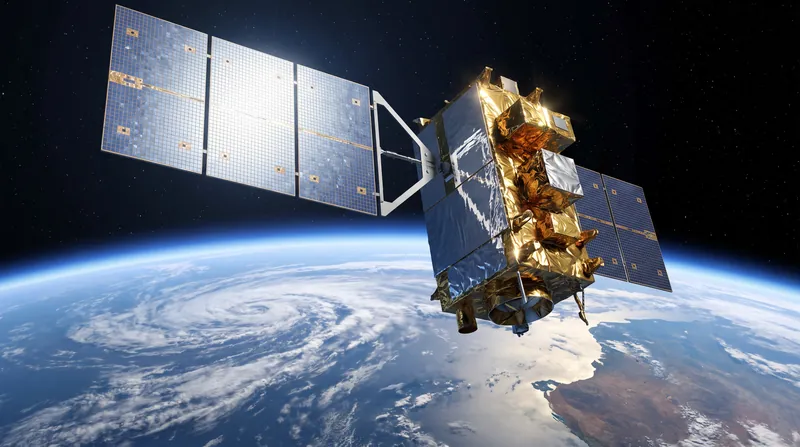
Enforcement remains the most significant practical hurdle. Monitoring compliance across millions of square miles of open ocean will require unprecedented international cooperation, heavily reliant on satellite tracking, artificial intelligence, and shared maritime intelligence.[2]
Commercial maritime industries are closely watching the implementation phase. For sectors accustomed to operating with minimal oversight in international waters, the treaty introduces a new paradigm of accountability, requiring them to adapt to stringent environmental standards and transparent reporting.[2]
While the entry into force is a historic victory, universal participation is still pending. The treaty binds only the nations that have ratified it. Securing the ratification of all major maritime and economic powers is essential to prevent regulatory loopholes and ensure total effectiveness.[2]
Ultimately, the High Seas Treaty represents a monumental shift away from the "tragedy of the commons." By establishing clear rules, equitable benefit-sharing, and robust conservation tools, the international community has created a lifeline for the ocean's most vulnerable ecosystems and a blueprint for global environmental cooperation.[1][2]
Definitions
- High Seas
- Ocean areas beyond countries' 200-nautical-mile Exclusive Economic Zones, comprising roughly two-thirds of the global ocean.
- BBNJ Agreement
- Biodiversity Beyond National Jurisdiction; the formal UN designation for the High Seas Treaty.
- Marine Protected Area (MPA)
- A clearly defined geographical space recognized and managed to achieve the long-term conservation of nature.
- Marine Genetic Resources (MGRs)
- Genetic material of marine plant, animal, or microbial origin with actual or potential value, often used in pharmaceuticals.
- 30x30 Target
- The global commitment under the Kunming-Montreal framework to protect 30 percent of the Earth's land and ocean by 2030.
Questions & answers
When did the High Seas Treaty take effect?
The treaty officially entered into force on January 17, 2026, 120 days after securing its 60th national ratification.
Does this treaty ban fishing on the high seas?
No. It does not ban fishing outright, but it requires Environmental Impact Assessments for new activities and allows for the creation of protected areas where fishing may be restricted.
How does the treaty help developing nations?
It mandates capacity building, technology transfer, and the equitable sharing of scientific and monetary benefits derived from marine genetic resources.
Who enforces the rules in international waters?
Enforcement relies on flag state responsibility, international cooperation, and a new dispute resolution mechanism established by the treaty, supported by satellite monitoring.
Analysis by camp
Marine Conservationists
Emphasize the treaty's role as the essential mechanism for achieving the 30x30 global biodiversity target.
For environmental advocates, the treaty's true value lies in its Area-Based Management Tools. Without a legal framework to establish Marine Protected Areas in international waters, the Kunming-Montreal goal of protecting 30 percent of the ocean by 2030 was mathematically impossible. Conservationists are now focused on rapidly advancing proposals for high-priority ecological zones, arguing that the treaty must be aggressively utilized to halt biodiversity loss rather than serving merely as a symbolic agreement.
Developing Nations
Prioritize the equitable sharing of marine genetic resources and mandatory technology transfer.
Nations from the Global South view the treaty as a critical corrective to historical inequities in ocean exploitation. Previously, only a handful of wealthy nations possessed the capital and technology to harvest deep-sea genetic resources for lucrative pharmaceutical and industrial applications. By mandating a clearing-house mechanism and the sharing of both monetary and scientific benefits, developing nations argue the treaty ensures the ocean's biological wealth is treated as a shared global heritage rather than a first-come, first-served commodity.
Commercial Maritime Industries
Seek regulatory clarity and standardized procedures for Environmental Impact Assessments.
For industries operating in the high seas—including commercial fishing, shipping, and prospective deep-sea mining—the treaty introduces a new era of compliance. Industry groups are closely monitoring how the new Environmental Impact Assessment requirements will be implemented by the Conference of the Parties. Their primary objective is ensuring that the regulatory framework is predictable, standardized, and based on objective scientific criteria, preventing arbitrary restrictions while leveling the playing field for all international operators.
- Marine Conservationists
- Emphasize the treaty's role as the essential mechanism for achieving the 30x30 global biodiversity target.
- Developing Nations
- Prioritize the equitable sharing of marine genetic resources and mandatory technology transfer.
- Commercial Maritime Industries
- Seek regulatory clarity and standardized procedures for Environmental Impact Assessments.
Perspectives this story doesn't cover
- Deep-sea mining prospectors
- Indigenous coastal communities
Sources
Source coverage
2 outlets
3 viewpoints surfaced


- [1]WikipediaDeveloping Nations
High Seas Treaty
Read on Wikipedia → - [2]Factlen Editorial TeamDeveloping Nations
Synthesis by Factlen editorial team
Read on Factlen Editorial Team →

More in Guides
See all →Home Networking
Why Your Mesh Wi-Fi's Wireless Backhaul Destroys NAS Performance
5 sources

Cloud Privacy
How Zero-Knowledge Cloud Storage Secures Files by Throwing Away the Key
6 sources

Satellite Navigation
The Four-Satellite Trilateration Principle: How GPS Receivers Calculate Position by Correcting for Clock Drift
8 sources
Wi-Fi Optimization
Why Hiding a Wi-Fi Router in a Media Cabinet Destroys Network Speed
4 sources

Comments
Every angle. Every day.
Get Guides stories with full source coverage and perspective breakdowns, free every day.