
The Mechanics of the SpaceX IPO: A Guide for Retail Investors
As SpaceX targets a record-breaking $1.75 trillion valuation, new index rules and financial products are changing how everyday investors can participate in the historic debut.
By Factlen Editorial Team
- Market Structure Analysts
- Analyzes the systemic mechanics and risks of new derivative products.
- Retail Access Advocates
- Argues that lowering barriers to mega-cap IPOs democratizes wealth creation.
- Academic & Institutional Researchers
- Studies the structural impact of fast-tracking and IPO underpricing.
What's not represented
- · Traditional Institutional Underwriters
- · Retail Investors Denied Allocation
Why this matters
The SpaceX IPO is rewriting the rules of public markets. Understanding how retail allocations, index fast-tracking, and leveraged ETFs function allows everyday investors to navigate this historic event with confidence rather than FOMO.
Key points
- SpaceX's IPO values the company at $1.75 trillion, making it one of the largest market debuts in history.
- Retail investors have been allocated over 20% of the float, roughly three times the standard mega-cap IPO allocation.
- A new Nasdaq 'Fast Entry' rule will force passive index funds to buy SpaceX shares within 15 trading days.
- New single-stock leveraged ETFs offer amplified exposure but carry significant risks due to volatility decay.
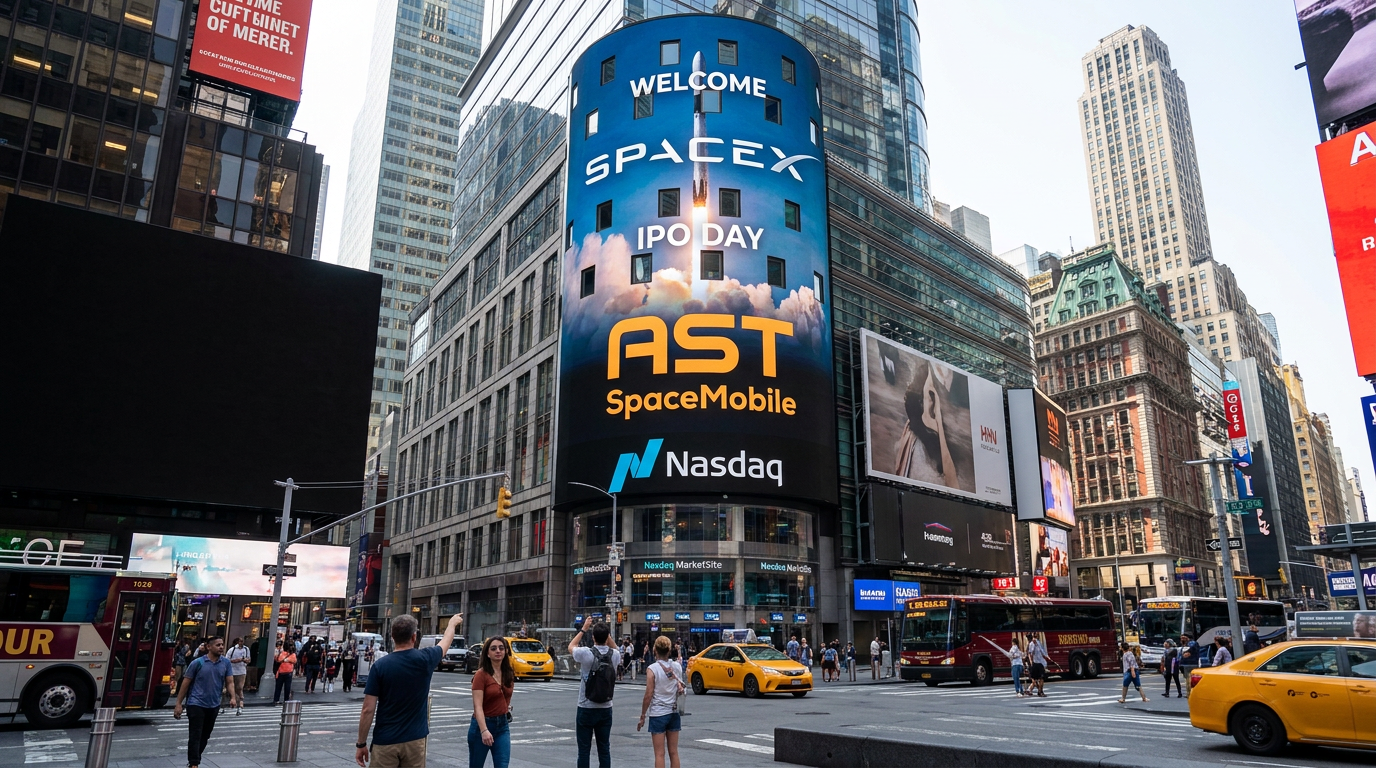
The debut of Space Exploration Technologies Corp. (SpaceX) on the Nasdaq is not just a milestone for the aerospace industry; it is a watershed moment for market mechanics. Priced at $135 per share, the initial public offering values the company at roughly $1.75 trillion, making it one of the largest public debuts in financial history. For everyday investors, the sheer scale of the offering—raising an estimated $75 billion—presents a unique opportunity to participate in a wealth-creation event that would traditionally be reserved for institutional insiders. The mechanics of this specific IPO are actively reshaping how retail capital interacts with mega-cap technology companies.[1]
Historically, retail investors have been locked out of the most lucrative IPOs, forced to wait until shares begin trading on the open market at a premium. SpaceX has actively chosen to rewrite this playbook. The company initially earmarked up to 30% of its float for retail investors, a figure that eventually settled in the low 20% range due to overwhelming institutional demand. Even at this adjusted tier, the retail allocation is roughly three times the standard 5% to 10% seen in typical mega-cap IPOs, representing tens of billions of dollars in accessible shares for the general public.[1][3][6]
Brokerages have rapidly adapted to accommodate this unprecedented influx of retail interest. Fidelity Investments, for example, lowered its standard IPO eligibility requirement, allowing customers with as little as $2,000 in their retail brokerage accounts to request shares. This democratization means that more individuals can participate in the capital formation process at the ground floor, shifting the balance of power away from exclusive private-bank clients and toward the broader public. It signals a broader industry trend where retail investors are increasingly treated as a primary capital base rather than an afterthought.[3][6]

However, participating in an IPO requires understanding the mechanics of the opening trade. A well-documented phenomenon in financial academia is "IPO underpricing," where the initial offering price is deliberately set below the actual market-clearing price. Academic research suggests that underpricing serves multiple functions: it rewards early institutional backers, generates a wave of positive media coverage, and ensures a broad, enthusiastic distribution of shares. This structural discount is designed to create momentum and validate the company's valuation on its very first day of public trading.[5][6]
For retail investors, this underpricing often translates to a day-one "pop" in the stock price. Research indicates that this initial surge is heavily influenced by retail sentiment, digital attention, and the broader cultural momentum surrounding the company. By understanding that this day-one volatility is a structural feature of the IPO process rather than a pure reflection of fundamental business changes, investors can make more informed decisions about when to buy or hold. It transforms a seemingly chaotic trading debut into a predictable, mechanical event.[5][6]
For retail investors, this underpricing often translates to a day-one "pop" in the stock price.
But what if you do not buy individual shares? You will likely own SpaceX anyway. The company's massive valuation has triggered structural changes in how passive index funds operate, ensuring that broad-market investors gain exposure almost immediately. In March 2026, Nasdaq updated its methodology for the Nasdaq-100 index, introducing a new "Fast Entry" rule designed specifically for mega-cap debuts. This rule change acknowledges that modern tech giants are often fully mature businesses by the time they finally decide to go public.[4][6]
Previously, newly public companies had to undergo a three-month "seasoning period" to ensure price stability before being added to the index. Under the new rules, a company that ranks within the top 40 of the index's market capitalization can bypass this waiting period entirely. Because SpaceX easily clears this $100 billion threshold, the company is expected to be added to the Nasdaq-100 just 15 trading days after its debut. This rapid inclusion fundamentally alters the timeline for passive capital deployment.[4][6]

This fast-track inclusion means that massive passive investment vehicles, such as the Invesco QQQ Trust, will be mandated to purchase billions of dollars of SpaceX stock to match the index weighting. For the everyday investor holding these broad tech funds in a 401(k) or IRA, exposure to SpaceX will arrive seamlessly, integrating the aerospace giant into the foundation of modern retirement portfolios. It guarantees that the wealth generated by the company's future growth will be distributed across millions of passive accounts.[6]
Alongside traditional stock purchases and index inclusion, the SpaceX IPO has spawned a cottage industry of complex derivatives. Exchange-traded fund (ETF) issuers have launched a suite of single-stock leveraged ETFs tied directly to SpaceX's daily performance, offering a high-octane way for active traders to engage with the stock. These products reflect the growing sophistication of retail trading tools, allowing individuals to execute directional bets that were once the exclusive domain of hedge funds and proprietary trading desks.[2][6]
These funds, offering 200% long or inverse exposure, are designed to amplify the stock's daily movements. However, their underlying mechanics are complex. Leveraged single-stock ETFs typically do not hold the underlying shares; instead, they use financial derivatives known as total return swaps, entering into agreements with large investment banks to deliver the promised multiple of the stock's return. This synthetic exposure allows the fund to achieve its leverage targets without the capital requirements of buying the physical stock on margin.[2][6]

Because these funds rebalance daily, they are subject to a mathematical phenomenon known as "volatility decay." Over periods longer than a single day, the compounding effect of daily resets can cause the ETF's performance to diverge significantly from the underlying stock. While they are powerful tools for short-term hedging and day trading, they are generally unsuitable for long-term buy-and-hold strategies. Educated investors who understand this decay can utilize these tools safely, avoiding the pitfalls that trap uninformed market participants.[2][6]
Ultimately, the SpaceX IPO serves as a masterclass in modern market structure. By blending unprecedented retail access, accelerated index inclusion, and advanced derivative products, the event empowers investors with more choices than ever before. Understanding these underlying mechanisms is the key to navigating the aerospace giant's historic transition to the public markets with confidence and clarity. As the financial ecosystem continues to evolve, this informed approach ensures that everyday investors can actively participate in the defining market events of our time.[6]
How we got here
May 2026
The SEC publicly discloses SpaceX's S-1 paperwork, detailing plans for a historic public offering.
June 3, 2026
SpaceX targets a $135 per share price, bypassing the traditional institutional bookbuilding process.
June 11, 2026
The final IPO price is cemented at $135 as retail investor demand tops $100 billion.
June 12, 2026
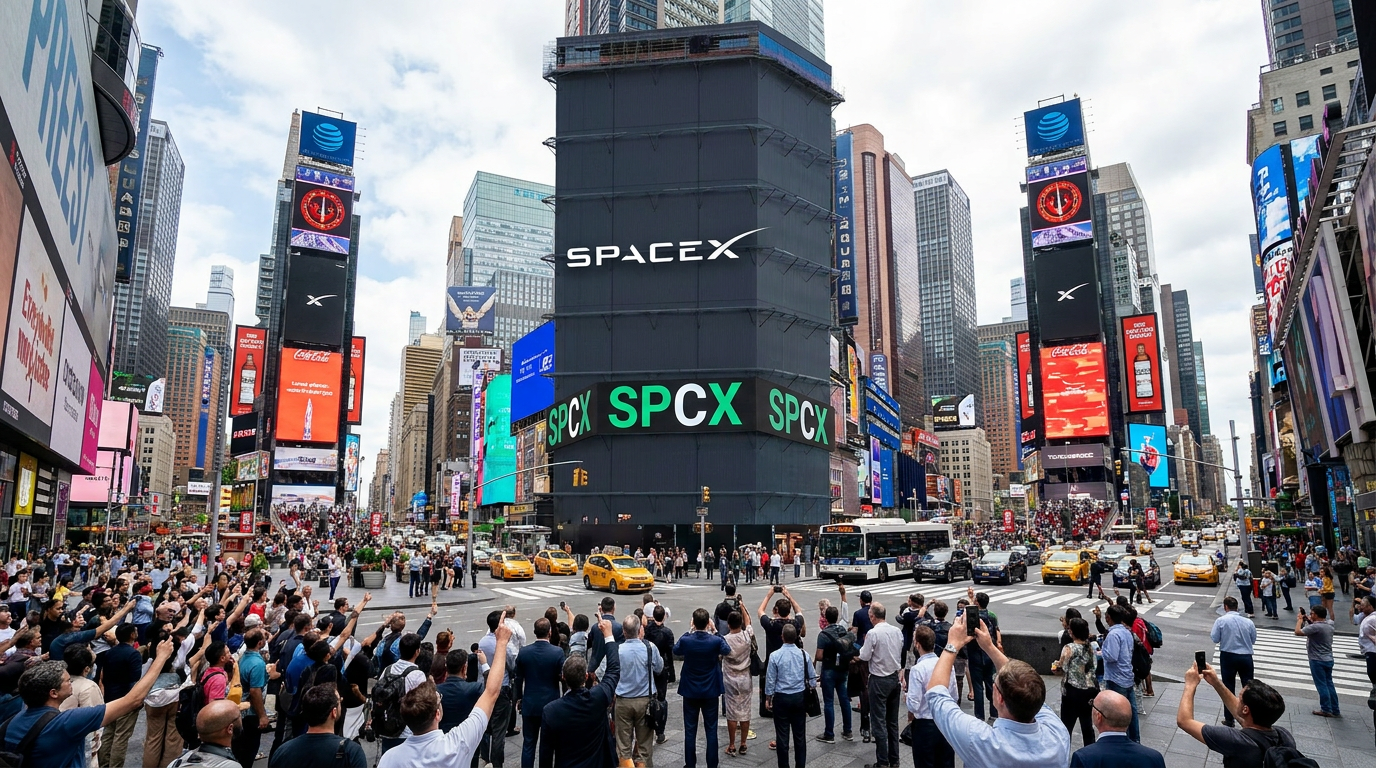
SpaceX officially begins trading on the Nasdaq under the ticker SPCX.
Late June 2026
SpaceX is expected to be added to the Nasdaq-100 index under the new Fast Entry rule.
Viewpoints in depth
Retail Access Advocates
Argues that lowering barriers to mega-cap IPOs democratizes wealth creation.
Proponents of high retail allocations argue that the traditional IPO model unfairly privileges institutional insiders, allowing them to capture the bulk of a company's early growth. By reserving over 20% of the float for everyday investors and lowering brokerage minimums, the SpaceX IPO sets a new precedent for financial inclusion. This camp views the democratization of access as a necessary evolution of capital markets, ensuring that the public can participate in the success of generational technology companies.
Passive Indexers
Focuses on the seamless integration of mega-cap companies into broad market funds.
For the millions of investors who rely on passive index funds for their retirement, the mechanics of index inclusion are paramount. This perspective supports Nasdaq's 'Fast Entry' rule, arguing that forcing index funds to wait three months to acquire a $1.75 trillion company creates an inaccurate reflection of the market. By fast-tracking inclusion, passive investors are guaranteed immediate exposure to the market's largest players, ensuring their portfolios accurately track the broader economy without requiring active management.
Market Structure Analysts
Analyzes the systemic mechanics and risks of new derivative products.
Financial structure experts focus on the plumbing beneath the IPO, particularly the rise of single-stock leveraged ETFs. While acknowledging these tools provide unprecedented flexibility, analysts warn that their reliance on total return swaps introduces complex counterparty dynamics. This camp emphasizes education, noting that while these derivatives are powerful for short-term hedging, the mathematical realities of volatility decay make them dangerous for uninformed retail investors attempting to use them as long-term investments.
What we don't know
- How the high retail allocation will impact the stock's long-term volatility compared to institutionally dominated IPOs.
- Whether the concentration of total return swaps supporting leveraged ETFs poses any hidden systemic risks during extreme price swings.
Key terms
- IPO Underpricing
- The practice of deliberately setting an initial public offering price below the actual market-clearing price to ensure a day-one price increase and broad distribution.
- Seasoning Period
- A traditional waiting period (often three months) required before a newly public company can be added to major stock indices, allowing its price to stabilize.
- Total Return Swap
- A financial derivative contract where one party (like an ETF) pays a set rate to an investment bank in exchange for the actual performance of a specific stock.
- Volatility Decay
- The mathematical erosion of value in leveraged ETFs over time, caused by the compounding effect of daily percentage resets in a fluctuating market.
Frequently asked
Can anyone buy SpaceX shares at the $135 IPO price?
While brokerages like Fidelity have lowered minimums to $2,000, final allocations depend on demand. Because the IPO is heavily oversubscribed, many retail investors may receive fewer shares than requested or have to buy on the open market.
Will my retirement account automatically buy SpaceX?
Yes, if you hold passive index funds that track the Nasdaq-100 (like QQQ). Due to a new 'Fast Entry' rule, these funds are expected to purchase SpaceX shares roughly 15 trading days after the IPO.
Are leveraged SpaceX ETFs safe for long-term investing?
No. Leveraged ETFs reset daily and use derivatives like total return swaps. Over time, 'volatility decay' can significantly erode their value, making them suitable only for short-term trading rather than long-term holding.
Sources
Source coverage
6 outlets
3 viewpoints surfaced






[1]ForbesRetail Access Advocates
SpaceX Cements Final IPO Price At $135 As Retail Investor Orders Top $100 Billion
Read on Forbes →[2]AxiosMarket Structure Analysts
Boom in ETFs tied to the shares of Elon Musk's SpaceX
Read on Axios →[3]Fidelity InvestmentsRetail Access Advocates
SpaceX IPO explained
Read on Fidelity Investments →[4]NasdaqAcademic & Institutional Researchers
Nasdaq-100 Index Methodology Changes
Read on Nasdaq →[5]ResearchGateAcademic & Institutional Researchers
IPO Underpricing: A Meta-Analysis and Research Synthesis
Read on ResearchGate →[6]Factlen Editorial TeamMarket Structure Analysts
Synthesis by Factlen editorial team
Read on Factlen Editorial Team →
Every angle. Every day.
Get finance stories with full source coverage and perspective breakdowns delivered to your inbox.