
Circle's National Trust Bank Places USDC Reserves Under Direct Federal Oversight
Circle has received final approval from the OCC to launch a national trust bank, bringing its digital asset custody and USDC stablecoin reserves under direct federal supervision. The milestone aligns with the upcoming GENIUS Act and signals a major integration of blockchain infrastructure into traditional U.S. banking.

Share this story
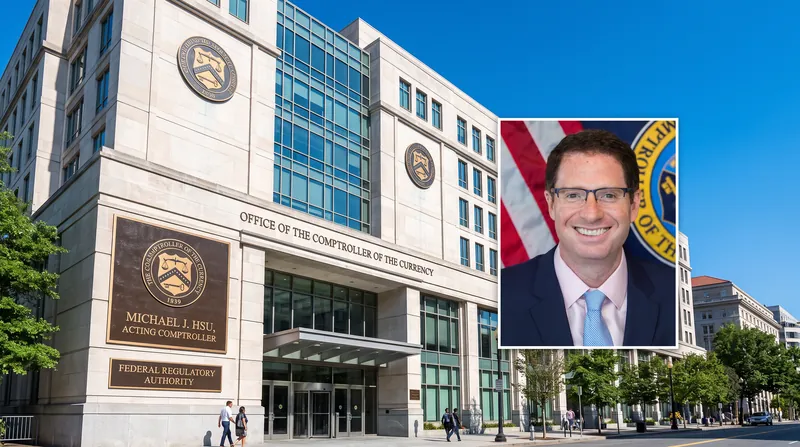
The integration of digital assets into the traditional U.S. financial system crossed a major threshold on Friday, as stablecoin issuer Circle received unfettered approval from the Office of the Comptroller of the Currency (OCC) to establish a national trust bank. The newly chartered entity, officially named First National Digital Currency Bank, N.A., will operate under the brand Circle National Trust. The approval grants the company a direct federal supervisory framework for its digital asset custody operations, capping a multi-year effort to secure a foothold within the regulated banking perimeter.
Investors reacted swiftly to the regulatory milestone, sending shares of Circle Internet Group up as much as 15.6% in intraday trading before settling to a 5.7% gain at the close. The market enthusiasm reflects the strategic value of the charter, which effectively de-risks the company's business model by aligning it with the strict fiduciary standards historically reserved for legacy financial institutions. Circle CEO Jeremy Allaire characterized the development as a defining step in bringing blockchain technology into the core of the U.S. financial system.[2]
Unlike commercial lenders, national trust banks operate under a limited-purpose framework. Circle National Trust will not accept consumer deposits, issue loans, or carry Federal Deposit Insurance Corporation (FDIC) backing. Instead, it will function purely as a fiduciary custodian. Upon opening, the bank will initially safeguard digital assets for Circle and its direct affiliates, establishing a federally regulated vault for the company's internal infrastructure.[1]
However, the OCC-approved business plan outlines a much broader roadmap. The charter paves the way for Circle National Trust to eventually manage the multibillion-dollar reserve backing USDC, the world's second-largest stablecoin with roughly $73 billion in assets under management. Bringing this reserve under direct federal oversight is designed to enhance transparency and alleviate lingering institutional hesitation regarding the stability of digital dollars.
Furthermore, the bank plans to extend its digital asset custody services directly to a select group of institutional clients. By focusing on regulated derivatives organizations and other traditional banks, Circle aims to position its trust bank as the primary gateway for Wall Street firms seeking to build on public blockchains without running afoul of federal compliance mandates.[1]
The timing of the OCC's final approval is closely tied to the shifting legislative landscape in Washington. In July 2025, Congress enacted the GENIUS Act, a landmark federal stablecoin law that mandates OCC supervision for large-scale stablecoin issuers. With the law slated for full implementation in early 2027, Circle's newly minted charter ensures the company is fully compliant well ahead of the statutory deadline, cementing its status as a premier incumbent in the regulated digital asset space.[2]
Circle's path to the charter began with an application in June 2025, followed by a conditional approval in December of that year. At that time, the OCC issued a batch of conditional approvals to five crypto-native firms, including Ripple, Paxos, BitGo, and Fidelity Digital Assets. While BitGo secured its unconditional charter shortly after, the remaining three firms are still awaiting the final green light, giving Circle a distinct competitive moat in the race for institutional custody.[2]
Despite the momentum, the integration of stablecoin issuers into the federal banking system has drawn sharp criticism from traditional banking advocates. Organizations like the Independent Community Bankers of America (ICBA) have warned that granting trust charters to digital asset firms blurs the statutory boundaries of what constitutes a bank. Because trust banks do not hold deposit insurance, critics argue the structure creates a risk of consumer confusion and potential harm in the event of insolvency.
Additionally, consumer advocacy groups such as the National Community Reinvestment Coalition (NCRC) have pointed out that limited-purpose trusts are exempt from the Community Reinvestment Act. This exemption allows crypto firms to benefit from the legitimacy of a federal bank charter without being legally obligated to meet the credit needs of low- and moderate-income neighborhoods, a cornerstone requirement for traditional commercial banks.
For the broader financial sector, the OCC's decision signals that federal regulators are increasingly willing to bring blockchain infrastructure inside the tent, provided companies adhere to rigorous supervisory standards. As Circle National Trust prepares to open its doors in the coming days, the move establishes a clear operational blueprint for how digital dollars will be managed, custodied, and regulated in the next era of global finance.[1]
Perspectives explored
Stablecoin Issuers & Advocates
View the charter as a legitimizing milestone that bridges blockchain with traditional finance.
For crypto-native firms and stablecoin issuers, the OCC's approval is a watershed moment that validates years of regulatory engagement. By securing a national trust charter, Circle demonstrates that blockchain infrastructure can operate within the strict fiduciary standards of the traditional U.S. banking system. Advocates argue this federal oversight provides the ultimate stamp of legitimacy, unlocking a new phase of adoption where risk-averse institutional investors and Wall Street banks can confidently interact with digital dollars and public blockchains.
Traditional Banking Groups
Express concern that limited-purpose trust charters blur banking boundaries and bypass core consumer protections.
Organizations representing traditional commercial banks view the proliferation of limited-purpose trust charters with deep skepticism. Groups like the Independent Community Bankers of America (ICBA) and the National Community Reinvestment Coalition (NCRC) argue that allowing stablecoin issuers to operate as banks without requiring FDIC deposit insurance creates systemic risks and consumer confusion. Furthermore, they criticize the fact that trust banks are exempt from the Community Reinvestment Act, allowing crypto firms to enjoy the benefits of the federal banking perimeter without the obligation to support low- and moderate-income communities.
Market Analysts
Focus on the competitive moat the charter provides ahead of new federal laws.
Financial analysts view the charter primarily through the lens of market positioning and regulatory moats. With the GENIUS Act set to mandate OCC supervision for large stablecoin issuers by 2027, analysts note that Circle has effectively future-proofed its business model well ahead of its competitors. While some analysts cautioned that the immediate double-digit spike in Circle's stock price was overly optimistic given the long timeline for institutional onboarding, the consensus is that the charter provides a structural advantage that few other digital asset firms currently possess.
Key points
- Circle received final OCC approval to establish First National Digital Currency Bank, N.A., operating as Circle National Trust.
- The limited-purpose trust bank will provide federally regulated digital asset custody services.
- Circle plans to eventually manage the $73 billion USDC reserve through the new bank.
- The approval positions Circle ahead of the 2027 implementation of the federal GENIUS Act.
Open questions
- Exactly when Circle National Trust will officially open its doors for business.
- How quickly the OCC will permit the bank to transition from internal custody to managing the broader USDC reserve.
- Whether the remaining conditionally approved firms (Ripple, Paxos, Fidelity) will secure their final charters before the GENIUS Act takes full effect.
Timeline
June 2025
Circle submits its application for a national trust bank charter to the OCC.
July 2025
The GENIUS Act is enacted, creating a federal framework for payment stablecoins.
December 2025
The OCC grants conditional approval to Circle, along with Ripple, Paxos, BitGo, and Fidelity.
July 10, 2026
Circle receives final, unfettered approval to open Circle National Trust.
- Stablecoin Issuers & Advocates
- View the charter as a legitimizing milestone that bridges blockchain with traditional finance and unlocks institutional adoption.
- Traditional Banking Groups
- Express concern that limited-purpose trust charters blur banking boundaries and bypass requirements like deposit insurance and community reinvestment.
- Market Analysts
- Focus on the competitive moat the charter provides ahead of new federal laws, while weighing the immediate financial impact on the company's stock.
Perspectives this story doesn't cover
- Retail stablecoin users
- State-level financial regulators
Sources
Source coverage
2 outlets
3 viewpoints surfaced


- [1]American BankerMarket Analysts
Circle is granted a trust bank charter from the OCC
Read on American Banker → - [2]The Motley FoolMarket Analysts
Circle Just Won a U.S. National Bank Charter. Here's Why It Matters for the Stock.
Read on The Motley Fool →

More in Finance
See all →Stablecoin Regulation
OCC Conditionally Approves National Trust Charter for Trump-Backed Stablecoin Issuer World Liberty Financial
2 sources
Ethereum ETF
SEC Approves Ethereum ETF 19b-4s, But S-1 Delays Put Immediate Launch on Hold
7 sources

Web3 Security
Crypto Hack Losses Fell in 2026 as Attackers Shifted from Code Flaws to Access Control
5 sources

Crypto Regulation
SEC Ends 'Registration War' Against Crypto Platforms, Pivots Enforcement to Fraud
4 sources

Comments
Every angle. Every day.
Get Finance stories with full source coverage and perspective breakdowns, free every day.