
Hawaii's 14% Cruise Tax: Raising $100 Million to Fund Climate Resilience
Hawaii has expanded its accommodation tax to include cruise passengers, aiming to generate $100 million annually for environmental protection. Though temporarily paused by a federal appeals court, the measure represents a landmark shift toward regenerative tourism.

Share this story
Hawaii occupies a unique and increasingly precarious position in the global travel landscape, serving as a remote, ecologically fragile paradise that must constantly balance the economic lifeblood of mass tourism against the rapidly accelerating threats of climate change. With over 10 million visitors arriving annually from across the globe, the state's natural resources, infrastructure, and local communities are operating under unprecedented strain.
For decades, the economic benefits of this visitor influx were viewed as an acceptable trade-off for the environmental wear-and-tear, but a series of severe climate events and growing local frustration have forced a profound reevaluation of how the islands manage their most famous industry.
In a determined effort to shift the paradigm from extractive visitation to regenerative tourism, Governor Josh Green championed a sweeping legislative package known as Act 96, which introduced a pioneering 'Green Fee' for travelers. The initiative is fundamentally designed to ensure that the millions of tourists who enjoy the islands' pristine beaches and vibrant ecosystems actively contribute to their preservation and defense against climate volatility.
By legally linking tourism revenue directly to environmental stewardship, state lawmakers hope to create a sustainable financial model that can protect Hawaii's natural heritage for future generations while mitigating the immediate impacts of a warming planet.
The core mechanism of this ambitious new law involves a significant and controversial expansion of Hawaii's Transient Accommodations Tax, widely known as the TAT. Historically, this specific tax was levied exclusively on land-based lodgings, such as traditional hotel rooms, timeshares, and short-term vacation rentals, ensuring that overnight guests contributed to the local tax base.
However, this structure left the booming and highly lucrative cruise sector largely exempt from the state's primary tourism revenue stream, creating what many local advocates viewed as an unfair loophole that allowed maritime visitors to enjoy the islands without paying their fair share for infrastructure upkeep.[2]
Under the newly implemented framework, the state applies an 11 percent baseline tax directly to the gross fares paid by cruise ship passengers. Furthermore, the legislation explicitly authorizes individual Hawaiian counties—such as Honolulu, Maui, Kauai, and Hawaii County—to levy an additional surcharge of up to 3 percent at their own discretion.
When these state and local levies are combined, it brings the maximum potential tax burden to a substantial 14 percent for passengers exploring the archipelago by sea, marking one of the most aggressive maritime tourism taxes ever introduced in the United States.[1][2]
Crucially, this new tax is not applied to the entire overarching cost of a multi-week Pacific voyage, which would likely be financially ruinous for the industry. Instead, the legislation dictates that the fee is prorated based strictly on the exact number of days a vessel is physically docked in a Hawaiian port or anchored in state waters.
For example, a passenger on a 14-night transpacific repositioning cruise that only spends three days in Hawaiian territory would only see the 14 percent tax applied to the prorated value of those three specific days, rather than the entire two-week journey.
For the average traveler planning a dream vacation, the real-world financial translation of this policy varies widely based on the specific itinerary, the cruise line, and the chosen cabin class. Industry analysts and travel advisors estimate that the tax will add anywhere from $50 for a brief, single-day port call to upwards of $500 per person for luxury suite accommodations on intensive, week-long inter-island sailings.
While budget-conscious cruisers may feel the pinch, travel experts suggest that for most families already committing thousands of dollars to a Hawaiian vacation, the added fee will likely be absorbed as just another built-in cost of travel.
The state government has been highly explicit and transparent about exactly where this new influx of money is going, attempting to preempt accusations of a simple cash grab. Officials estimate that the expanded tax across both hotels and cruise ships will generate approximately $100 million in new revenue annually. By law, these funds are strictly ring-fenced and earmarked exclusively for environmental protection, infrastructure reinforcement, and climate resilience projects across the islands, ensuring that the money cannot be quietly diverted into the state's general operating fund to cover unrelated administrative shortfalls.
A significant portion of this dedicated funding is immediately earmarked for critical coastal defense initiatives. This includes large-scale, capital-intensive projects to replenish the rapidly eroding sands of iconic shorelines like Waikiki Beach, which serves as the epicenter of the state's tourism economy but faces an existential threat from rising sea levels. Additionally, the revenue will provide essential grants to help local homeowners and small businesses install hurricane protection and reinforce their properties against the intensifying Pacific storm systems that have become increasingly common in recent years.
Equally critical to the state's survival is the intense new focus on comprehensive wildfire prevention. Following the catastrophic and deadly 2023 fires that leveled the historic town of Lahaina on Maui, the state plans to use the Green Fee to fund the systematic removal of invasive, highly flammable grass species. These non-native grasses have aggressively colonized thousands of acres of abandoned agricultural lands across the islands, transforming them into severe fire hazards that threaten both local communities and the broader tourism infrastructure during the dry season.
Unsurprisingly, the global cruise industry mounted an immediate, well-funded, and aggressive legal defense against the legislation. The Cruise Lines International Association, joined by major operators like Norwegian Cruise Line—which notably operates the Pride of America, the only vessel offering year-round, closed-loop Hawaiian itineraries—filed a comprehensive federal lawsuit to block the tax before it could ever take effect. The industry argued that the state was unfairly targeting maritime operators to solve a broad environmental crisis, setting the stage for a high-stakes courtroom showdown over the future of travel taxation.
The cruise industry's legal argument fundamentally hinges on the concept of federal supremacy over maritime commerce and international waters. Plaintiffs in the lawsuit argue that the Hawaiian tax blatantly violates the United States Constitution's Commerce Clause and Tonnage Clause.
They assert that individual states simply do not possess the legal authority to arbitrarily penalize commercial vessels or levy heavy taxes simply for the privilege of entering their navigable waters and docking at their ports, warning that allowing the law to stand would create a chaotic patchwork of local maritime taxes nationwide.[1]
Beyond the dense constitutional claims, cruise advocates have issued stark warnings about the severe economic blowback the state will inevitably face. The Cruise Lines International Association noted that cruise tourism reliably generates nearly $1 billion in total economic impact for Hawaii each year, supporting thousands of local jobs.
Industry leaders argue that slapping a 14 percent surcharge on fares will price middle-class families out of the market entirely, ultimately devastating the port-side vendors, independent tour operators, and local supply companies that rely heavily on the consistent arrival of massive passenger ships.
The high-stakes legal battle saw its first major judicial ruling in late December 2025, initially handing a significant victory to state lawmakers. United States District Judge Jill A. Otake firmly denied the cruise industry's request for a preliminary injunction, ruling that the state possessed the clear authority and the urgent necessity to mitigate the severe environmental impacts of mass tourism. The district court's decision seemingly cleared the way for the tax to proceed as planned, prompting celebration among local environmental groups and sustainable tourism advocates.
However, the legal narrative experienced a dramatic and highly disruptive eleventh-hour plot twist just days later. On New Year's Eve, mere hours before the tax was officially scheduled to take effect on January 1, 2026, the 9th United States Circuit Court of Appeals unexpectedly intervened. Granting an emergency request from the cruise lines and the federal government, the appellate court issued a temporary injunction that strictly blocked the state from collecting the new fee from cruise passengers while the broader, complex appeals process slowly grinds forward.[1]
This sudden judicial intervention created a strange, bifurcated reality for Hawaii's massive tourism sector in early 2026. While the increased Transient Accommodations Tax and the associated Green Fee successfully went into effect for land-based hotel guests and short-term vacation renters without issue, cruise passengers remain temporarily exempt in a state of legal limbo. This disparity has fueled ongoing debates about fairness, with land-based hospitality executives questioning why their guests must shoulder the entire financial burden of climate resilience while maritime visitors continue to enjoy the islands tax-free.[2]
Despite the ongoing courtroom drama and temporary setbacks, Hawaii's bold legislative push is not an isolated or rogue phenomenon. It reflects a rapidly accelerating global trend where highly sought-after, ecologically sensitive destinations are fundamentally rewriting the social contract of travel. From the Mediterranean to the Pacific, local governments are increasingly demanding that visitors directly offset the heavy environmental and infrastructural footprint of mass tourism, signaling an end to the era where the sheer volume of arrivals was the only metric of success.
State policymakers in Honolulu frequently point to successful international models of managed tourism to justify their approach. For instance, Amsterdam has implemented some of the most aggressive hotel and cruise taxes in Europe to actively curb overtourism and fund city services. Similarly, the Himalayan kingdom of Bhutan famously charges a mandatory $100-per-day Sustainable Development Fee to ensure that international travel directly funds national conservation efforts, proving that travelers are willing to pay a premium to visit destinations that actively protect their natural and cultural heritage.
This legislative movement represents a profound philosophical shift in the field of destination management and global travel economics. Forward-thinking governments are rapidly moving away from measuring the success of their tourism sectors purely by gross arrival numbers and hotel occupancy rates. Instead, they are focusing intently on the net ecological and economic benefit generated per individual visitor, prioritizing high-value, low-impact tourism that sustains local communities rather than slowly eroding the very natural attractions that draw people in the first place.
The ultimate fate of Hawaii's controversial cruise tax now rests entirely with the federal appellate courts, with a final ruling expected later this year. The forthcoming judicial decisions will not only dictate the final cost of a Hawaiian cruise vacation for thousands of families but will also establish a critical, precedent-setting legal framework regarding the delicate balance between federal maritime law and a sovereign state's inherent right to tax and manage the environmental footprint of its temporary visitors.[1]
The ultimate fate of Hawaii's controversial cruise tax now rests entirely with the federal appellate courts, with a final ruling expected later this year.
Regardless of the final legal outcome in the 9th Circuit, Hawaii's bold legislative maneuver signals a permanent and undeniable evolution in the global travel industry. The long-standing era of consequence-free cruising and unchecked mass tourism is gradually giving way to a new era of strict environmental accountability. Moving forward, the preservation of a destination's ecological health will increasingly become a shared financial responsibility, permanently altering the economics of how we explore the world's most beautiful and fragile environments.
Key points
- Hawaii expanded its Transient Accommodations Tax to include cruise passengers for the first time.
- The legislation applies an 11% state levy and up to a 3% county surcharge on prorated cruise fares.
- The estimated $100 million in annual revenue is strictly earmarked for climate resilience and conservation projects.
- The cruise industry sued to block the measure, arguing it violates federal maritime commerce laws.
Open questions
- How the 9th Circuit Court of Appeals will ultimately rule on the constitutionality of taxing maritime passengers.
- Whether major cruise lines will permanently reduce their Hawaiian itineraries if the 14% tax is fully upheld.
- Exactly how the state will distribute the first wave of climate funding across the various island counties.
Timeline
May 2025
Governor Josh Green signs Act 96, officially extending the state's accommodation tax to cruise ships.
December 2025
A federal district judge denies the cruise industry's request for an injunction, upholding the state's right to tax.
December 31, 2025
The 9th Circuit Court of Appeals issues a temporary injunction, blocking the tax just hours before implementation.
January 1, 2026
The broader 'Green Fee' takes effect for land-based hotels, while the cruise portion remains in legal limbo.
- State Policymakers
- Focused on closing tax loopholes to fund urgent climate mitigation and infrastructure projects.
- Cruise Industry
- Focused on defending federal maritime law and maintaining the affordability of cruise vacations.
- Travel Consumers & Advisors
- Focused on the practical financial impact and budgeting for the rising costs of Hawaiian vacations.
Perspectives this story doesn't cover
- Port-adjacent small businesses and tour operators who rely heavily on cruise foot traffic.
- Native Hawaiian cultural practitioners advocating for deeper structural changes to the tourism economy.
Sources
Source coverage
2 outlets
3 viewpoints surfaced


- [1]Seatrade Cruise NewsCruise Industry
Appeals court halts Hawaii's 'green fee' for cruise passengers
Read on Seatrade Cruise News → - [2]Travel Market ReportTravel Consumers & Advisors
Federal Court Upholds Hawaii Tax on Cruise Passengers
Read on Travel Market Report →
More in Travel
See all →Outbreak Response
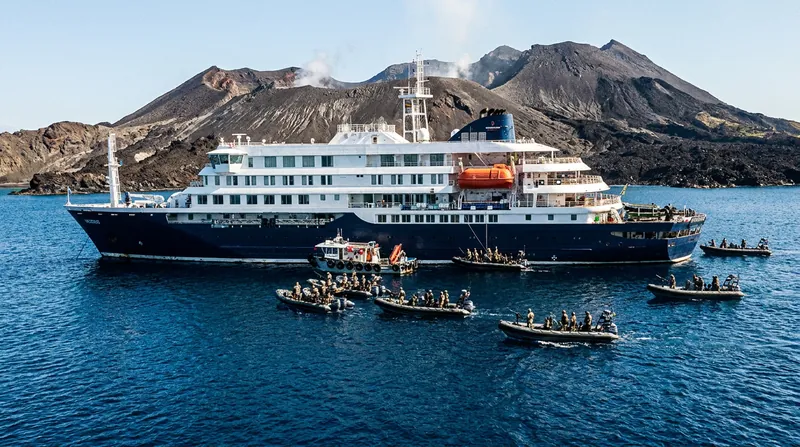
Containment and Evacuation of 147 People From the MV Hondius Andes Virus Outbreak
2 sources
Maritime Access
Port Clearance Rules That Allowed Turkey and Egypt to Bar an LGBTQ+ Cruise Ship
2 sources
Fjord Conservation
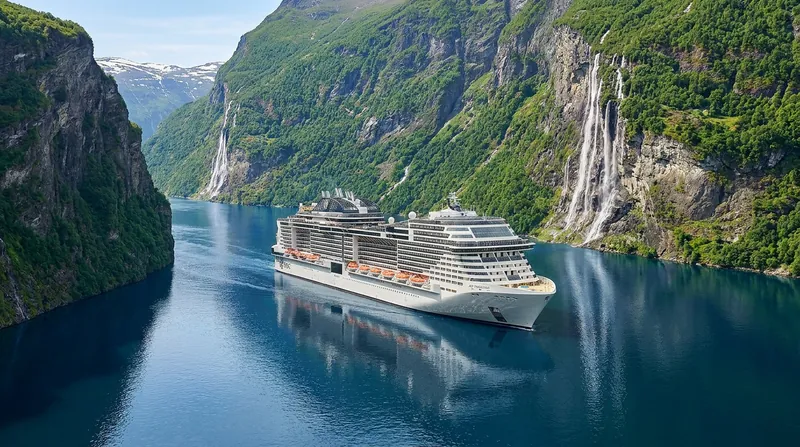
Norway's 2026 Fjord Zero-Emission Rules Force Refits While Delaying Mega-Ships
3 sources
Maritime Tech
The Engineering of Zero-Emissions Cruising: Inside the World's First Hydrogen-Powered Ship, the Viking Libra
1 sources
Comments
Every angle. Every day.
Get Travel stories with full source coverage and perspective breakdowns, free every day.