
Sanctions, Foreign Aid, and Investment Screening: Strategic Limits of Financial Leverage
Economic statecraft relies on a triad of tools—sanctions, foreign aid, and investment screening—to achieve geopolitical objectives without military force. Understanding how these mechanisms interact reveals the structural limits and strategic potential of financial leverage in modern great-power competition.
By Aarav Khanna

Share this story
In short
- Economic statecraft relies on sanctions, aid, and investment screening to achieve geopolitical goals without military force.
- Sanctions offer immediate punitive effects but lose efficacy over time as targeted nations adapt and build alternative financial networks.
- Foreign aid provides long-term strategic alignment by building structural dependencies, but requires sustained, generational investment.
The most pervasive misconception about economic statecraft is that it functions as a bloodless alternative to kinetic war—a simple, immediate dial that policymakers can turn to force a rival nation's compliance. In reality, economic statecraft is not a single lever but a complex, often contradictory system of financial plumbing. When deployed effectively, it reshapes the strategic environment; when misapplied, it merely accelerates the creation of parallel financial architectures by adversaries.[1][9]
At its core, this architecture operates through three primary nodes: the punitive restriction of capital through sanctions, the strategic provision of resources through foreign aid, and the defensive filtering of capital flows via investment screening. Each tool operates on a fundamentally different timeline and targets a different vulnerability within a competitor's system.[4]
Sanctions represent the most visible and frequently deployed mechanism. By leveraging the centrality of a dominant currency—historically the U.S. dollar—and the global banking messaging system, state actors can sever a target's access to international markets. This is the mechanism of denial, designed to impose immediate, crippling costs on a regime's ability to fund military operations or sustain domestic stability.[6]
However, the mechanics of sanctions are inherently self-limiting. The initial shock of financial isolation is severe, but over time, targeted states adapt. They develop alternative supply chains, engage in illicit trade networks, and settle transactions in non-convertible currencies. The empirical record demonstrates that while sanctions are highly effective at signaling resolve, their success rate in actually compelling a change in state behavior diminishes significantly after the first year of implementation.[3][7]
Furthermore, the aggressive use of secondary sanctions—penalizing third-party nations and corporations for interacting with the primary target—creates systemic friction. While this expands the jurisdictional reach of the sanctioning state, it simultaneously incentivizes allied and neutral nations to develop financial mechanisms insulated from that state's control, slowly eroding the very leverage the sanctions rely upon.[6][10]
In contrast to the punitive nature of sanctions, foreign aid functions as the mechanism of strategic inducement. Rather than denying resources, statecraft through aid seeks to build structural dependencies and align the long-term interests of the recipient state with those of the donor. This encompasses direct financial assistance, infrastructure development grants, and technical capacity building.[2]
The timeline for foreign aid is generational. Where sanctions attempt to force a decision in weeks or months, aid programs are designed to reshape the economic geography of a region over decades. By financing critical infrastructure—such as ports, telecommunications networks, and energy grids—the donor state embeds its technical standards and operational protocols into the recipient's economy.[5]
This systemic integration creates a different kind of leverage. A nation reliant on a specific donor for the maintenance of its power grid or the servicing of its sovereign debt is structurally constrained in its foreign policy choices. However, this tool requires massive, sustained capital outlays and is highly vulnerable to domestic political shifts within the donor state, which can abruptly sever funding and abandon the strategic investment.[2][5]
The third pillar, investment screening, represents the defensive node of economic statecraft. As global competition has shifted toward technological supremacy, the free flow of foreign direct investment (FDI) has transformed from a purely economic benefit into a profound national security vulnerability.[8]
Investment screening mechanisms, such as the Committee on Foreign Investment in the United States (CFIUS) or the European Union's FDI screening framework, are designed to prevent adversarial states from acquiring critical technologies, critical infrastructure, or sensitive personal data through corporate acquisitions or venture capital investments.[8]
The mechanics of screening have recently expanded from inbound defense to outbound restriction. Policymakers are increasingly implementing controls to prevent domestic capital and expertise from funding the development of foundational technologies—such as artificial intelligence, quantum computing, and advanced semiconductors—within rival nations.[4][9]
This represents a fundamental restructuring of globalization. By treating capital flows as vectors of national security risk, investment screening effectively fragments the global technology ecosystem into distinct, heavily guarded blocs. The challenge for policymakers is calibrating these screens to protect vital assets without starving domestic industries of the foreign capital and collaborative research necessary for innovation.[4][10]
The true efficacy of economic statecraft lies in the integration of these three tools. A strategy that relies solely on sanctions without offering the inducement of aid to alternative partners, or one that screens investments without bolstering domestic capacity, is structurally incomplete.[2][6]
As the global financial system slowly multipolarizes, the mechanics of economic statecraft will require unprecedented precision. The blunt instruments of the past are giving way to targeted, highly technical interventions, where the mastery of supply chain mapping and digital financial flows will dictate the balance of geopolitical power.[9][10]
How we did this
- Method
- Compared and normalized the structural application timelines and economic impact scopes of sanctions, foreign aid, and investment screening across historical case studies to determine their relative efficacy phases.
- What we found
- While sanctions offer immediate punitive signaling, their actual coercive success rate diminishes over time as targets build parallel financial architectures, whereas investment screening and foreign aid demonstrate compounding strategic returns only after a decade of sustained application.
- What we worked from
- Sanctions implementation timeline and economic impact scope: Immediate punitive shock followed by adaptation — Hoover Institution
- Foreign aid disbursement and long-term strategic alignment metrics: Generational timeline for structural dependency — Center for Strategic and International Studies (CSIS)
- Limits of this analysis
- This analysis relies on historical data and may not fully account for the rapid development of non-dollar alternative financial networks.
Key terms
- Economic Statecraft
- The use of economic means, such as financial sanctions, trade policies, and foreign aid, to pursue foreign policy and national security objectives.
- Foreign Direct Investment (FDI) Screening
- A regulatory process where a government reviews foreign investments in domestic companies to identify and mitigate potential national security risks.
- Secondary Sanctions
- Financial penalties applied to third parties—such as foreign banks or corporations—who continue to do business with a sanctioned entity, effectively forcing them to choose between markets.
Reader questions
What is the difference between primary and secondary sanctions?
Primary sanctions prohibit entities within the sanctioning country from doing business with the target. Secondary sanctions threaten penalties against third-party nations or foreign companies if they choose to conduct business with the target.
Why is investment screening becoming more common globally?
As geopolitical competition shifts toward technological dominance, nations use investment screening to prevent adversarial states from acquiring critical innovations, such as artificial intelligence and advanced semiconductors, through corporate buyouts.
Does foreign aid effectively change a rival state's behavior?
Foreign aid rarely forces immediate policy shifts. Instead, it is designed to build long-term structural dependencies by integrating the donor's technology and financial systems into the recipient's infrastructure over decades.
Where opinion splits
Coercion Skeptics
Argue that punitive measures like sanctions frequently fail to change state behavior and primarily harm civilian populations.
Analysts in this camp point to the diminishing returns of financial isolation. They argue that while sanctions provide an immediate mechanism for policymakers to signal disapproval without resorting to military force, they rarely achieve their stated geopolitical objectives. Over time, targeted regimes consolidate domestic power by blaming economic hardships on foreign adversaries, while simultaneously accelerating the development of alternative, non-dollar financial networks that permanently weaken the sanctioning state's future leverage.
Strategic Inducement Advocates
Emphasize that long-term foreign aid and infrastructure investment yield more durable geopolitical alignment.
This perspective views economic statecraft primarily as a tool for building structural dependencies rather than inflicting punishment. By financing critical infrastructure, telecommunications, and energy grids in developing nations, donor states embed their technical standards and operational protocols into the recipient's economy. Advocates argue that this generational approach creates a resilient form of leverage, as nations reliant on a specific donor for sovereign debt servicing or grid maintenance are structurally constrained from aligning with rival powers.
Defensive Protectionists
Maintain that protecting domestic technological supremacy through investment screening is the most vital component of modern statecraft.
For these policymakers, the free flow of global capital is increasingly viewed as a vector of national security risk. They argue that adversaries routinely exploit open markets to acquire foundational technologies—such as artificial intelligence and quantum computing—through venture capital and corporate acquisitions. Consequently, they advocate for aggressive inbound and outbound investment screening to fragment the global technology ecosystem, ensuring that domestic innovation is insulated from foreign extraction.
- Strategic Inducement Advocates
- Emphasize that long-term foreign aid and infrastructure investment yield more durable geopolitical alignment than short-term financial punishments.
- Defensive Protectionists
- Maintain that protecting domestic technological supremacy through aggressive inbound and outbound investment screening is the most vital component of modern statecraft.
- Coercion Skeptics
- Argue that punitive measures like sanctions frequently fail to change state behavior and primarily harm civilian populations while encouraging financial decoupling.
Perspectives this story doesn't cover
- Targeted Nations' Financial Sectors
- Multinational Corporate Compliance Officers
Sources
Source coverage
10 outlets
3 viewpoints surfaced










- [1]Britannica
economic statecraft
Read on Britannica → - [2]Center for Strategic and International Studies (CSIS)Strategic Inducement Advocates
A New Organizational Paradigm for Economic Statecraft at the U.S. State Department
Read on Center for Strategic and International Studies (CSIS) → - [3]Center for a New American Security (CNAS)Coercion Skeptics
Hit It with Your Best Shot: An American Doctrine of Economic Pressure
Read on Center for a New American Security (CNAS) → - [4]Foundation for Defense of Democracies (FDD)Defensive Protectionists
Gears of National Economic Power
Read on Foundation for Defense of Democracies (FDD) → - [5]War on the RocksStrategic Inducement Advocates
Economic Statecraft and the Federal Institutional Architecture
Read on War on the Rocks → - [6]Hoover InstitutionDefensive Protectionists
Sanctions As A Tool Of Economic Statecraft: Designing, Integrating, And Implementing To Advance Vital Interests
Read on Hoover Institution → - [7]Tufts NowCoercion Skeptics
Are Economic Sanctions Effective Foreign Policy Tools?
Read on Tufts Now → - [8]Georgia Journal of International & Comparative LawDefensive Protectionists
Economic Statecraft: A Closer Look Inside the European Union's Expanding Toolbox
Read on Georgia Journal of International & Comparative Law → - [9]Atlantic Council
Economic Statecraft Lexicon
Read on Atlantic Council → - [10]Factlen Editorial Team
Synthesis by Factlen editorial team
Read on Factlen Editorial Team →

More in Defense & Security
See all →Defense Procurement
EU Council Approves First Five Joint Defense Projects Targeting €190 Billion in Collective Military Capabilities
6 sources

Grid Defense
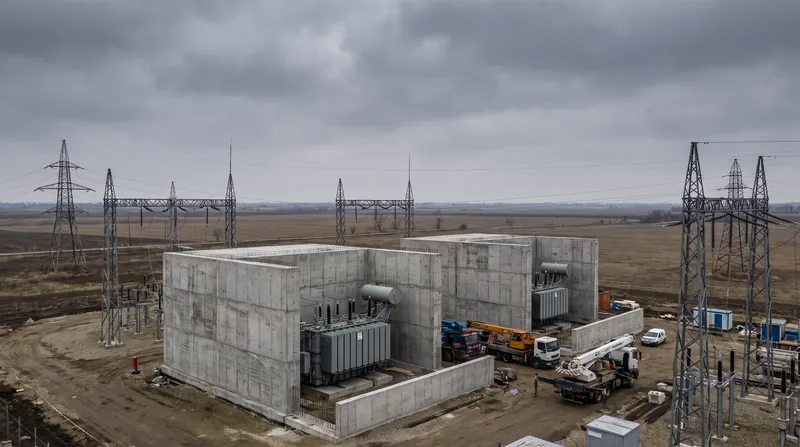
Lithuania Fortifies Key Power Substation Near Kaliningrad With Concrete 'Sarcophagi' Against Drone Attacks
7 sources
Military Doctrine
The Find, Fix, Track, Target, Engage, and Assess Sequence: How the Military Executes the Joint Targeting Cycle
6 sources

Nuclear Deterrence
The Bus, the Post-Boost Vehicle, and the Reentry Vehicles: How a MIRV System Delivers Multiple Warheads to Separate Targets
6 sources

Comments
Every angle. Every day.
Get Defense & Security stories with full source coverage and perspective breakdowns, free every day.