
The Mechanics of a Mega-IPO: How the Anticipated SpaceX Listing Could Reshape Public Markets
As SpaceX prepares for a highly anticipated initial public offering, financial analysts are breaking down how the mechanics of a 'mega-IPO' will impact global capital flows, investment banks, and everyday investors.
By Factlen Editorial Team
- Institutional Underwriters
- Investment banks focused on structuring the deal, managing market volatility, and generating significant fee revenue.
- Retail Investors
- Everyday market participants eager for access to a generational growth story, despite structural disadvantages in early allocation.
- Space Economy Analysts
- Industry observers who view the listing as a massive catalyst that will unlock funding for the broader aerospace supply chain.
What's not represented
- · Venture Capital Backers seeking liquidity
- · Competitors facing a newly capitalized rival
Why this matters
Understanding the mechanics of a mega-IPO empowers investors to navigate the volatility and opportunities that arise when a generational private company finally enters the public markets. It demystifies how Wall Street prices innovation and how everyday portfolios are ultimately affected.
Key points
- A mega-IPO involves complex coordination between the issuing company, the SEC, and Wall Street underwriters.
- Investment banks use a 'roadshow' and 'book building' to gauge institutional demand and set the initial share price.
- Retail investors typically cannot access IPO shares at the offering price and must wait for open market trading.
- A successful mega-listing can create a 'halo effect,' boosting valuations across the company's broader industry sector.
- Eventual inclusion in major stock indices forces passive funds to buy the stock, providing long-term price support.
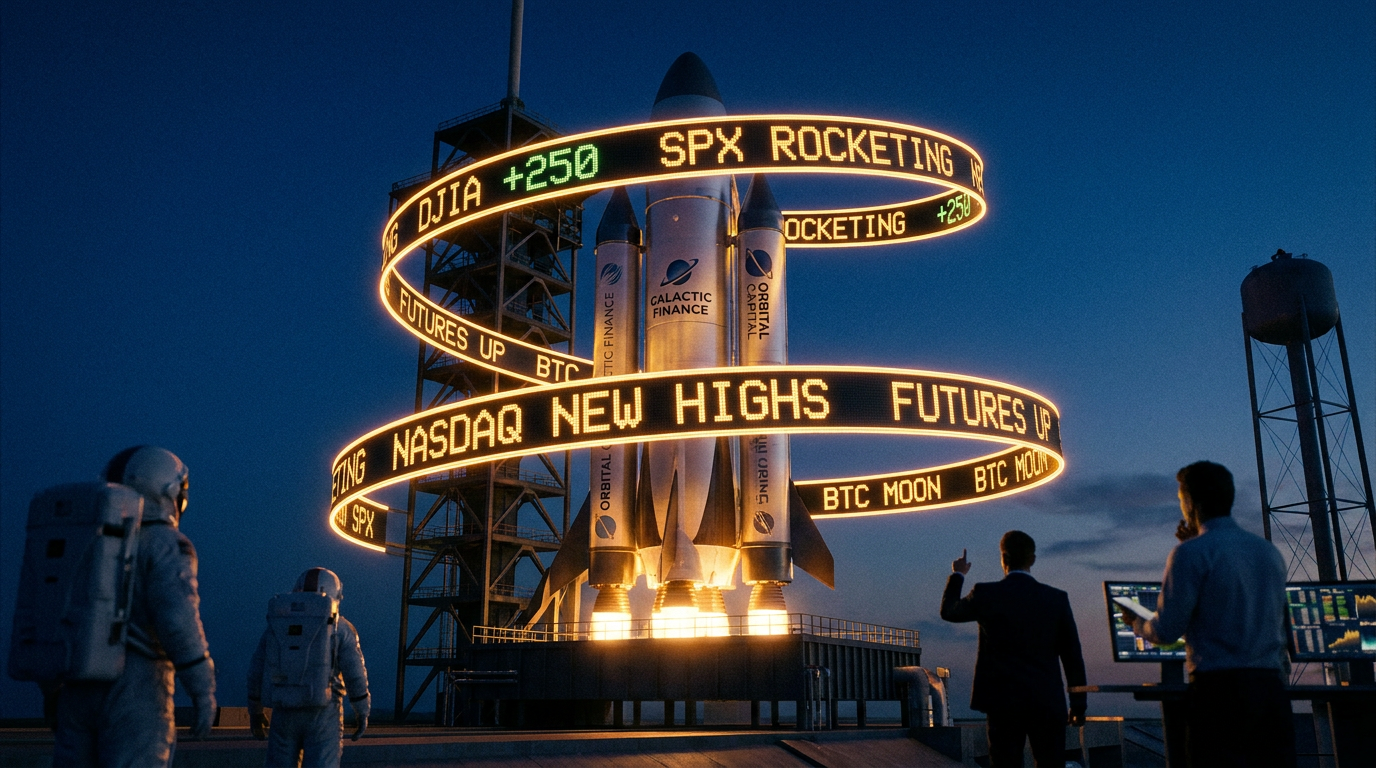
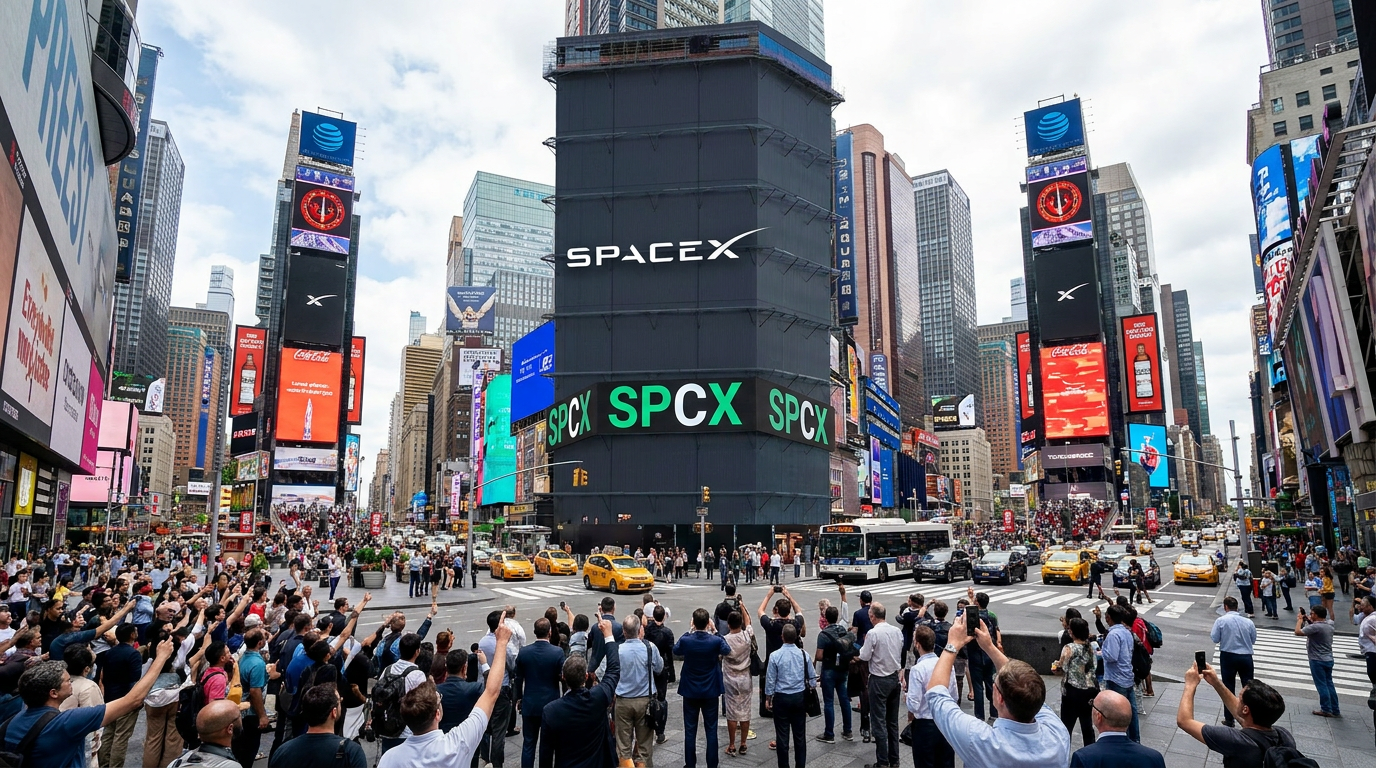
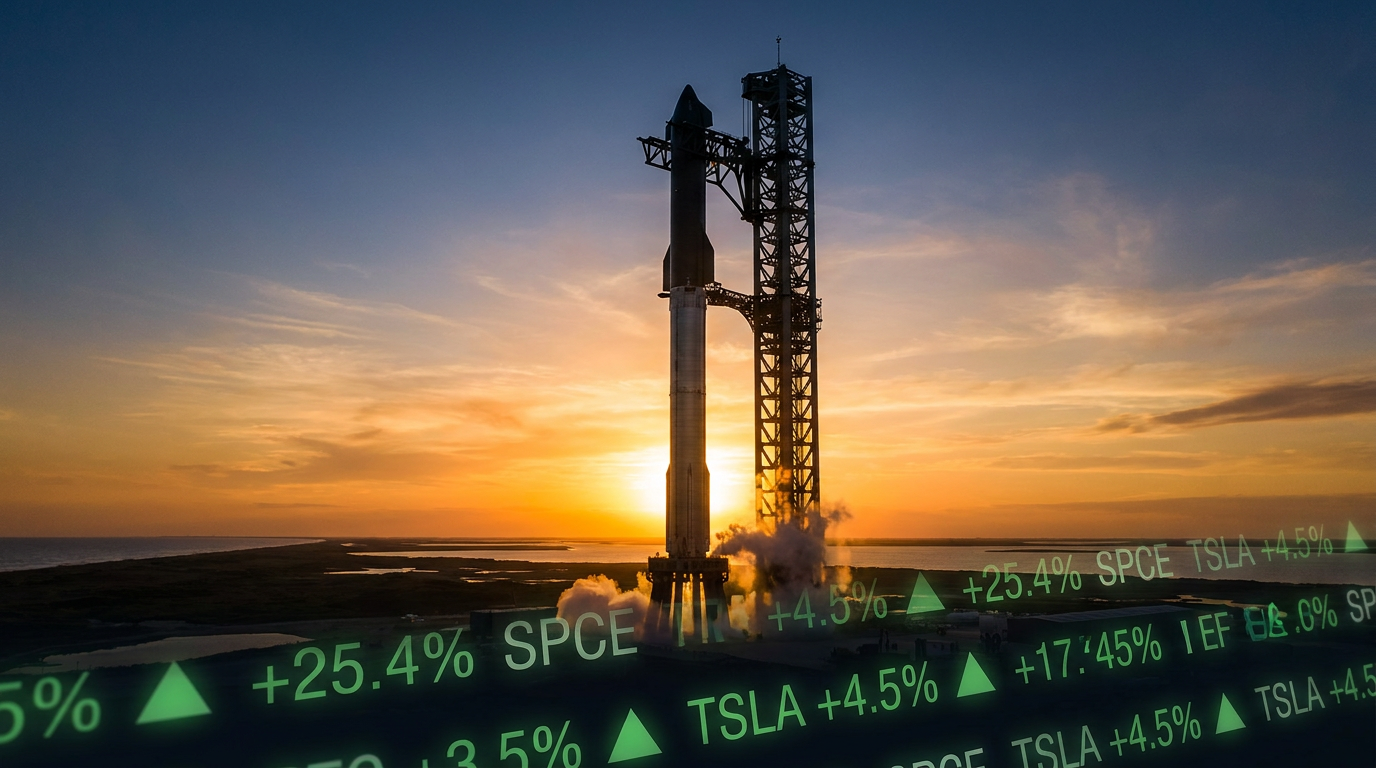
For years, the commercial space race has been largely funded behind closed doors, accessible only to venture capitalists and institutional heavyweights. Now, as SpaceX edges closer to a highly anticipated Initial Public Offering (IPO), the financial world is preparing for what could be one of the largest public listings in history. With private market valuations reportedly crossing the $200 billion threshold, the transition from a privately held aerospace pioneer to a publicly traded behemoth is not just a milestone for space exploration—it is a massive liquidity event that will ripple through global capital markets.[3][6]
To understand the gravity of this event, it is essential to unpack the mechanics of a 'mega-IPO.' An IPO is the process by which a private company offers shares to the public in a new stock issuance, allowing it to raise capital from public investors. A mega-IPO typically refers to a listing that raises upwards of $5 billion to $10 billion in fresh capital. These rare events require immense coordination between the issuing company, regulatory bodies, and the Wall Street investment banks that serve as underwriters.[4][6]
The underwriting process is the engine room of any public offering. Investment banks like JPMorgan, Goldman Sachs, and Morgan Stanley act as intermediaries between the company and the investing public. They help determine the initial offer price, buy the shares from the company, and then sell them to investors through their distribution networks. Recent analysis suggests that the sheer scale of a SpaceX listing could generate extraordinary trading income and underwriting fees for these banks, providing a significant upside that some market watchers believe is currently overlooked.[1][5]
Before a single share can be traded on an exchange, the company must file an S-1 registration statement with the U.S. Securities and Exchange Commission (SEC). This exhaustive document strips away the secrecy of private ownership, requiring the company to disclose its business model, financial health, risk factors, and the specific intended use of the capital it plans to raise. For a company involved in advanced aerospace manufacturing and satellite internet deployment, the S-1 will provide unprecedented transparency into the economics of modern spaceflight.[4][6]

Once the SEC clears the filing, the underwriters embark on a 'roadshow.' During this phase, company executives pitch the investment thesis to large institutional investors—pension funds, mutual funds, and sovereign wealth funds. The goal is 'book building,' a process where underwriters collect indications of interest from these heavy-hitters to gauge demand. If demand vastly exceeds the number of shares available, the offering is considered 'oversubscribed,' which often allows the underwriters to raise the final IPO price before the stock debuts on the open market.[4][5]
The global appetite for a piece of the space economy is proving to be unprecedented. Foreign investors are reportedly showing historic demand for the upcoming listing, eager to gain exposure to a sector that promises to define the next century of technological infrastructure. Interestingly, foreign exchange analysts note that while international capital is flowing toward U.S. equities to capture this IPO, it is not necessarily triggering a massive frenzy of dollar-buying, as many large institutions already hold significant dollar reserves or use complex hedging strategies.[2][6]
For retail investors—everyday individuals managing their own brokerage accounts—accessing a mega-IPO at the initial offering price is notoriously difficult. Underwriters typically allocate the lion's share of the stock to their preferred institutional clients. Retail investors usually have to wait until the stock officially begins trading on an exchange, such as the Nasdaq or the New York Stock Exchange. By the time the opening bell rings and the first public trades are executed, the price may have already surged significantly above the initial offering price, a phenomenon known as the 'IPO pop.'[4][5]
For retail investors—everyday individuals managing their own brokerage accounts—accessing a mega-IPO at the initial offering price is notoriously difficult.
However, the impact of a mega-IPO extends far beyond the first day of trading. One of the most significant secondary effects is the 'halo effect' it casts over the broader sector. When a market leader goes public at a premium valuation, it establishes a new pricing benchmark. This often leads to a revaluation of smaller, publicly traded competitors and suppliers within the same industry. A successful SpaceX debut could inject fresh capital and investor enthusiasm into the entire aerospace and defense supply chain.[3][6]

Another critical mechanism is passive index inclusion. If a newly public company is large enough, it will eventually be added to major stock indices like the S&P 500 or the Nasdaq 100. When this happens, every passive index fund and Exchange Traded Fund (ETF) that tracks those benchmarks is forced to buy the stock to accurately reflect the index's composition. This creates a massive, automated wave of buying pressure that can provide long-term support for the stock price, regardless of day-to-day market sentiment.[1][6]
To prevent the market from being flooded with shares immediately after the IPO, regulators and underwriters enforce a 'lock-up period.' This is a legally binding contract that prevents company insiders, early employees, and venture capital backers from selling their shares for a specified duration—typically 90 to 180 days after the listing. The lock-up period ensures that the stock price has time to stabilize without the downward pressure of massive insider sell-offs.[4][5]
When the lock-up period eventually expires, it marks another critical juncture for the stock. The sudden increase in the supply of tradable shares, known as the 'float,' can lead to increased volatility. Savvy investors often mark lock-up expiration dates on their calendars, as the influx of supply can create short-term price dips, presenting potential buying opportunities for those who missed the initial offering.[4][6]

Despite the excitement, mega-IPOs are not without risks. Academic studies of pricing dynamics in massive public offerings show that while the initial pop can be lucrative, long-term performance is heavily dependent on the company's ability to meet the lofty growth expectations set during the roadshow. If a newly public company misses its first few quarterly earnings targets, the market's punishment can be swift and severe, leading to a rapid valuation reset.[5][6]
Furthermore, the transition from a private entity to a public one requires a profound cultural shift within the company. Management must pivot from optimizing for long-term, visionary milestones to balancing those goals with the rigorous, quarter-by-quarter scrutiny of Wall Street analysts. This tension between long-term innovation and short-term financial performance is a tightrope that every newly public tech giant must learn to walk.[5][6]
As the financial plumbing is laid for this monumental listing, secondary markets—where private shares are traded among accredited investors before an IPO—are providing a real-time gauge of sentiment. These private transactions have been the primary driver pushing the implied valuation past the $200 billion mark, signaling that institutional conviction in the commercial space thesis remains incredibly strong despite broader macroeconomic uncertainties.[3][6]

Ultimately, the mechanics of a mega-IPO serve as a bridge between private innovation and public wealth creation. By navigating the complex labyrinth of SEC filings, underwriter negotiations, and global roadshows, a company does more than just raise capital; it democratizes access to its financial future. For investors watching from the sidelines, understanding these underlying forces transforms a chaotic market event into a legible, structured financial milestone.[4][6]
How we got here
Pre-IPO Phase
The company operates privately, raising capital through venture funding rounds and secondary market trading.
S-1 Filing
The company submits its comprehensive financial and operational disclosures to the SEC.
The Roadshow
Executives and underwriters pitch the stock to large institutional investors to build the order book.
Pricing Night
Underwriters finalize the initial offering price based on institutional demand.
Opening Bell
The stock officially begins trading on a public exchange, becoming available to retail investors.
Lock-up Expiration
Typically 90 to 180 days later, insiders are permitted to sell their early shares on the open market.
Viewpoints in depth
Institutional Underwriters
Investment banks view mega-IPOs as crucial revenue generators and market-stabilizing events.
For major Wall Street banks, underwriting a mega-IPO is highly lucrative. They earn substantial fees—often a percentage of the total capital raised—for structuring the deal, navigating regulatory hurdles, and leveraging their massive distribution networks. Beyond the immediate financial windfall, leading a high-profile offering bolsters a bank's prestige and helps secure future corporate advisory roles. Their primary objective during the pricing phase is to find the 'Goldilocks' zone: pricing the stock high enough to maximize the capital raised for the company, but leaving just enough upside to ensure their institutional clients see a profitable first-day 'pop.'
Retail Investors
Everyday traders seek access to generational growth, despite structural barriers in the IPO process.
The retail investing community often views mega-IPOs with a mix of intense enthusiasm and structural frustration. Because underwriters allocate the vast majority of initial shares to preferred institutional clients, retail investors are usually forced to buy on the secondary market after the stock has already experienced its initial price surge. Despite this disadvantage, retail demand remains a powerful force. For everyday investors, a mega-IPO represents a rare opportunity to add a pure-play, high-growth innovator to their personal portfolios, shifting wealth creation from private venture capital back to the public domain.
Space Economy Analysts
Industry experts see the listing as a watershed moment that will validate and fund the broader aerospace sector.
Analysts covering the commercial space sector look beyond the immediate financial mechanics of the IPO. They view a successful mega-listing as a fundamental validation of the 'space economy' thesis. When a flagship company achieves a massive public valuation, it lowers the cost of capital for the entire industry. Suppliers, secondary launch providers, and satellite manufacturers often experience a surge in investment as public markets become more comfortable with the economics of spaceflight. For these analysts, the IPO is less about a single company's stock price and more about unlocking the trillions of dollars required to build next-generation orbital infrastructure.
What we don't know
- The exact date the S-1 registration statement will be filed with the SEC.
- The final proportion of shares that will be allocated to retail investors versus institutional funds.
- How broader macroeconomic conditions, such as interest rates, will impact the final IPO pricing.
Key terms
- Underwriter
- An investment bank that manages the IPO process, helps set the initial price, and distributes the shares to institutional investors.
- Book Building
- The process by which underwriters collect bids from institutional investors to determine the demand and final price of the IPO.
- Lock-up Period
- A predetermined timeframe, usually 90 to 180 days after an IPO, during which early investors and employees are legally restricted from selling their shares.
- Float
- The total number of a company's shares that are publicly owned and available for trading on the open market.
- Oversubscribed
- A situation where the demand for a new issue of stock is greater than the number of shares actually available.
Frequently asked
Can everyday investors buy shares before the IPO?
Generally, no. Pre-IPO shares are typically restricted to accredited investors, venture capital firms, and institutional funds trading on private secondary markets.
What is an S-1 filing?
An S-1 is a mandatory document filed with the SEC before a company goes public. It provides a comprehensive look at the company's financials, business model, and risk factors.
Why does the stock price often jump on the first day?
If institutional demand during the 'book building' phase vastly exceeds the number of shares available, that pent-up demand floods the open market on day one, driving the price up.
What happens when a lock-up period expires?
Company insiders and early investors are finally allowed to sell their shares. This sudden increase in the supply of tradable stock can sometimes cause temporary downward pressure on the price.
Sources
Source coverage
6 outlets
3 viewpoints surfaced





[1]MarketWatchInstitutional Underwriters
JPMorgan says investors are overlooking the upside to Wall Street banks that comes from SpaceX and other mega IPOs
Read on MarketWatch →The SpaceX IPO is drawing historic demand from foreign investors. But don’t expect a dollar-buying frenzy.
Read on MarketWatch →[3]BloombergSpace Economy Analysts
SpaceX Valuation Crosses $200 Billion Ahead of Potential Public Listing
Read on Bloomberg →[4]U.S. Securities and Exchange CommissionRetail Investors
Initial Public Offerings: A Guide for Investors
Read on U.S. Securities and Exchange Commission →[5]Journal of Financial EconomicsInstitutional Underwriters
Pricing Dynamics and Underwriter Behavior in Mega-IPOs
Read on Journal of Financial Economics →[6]Factlen Editorial TeamSpace Economy Analysts
Synthesis by Factlen editorial team
Read on Factlen Editorial Team →
Every angle. Every day.
Get finance stories with full source coverage and perspective breakdowns delivered to your inbox.