
The Mechanics of a Mega-IPO: How Retail Investors Can Navigate the SpaceX Debut
As SpaceX prepares for its historic public market debut, understanding the structural mechanics of mega-IPOs—from lock-up periods to index inclusion—can help investors evaluate the opportunity without succumbing to hype.
By Factlen Editorial Team

- Fundamental Analysts
- Advise waiting for S-1 data, public earnings reports, and the expiration of lock-up periods before investing.
- Institutional Underwriters
- Focus on pricing the initial offering to ensure a successful market launch and reward early institutional backers.
- Retail Momentum Traders
- Driven by brand enthusiasm and utilize the immediate liquidity event and leveraged products to capture short-term volatility.
What's not represented
- · Early company employees holding private equity
- · Venture capital firms seeking exit liquidity
Why this matters
Mega-IPOs often generate intense media coverage that can pressure retail investors into making rushed decisions. By understanding the structural mechanics of how a company goes public, investors can evaluate these opportunities based on fundamentals rather than the fear of missing out.
Key points
- Mega-IPOs involve complex mechanics like S-1 filings, roadshows, and underwriter pricing before shares ever reach the public.
- The famous first-day 'pop' in stock price primarily benefits institutional investors who bought at the offering price.
- Retail investors face risks from FOMO and inflated secondary-market prices on the first day of trading.
- Lock-up expirations, typically 90 to 180 days post-IPO, can introduce sudden supply and downward pressure on the stock.
- Inclusion in major indices forces passive funds to buy the stock, creating a structural floor of demand.
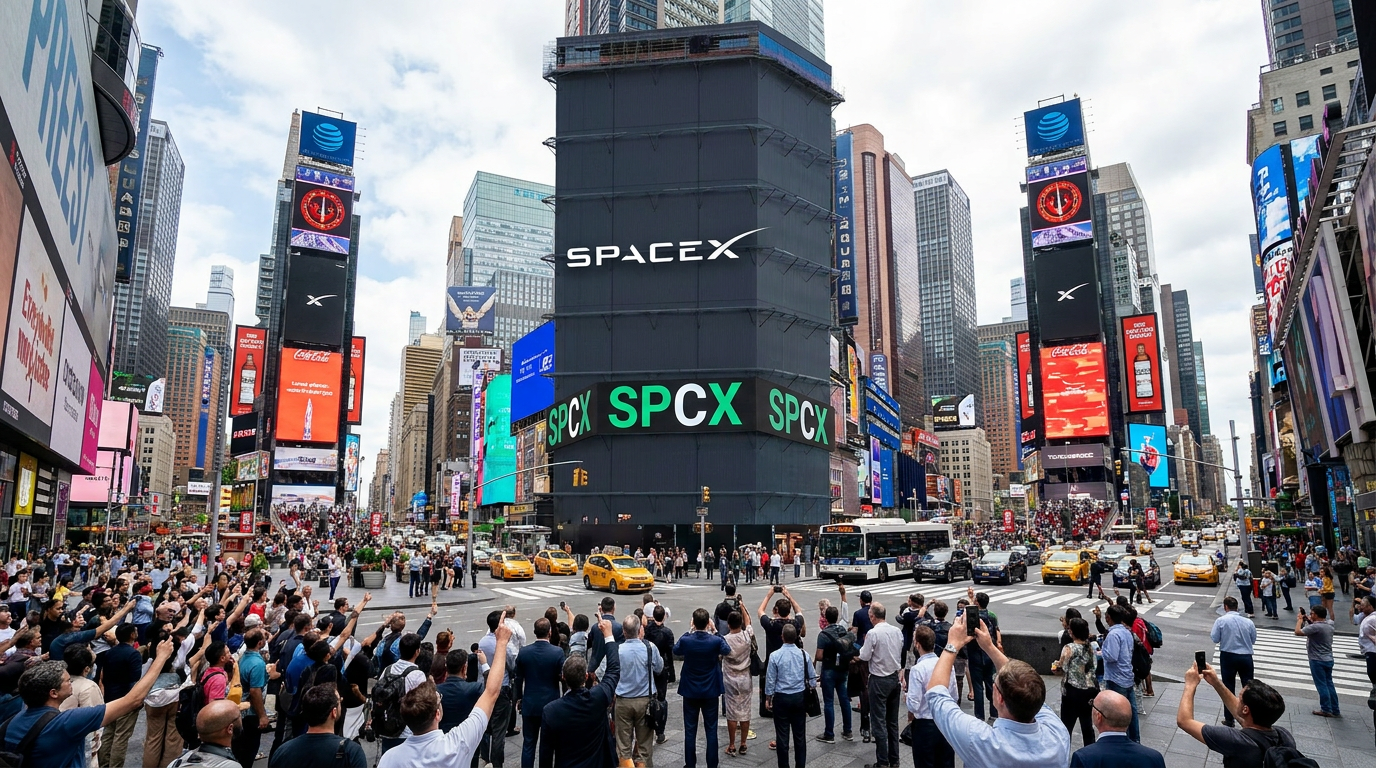
The impending initial public offering (IPO) of SpaceX is dominating financial news cycles, drawing historic levels of demand from both domestic and foreign investors eager to own a piece of the space economy.[2]
But beyond the headlines of reusable rockets and satellite internet networks, a mega-IPO of this scale offers a masterclass in the mechanics of modern public markets. Understanding how these events are structured is crucial for any investor looking to participate.[6]
The process begins long before the first share is traded on an exchange. A company must first file an S-1 registration statement with the Securities and Exchange Commission (SEC), a comprehensive document detailing its audited financials, business model, and potential risk factors.[3]
Following the S-1 filing, the company's executive team and their underwriting investment banks embark on a "roadshow." During this phase, they pitch the stock to large institutional investors—such as pension funds and mutual funds—to gauge demand and establish the initial offering price.[3]

When shares finally hit the open market, they frequently experience a first-day "pop." Academic research into market mechanics shows that underwriters historically underprice IPOs by an average of 15% to 20% to ensure a successful launch and reward early institutional backers.[5]
However, this initial price surge primarily benefits the institutional investors who were granted access at the underwritten offering price. Retail investors buying on the open exchange on day one are typically purchasing shares after this premium has already been priced in.[5]
This dynamic is why financial advisors frequently warn against buying into a highly anticipated IPO on its first day of trading. The fear of missing out (FOMO) can drive retail investors to purchase shares at inflated secondary-market prices, exposing them to immediate volatility.[1]
This dynamic is why financial advisors frequently warn against buying into a highly anticipated IPO on its first day of trading.
For older investors, particularly those in or near retirement, allocating a significant portion of a portfolio to a newly public, highly volatile stock can introduce dangerous sequence-of-returns risk, where early losses disproportionately damage long-term wealth.[1]

A critical mechanic that retail investors must watch is the "lock-up period." This is an SEC-regulated window, typically lasting 90 to 180 days after the IPO, during which company insiders, founders, and early private equity investors are legally prohibited from selling their shares.[3]
When the lock-up period expires, a massive influx of previously restricted shares can suddenly flood the market. This sudden increase in supply often creates downward pressure on the stock price, which is why many fundamental analysts prefer to wait until after this period to initiate a position.[6]
Another unique structural factor for a company of SpaceX's size is its anticipated fast-track inclusion into major market indices, such as the Nasdaq 100. Index methodology dictates specific market capitalization and liquidity requirements for entry.[4]
Once a mega-cap company is officially added to an index, passive index funds and exchange-traded funds (ETFs) that track that benchmark are structurally forced to purchase the stock to accurately reflect the index's new weighting.[4]

This forced buying by passive funds creates a structural floor of demand for the stock, independent of the company's day-to-day fundamental performance or retail sentiment.[6]
Simultaneously, the broader financial industry often prepares derivative products to capitalize on the event. For highly anticipated debuts, asset managers frequently launch leveraged ETFs designed to offer amplified bullish or bearish bets on the newly public stock.[1]
While these leveraged tools offer the potential for magnified returns, they also compound losses and suffer from volatility decay. They are generally designed for short-term day trading rather than long-term, buy-and-hold investing.[6]
Ultimately, a mega-IPO is a complex financial ecosystem with multiple moving parts. By focusing on the structural mechanics—S-1 disclosures, lock-up expirations, and index fund flows—retail investors can navigate the noise, ignore the hype, and make informed, long-term portfolio decisions.[6]
How we got here
Pre-IPO
The company operates privately, raising capital from venture capital and private equity firms.
S-1 Filing
The company publicly discloses its audited financials and risk factors to the SEC.
The Roadshow
Management pitches institutional investors to gauge market demand and establish an offering price.
Pricing
Underwriters set the final per-share price for the initial institutional buyers.
Day 1 Trading
Shares become available to retail investors on the open exchange, often at a premium.
Lock-Up Expiration
90 to 180 days later, insiders and early investors are legally permitted to sell their shares.
Viewpoints in depth
Fundamental Analysts
Advocate for patience, urging investors to wait for public earnings reports and the expiration of lock-up periods.
Fundamental analysts argue that the initial days of a mega-IPO are driven purely by sentiment and supply-demand imbalances rather than true corporate valuation. They recommend that retail investors wait two to four quarters to see how the company performs under the scrutiny of public earnings calls. Furthermore, they emphasize waiting for the 90-to-180-day lock-up period to expire, as the sudden influx of insider shares often provides a more attractive, stabilized entry point for long-term positions.
Retail Momentum Traders
Focus on the immediate liquidity event, utilizing volatility to capture short-term gains.
Momentum traders view mega-IPOs not as long-term investments, but as high-probability volatility events. They capitalize on the massive retail enthusiasm and media coverage that drives the stock's first-day 'pop.' By utilizing leveraged ETFs and options contracts, these traders attempt to ride the wave of forced buying and FOMO, often exiting their positions within days or even hours before the initial hype subsides and fundamental valuation metrics take over.
Passive Indexers
Rely on the automatic inclusion of mega-cap companies into major indices to gain exposure.
Passive investors largely ignore the noise of the IPO day entirely. They understand that if a newly public company is large enough—such as a mega-cap tech or aerospace firm—it will inevitably be added to major benchmarks like the S&P 500 or the Nasdaq 100. By simply holding broad market index funds, these investors automatically gain proportional exposure to the company once it meets the index's inclusion criteria, entirely avoiding the risks of first-day price discovery and individual stock picking.
What we don't know
- The exact pricing and valuation multiples the underwriters will settle on before the stock begins trading.
- How much downward pressure the stock will face once the insider lock-up period officially expires.
- The precise timeline for when the company will meet all regulatory requirements for major index inclusion.
Key terms
- S-1 Filing
- The initial registration form required by the SEC for public companies, detailing financials, business operations, and risks.
- Lock-Up Period
- A predetermined window, usually 90 to 180 days after an IPO, during which company insiders cannot sell their shares.
- Underwriter
- Financial institutions, typically investment banks, that manage the IPO process, gauge demand, and price the initial shares.
- Underpricing
- The practice of listing an IPO slightly below its perceived market value to ensure a first-day price increase and a successful launch.
Frequently asked
Can retail investors buy shares at the IPO offering price?
Typically, no. The initial offering price is usually reserved for institutional investors and high-net-worth clients of the underwriting banks. Retail investors usually buy shares on the open market after trading begins.
What happens when an IPO lock-up period expires?
A large number of shares held by company insiders and early investors become eligible for sale. This sudden increase in supply can temporarily drive down the stock price.
Why do index funds automatically buy newly public mega-cap stocks?
If a company is large enough to be added to major indices like the Nasdaq 100, passive funds tracking those indices are structurally required to buy shares to match the index's new weighting.
Sources
Source coverage
6 outlets
3 viewpoints surfaced





[1]MarketWatchRetail Momentum Traders
SpaceX IPO hype is massive — and the FOMO can ruin your retirement
Read on MarketWatch →The SpaceX IPO is drawing historic demand from foreign investors. But don’t expect a dollar-buying frenzy.
Read on MarketWatch →[3]SEC.govFundamental Analysts
Investor Bulletin: Investing in an IPO
Read on SEC.gov →[4]NasdaqInstitutional Underwriters
Nasdaq-100 Index Methodology
Read on Nasdaq →[5]SSRNInstitutional Underwriters
Initial Public Offerings: A Synthesis of the Literature and Directions for Future Research
Read on SSRN →[6]Factlen Editorial TeamFundamental Analysts
Synthesis by Factlen editorial team
Read on Factlen Editorial Team →
Every angle. Every day.
Get finance stories with full source coverage and perspective breakdowns delivered to your inbox.