
The Last Dance: Messi and Ronaldo's Diverging Paths at the 2026 World Cup
As Lionel Messi and Cristiano Ronaldo embark on their historic sixth FIFA World Cup, their opening matches have painted a starkly contrasting picture of their athletic twilight.
By Ryder James

Share this story
The 2026 FIFA World Cup across North America was always destined to serve as the grand finale for the two men who have monopolized football's global spotlight for nearly two decades. As the expanded 48-team tournament kicked off across the United States, Canada, and Mexico, both Lionel Messi and Cristiano Ronaldo made history simply by stepping onto the pitch, becoming the first players in the sport's history to appear in six World Cups.
Yet, as the opening week of group-stage action concluded, the contrasting fortunes of the 38-year-old Argentine playmaker and the 41-year-old Portuguese striker have become the defining narrative of the tournament's early days. Their diverging starts highlight not only the different ways elite athletes navigate their athletic twilight but also the immense pressure their respective nations face in maximizing their final moments on the world stage.[4]
For Messi, the script could not have been written more perfectly. Exactly twenty years to the day after making his World Cup debut as a teenager in Germany, the defending champion led Argentina out against Algeria at Kansas City Stadium on June 16.
Operating with the same ageless vision that guided his nation to glory in Qatar four years prior, Messi dictated the tempo of the match before delivering a trademark moment of magic. Finding space in the final third, he unleashed a stunning long-range, left-footed strike that beat Algerian goalkeeper Luca Zidane, setting the tone for Argentina's title defense and sending the heavily pro-Argentine crowd into raptures.[1][4]
The goal was steeped in statistical milestones that further cemented his legacy. By finding the net, Messi matched Ronaldo's previously exclusive record of scoring in five different World Cup editions.
It was his 14th career World Cup goal, drawing him level with France's Kylian Mbappe on the all-time scoring list, and made him the third-oldest player ever to score in the tournament, trailing only Cameroon's Roger Milla and Portugal's Pepe. More importantly, his seamless performance underscored that even at 38, Messi remains the undisputed creative fulcrum of Lionel Scaloni's squad, capable of unlocking defenses with a single pass or strike.[1]
Twenty-four hours later, the tournament's spotlight shifted to Houston, Texas, where Cristiano Ronaldo and a heavily favored Portugal side faced the Democratic Republic of Congo in Group K. The African nation, ranked as 1000-1 outsiders to win the tournament, were expected to be comfortable opening-day fodder for Roberto Martinez's star-studded European heavyweights.
Instead, the match devolved into a frustrating 1-1 stalemate, with DR Congo's Yoane Wissa canceling out João Neves's early header just before halftime. The result immediately complicated Portugal's path in a group that also features a dangerous Colombian side.[2][3]
At the center of Portugal's disjointed performance was Ronaldo himself. The 41-year-old striker endured a torrid evening under the Texan sun, managing the fewest touches of any Portuguese outfield player and failing to register a single shot on target. Visibly frustrated as service failed to reach him in the penalty area, Ronaldo struggled to link up with his younger attacking counterparts, raising immediate questions about his role in a squad brimming with world-class, dynamic talent like Rafael Leão and Bruno Fernandes.[3]
The fallout from the Houston draw was swift and unforgiving across the global football media landscape. Pundits and former players openly questioned whether Ronaldo's undroppable status is now actively hindering Portugal's tactical fluidity.
Former Barcelona midfielder Kevin-Prince Boateng stated bluntly on broadcast television that if Ronaldo were a "real team player, he would step down and let the young players flow," while former England international Chris Sutton called Martinez's refusal to substitute the struggling captain "embarrassing," suggesting the manager was too intimidated by the star's stature to make a necessary tactical change.
These diverging opening acts have reignited the perennial "Greatest of All Time" debate, this time framed entirely by how gracefully each icon is navigating his athletic twilight.
While Messi has seamlessly transitioned into a deeper, playmaking role that maximizes his unparalleled vision while minimizing his physical exertion, Ronaldo's reliance on explosive athleticism and penalty-box poaching has made his physical decline more starkly visible against energetic, low-block defenses like DR Congo's. Analysts note that Argentina's system is built to do the running for Messi, whereas Portugal is still trying to figure out how to press effectively with a 41-year-old leading the line.
Despite the contrasting on-pitch narratives, the commercial and cultural gravity of both players remains unparalleled at this World Cup. Their mere presence in the United States—a market where both have significant commercial footprints and massive fanbases—has dominated the tournament's early news cycle, overshadowing even the host nations' opening fixtures. Every touch, gesture, and post-match reaction is heavily scrutinized by a global audience hyper-aware that they are witnessing the final episodes of a two-decade sporting saga.
The World Cup, however, is notoriously unforgiving of early judgments, and the narrative can flip in an instant. Portugal possesses more than enough firepower to navigate the remainder of Group K, and Ronaldo has built a legendary career on silencing his harshest critics with sudden bursts of decisive brilliance when his back is against the wall. Meanwhile, Argentina's title defense will face far stiffer tactical tests than Algeria as the knockout stages approach, requiring Messi to maintain his opening-day magic against elite European and South American defenses.[4]
Lurking in the background of these opening-week storylines is a tantalizing logistical possibility that has FIFA executives and fans alike dreaming. Should both Argentina and Portugal win their respective groups and successfully navigate the expanded 32-team knockout bracket, the two icons are mathematically projected to meet in the quarterfinals in Kansas City on July 11. It would be their first-ever encounter at a World Cup—a cinematic conclusion that, regardless of their current form, would bring the sporting world to an absolute standstill.
Key points
- Lionel Messi and Cristiano Ronaldo became the first players to appear in six World Cups.
- Messi scored a stunning long-range goal in Argentina's opening win over Algeria.
- Ronaldo struggled to make an impact as Portugal drew 1-1 with DR Congo.
- Pundits are questioning whether Ronaldo's presence is hindering Portugal's tactical setup.
- If both teams advance, Argentina and Portugal are projected to meet in the quarterfinals.
How we got here
June 16, 2006
Lionel Messi makes his FIFA World Cup debut for Argentina in Germany, scoring against Serbia.
December 18, 2022
Messi leads Argentina to World Cup glory in Qatar, cementing his legacy while Ronaldo's Portugal exits in the quarterfinals.
June 11, 2026
The 2026 FIFA World Cup kicks off across the United States, Canada, and Mexico.
June 16, 2026
Messi scores in Argentina's opening victory over Algeria, exactly 20 years after his tournament debut.
June 17, 2026
Ronaldo struggles as Portugal is held to a shock 1-1 draw by DR Congo in their opening match.
- Argentine Optimists
- Confident that Messi's evolved role makes Argentina the clear tournament favorites.
- Portuguese Pragmatists
- Concerned that loyalty to Ronaldo is compromising Portugal's tactical balance.
- Neutral Romantics
- Focused on the historic weight of the tournament and the dream of a final showdown.
Perspectives this story doesn't cover
- DR Congo Supporters celebrating their historic point
- Algerian Analysts breaking down their opening loss
Sources
Source coverage
4 outlets
3 viewpoints surfaced



- [1]beIN SPORTSArgentine Optimists
Lionel Messi Scores His First Goal of the 2026 FIFA World Cup and Matches Cristiano Ronaldo's Record
Read on beIN SPORTS → - [2]Al JazeeraPortuguese Pragmatists
Wissa makes history as DR Congo hold Portugal at World Cup 2026
Read on Al Jazeera → - [3]OFC MediaPortuguese Pragmatists
Portugal held as England and Colombia make a bright start at FIFA World Cup 2026™
Read on OFC Media → - [4]Olympics.comArgentine Optimists
FIFA World Cup 2026 - Every match result on Tuesday 16 June - Live scores
Read on Olympics.com →
More in Sports
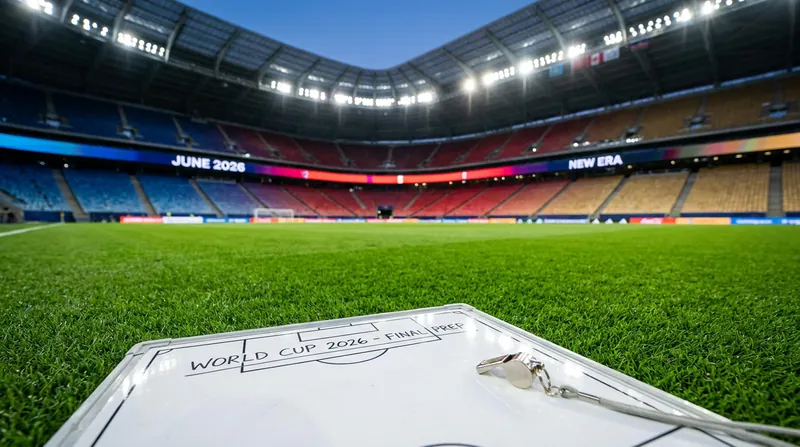
See all →Transit Infrastructure
How World Cup Host Cities Are Navigating Infrastructure Hurdles to Keep Matches on Track
8 sources
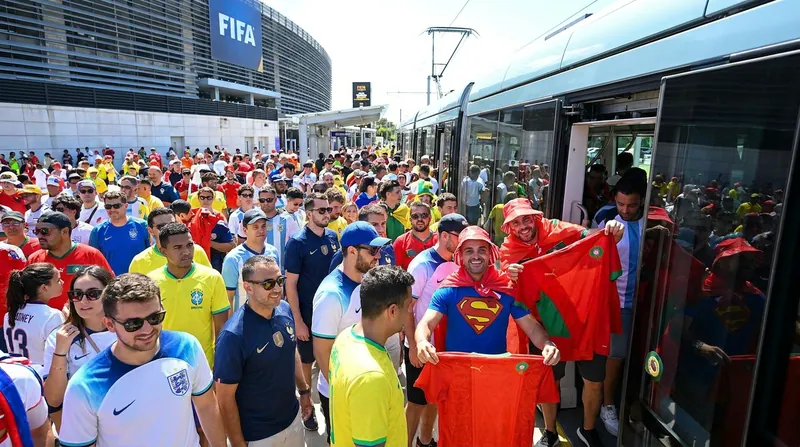
World Cup Traditions
World Cup Winners to Receive Championship Rings for First Time in Tournament History
5 sources
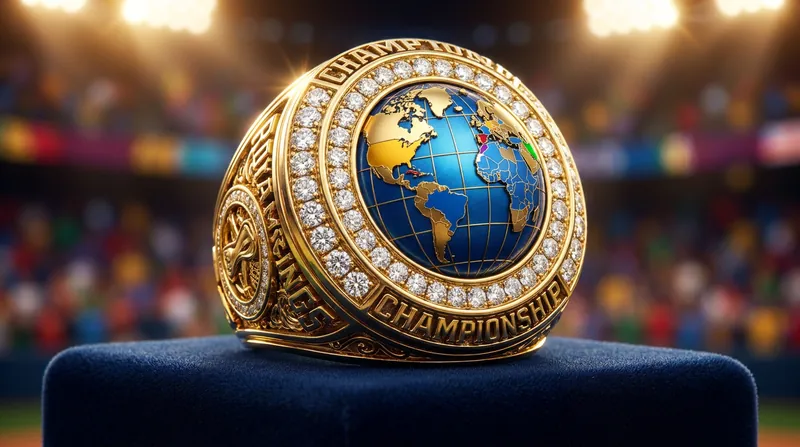
Tournament Expansion
Expanded 2026 World Cup Shatters All-Time Records for Attendance and Goals Scored, Validating 48-Team Format
4 sources
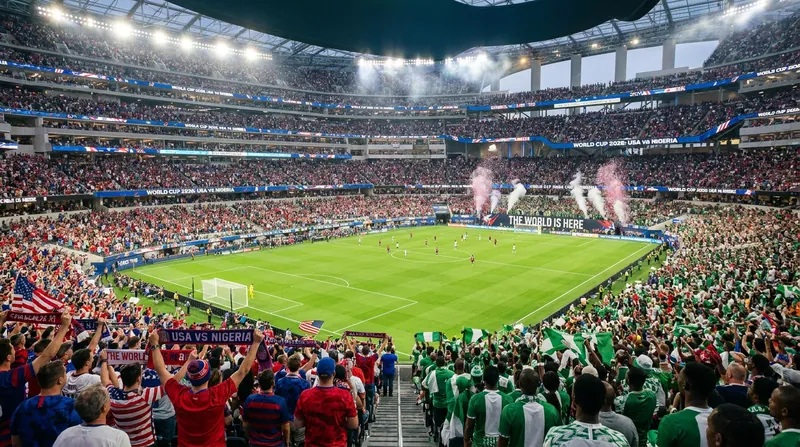
Generational Clash
Messi vs. Yamal: The Generational Showdown Defining the 2026 World Cup Final
7 sources
Comments
Every angle. Every day.
Get Sports stories with full source coverage and perspective breakdowns, free every day.