
The High-Tech Trade Resurgence: How Modern Apprenticeships are Replacing the Traditional Four-Year Degree
Driven by $1.7 trillion in student debt and a massive demand for skilled labor, modern Career and Technical Education (CTE) and 'new-collar' apprenticeships are offering debt-free, high-wage alternatives to traditional college.
By Kavya Nair

Share this story
In short
- Modern CTE programs and apprenticeships are expanding into high-tech fields like cybersecurity and healthcare.
- Apprenticeships utilize an 'earn while you learn' model, allowing students to bypass massive student loan debt.
- 47 percent of skilled trades workers currently out-earn the median college graduate.
For three decades, the American educational consensus was absolute and unwavering: a traditional four-year college degree was the sole reliable passport to the middle class. High school guidance counselors preached it, parents demanded it, and the labor market seemingly rewarded it with a clear wage premium. Vocational education was often quietly sidelined, treated as a secondary option for students who supposedly could not handle academic rigor. This monolithic narrative shaped the financial decisions of millions of families, driving a cultural expectation that success required a university acceptance letter.[1]
But in 2026, that narrative is fracturing under the weight of economic reality. Driven by a staggering $1.7 trillion in national student loan debt and a chronic, economy-crippling shortage of skilled labor, a quiet revolution is reshaping how young adults enter the workforce. The calculus has shifted from prestige to pure return on investment. Students and parents are increasingly questioning whether starting adult life with mortgage-sized debt is a necessary rite of passage, especially when alternative pathways are offering immediate financial independence.[2]
Career and Technical Education (CTE) and modern apprenticeships are experiencing an unprecedented resurgence across the country. No longer relegated to the stigmatized, dimly lit 'shop class' basement of the 1990s, these pathways have evolved into high-tech, high-wage launchpads. They are increasingly outperforming traditional liberal arts degrees in early-career financial returns, offering a compelling alternative for a generation highly skeptical of institutional debt. This shift represents a fundamental realignment of the American workforce, prioritizing concrete skills over traditional academic credentials.[1][3]
The mechanism driving this shift begins long before graduation, taking root directly inside modern high schools. Today's CTE programs are academically rigorous, heavily funded, and deeply integrated with local industry needs. Across the United States, over 8.6 million secondary students now participate in CTE courses, blending traditional core academics with specialized technical training. These are not outdated vocational tracks; students are learning advanced robotics, 3D modeling, biomedical sciences, and renewable energy engineering using the exact equipment they will encounter in the professional world.
The outcomes for students participating in these modernized programs are striking, defying outdated stereotypes about vocational tracks. According to the Association for Career and Technical Education, 97 percent of secondary CTE 'concentrators'—defined as students who take two or more sequential courses in a single specialized program area—graduate high school. This rate is significantly higher than the national average for traditional students. The data suggests that when students see a direct, tangible connection between their coursework and a future paycheck, their overall academic engagement rises dramatically.
Crucially, modern CTE is not a dead-end track that precludes higher education; rather, it is a highly flexible foundation. Many programs offer robust dual-enrollment options, allowing students to earn transferable college credits while still in high school. This flexibility means a student can graduate with an industry-recognized credential, a portfolio of practical experience, and the option to either enter the workforce immediately or pursue a specialized two- or four-year degree with a significant head start. The pathways are no longer mutually exclusive.
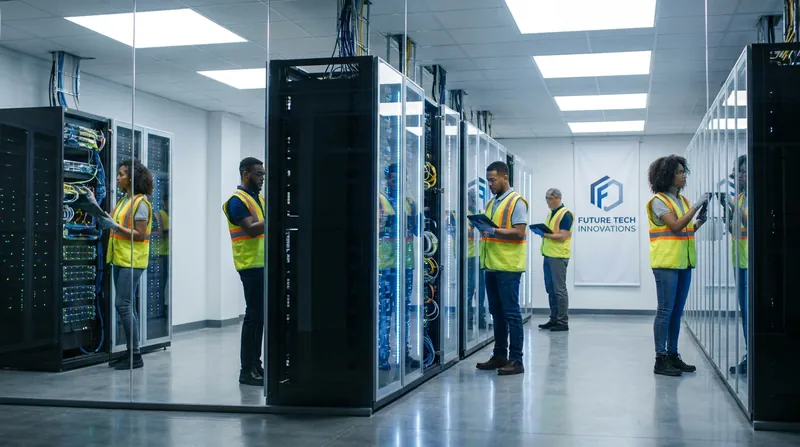
Beyond the high school level, the traditional apprenticeship model is undergoing a radical and lucrative expansion. Historically, the term 'apprentice' evoked images almost exclusively associated with blue-collar trades like plumbing, carpentry, and electrical work. While those fields remain vital and highly profitable, the registered apprenticeship model has successfully breached the walls of the white-collar and high-tech worlds. Employers desperate for talent have realized that the structured, hands-on training model works just as well for a server farm as it does for a construction site.
Today, 'new-collar' apprenticeships are rapidly proliferating in sectors that previously demanded bachelor's degrees, including cybersecurity, data analytics, healthcare, and advanced manufacturing. Programs are actively training workers for complex roles ranging from MRI technicians to software developers and cloud architects.
They utilize the exact same proven framework that has trained master electricians for decades: pairing a novice with a seasoned mentor for thousands of hours of supervised, practical application, supplemented by targeted classroom instruction. This approach ensures that the skills being taught are exactly what the employer actually needs, eliminating the disconnect often found between university curricula and real-world industry demands.
The core advantage of the apprenticeship model is its highly pragmatic 'earn while you learn' structure. Unlike traditional college students who accumulate compounding debt while sitting in lecture halls for four years, apprentices are paid employees from their very first day on the job. They work alongside seasoned professionals, gaining practical, hands-on experience while receiving structured classroom instruction that is often entirely funded by the employer. This structure democratizes access to high-wage careers, removing the financial barriers that keep many talented individuals out of traditional higher education.
This structure fundamentally alters the financial calculus of early adulthood, shifting the focus to total return on investment. The true cost of a four-year degree is not just the published tuition—which can range from $40,000 at an in-state public university to well over $200,000 at a private institution—but the massive opportunity cost of foregone wages. When a student spends four years out of the full-time labor force, they are missing out on tens of thousands of dollars in potential earnings, a deficit that can take decades to overcome.[1]
A traditional college student spends four to six years out of the full-time labor force, often working low-wage part-time jobs just to cover living expenses. In stark contrast, a comprehensive trade school program typically costs between $5,000 and $20,000 in total and lasts only six months to two years. An apprentice bypasses tuition entirely, earning a progressively increasing wage as their skills develop. By the time the traditional student is walking across the graduation stage to accept their diploma, the apprentice has already banked years of full-time income.[1]
The financial head start provided by this alternative pathway is massive and compounding. A journeyman electrician who begins an apprenticeship at age 18 can easily earn between $65,000 and $97,000 by age 23, carrying absolutely zero student debt. Meanwhile, the median college graduate enters the workforce at age 22 with an average starting salary of roughly $52,000 and carrying upwards of $37,000 in federal student loans. The tradesperson is positioned to buy a home and start investing, while the graduate is budgeting for monthly loan payments.
Because of this debt-free head start and the severe shortage of skilled labor driving up wages, the financial outcomes are surprising many economists. Vocational advocates note that 47 percent of skilled trades workers now out-earn the median college graduate. The ability to begin saving, investing in index funds, and purchasing property in one's early twenties allows compounding interest to work heavily in the tradesperson's favor. Over a ten-year horizon, the net worth of a debt-free tradesperson frequently eclipses that of a heavily indebted white-collar professional.
Furthermore, the rapid rise of artificial intelligence has inverted traditional assumptions about long-term job security. For decades, physical labor was viewed as vulnerable to automation, while 'knowledge work' was considered safe. Today, generative AI threatens to automate mid-level white-collar tasks like data entry, basic financial analysis, copywriting, and routine paralegal work. In contrast, the physical trades remain highly resistant to automation, requiring a level of spatial reasoning, adaptability, and physical dexterity that robots simply do not possess.
An electrician navigating the unique, undocumented wiring of a century-old home, or an HVAC technician diagnosing a complex mechanical failure on a freezing rooftop, performs tasks that no current AI can replicate. Labor market data indicates that skilled physical trades face an automation risk of roughly 8 to 11 percent. In stark contrast, many desk jobs and administrative roles face automation risks ranging from 35 to 45 percent, making the trades one of the most future-proof career choices available in the modern economy.
However, the vocational path is not without its uncertainties, physical realities, and long-term trade-offs. Traditional higher-education defenders correctly point out that, on average across the entire population, a bachelor's degree still confers a lifetime earnings premium of roughly $1.2 million over a high school diploma. While the early-career advantage goes to the trades, the peak earning years for college graduates in their forties and fifties often surpass those of manual laborers, particularly as tradespeople begin to physically slow down.[2]
Certain high-paying, highly influential fields in medicine, advanced engineering, law, and corporate leadership remain firmly gated behind advanced university degrees. Additionally, physical trades can take a severe toll on the human body over a grueling 40-year career.
For a tradesperson to truly maximize their lifetime earnings and protect their health, they must eventually transition into management, project estimation, or business ownership—moves that often require the very soft skills and business acumen traditionally taught in college. Without a clear exit strategy from daily physical labor, a tradesperson risks early retirement due to injury or chronic pain, which can severely undercut the financial head start they built in their twenties.[1][2]
There is also a persistent and frustrating cultural hurdle that CTE programs must overcome. Despite bipartisan political support, glowing economic data, and high-tech curriculum overhauls, vocational training still battles outdated stigmas. Surveys indicate that a majority of CTE leaders feel their programs face significant bias from parents and educators. Too often, vocational tracks are subtly framed by affluent communities as a wonderful pathway for 'other people's children,' while hoarding four-year university slots for their own, regardless of the actual financial ROI.[2]
Ultimately, the data from 2026 suggests that the rigid 'trades versus college' debate is a false dichotomy that harms students. The most successful and resilient educational models are increasingly hybrid, deliberately blurring the lines between academic theory and technical application. A student might complete a tech apprenticeship, work for three years, and then have their employer pay for their bachelor's degree in business management. The pathways are becoming fluid, allowing workers to stack credentials as their careers evolve.[3]
Whether through a high-tech apprenticeship in cybersecurity, a specialized associate degree in advanced manufacturing, or a traditional university program augmented by highly practical internships, the future of workforce preparation is undeniably competency-based. For a growing number of young adults looking at a volatile economy, the smartest investment is no longer automatically the most expensive degree, but rather the most direct, debt-free path to a high-demand skill.
Terms to know
- Career and Technical Education (CTE)
- Educational programs that specialize in the skilled trades, applied sciences, modern technologies, and career preparation.
- Registered Apprenticeship
- An industry-driven, high-quality career pathway where employers can develop and prepare their future workforce, validated by the Department of Labor.
- Journeyman
- A skilled worker who has successfully completed an official apprenticeship qualification in a building trade or craft.
- Opportunity Cost
- The potential income and experience a student forfeits by spending four to six years out of the full-time labor force to attend college.
- Competency-Based Learning
- An educational approach that focuses on the student's demonstration of desired learning outcomes and concrete skills rather than time spent in a classroom.
Questions readers ask
What is a CTE concentrator?
A CTE concentrator is a high school student who takes two or more sequential courses in a single specialized Career and Technical Education program area, such as healthcare or advanced manufacturing.
Are apprenticeships only for construction and plumbing?
No. Modern 'new-collar' apprenticeships have expanded rapidly into high-tech sectors, including cybersecurity, data analytics, healthcare, and advanced manufacturing.
Do trade school credits transfer to a four-year university?
Increasingly, yes. Many modern CTE programs and apprenticeships offer dual-enrollment or articulated credits that can be transferred to an associate or bachelor's degree program later on.
Does a bachelor's degree still pay off in the long run?
On average, yes. While trades offer a massive early-career financial advantage and zero debt, a bachelor's degree still confers a lifetime earnings premium of roughly $1.2 million over a high school diploma.
Different angles
ROI-Focused Analysts
Argue that education should be evaluated strictly on debt-to-income ratios and early-career wealth building.
This camp views the traditional four-year degree as an increasingly risky financial product. They point to the $1.7 trillion in national student debt and the massive opportunity cost of spending four years out of the labor force as evidence that the system is broken. For these analysts, the math is simple: a trade school program costing $15,000 that leads to a $75,000 starting salary at age 20 is a mathematically superior investment to a $150,000 degree that yields a $52,000 starting salary at age 22. They emphasize that the ability to invest early and avoid compounding loan interest allows tradespeople to build higher net worths in their first decade of work.
Workforce Developers
Focus on closing the critical skills gap through apprenticeships and competency-based training.
Industry leaders and workforce developers are less concerned with the cultural debate and more focused on the immediate reality: there are millions of unfilled skilled jobs. This camp champions the expansion of the apprenticeship model into white-collar sectors like IT and healthcare. They argue that the 'earn while you learn' model is the most sustainable way to train a workforce because it aligns educational outcomes directly with employer needs. By paying apprentices from day one, employers build a loyal, highly customized workforce while simultaneously removing the financial barriers that prevent talented individuals from acquiring specialized skills.
Equity & Access Advocates
Warn that tracking students into trades must not become a way to gatekeep marginalized students from bachelor's degrees.
While acknowledging the crisis of student debt, equity advocates urge caution regarding the CTE resurgence. They point out that historically, vocational tracking was used to divert low-income and minority students away from the lucrative pathways of higher education. This camp emphasizes that while trades offer a great early-career head start, a bachelor's degree still confers a $1.2 million lifetime earnings premium and opens doors to the highest echelons of corporate and political leadership. They argue that CTE must be an option, not a mandate, and that society must not use the trades as an excuse to stop making four-year universities affordable and accessible to all.
- ROI-Focused Analysts
- Argue that education should be evaluated strictly on debt-to-income ratios and early-career wealth building rather than prestige.
- Workforce Developers
- Focus on closing the critical skills gap through apprenticeships, competency-based training, and employer partnerships.
- Equity & Access Advocates
- Warn that while CTE is valuable, tracking students into trades must not become a way to gatekeep marginalized students from the long-term wealth of a bachelor's degree.
Perspectives this story doesn't cover
- High school guidance counselors who are pressured to maintain high four-year college enrollment metrics.
- Students who dropped out of four-year universities due to financial strain and transitioned to the trades.
Sources
Source coverage
3 outlets
3 viewpoints surfaced



- [1]College TransitionsROI-Focused Analysts
Trade School vs. College Degree: The 2026 ROI Guide
Read on College Transitions → - [2]OnLaborEquity & Access Advocates
Career and Technical Education at a Crossroads
Read on OnLabor → - [3]Factlen Editorial TeamWorkforce Developers
Synthesis by Factlen editorial team
Read on Factlen Editorial Team →
More in Education
See all →Vocational Tech
Haptic VR Simulations Compress Years of Heavy Industry Apprenticeships
3 sources

Higher Ed Finance
Education Department Finalizes 'STATS' Rule to Cut Federal Aid for Low-Earning College Programs
5 sources

Grad PLUS Loans
Federal Court Blocks $100,000 Loan Cap, Preserving Unlimited Grad PLUS Borrowing
2 sources

Workforce Retraining
The $500 Million AI Workforce Initiative Bypasses Federal Retraining With Skills Wallets
5 sources

Comments
Every angle. Every day.
Get Education stories with full source coverage and perspective breakdowns, free every day.