
The Great Re-Bundling: How to Navigate 2026's Massive New Streaming Discounts
After years of fragmentation and price hikes, major streaming platforms are finally teaming up to offer unified bundles that can cut monthly entertainment bills by up to 44%.

Share this story
The era of paying $15 a la carte for half a dozen different streaming apps is quietly coming to an end. After years of frustrating fragmentation and steady price hikes, the summer of 2026 marks a definitive turning point in home entertainment. The industry has aggressively pivoted to what analysts are calling the "Great Re-Bundling," a massive consumer win that is finally driving down the monthly cost of television.[2]
For years, viewers begged for a unified solution as every major media conglomerate pulled its content behind a proprietary paywall. The result was subscription fatigue, with the average household juggling multiple logins and a ballooning monthly bill just to keep up with pop culture.
Now, facing market saturation and high cancellation rates, former bitter rivals are teaming up. By recreating the convenience of the old cable package—but with on-demand flexibility and significantly lower price points—streaming giants are offering unprecedented cross-platform partnerships.[1]
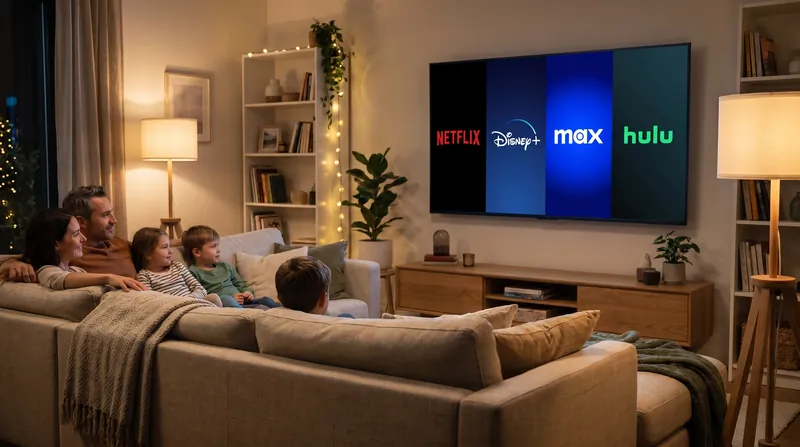
The crown jewel of this new era of detente is the mega-bundle combining Disney+, Hulu, and Warner Bros. Discovery's Max. Launched to combat summer churn, this alliance merges three of the most robust content libraries in the world into a single subscription.
Pricing for the Disney, Hulu, and Max trio starts at $19.99 per month for the ad-supported tier, or $32.99 for the premium ad-free experience. For consumers who previously paid for these services separately, the package represents a massive 42% to 44% monthly savings.[1]
The sheer volume of premium content unlocked by this specific bundle is staggering, especially given the June 2026 release calendar. Subscribers gain simultaneous access to the streaming debut of James Cameron's $1.5 billion blockbuster Avatar: Fire and Ash on Disney+, the highly anticipated third season of House of the Dragon on Max, and the final season of the Emmy-winning culinary drama The Bear on Hulu.[3]
Direct-to-consumer alliances are only half the story. Telecommunications and internet service providers are also aggressively entering the aggregation game, using heavily discounted streaming perks as loss-leaders to keep their core mobile and broadband customers loyal.
Comcast's Xfinity recently launched its StreamSaver package, which bundles Netflix Standard with Ads, Apple TV+, and Peacock for just $22 a month. For an additional tier, users can even integrate over 125 live television channels, effectively bridging the gap between traditional broadcast and modern streaming.
Verizon has introduced an equally aggressive $10-per-month perk that combines the ad-supported tiers of Netflix and Max. Available to both mobile and home internet customers, the add-on shaves roughly $7 off the standard combined retail price of the two platforms.
T-Mobile continues to lean into its long-running "Netflix on Us" strategy, which includes the streaming giant's ad-supported tier at no extra cost for subscribers on its premium Go5G Next and Magenta MAX cellular plans.
Beyond the mega-bundles, niche pairings are emerging to serve specific audience demands. A notable example is the new $14.99-per-month alliance between Apple TV+ and NBCUniversal's Peacock.[2]
This specific pairing is being hailed as one of the smartest deals in the industry, combining two platforms with almost zero content overlap. It offers a perfect split for households that want prestige television—like Apple's sci-fi thriller Severance or the new Javier Bardem limited series Cape Fear—alongside Peacock's live sports offerings, including exclusive Premier League soccer matches.[2][3]
The sudden willingness of these massive corporations to share revenue stems from the brutal economics of subscriber churn. As household budgets tightened, consumers became adept at strategic subscribing—signing up for a single month to binge a specific show, then immediately canceling the card on file.[2]
Bundles are mathematically designed to neutralize this behavior. If a viewer is watching a Marvel series on Disney+ one month and a prestige HBO drama the next, a unified subscription ensures the parent companies keep collecting revenue year-round rather than trading the same $15 back and forth.[1]
There is, however, a catch to the industry's newfound generosity: the most heavily promoted discounts are almost entirely built on ad-supported tiers. To unlock the 40% to 70% savings advertised by carriers and platforms, viewers must be willing to sit through commercial breaks.[2]
This shift is highly intentional. Streaming companies have discovered that they actually generate higher average revenue per user on their cheaper ad-supported plans—thanks to lucrative Madison Avenue brand deals—than they do on their premium ad-free subscriptions.[1]
Despite the return of the commercial break, the math remains undeniably favorable for the average family. The ability to access the vast majority of the cultural zeitgeist for under $35 a month is a stark improvement over the fragmented landscape of just two years ago.
Looking ahead, this aggregation model is likely to become the default method for purchasing television. The industry has realized that forcing consumers to navigate a dozen different billing portals was a losing battle.[2]
Ultimately, 2026 will be remembered as the year the streaming wars entered a phase of collaborative peace. By prioritizing consumer convenience and wallet-friendly pricing over walled gardens, the entertainment industry has finally solved its biggest self-inflicted problem.[1][2]
Key points
- Major streaming platforms have launched unprecedented cross-company bundles to combat subscriber fatigue and high cancellation rates.
- The Disney+, Hulu, and Max bundle offers a 42% discount, costing $19.99 per month for the ad-supported tier.
- Telecom providers like Verizon and Xfinity are offering steep streaming discounts as loss-leaders to retain their internet customers.
- While the biggest savings require opting into ad-supported viewing, the bundles offer a massive financial win for the average household.
What we don’t know
- Whether these heavily discounted introductory bundle prices will be subject to the same aggressive rate hikes seen in standalone subscriptions over the next two years.
- How independent streaming platforms and niche services will survive as consumers consolidate their spending into three or four mega-bundles.
How we got here
Late 2019
The 'Streaming Wars' escalate as Disney+ and Apple TV+ launch, pulling content away from Netflix and fragmenting the market.
2023–2024
Subscription fatigue peaks as major platforms aggressively raise prices and crack down on password sharing.
Early 2026
Facing high cancellation rates, former rival studios announce unprecedented cross-platform partnerships.
June 2026
The 'Great Re-Bundling' takes full effect with the launch of the Disney/Hulu/Max mega-bundle and ISP aggregation packages.
- Value-Focused Viewers
- Consumers who prioritize massive monthly savings and unified convenience over ad-free viewing.
- Entertainment Analysts
- Industry watchers focused on how aggregation solves the streaming sector's churn crisis.
- Telecom & ISP Strategists
- Carriers using entertainment perks to lock in long-term mobile and broadband customers.
Perspectives this story doesn't cover
- Independent Streaming Platforms
- International Audiences
Sources
Source coverage
3 outlets
3 viewpoints surfaced



- [1]FinanceBuzzValue-Focused Viewers
Best Streaming Deals of June 2026: Save Money and Start Watching
Read on FinanceBuzz → - [2]The Sun NewspapersTelecom & ISP Strategists
Best Streaming Services 2026: Prices, Plans, What's Included
Read on The Sun Newspapers → - [3]GizmodoEntertainment Analysts
The Films and Shows You Should Be Streaming in June 2026
Read on Gizmodo →
More in Entertainment
See all →Streaming Bundles
YouTube Premium to Include Ad-Supported Peacock in Major Streaming Bundle Deal
7 sources

Child Privacy
Texas Sues Netflix Over Minor Data Collection and Algorithmic Binge-Watching Mechanics
4 sources

Streaming Finance
Director Carl Rinsch Sentenced to 30 Months in Prison for $11 Million Netflix Fraud
2 sources

Live Sports Streaming
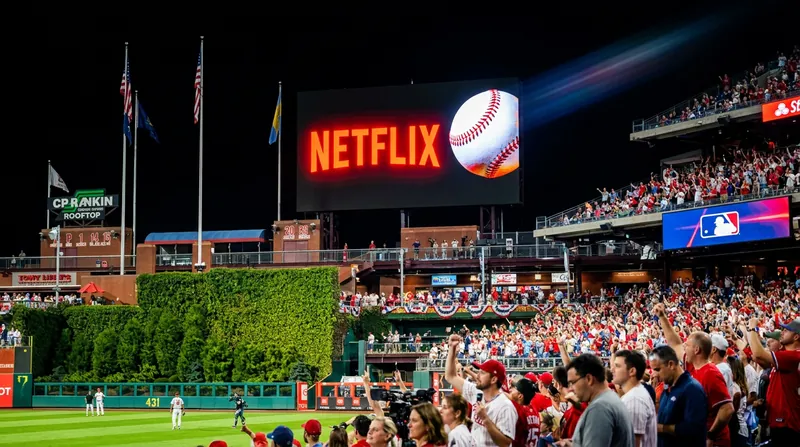
Netflix Secures Exclusive MLB Home Run Derby and Opening Night Rights in Major Live Sports Pivot
4 sources
Comments
Every angle. Every day.
Get Entertainment stories with full source coverage and perspective breakdowns, free every day.