
The Great Kitchen Upgrade: Why Induction Cooktops Are Replacing Gas and Electric
As concerns over indoor air pollution mount, induction cooking is rapidly gaining popularity for its professional-grade speed, superior energy efficiency, and zero-emission technology.
By Factlen Editorial Team
- Public Health & Environmental Advocates
- Focuses on the urgent need to eliminate indoor combustion and reduce greenhouse gas emissions.
- Culinary Professionals
- Prioritizes cooking performance, speed, and precision over environmental metrics.
- Consumer Advocates
- Weighs the long-term benefits of induction against the immediate financial and practical hurdles for average homeowners.
What's not represented
- · Natural Gas Industry Representatives
- · Renters Unable to Upgrade
Why this matters
Switching to an induction cooktop is one of the most impactful upgrades a household can make to eliminate toxic indoor air pollution, reduce energy waste, and significantly cut down on daily cooking times.
Key points
- Induction cooktops use electromagnetic fields to heat cookware directly, achieving 84-90% energy efficiency compared to 32-40% for gas.
- Recent studies show switching from gas to induction can reduce indoor nitrogen dioxide (NO2) pollution by over 50%.
- Induction boils water significantly faster than gas or traditional electric stoves while offering precise temperature control.
- The cooktop surface remains relatively cool during use, eliminating open flames and reducing the risk of accidental burns.
- Consumers must ensure their cookware is magnetic (like cast iron or stainless steel) for the induction process to work.
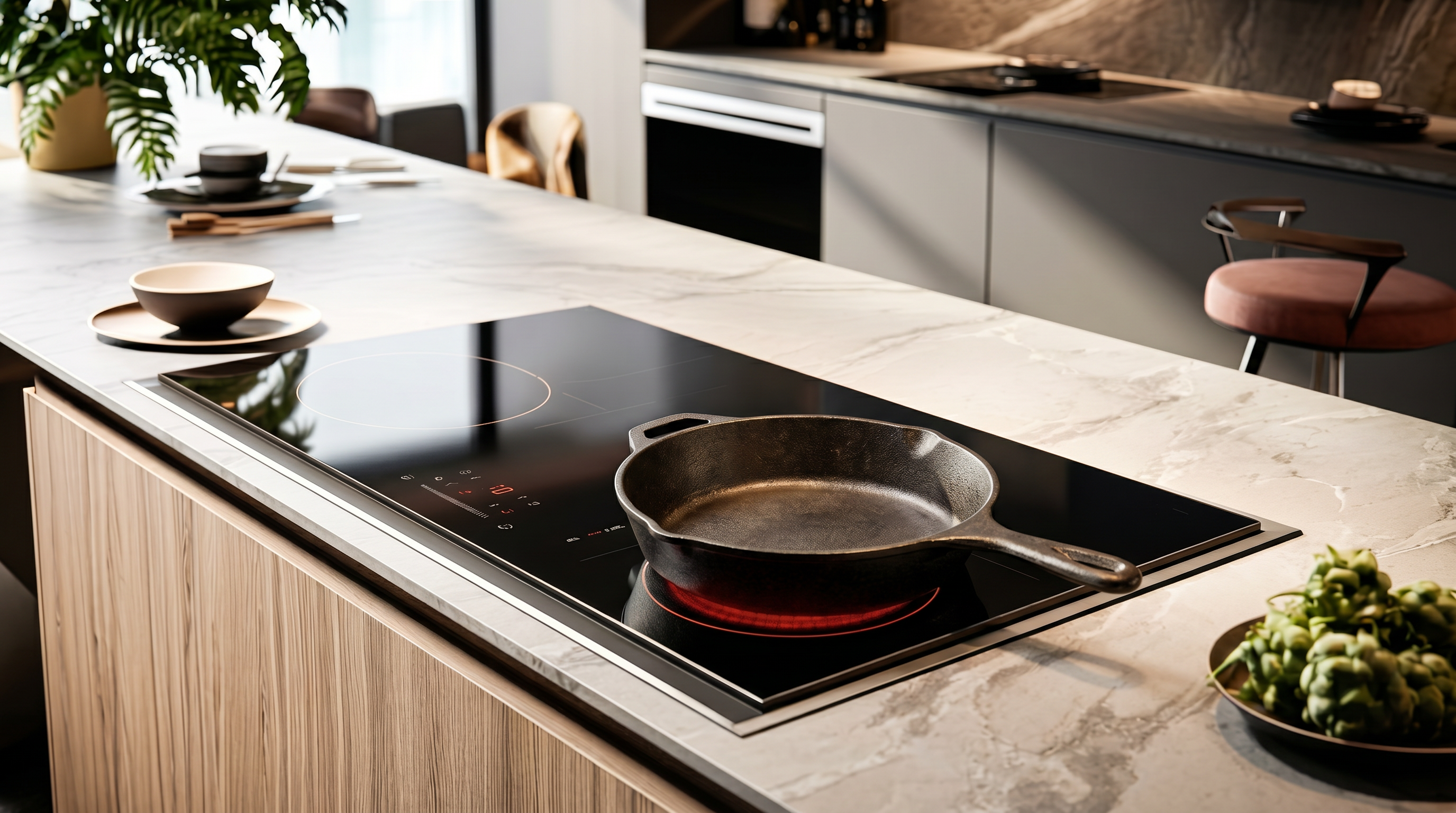
For decades, the American kitchen was divided into two distinct camps: those who cooked with gas, and those who tolerated traditional electric coils. Gas was long marketed as the gold standard for serious cooks, offering visual feedback and immediate control, while electric stoves were often derided for their sluggish response times and baked-on spills. But a third technology has rapidly matured from a premium niche into a mainstream powerhouse. Induction cooking is fundamentally rewriting the rules of the residential kitchen, promising a rare combination of professional-grade performance, dramatic energy savings, and a solution to a growing public health crisis.[3][5]
To understand why induction is gaining such unprecedented momentum, it helps to look at the physics of how we have historically cooked our food. Both gas and traditional radiant electric stoves rely on indirect heating. A gas stove combusts fossil fuels to create a flame, while an electric stove uses electrical resistance to heat a metal coil. In both cases, the stove must first generate its own heat, which then transfers to the bottom of a pot or pan, and eventually to the food inside.[3]
This indirect transfer is inherently wasteful. When cooking with gas, a massive amount of the generated heat simply escapes around the sides of the cookware, warming the ambient air in the kitchen rather than the meal. Induction, by contrast, eliminates the middleman entirely. Beneath the smooth glass surface of an induction cooktop lies a tightly wound copper coil. When powered on, an alternating electrical current flows through this coil, generating a dynamic, high-frequency electromagnetic field.[3][6]

When a compatible, magnetic piece of cookware is placed within this field, the magnetic energy induces electrical currents—known as eddy currents—directly inside the metal of the pan itself. The electrical resistance of the pan's metal converts these currents into heat. In short, the cooktop does not get hot; the pan itself becomes the heat source. This direct transfer of energy is what gives induction its almost magical properties and its staggering efficiency metrics.[3][4]
The numbers heavily favor this magnetic approach. Thermodynamic analyses reveal that induction cooktops operate at roughly 84 to 90 percent energy efficiency, meaning nearly all the electricity consumed goes directly into cooking the food. Traditional radiant electric stoves hover around 65 to 75 percent efficiency. Gas stoves, meanwhile, are the least efficient of all, converting only 32 to 40 percent of their energy into usable cooking heat.[6]

For home cooks and culinary professionals, this efficiency translates directly into speed and precision. Consumer testing organizations have repeatedly found that induction is the fastest cooking technology on the market. Boiling six quarts of water on an induction range typically takes two to four minutes less than on a high-powered gas or electric equivalent. Furthermore, because the electromagnetic field can be adjusted instantly, an induction burner responds to temperature changes with the exact same immediacy as a gas flame, allowing cooks to drop from a rolling boil to a delicate simmer in a fraction of a second.[4][5]
For home cooks and culinary professionals, this efficiency translates directly into speed and precision.
While speed and precision are winning over chefs, a growing body of medical research is driving everyday consumers to make the switch. Over the past few years, the conversation around gas stoves has shifted dramatically from culinary preference to indoor air quality. Burning natural gas indoors releases a cocktail of combustion byproducts, including carbon monoxide, fine particulate matter, and nitrogen dioxide (NO2), a toxic gas strongly linked to respiratory distress.[2][6]
A landmark pilot study conducted by researchers at Columbia University’s Mailman School of Public Health tracked indoor air quality in affordable housing units in the Bronx. When researchers replaced the residents' gas stoves with induction models, they recorded a 56 percent reduction in average daily NO2 concentrations. During controlled cooking tests, background NO2 levels in the gas-equipped homes spiked to nearly 200 parts per billion—well above outdoor safety guidelines—while levels in the induction homes remained negligibly changed.[1]
The health implications extend beyond asthma and respiratory irritation. Recent environmental testing has revealed that gas stoves emit benzene, a known carcinogen, at levels comparable to secondhand cigarette smoke. Alarmingly, these emissions can occur even when the stove is turned off, as the appliances and their connecting pipes frequently leak unburned methane into the home. Because induction cooking relies entirely on electricity and electromagnetism, it produces zero combustion byproducts, effectively eliminating this source of indoor pollution.[2][6]

Beyond the invisible benefits to lung health, induction offers highly visible safety advantages, particularly for households with young children or elderly residents. Because the glass surface only warms up from the residual heat of the pan resting upon it, the cooktop itself remains relatively cool to the touch. There are no open flames to catch a loose sleeve on fire, and no red-hot electric coils left radiating heat long after the burner is switched off. Most modern units also feature automatic pan detection, instantly cutting power if a pot boils dry or is removed from the zone.[4][5]
Despite these overwhelming advantages, the transition to induction is not without friction. The most immediate hurdle for many consumers is cookware compatibility. Because the technology relies on magnetic fields, pots and pans must contain ferrous metal to work. Cast iron, enameled cast iron, and most stainless steel cookware perform beautifully, but pure aluminum, copper, and glass pots will not heat up at all. Consumer advocates recommend a simple test: if a refrigerator magnet sticks firmly to the bottom of a pan, it is ready for an induction stove.[7]
There is also a distinct learning curve associated with the technology. The sheer speed of induction means that cooks who are used to walking away while a pan preheats on a gas stove may return to find their oil smoking. Additionally, the electromagnetic interaction between the coil and the cookware can sometimes produce a faint humming or buzzing noise, particularly on high power settings or with lighter-weight pans. Proper pan sizing is also critical; if a small pan is placed on a large induction zone, the cooktop may fail to detect it, or it may heat unevenly.[4][7]

The financial barrier to entry is also a consideration. While the prices of induction ranges have dropped significantly—with high-quality models now available for under $1,200—they still carry a premium over basic gas or electric coil models. Furthermore, homeowners switching from gas to induction may need to hire an electrician to install a dedicated 240-volt circuit, an upgrade that can add hundreds or thousands of dollars to the total cost of the renovation.[5][6]
However, a combination of market forces and policy incentives is rapidly eroding these barriers. Under the Inflation Reduction Act, many households are eligible for substantial rebates—up to $840—to help offset the cost of upgrading to an electric or induction range, though the future of these funds remains a subject of political debate. As building codes increasingly favor all-electric construction and the electrical grid continues to decarbonize, induction cooking stands out not merely as a luxury upgrade, but as a vital step toward healthier homes and a more sustainable future.[4][6]
How we got here
Early 1900s
The first patents for magnetic induction heating are filed, though the technology remains largely industrial.
1970s
Westinghouse introduces the first induction ranges for residential use, but high costs prevent widespread adoption.
2022
The US passes the Inflation Reduction Act, allocating billions in rebates for home electrification, including induction stoves.
2023–2024
Major public health studies link gas stove emissions to childhood asthma and high indoor benzene levels, accelerating consumer interest in induction.
2026
Induction cooktop prices drop significantly, and the technology becomes a standard feature in new, all-electric building codes across multiple municipalities.
Viewpoints in depth
Public Health & Environmental Advocates
Focuses on the urgent need to eliminate indoor combustion and reduce greenhouse gas emissions.
This camp views the transition away from gas stoves as a critical public health intervention, akin to removing lead paint or asbestos. They point to mounting peer-reviewed evidence that gas stoves emit dangerous levels of nitrogen dioxide and benzene, directly contributing to childhood asthma. From an environmental perspective, they emphasize that even when turned off, gas infrastructure leaks methane—a potent greenhouse gas. For these advocates, induction is the necessary technological bridge to fully electrified, zero-emission homes.
Culinary Professionals
Prioritizes cooking performance, speed, and precision over environmental metrics.
Chefs and dedicated home cooks have historically been the staunchest defenders of gas stoves, valuing the visual feedback of an open flame. However, this camp is increasingly converting to induction due to its sheer thermodynamic superiority. They highlight that induction boils water significantly faster than commercial gas ranges and offers unparalleled low-temperature stability for delicate tasks like melting chocolate or holding a steady simmer. The added benefit of a cool, easy-to-wipe glass surface has made induction a favorite in fast-paced professional kitchens.
Consumer Advocates
Weighs the long-term benefits of induction against the immediate financial and practical hurdles for average homeowners.
While acknowledging the health and efficiency benefits, consumer watchdogs focus on the friction of adoption. They highlight the high upfront costs of the appliances and the potential need for expensive electrical panel upgrades in older homes. This camp also emphasizes the practical learning curve—such as the need to replace non-magnetic cookware and adjust to the rapid heating speeds. They advocate for stronger government rebates and clearer appliance labeling to help buyers navigate the transition without financial strain.
What we don't know
- The long-term political viability of federal rebates (like those in the Inflation Reduction Act) that currently subsidize induction upgrades.
- How quickly the electrical grids in older residential neighborhoods can adapt if entire communities simultaneously switch to high-voltage electric appliances.
Key terms
- Magnetic Induction
- The process of using an alternating electromagnetic field to generate electrical currents—and therefore heat—directly inside a piece of metal cookware.
- Nitrogen Dioxide (NO2)
- A toxic gas produced by the combustion of fossil fuels, including natural gas, which is strongly linked to respiratory issues like asthma.
- Radiant Electric Cooktop
- A traditional electric stove that passes electricity through a high-resistance wire coil to generate heat, which then transfers through a glass surface to the pan.
- Capture Efficiency
- The percentage of cooking fumes, steam, and pollutants that a kitchen range hood successfully vents out of the home.
Frequently asked
Do I need to buy all new pots and pans for an induction stove?
Not necessarily. Induction requires magnetic cookware, so cast iron, enameled cast iron, and most stainless steel will work perfectly. You can test your current pans by seeing if a refrigerator magnet sticks firmly to the bottom.
Is an induction cooktop the same as a glass-top electric stove?
No. While both have smooth glass surfaces, traditional electric stoves use radiant heat from a glowing metal coil beneath the glass. Induction uses electromagnetic fields to heat the pan directly, making it much faster and more energy-efficient.
Will an induction stove increase my electricity bill?
Because induction is 84-90% efficient, it uses significantly less energy to cook food than traditional electric or gas stoves. While it does use electricity, the overall energy savings typically offset the cost, especially as natural gas prices fluctuate.
Are induction cooktops safe for people with pacemakers?
Induction cooktops generate electromagnetic fields, which can theoretically interfere with some pacemakers if the person stands extremely close. Most manufacturers and health experts recommend consulting a cardiologist for specific guidance before purchasing.
Sources
Source coverage
7 outlets
3 viewpoints surfaced







[1]Columbia University Mailman School of Public HealthPublic Health & Environmental Advocates
Switching from a gas stove to an electric induction stove can reduce indoor nitrogen dioxide air pollution
Read on Columbia University Mailman School of Public Health →[2]ForbesPublic Health & Environmental Advocates
Gas Stoves Emit Toxic Gases In Homes
Read on Forbes →[3]Popular ScienceConsumer Advocates
What is an induction stove, and is it better than electric?
Read on Popular Science →[4]The CooldownCulinary Professionals
Chef shares real-world pros and cons of next-gen kitchen appliances
Read on The Cooldown →[5]Tasting TableCulinary Professionals
Induction Stove Chef Opinions: Pros And Cons
Read on Tasting Table →[6]Energy SolutionsPublic Health & Environmental Advocates
The Case for Cooking Electrification: 2026 Analysis
Read on Energy Solutions →[7]CHOICEConsumer Advocates
Induction cooktops our experts wouldn't buy
Read on CHOICE →

More in shopping
See all 5 stories →


Every angle. Every day.
Get shopping stories with full source coverage and perspective breakdowns delivered to your inbox.