
The Grassroots Rebellion: How Fan-Owned Football Clubs Are Reclaiming the Beautiful Game
As private equity and sovereign wealth funds dominate top-tier European football, a growing wave of community-owned clubs is proving that sustainable, fan-led models can thrive on and off the pitch.
By Ryder James

Share this story
At the apex of European football, the numbers have become almost abstract. The average English Premier League club is now valued at roughly £1.5 billion, driven by an influx of sovereign wealth funds, private equity consortiums, and high-net-worth individuals. In this hyper-commercialized stratosphere, clubs operate as global entertainment franchises, optimizing for return on investment and international broadcasting rights. Yet, far away from the glitz of the Champions League, a quiet but resilient rebellion has been gathering momentum across the continent.[1][4]
A growing coalition of supporters is rejecting the billionaire model entirely, opting instead to buy, build, and run their own football clubs. These fan-owned and community-owned institutions are proving that a different kind of football is possible—one that prioritizes local connection, financial sustainability, and democratic governance over the relentless pursuit of profit.[1][2]
The roots of this movement in the UK trace back to 2001, when supporters of Enfield FC, frustrated by the mismanagement of their historic club, broke away to form Enfield Town FC. They became the first fully fan-owned, fan-run senior football club in the country. Their rise was unspectacular but steady, built on a foundation of prudent financial management rather than reckless spending. Recently, that patience paid off when the club secured a historic promotion to the National League South, proving that community ownership can yield on-pitch success.[5]
The Enfield model has since inspired dozens of similar initiatives. Across the UK, clubs like AFC Wimbledon, FC United of Manchester, and numerous others have been born out of protest against corporate takeovers or financial ruin. In Scotland, the movement reached the top flight when Heart of Midlothian (Hearts) officially became the largest supporter-owned club in the UK in 2021, following a massive fundraising effort by the Foundation of Hearts.[3][6]
What makes these clubs fundamentally different is their legal and operational structure. Many are registered as Community Benefit Societies, meaning they are legally bound to serve the interests of their local area. Profits are not extracted as dividends for wealthy shareholders; instead, they are reinvested into the club's infrastructure, youth academies, and community outreach programs, such as hosting food banks or providing facilities for local schools.[2]
This structure acts as a powerful safeguard against the existential threats that plague modern football. In recent years, historic clubs like Bury and Macclesfield Town were driven into liquidation after private owners gambled heavily on promotion and lost. Community-owned clubs, by contrast, operate within strict financial frameworks. They cannot spend money they do not have, and major decisions—such as stadium relocations or changes to the club crest—require a democratic vote by the member-owners.[2][4]
The philosophical divide between these models is stark. Private equity investors and consortiums view football clubs as assets to be optimized. Their strategies often involve streamlining costs, leveraging debt, and maximizing commercial revenue before a potential exit. While this can lead to rapid injections of capital and elite talent acquisition, it frequently alienates the core fanbase, who are treated more as consumers than stakeholders.[3][4]
Conversely, the fan-owned model draws heavy inspiration from Germany's famous "50+1" rule, which mandates that a club's members must hold a majority of voting rights. This ensures that commercial investors cannot take absolute control, preserving the cultural link between the team and its city. While traditional member-owned giants like FC Barcelona and Real Madrid operate on a massive scale, the grassroots movement in the UK and lower-league Europe is proving that the "socio" model works just as well for local communities.[1][4]
Managing a community-owned club is not without its challenges. Progress is rarely linear, and the lack of a wealthy benefactor means these clubs often operate at a financial disadvantage compared to privately owned rivals. Fan education is also a constant hurdle; supporters must understand that "fan-owned" does not mean "fan-run" on a day-to-day basis. Successful community clubs rely on capable executive teams to manage operations, while the fans act as the ultimate custodians and guardians of the club's values.[3]
Yet, for the thousands of fans who pay their annual membership fees to have a voice in their club's future, the trade-offs are entirely worth it. In an increasingly atomized society, these clubs serve as vital civic anchors. They offer a rare space where people from all walks of life can unite around a shared, tangible asset that belongs to them, not to a distant holding company.[1][2]
As the financial disparity in global football continues to widen, the grassroots rebellion is no longer just a romantic protest. It has matured into a viable, resilient alternative. By proving that sustainability and community integration can coexist with competitive sport, fan-owned clubs are quietly reclaiming the soul of the beautiful game, one match at a time.[1][3]
- Community Advocates
- Argue that football clubs are civic assets that must be protected from reckless financial speculation through democratic fan ownership.
- Private Equity & Consortiums
- Focus on optimizing clubs as commercial assets, prioritizing global brand growth, elite talent acquisition, and return on investment.
- Traditional Member-Owned Giants
- Value sporting integrity and historical legacy, though they face modern liquidity challenges without the ability to sell equity.
Sources
Source coverage
6 outlets
3 viewpoints surfaced






- [1]Factlen Editorial TeamCommunity Advocates
Synthesis by Factlen editorial team
Read on Factlen Editorial Team → - [2]Power to ChangeCommunity Advocates
Community Ownership in Football: A Sustainable Model
- [3]Taylor & FrancisPrivate Equity & Consortiums
Football club ownership models and the paradox of performance
- [4]Cash on the PitchTraditional Member-Owned Giants
Member-Owned Clubs: Stability Over Profit
- [5]Bath City FCCommunity Advocates
Match Preview: Enfield Town FC and the History of Community Ownership
- [6]WikipediaTraditional Member-Owned Giants
List of fan-owned sports teams
Read on Wikipedia →

More in Sports
See all →Executive Compensation
US Filings Reveal Undisclosed $1.76 Million World Cup Payment to FIFA President
4 sources

Pitch Geometry
Enforcing Law 14's 9.15-Metre Buffer: Why Soccer's Penalty Arc Extends Four Yards Beyond the Box
4 sources

Nations League
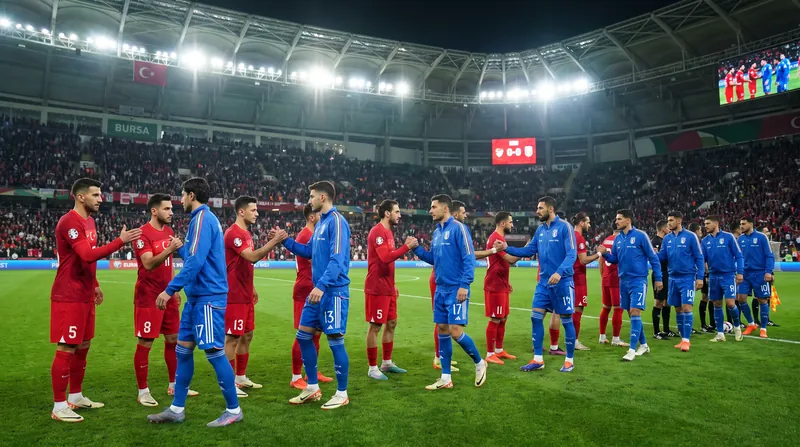
Can Turkey Finally Break Their Winless Curse Against Italy in Nations League Clash?
6 sources
Nations League
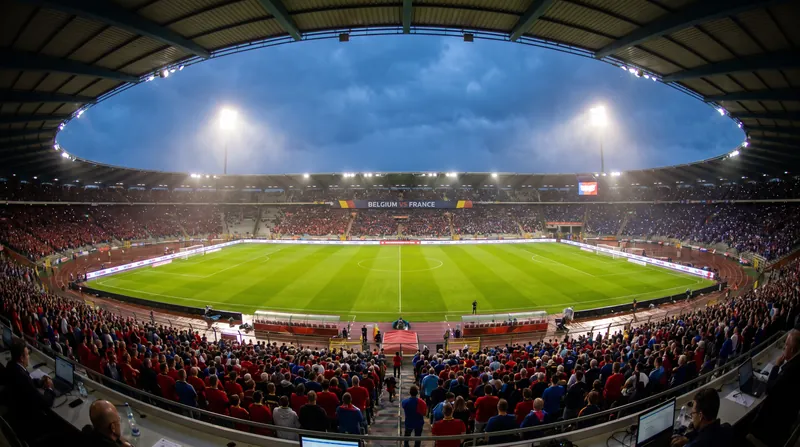
France and Belgium Face Early Nations League Test Without Mbappé and Courtois
5 sources
Comments
Every angle. Every day.
Get Sports stories with full source coverage and perspective breakdowns, free every day.