
The Global Rise of Astrotourism: How Chasing the Dark is Saving the Night Sky
As light pollution erases the stars for the vast majority of the developed world, a booming travel trend is turning pristine darkness into a highly sought-after commodity, boosting rural economies while protecting fragile nocturnal ecosystems.
By Factlen Editorial Team
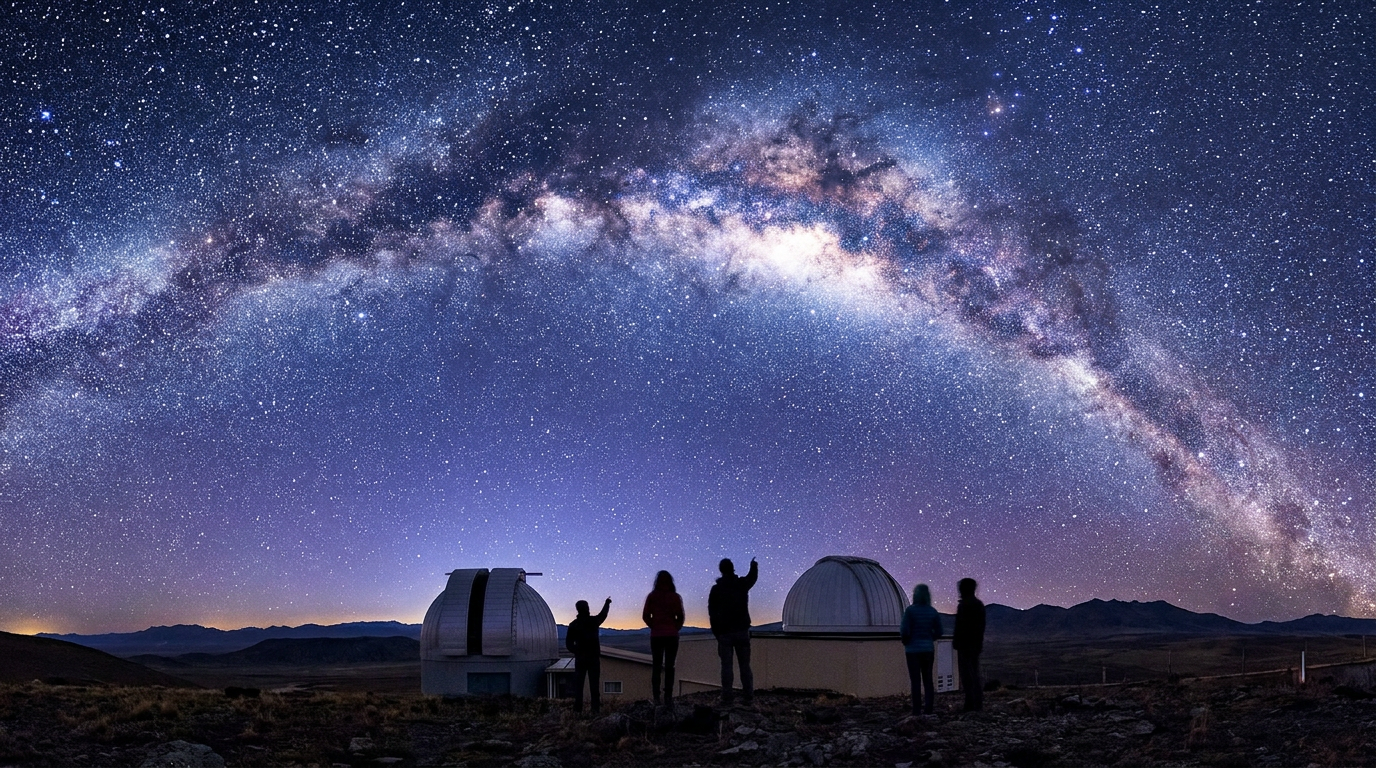
- Conservationists & Ecologists
- View astrotourism primarily as a vehicle to fund the restoration of nocturnal habitats and protect wildlife from ecological light pollution.
- Rural Economic Developers
- Focus on leveraging dark skies as a low-infrastructure, high-yield resource to bring sustainable income to remote communities.
- Hospitality & Travel Industry
- See the trend as a response to consumer demand for sensory-reduced, off-grid travel experiences that offer profound quiet.
What's not represented
- · Indigenous communities whose ancestral lands and celestial navigation traditions are impacted by tourism development
- · Urban planners struggling to balance public safety lighting with dark-sky compliance
Why this matters
Artificial light is rapidly altering global ecosystems and human circadian rhythms. The financial incentivization of dark skies through tourism provides one of the few scalable economic models for reversing light pollution and preserving natural habitats.
Key points
- Astrotourism has surged as a major travel trend, with 62% of travelers seeking dark-sky destinations.
- Artificial light pollution is growing rapidly, disrupting ecosystems and threatening nocturnal wildlife.
- DarkSky International certifies locations that prove their skies are dark and implement strict lighting rules.
- The trend provides a low-infrastructure economic boost to rural and remote communities.
- Luxury hotels are adapting by building observatories and reducing their own light footprints.
For most of human history, the night sky was a shared cultural canvas, a navigational tool, and a universal source of wonder. Today, it is a vanishing resource. With 99 percent of the population in the United States and Europe living under skies polluted by artificial light, the simple act of looking up and seeing the Milky Way has become a profound rarity.[1][3]
In response to this loss, a new travel movement has taken hold. "Astrotourism"—travel centered entirely on experiencing pristine night skies and celestial events—has evolved from a niche hobby for amateur astronomers into one of 2026's defining global travel trends.[2][7]
According to recent travel industry data, 62 percent of travelers now express a direct interest in darker-sky destinations and "noctourism" experiences. Major travel operators report that their stargazing and solar eclipse tours are selling out months in advance, driven largely by midlife travelers and multi-generational families seeking off-the-beaten-path connections away from digital screens.[1][2]
But astrotourism is more than just a hospitality trend; it operates as a vital ecological intervention. The rapid expansion of artificial light has created a pervasive phenomenon known as "ecological light pollution," which alters the fundamental behaviors of wildlife.[4][5]

The National Park Service notes that the artificially lit outdoor area of the Earth is growing by 2.2 percent per year. Furthermore, citizen science measurements indicate that average night sky brightness has surged by an estimated 9.6 percent annually over the last decade. This relentless skyglow disrupts the natural day-night cycle that governs almost all life on Earth.[4]
The ecological consequences of this brightening are profound. The UN Environment Programme highlights that artificial light disorients sea turtle hatchlings, which rely on moonlight reflecting off the ocean to find the water. It also disrupts the migratory patterns of birds, leading to fatal collisions with illuminated structures, and interferes with the foraging and reproductive cycles of nocturnal pollinators like moths.[5]

To combat this environmental degradation, conservationists and local governments are increasingly turning to the International Dark Sky Places program, managed by DarkSky International. The organization certifies communities, parks, reserves, and sanctuaries that commit to preserving natural darkness.[3]
The organization certifies communities, parks, reserves, and sanctuaries that commit to preserving natural darkness.
The certification process is rigorous, intentionally modeled after UNESCO World Heritage designations. Applicants must undergo extensive sky quality measurements using specialized meters to prove that the Milky Way is clearly visible to the naked eye, establishing a baseline for annual compliance reviews.[3]
Beyond just measuring darkness, communities must implement strict, long-term lighting management plans. This involves retrofitting municipal streetlights with warm-hued bulbs under 3000 Kelvin, installing directional shielding to prevent light trespass into the sky, and actively educating residents about responsible illumination.[3]
For rural communities, achieving Dark Sky certification offers a powerful and highly sustainable economic lifeline. Traditional tourism often requires massive infrastructure investments—paved highways, large resort complexes, and dense entertainment districts—which inherently alter the landscape.[6]

Astrotourism, by contrast, requires the exact opposite: the strict preservation of natural, undeveloped spaces. Academic research into rural development shows that astrotourism provides a "triple bottom line" benefit. It brings high-value, low-impact economic activity to remote areas, creates local jobs in guiding and hospitality, and financially incentivizes the conservation of the surrounding environment.[6]
The hospitality industry is rapidly adapting to meet this specific demand. Luxury lodges in places like Chile's Atacama Desert, Namibia, and the American Southwest are installing permanent observatories, hiring resident astronomers, and designing specialized rooms with glass ceilings for in-bed stargazing.[1]

This shift aligns with a broader consumer desire for "hushpitality"—environments that intentionally reduce sensory overload, noise, and digital interruptions. In an increasingly hyper-connected and artificially illuminated world, the vastness of a truly dark sky provides a rare sense of scale, quiet, and perspective.[7]
However, the sudden boom in astrotourism presents a complex paradox for local planners: can remote destinations attract thousands of stargazers without inadvertently introducing the very light pollution and infrastructure those visitors are traveling to escape?[6][7]
Managing this delicate balance requires strict zoning laws, visitor caps, and community buy-in. If remote destinations can successfully navigate this tension, astrotourism offers a rare, proven model of regenerative travel—one where the simple act of visiting a place actively funds the protection of its most fragile and ancient resource.[6][7]
How we got here
2001
The International Dark Sky Places program is founded to encourage the protection of dark sites through responsible lighting.
2007
The first International Dark Sky Parks are officially certified in the United States and Canada.
2012–2022
Global night sky brightness increases by an estimated 9.6 percent annually, accelerating the loss of visible stars.
2024
DarkSky International launches the Approved Lodging Program to certify eco-friendly stargazing hotels.
2026
Astrotourism surges as a top global travel trend, driven by the solar maximum and a desire for sensory-reduced travel.
Viewpoints in depth
Conservationists' view
Astrotourism is a critical funding mechanism for ecological restoration.
For environmental scientists and conservation groups, the value of astrotourism lies in its ability to monetize darkness. By proving that pristine night skies have immense economic value, conservationists can successfully lobby local governments to enact strict lighting ordinances. This reduction in skyglow directly benefits nocturnal ecosystems, restoring the natural circadian rhythms of local wildlife, protecting migratory bird routes, and ensuring the survival of nocturnal pollinators that are devastated by artificial glare.
Rural communities' view
Dark skies offer a sustainable path to economic revitalization without heavy infrastructure.
Remote towns and rural municipalities often struggle to attract traditional tourism because they lack the capital for massive infrastructure projects like resorts, paved highways, or entertainment districts. Astrotourism flips this dynamic, turning their lack of development into their greatest asset. By offering guided stargazing, astro-photography workshops, and eco-lodging, these communities can generate high-yield, low-impact revenue that keeps wealth local while preserving their rural character.
The hospitality industry's view
Darkness is the new ultimate luxury amenity in a hyper-connected world.
Hospitality brands recognize that modern travelers are increasingly suffering from digital fatigue and sensory overload. In response, luxury operators are pivoting toward 'hushpitality'—experiences defined by profound quiet, privacy, and natural wonder. By investing in on-site observatories, resident astronomers, and strict dark-sky lighting protocols, hotels can offer a premium, highly differentiated experience that cannot be replicated in urban environments.
What we don't know
- Whether the influx of tourists to remote dark-sky areas will eventually necessitate infrastructure that creates the very light pollution they are trying to escape.
- How quickly global municipalities will adopt dark-sky lighting ordinances on a scale large enough to reverse the 9.6% annual brightening trend.
Key terms
- Skyglow
- The diffuse brightening of the night sky over populated areas, caused by artificial light scattering in the atmosphere.
- Light trespass
- Unwanted artificial light that spills over property lines into areas where it is not intended, needed, or ecologically safe.
- Ecological light pollution
- Artificial light that alters the natural patterns of light and dark in ecosystems, disrupting the behavior and survival of wildlife.
- Bortle Scale
- A nine-level numeric scale that measures the night sky's brightness and the astronomical observability of celestial objects at a specific location.
Frequently asked
What is a certified Dark Sky Place?
It is a community, park, or reserve certified by DarkSky International for possessing exceptional starry nights and implementing strict lighting policies to protect the nocturnal environment.
How does light pollution harm wildlife?
Artificial light disrupts the circadian rhythms of animals, disorients migratory birds and sea turtle hatchlings, and interferes with the reproduction and foraging of nocturnal insects.
Why is astrotourism good for rural economies?
It attracts high-value tourism to remote areas without requiring the expensive, landscape-altering infrastructure—like massive resorts or paved commercial districts—that traditional tourism demands.
What is 'hushpitality'?
It is a growing travel trend focused on providing environments that intentionally reduce sensory overload, noise, and digital interruptions, which pairs perfectly with remote stargazing.
Sources
Source coverage
7 outlets
3 viewpoints surfaced







[1]ForbesHospitality & Travel Industry
The Rise Of Astrotourism: 25 Hotels Leading The Stargazing Trend
Read on Forbes →[2]South China Morning PostHospitality & Travel Industry
What does 2026 have in store for travel? Experts talk about dark sky gazing
Read on South China Morning Post →[3]DarkSky InternationalConservationists & Ecologists
International Dark Sky Places Program
Read on DarkSky International →[4]National Park ServiceConservationists & Ecologists
Adverse effects of light pollution
Read on National Park Service →[5]UN Environment ProgrammeConservationists & Ecologists
Light pollution is a driver of insect declines
Read on UN Environment Programme →[6]ResearchGateRural Economic Developers
Astrotourism as a driver of social innovation and rural development
Read on ResearchGate →[7]Factlen Editorial TeamHospitality & Travel Industry
Synthesis by Factlen editorial team
Read on Factlen Editorial Team →
Every angle. Every day.
Get travel stories with full source coverage and perspective breakdowns delivered to your inbox.