
AI Datacenter Memory Demand Is Driving Sharp Price Increases for Consumer GPUs
A structural shortage of video memory, driven by the massive demands of AI datacenters, is forcing NVIDIA and AMD to implement sharp price increases across their consumer graphics card lineups.

Share this story
The era of affordable consumer graphics cards is facing a formidable new headwind in 2026. While NVIDIA's flagship RTX 5090 launched with a theoretical manufacturer's suggested retail price of $1,999, severe supply constraints have pushed street prices well beyond that mark. Industry analysts are now projecting the card could approach $5,000 on the open market by the end of the year. Concurrently, AMD has reportedly begun informing its add-in-board partners that a 10 percent price increase for Radeon GPU bundles is imminent, signaling a broader market shift.
Unlike previous hardware shortages, this pricing pressure is not the result of a cryptocurrency mining bubble or artificial retail scarcity. Instead, the consumer graphics market is being reshaped by a structural memory crisis driven entirely by the global artificial intelligence boom. The core components required to render high-resolution video games are now the exact same components required to train and run frontier AI models, placing everyday consumers in direct competition with trillion-dollar tech conglomerates.[1]
To understand the mechanics of this price hike, it is necessary to examine the modern GPU Bill of Materials (BOM). Historically, the silicon processor die itself was the most expensive component of a graphics card. Today, that economic reality has inverted. Industry insiders report that advanced video memory now accounts for more than 80 percent of the total manufacturing cost of a high-end graphics card, making the market highly sensitive to any fluctuations in memory pricing.[1]
The bottleneck originates at the foundational level of the global semiconductor supply chain. Worldwide, the production of advanced memory chips is heavily consolidated among three primary fabrication giants: Samsung, SK Hynix, and Micron. These fabrication plants possess a strictly finite amount of cleanroom space, extreme ultraviolet lithography equipment, and advanced packaging capacity. This physical limitation forces the manufacturers to make strict, zero-sum decisions about which specific memory standards to prioritize and produce on their highly complex assembly lines.
The tension lies between two distinct memory architectures: High Bandwidth Memory (HBM) and Graphics Double Data Rate (GDDR). Enterprise AI accelerators, such as NVIDIA's highly sought-after H200, require massive, vertically stacked arrays of HBM3e to process the staggering datasets used in machine learning. Conversely, consumer graphics cards rely on GDDR7 and GDDR6 memory, which prioritize fast, sequential data delivery for gaming workloads.[1]
Because hyperscalers like Microsoft, Meta, and Google are purchasing AI accelerators by the hundreds of thousands, the demand for HBM3e has eclipsed all previous forecasts. In response to this unprecedented enterprise demand, memory fabrication plants have aggressively pivoted their production lines to maximize HBM output. HBM commands significantly higher profit margins than consumer memory, making the pivot an obvious financial decision for silicon manufacturers.[1]
However, this pivot directly starves the production lines dedicated to consumer memory. Every silicon wafer allocated to enterprise HBM is a wafer that cannot be used to manufacture GDDR7 or GDDR6. As the supply of consumer video memory constricts, the basic laws of supply and demand have triggered a rapid and compounding escalation in the cost of the raw materials required to build gaming graphics cards.
The evidence of this manufacturing squeeze is starkly visible in the daily fluctuations of the semiconductor spot market. According to TrendForce, a leading semiconductor market research firm, spot prices for GDDR memory rose by approximately 40 percent in the first quarter of 2026 alone. This rapid and sustained inflation has completely dismantled the baseline cost projections that GPU designers relied upon when engineering and pricing their current generation of consumer hardware, forcing an immediate recalibration of their entire retail strategy.
The price inflation extends beyond the most advanced GDDR7 modules. The cost of foundational DDR5 16Gb memory chips—a staple component in many consumer graphics configurations—surged from roughly $5.50 in mid-2025 to over $20 by early 2026. This represents a nearly 300 percent increase in less than a year, creating a cost burden that GPU manufacturers simply cannot absorb internally.[1]
As a result, these cumulative costs are being passed downstream to board partners and, ultimately, to consumers. Supply chain sources indicate that AMD's recent 10 percent price increase applies directly to the GPU-and-memory bundles it sells to manufacturing partners like Sapphire, ASUS, and XFX. Because the profit margins on PC gaming hardware are already notoriously thin, these board partners have little choice but to raise retail prices accordingly.
NVIDIA is navigating identical supply chain pressures through strategic component reallocation. Industry reports suggest that the company is actively reducing the production volume of its mid-range consumer cards, including the highly popular RTX 5060 Ti and RTX 5070, by as much as 30 to 40 percent.
This reduction is not due to a lack of consumer demand for affordable graphics, but rather a calculated effort to manage a severely constrained memory inventory across its entire product stack. By limiting the output of these high-volume cards, the company can stretch its memory reserves further.
By scaling back the production of mid-range hardware, NVIDIA can redirect its limited supply of GDDR7 memory toward its flagship consumer cards and professional workstation GPUs. These higher-tier products carry significantly larger profit margins, allowing the company to better offset the inflated cost of the memory modules. However, this strategy effectively hollows out the affordable middle tier of the PC gaming market.
The overarching uncertainty for the consumer market is the timeline for supply chain stabilization. While memory manufacturers are investing billions to expand their global fabrication capacity, the physical construction of new cleanrooms and the installation of extreme ultraviolet (EUV) lithography machines take years to complete. Furthermore, the impending transition to next-generation HBM4 memory threatens to keep existing production lines fully booked well into 2027.
For the foreseeable future, the PC gaming hardware market has been fundamentally rewired. It is no longer an isolated ecosystem governed by the release cycles of video games. Instead, the cost of building a personal computer is now inextricably linked to the capital expenditures of the world's largest technology companies, leaving consumers to navigate a market where gaming performance is priced against the insatiable demands of artificial intelligence.[2]
Key points
- NVIDIA and AMD are raising consumer GPU prices as memory costs surge.
- Video memory now accounts for over 80 percent of a graphics card's manufacturing cost.
- Fabrication plants are prioritizing high-margin AI memory over consumer GDDR memory.
- Mid-range GPU production is reportedly being cut to reallocate limited memory supplies.
Open questions
- Exactly how high street prices for flagship GPUs will climb before demand destruction occurs.
- Whether memory manufacturers can bring new fabrication capacity online fast enough to stabilize prices in 2027.
- How the impending transition to next-generation HBM4 memory will further impact consumer supply lines.
Timeline
Late 2025
Hyperscalers dramatically increase orders for High Bandwidth Memory (HBM) to fuel new AI datacenter buildouts.
January 2026
Memory fabrication plants begin heavily pivoting production lines away from consumer GDDR memory to high-margin HBM.
March 2026
Spot prices for consumer graphics memory surge by 40%, fundamentally altering the manufacturing economics of graphics cards.
July 2026
AMD and NVIDIA begin passing cumulative memory costs downstream, resulting in significant price hikes for consumer GPUs.
- Semiconductor Manufacturers
- Fabrication plants and GPU designers focused on maximizing yield and profitability amid unprecedented demand.
- AI Infrastructure Providers
- Hyperscalers and AI developers who view memory as the primary bottleneck to technological progress.
- PC Gamers and Enthusiasts
- Consumers who feel priced out of the hardware market as gaming takes a backseat to enterprise AI.
Perspectives this story doesn't cover
- Independent PC hardware retailers
- Game developers optimizing for lower-end hardware
Sources
Source coverage
2 outlets
3 viewpoints surfaced


- [1]GosuGamersAI Infrastructure Providers
GPU prices could skyrocket in 2026 as NVIDIA and AMD plan hikes
Read on GosuGamers → - [2]TechPowerUpPC Gamers and Enthusiasts
AMD and NVIDIA Reportedly Planning Significant GPU Price Hikes in 2026
Read on TechPowerUp →

More in Technology
See all →Hardware Emulation
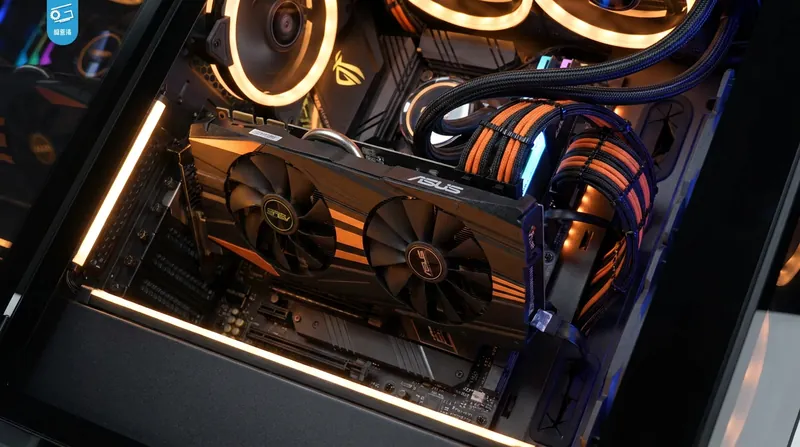
Open-Source ZLUDA v6 Breaks NVIDIA Lock, Enabling 3x Performance Boost for PhysX Games on AMD Radeon
2 sources
Game Engines
Epic Games Unveils Unreal Engine 6, Bypassing UE5 for Rocket League's Next Era
2 sources

PC Hardware
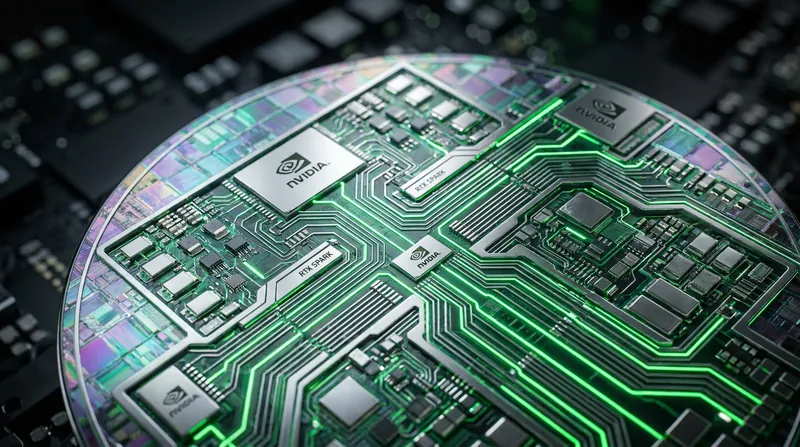
NVIDIA Unveils RTX Spark, Its First ARM-Based 'Superchip' to Redefine Windows Gaming and AI PCs
3 sources
Xbox Strategy
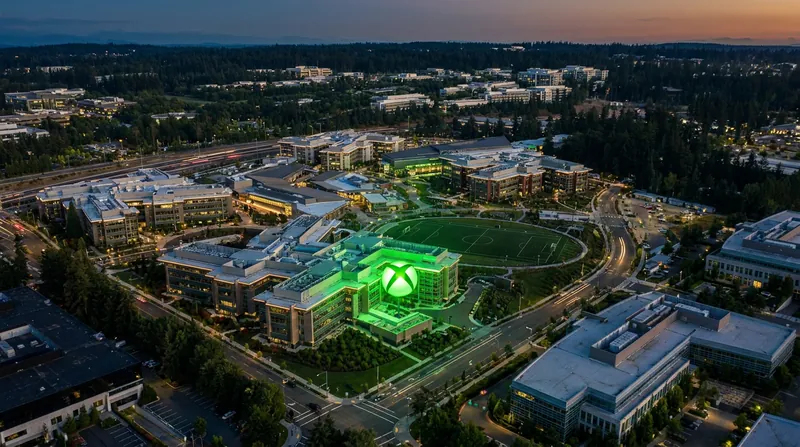
Microsoft Weighs Xbox Spin-Off to Accelerate Game Development as Studio Head Departs
2 sources
Comments
Every angle. Every day.
Get Technology stories with full source coverage and perspective breakdowns, free every day.