
Amazon's High-Return-Rate Fee Forces Sellers to Improve Quality and Alter Prices
Amazon's new penalty for frequently returned items is forcing sellers to improve product quality or face margin-crushing fees. Here is the evidence on how the policy alters consumer prices, marketplace junk, and retail's massive reverse-logistics footprint.

Share this story
In short
- Amazon now charges third-party sellers a per-unit fee if their product's return rate exceeds the category average.
- The policy makes it financially unviable to sell low-quality, easily broken items on the platform.
- Sellers are responding by investing in better product descriptions and AR sizing tools to prevent returns.
The era of consequence-free online returns is quietly drawing to a close, fundamentally altering the calculus of digital shopping. For over a decade, e-commerce giants prioritized frictionless buying above all else, effectively training consumers to order three variations of a product and return two without a second thought. This strategy successfully drove unprecedented gross merchandise volume, but it also created a logistical nightmare.
Today, the sheer volume of returned goods has become an unsustainable financial and environmental burden. In response, Amazon’s implementation of the "high-return-rate fee" represents a structural shift in how the marketplace operates. By directly penalizing third-party sellers whose products are sent back at rates significantly above their category average, the platform is forcing a long-overdue reckoning with product quality and accurate representation.[2][4]
The cost of this consumer behavior has reached a breaking point for the retail industry. The National Retail Federation estimates that the average e-commerce return rate hovers around 14.5%, representing tens of billions of dollars in lost revenue and processing costs annually.
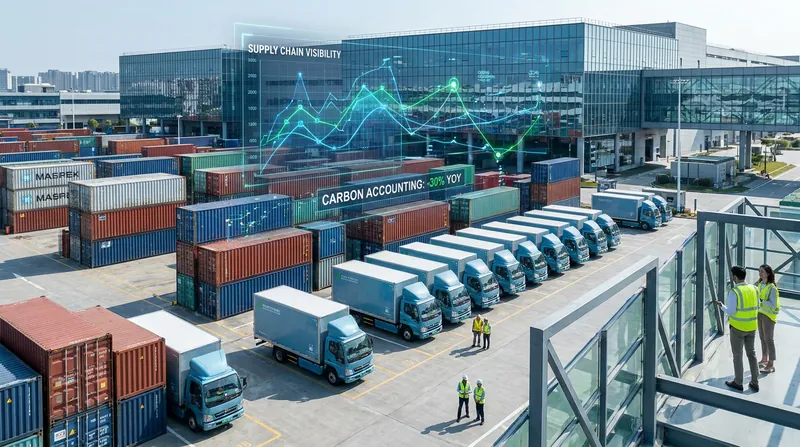
Processing a single return requires a complex web of reverse logistics: shipping the item back to a fulfillment center, manually inspecting it for damage, repackaging it, and determining whether it can be resold, liquidated, or sent to a landfill. Amazon’s new fee structure is designed to attack this problem at its source by making it financially unviable to sell products that consistently disappoint buyers.
The mechanism of the high-return-rate fee is straightforward but highly punitive for underperforming sellers. If a seller's return rate for a specific item—identified by its Amazon Standard Identification Number (ASIN)—breaches the established threshold for its category, the seller is hit with a per-unit processing fee for every returned item.
These thresholds vary widely; a complex electronic device might have a higher acceptable return rate than a simple plastic storage bin. The fee itself typically ranges from $1.50 to over $5.00 per unit, depending on the size and weight of the product. For sellers operating on tight margins, this penalty can instantly turn a profitable best-seller into a financial liability.[1][4]
To understand the true impact of this policy shift, we must evaluate the core claims surrounding its implementation. Claim one: The fee will systematically purge low-quality "junk" from the marketplace. The evidence supporting this claim is robust and highly visible in seller behavior.
For years, the platform has been flooded with cheap, easily broken items manufactured with minimal quality control. Because the cost of acquiring a customer was low, sellers could afford a high return rate as long as the overall volume remained high. The new fee destroys this arbitrage model.
According to retail analysts tracking marketplace dynamics, sellers of sub-par electronics, flimsy home goods, or poorly stitched accessories operate on razor-thin margins. A $3 penalty on a $12 item instantly renders the product unprofitable. Faced with these fees, sellers are forced into a Darwinian filter.
They must either invest in better manufacturing processes to improve the product, pull the sub-par items voluntarily, or face automated financial ruin. The net result is a gradual but significant cleaning up of search results, ensuring that consumers are presented with products that actually meet their expectations.[2]
Claim two: The fee will inevitably drive up upfront prices for consumers as sellers pass on the costs. The evidence for this is mixed and heavily dependent on the product category and the individual seller's market power.
Critics of the fee structure argue that small businesses, already squeezed by rising fulfillment and advertising costs, have no choice but to bake the risk of returns into their retail prices. If a seller anticipates a 12% return rate and knows they will be penalized for it, the logical response is to raise the base price of the item to cover the anticipated losses.
However, industry data suggests an alternative, more consumer-friendly adaptation is taking place. Instead of simply raising prices across the board, sophisticated sellers are investing heavily in "return prevention." This involves providing high-fidelity product images, detailed and accurate sizing charts, augmented reality tools that allow buyers to visualize items in their space, and comprehensive video demonstrations. By ensuring the buyer knows exactly what they are getting before they click "buy," sellers can keep their return rates below the penalty threshold, maintaining competitive pricing while avoiding the fee entirely.[4]
Claim three: The policy will significantly reduce the environmental toll of reverse logistics. The evidence here is strong, though it highlights a grim baseline regarding the ecological footprint of modern retail. E-commerce returns generate millions of tons of landfill waste annually. When an item is returned, the cost of inspecting and repackaging it often exceeds the value of the item itself. Consequently, massive quantities of perfectly functional but slightly used goods are sold to liquidators for pennies on the dollar or, worse, sent directly to landfills or incinerators.[3]
Academic research analyzing the intersection of retail policy and environmental impact demonstrates that financial penalties on returns directly correlate with a reduction in reverse-logistics volume. By stopping the flow of "disposable" goods at the source—by making them unprofitable to sell in the first place—the carbon footprint of the marketplace shrinks. Fewer returns mean fewer delivery trucks making secondary trips, less cardboard packaging being cycled through the system, and a measurable decrease in the volume of manufactured goods ending up as waste.[3]
Despite the clear benefits regarding product quality and waste reduction, significant uncertainty remains regarding the consistency of the fee's enforcement. Amazon's algorithms must accurately distinguish between a genuinely defective product and a buyer who simply experienced "buyer's remorse" or engaged in "wardrobing"—buying an item to use once and then return it. Sellers frequently argue that they are being penalized for consumer behavior that is entirely out of their control, such as buyers failing to read clear product descriptions or intentionally damaging items to secure a free return.
Furthermore, the policy's implementation is complex, with certain categories like apparel and shoes operating under different rules. These categories have historically high return rates due to the inherent difficulty of sizing without trying items on. While they are exempt from this specific new high-return-rate fee, they have long been subject to separate return processing fees. The new policy primarily targets categories where high returns are a clear indicator of poor quality or misleading marketing, rather than a natural byproduct of the shopping experience.[1][2]
The ripple effects of this policy are already being felt beyond Amazon's ecosystem. Competing marketplaces and independent retailers are closely monitoring the implementation of the high-return-rate fee. As Amazon successfully purges low-quality inventory and reduces its reverse logistics overhead, other platforms are likely to adopt similar punitive measures. This creates an industry-wide standard where product quality and accurate representation become non-negotiable baseline requirements for participating in the digital economy, rather than optional best practices.[4]
For brands and manufacturers, this shift necessitates a fundamental rethinking of product development. The "fast fashion" approach to electronics and home goods—rushing minimally viable products to market to capitalize on fleeting trends—is no longer financially viable. Manufacturers must now prioritize durability, clear user instructions, and robust quality assurance testing. The penalty for failing to do so is no longer just a few bad reviews; it is immediate, algorithmic exclusion from the world's largest retail platform.[2]
In the broader context of consumer rights, this policy represents a fascinating inversion of traditional dynamics. Historically, consumer protection focused on ensuring the right to return defective goods. Today, the most effective consumer protection is preventing those defective goods from being sold in the first place. By aligning the financial incentives of the marketplace with the desire for high-quality products, the high-return-rate fee acts as an automated, highly efficient regulatory mechanism, achieving what traditional oversight agencies have struggled to accomplish in the borderless world of e-commerce.[4]
In the broader context of consumer rights, this policy represents a fascinating inversion of traditional dynamics.
Ultimately, the high-return-rate fee signals a necessary maturation of the e-commerce model. The industry's focus is decisively shifting from raw gross merchandise volume to profitable, sustainable transactions. For the consumer, the short-term friction of potentially stricter return windows or slightly higher prices for certain goods is offset by a marketplace that actively discourages deceptive marketing and disposable manufacturing.
The era of the "free return" was always an illusion; the costs were simply hidden. By reallocating those costs to the source of the problem, the marketplace is taking a vital step toward a more sustainable and reliable shopping experience.[4]
Key terms
- Reverse Logistics
- The complex supply chain process of moving goods from their typical final destination (the consumer) back to the seller or manufacturer for returns, repairs, or recycling.
- ASIN
- Amazon Standard Identification Number, a unique block of 10 letters and/or numbers that identifies items within the Amazon catalog.
- Wardrobing
- A form of return fraud where a consumer purchases an item, uses it for a specific event, and then returns it for a full refund.
- Return Processing Fee
- A specific charge levied by a marketplace against a seller to cover the operational costs of receiving, inspecting, and restocking a returned item.
Reader questions
Will I be charged a fee to return an item?
No. The high-return-rate fee is charged directly to the third-party seller, not the consumer. However, sellers may raise upfront prices to cover the cost of these potential penalties.
What is considered a 'high' return rate?
The threshold varies by product category. Amazon sets a specific percentage for each category based on historical averages; if a product's return rate exceeds that specific threshold, the fee applies.
Does this fee apply to clothing and shoes?
Apparel and shoes are generally exempt from this specific new threshold fee because they already have separate, built-in return processing fees due to their naturally high return rates.
How does this improve product quality?
By making it financially unviable to sell products that are frequently returned for being defective or poorly described, the fee forces sellers to either improve their manufacturing or remove the items from the platform entirely.
Where opinion splits
Marketplace Platforms
Focuses on reducing the massive logistical overhead and financial losses associated with processing returns.
For marketplace operators, the era of subsidizing returns to drive top-line growth is over. Processing a return is highly labor-intensive, requiring individual inspection, repackaging, and routing. By implementing the high-return-rate fee, platforms are effectively outsourcing quality control to the sellers themselves. If a product is genuinely good and accurately described, it won't trigger the fee. If it is deceptive or flimsy, the seller pays for the logistical headache they created. This aligns platform profitability with consumer satisfaction.
Independent Sellers
Argues that the fees unfairly squeeze small business margins and punish sellers for uncontrollable consumer behavior.
Many third-party sellers view the policy as an algorithmic blunt instrument that fails to account for consumer behavior. Sellers argue they are frequently penalized for 'wardrobing' or buyers who simply fail to read clear product dimensions before ordering. Because the fee is deducted automatically, sellers have little recourse to dispute returns they believe are fraudulent or unjustified. For small businesses operating on tight margins, a sudden spike in returns can trigger fees that wipe out an entire month's profit, forcing them to raise prices defensively.
Supply Chain Analysts
Views the policy as a necessary mechanism to reduce the massive environmental waste generated by reverse logistics.
Sustainability experts point out that the 'free return' model has been an ecological disaster. Because inspecting and restocking a cheap item often costs more than the item's retail value, millions of tons of perfectly usable goods are sent directly to landfills or incinerators every year. By making high return rates financially painful for the manufacturer, the policy attacks the root of the problem: the production of disposable, low-quality goods. Analysts argue that financial penalties are the only proven method to reduce the carbon footprint of e-commerce logistics.
- Marketplace Platforms
- Focuses on reducing the massive logistical overhead and financial losses associated with processing returns.
- Independent Sellers
- Argues that the fees unfairly squeeze small business margins and punish sellers for uncontrollable consumer behavior.
- Supply Chain Analysts
- Views the policy as a necessary mechanism to reduce the massive environmental waste generated by reverse logistics.
- Consumer Advocates
- Evaluates the trade-off between potentially higher upfront prices and the benefit of a marketplace free of low-quality junk.
Perspectives this story doesn't cover
- Warehouse workers processing returns
- Liquidators who purchase returned pallets
Sources
Source coverage
4 outlets
4 viewpoints surfaced




- [1]Amazon Seller Central
High return rate fee for seller-fulfilled and FBA products
Read on Amazon Seller Central → - [2]The Wall Street JournalMarketplace Platforms
Amazon's Crackdown on Returns is Forcing Sellers to Ditch the Junk
Read on The Wall Street Journal → - [3]Journal of RetailingSupply Chain Analysts
The Environmental Impact of E-Commerce Reverse Logistics and Policy Interventions
Read on Journal of Retailing → - [4]Factlen Editorial TeamConsumer Advocates
Synthesis by Factlen editorial team
Read on Factlen Editorial Team →
More in Shopping & Reviews
See all →Tech Hardware
The Electronic Shrinkflation: Why Your New Laptop or Phone Has Less RAM and a Cheaper Screen Than Last Year's Model
2 sources

Supply Chain
Mexico's New Tariffs on Asian Goods Reshape Apparel and Electronics Sourcing
4 sources

PFAS Ban
The PFAS Patchwork: Comparing Cookware, Cosmetics, and Apparel Under New State Bans vs. Legacy Products
2 sources

Food Safety
FDA Closes GRAS Loophole With Mandatory Pre-Market Review for New Food Additives
5 sources
Comments
Every angle. Every day.
Get Shopping & Reviews stories with full source coverage and perspective breakdowns, free every day.