
The Evidence Is In: 'Missing Middle' Zoning Reforms Are Successfully Lowering Rents
Peer-reviewed data from Auckland, Minneapolis, and Austin proves that eliminating single-family zoning and legalizing density directly stabilizes housing costs.
By Factlen Editorial Team
- Urban Planners & Economists
- Advocating for data-driven, supply-side solutions to the housing shortage.
- Free-Market Advocates
- Focusing on property rights and the removal of government bureaucracy.
- Affordable Housing Advocates
- Supporting supply increases but emphasizing the need for direct subsidies.
What's not represented
- · Incumbent homeowners opposed to neighborhood density
- · Local city council members losing discretionary zoning power
Why this matters
For decades, the housing shortage has felt like an unsolvable crisis that locks young people out of homeownership and drains household wealth. This new wave of data proves that local policy changes can actually reverse the trend, offering a proven blueprint for cities to make housing affordable again.
Key points
- Auckland's 2016 upzoning of 75% of its residential land directly resulted in 22,000 new homes, proving developers will build density when legalized.
- Five years after eliminating single-family zoning, Minneapolis rents are up to 34% lower than they would have been without the reform.
- Austin's HOME initiative, which reduced lot sizes and allowed three units per lot, triggered an 86% increase in multi-unit permits in one year.
- While zoning reform successfully stabilizes median rents, experts caution that direct subsidies are still required to house extremely low-income residents.
For decades, the American housing market has been defined by a structural shortage, with estimates suggesting a deficit of four to seven million homes nationwide. This severe scarcity has pushed rents and home prices to historic highs, locking an entire generation out of homeownership and accelerating homelessness in major metropolitan areas. But a growing body of empirical evidence suggests that the root cause is not a lack of land or capital, but a web of local zoning regulations that effectively banned the construction of anything other than single-family homes on large lots.[1][8]
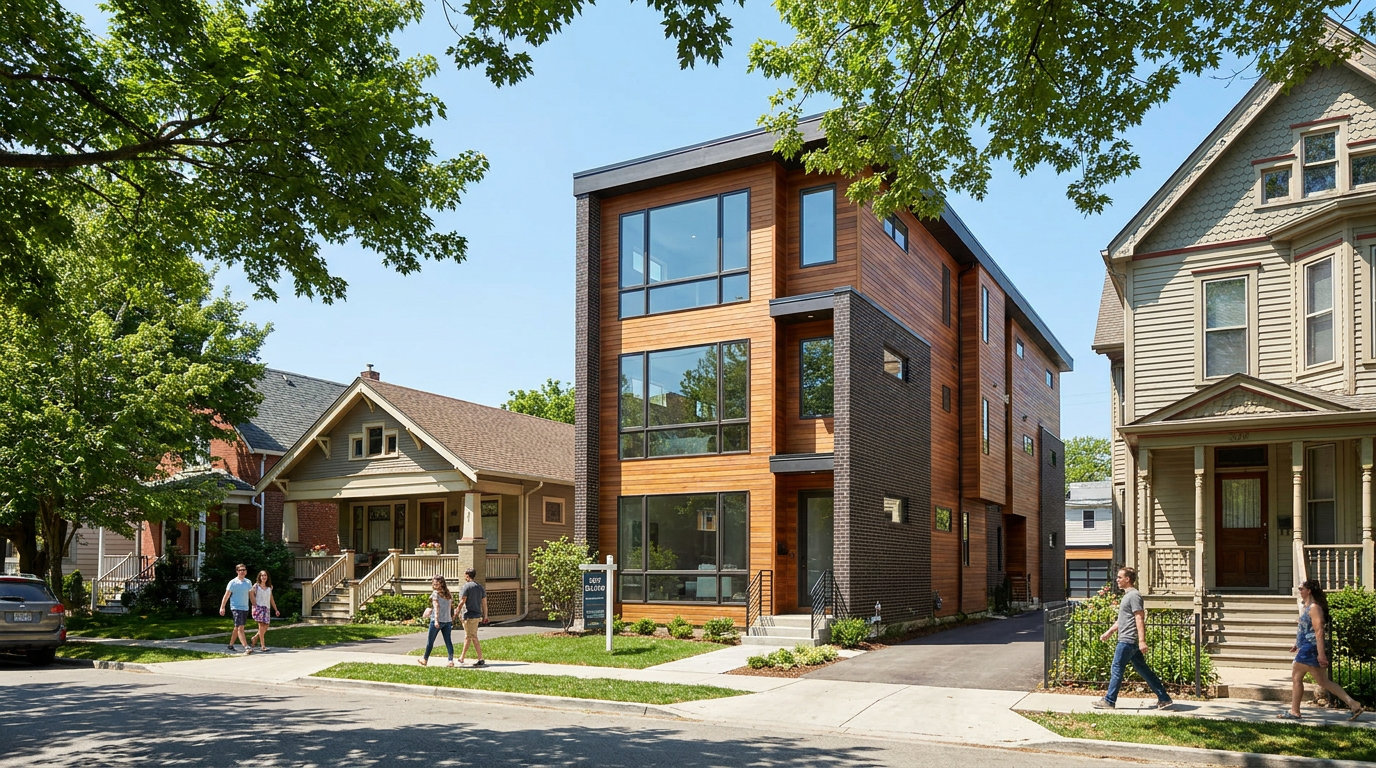
In response, a wave of cities and states have begun dismantling these barriers, legalizing "missing middle" housing—duplexes, triplexes, and townhomes—and reducing minimum lot sizes. For years, the debate over whether these "upzoning" reforms would actually lower housing costs was largely theoretical, dominated by competing economic models and neighborhood anxieties. Now, in 2026, the first generation of comprehensive zoning reforms has matured enough to yield hard, peer-reviewed data.[1][8]
The central claim evaluated by economists is whether legalizing density directly causes a measurable surge in housing supply. The strongest evidence comes from Auckland, New Zealand, which executed one of the largest upzoning experiments in the developed world. In 2016, the city implemented the Auckland Unitary Plan, removing single-dwelling restrictions on roughly 75 percent of its residential land and allowing medium- and high-density housing near transit corridors.[3][4]
Researchers from the University of Auckland and Yale University applied a quasi-experimental framework to track the aftermath. They found that the policy directly caused a historic construction boom. Between 2016 and 2021, approximately 22,000 new homes were consented as a direct result of the upzoning—accounting for one-third of all residential consents during that period. The researchers noted that this equated to 50 percent more dwellings than would have been built under the old rules, proving that developers will rapidly build missing-middle housing when legally permitted.[3][4]

The second, and more contentious, claim is that this localized surge in supply actually suppresses rent growth across an entire metropolitan area. To test this hypothesis, economists turned to Minneapolis, which in 2018 became the first major U.S. city to eliminate single-family zoning citywide through its landmark Minneapolis 2040 Plan. The city also eliminated off-street parking requirements, removing a major financial hurdle for small-scale apartment construction and allowing developers to maximize the footprint of residential lots.[2][8]
A 2025 study published by researchers at Middlebury College utilized a synthetic control approach—comparing Minneapolis to a mathematically constructed "counterfactual" city made up of 83 similar metro areas that did not reform their zoning laws. The results of the peer-reviewed analysis were stark. In the five years following the implementation of the 2040 Plan, rents in Minneapolis were 17.5 percent to 34 percent lower than they would have been without the reform, saving the average renter hundreds of dollars per month.[2]
This divergence was not due to a lack of demand; the number of households in Minneapolis actually grew during this period. Instead, the city authorized over 14,000 multifamily units in a single year, flooding the market with new inventory. As a result, official Bureau of Labor Statistics data showed that shelter inflation in Minneapolis rose significantly less than the national average, making it one of the first American cities to successfully tame housing-driven inflation.[2][8]

This divergence was not due to a lack of demand; the number of households in Minneapolis actually grew during this period.
A third claim emerging from the data is that "light-touch" density—allowing two or three units on a standard lot—can yield immediate results if paired with reductions in minimum lot sizes. Austin, Texas, provides the primary case study for this mechanism. After seeing rents skyrocket by 93 percent between 2010 and 2019 due to explosive population growth, the Austin City Council passed the HOME Initiative in late 2023.[5][6]
The first phase of the initiative allowed up to three homes on lots that previously permitted only one. The Texas Public Policy Foundation tracked the immediate aftermath: in the year following the reform, builders filed 906 permits for multi-unit projects in single-family zones, an 86 percent increase over the prior year. Crucially, the median lot size for new completions shrank from 7,800 square feet to roughly 4,000 square feet for two homes, bringing the price of new construction down from over $1 million to below $500,000.[6]
The cumulative effect of Austin's multi-year push to remove regulatory barriers—including targeted rezoning and cutting restrictions on accessory dwelling units—has been a 30 percent increase in its housing stock between 2015 and 2024. This construction boom fundamentally altered the market dynamic. According to a Pew Charitable Trusts analysis, Austin's median rent dropped by more than 16 percent from 2021 to 2026, with rents in older, non-luxury buildings falling by approximately 11 percent.[1][5]

However, the evidence pack also reveals transparent limitations to upzoning as a standalone cure. The primary area of weak evidence is the impact of zoning reform on extremely low-income households. While the data from Auckland, Minneapolis, and Austin clearly shows that increased supply stabilizes median rents and creates attainable housing for middle-income earners, the private market still struggles to build units affordable to those at the lowest end of the income spectrum.[7][8]
The National Low Income Housing Coalition notes that the sheer cost of land, labor, and materials means that new construction cannot be profitably rented at prices affordable to families living near the poverty line. While zoning reforms are deemed imperative to stop the bleeding, researchers stress that direct government subsidies and rental assistance remain necessary to bridge the gap between construction costs and what extremely low-income renters can actually pay.[7]
Despite this limitation, the empirical success of these early adopters has triggered a bipartisan policy shift. In 2025, state legislatures in Texas, Washington, and Montana passed sweeping bills that preempted local zoning laws, targeting parking requirements, lot sizes, and building codes. The data has effectively bridged the political divide, uniting free-market advocates who want to deregulate property rights with progressives seeking to lower the cost of living and reduce urban sprawl.[1][6]
Ultimately, the evidence from the past five years provides a clear verdict on the mechanics of the housing shortage. Cities that maintain strict single-family zoning and complex permitting processes continue to see housing costs outpace wage growth. Conversely, municipalities that have legalized missing-middle housing and streamlined approvals have successfully decoupled population growth from skyrocketing rents, proving that the housing crisis is a policy choice that can be reversed.[1][3][8]
How we got here
2016
Auckland implements the Unitary Plan, upzoning 75% of its residential land to allow for greater density.
December 2018
Minneapolis passes the 2040 Plan, becoming the first major US city to eliminate single-family zoning citywide.
December 2023
Austin passes the HOME-1 initiative, allowing up to three homes on standard single-family lots.
2025-2026
Peer-reviewed economic studies confirm that these early zoning reforms successfully decoupled population growth from skyrocketing rents.
Viewpoints in depth
Urban Planners & Economists
Advocating for data-driven, supply-side solutions to the housing shortage.
This camp, which includes academic researchers and municipal planners, argues that the laws of supply and demand apply strictly to housing. They point to the empirical data from Auckland and Minneapolis as proof that artificial constraints—like single-family zoning and parking minimums—are the primary drivers of the affordability crisis. By legalizing density, they argue, cities can harness private capital to build enough housing to stabilize rents, reduce sprawl, and lower carbon emissions through transit-oriented development.
Free-Market Advocates
Focusing on property rights and the removal of government bureaucracy.
Conservative and libertarian policy groups view zoning reform primarily as a deregulation success story. They argue that strict land-use rules are government overreach that infringes on private property rights and artificially inflates costs. For this camp, the surge of small, local developers building duplexes in Austin proves that when the government gets out of the way and removes bureaucratic veto points, the free market can efficiently deliver housing that meets consumer needs.
Affordable Housing Advocates
Supporting supply increases but emphasizing the need for direct subsidies.
While generally supportive of eliminating exclusionary zoning, housing coalitions stress that the free market alone cannot solve the entirety of the crisis. They point out that the cost of land, labor, and materials establishes a 'floor' on construction costs, making it impossible to profitably build homes for extremely low-income renters. This camp argues that while upzoning is a necessary first step to stabilize the broader market, it must be paired with robust government subsidies, rental assistance, and public housing investments to protect the most vulnerable.
What we don't know
- How long the rent-suppression effects of a one-time upzoning reform will last before demand once again outpaces the newly expanded supply.
- Whether the political momentum for state-level zoning preemption will survive backlash from suburban homeowners in upcoming election cycles.
Key terms
- Upzoning
- Changing local regulations to allow for denser housing development, such as legalizing duplexes on lots previously restricted to single-family homes.
- Synthetic Control
- A statistical method used by economists to evaluate policy impacts by comparing a treated area to a weighted combination of untreated areas.
- By-Right Development
- A permitting process where a project is approved administratively if it meets zoning codes, without requiring discretionary public hearings or city council votes.
- Missing Middle Housing
- House-scale buildings with multiple units in walkable neighborhoods, such as townhouses and triplexes, which have been largely illegal to build in many US cities for decades.
- Shelter Inflation
- The component of the Consumer Price Index that measures the cost of housing, including rent and the equivalent cost of owning a home.
Frequently asked
What is 'missing middle' housing?
Missing middle housing refers to house-scale buildings with multiple units—such as duplexes, triplexes, and townhomes—that sit between single-family homes and large apartment high-rises.
Does building new luxury apartments lower rent for everyone else?
Yes, evidence shows that adding supply at the top of the market prevents high-income earners from bidding up the prices of older, more affordable housing stock, which stabilizes rents across the board.
Why doesn't zoning reform solve homelessness on its own?
While zoning reform lowers median rents, the baseline cost of labor and materials means the private market cannot profitably build homes cheap enough for extremely low-income individuals without direct government subsidies.
What is a synthetic control study?
It is an economic method that compares a city that changed its laws to a mathematically constructed 'twin' city made up of similar areas that did not, isolating the true effect of the policy.
Sources
Source coverage
8 outlets
3 viewpoints surfaced








[1]Pew Charitable TrustsUrban Planners & Economists
State Legislatures Make Bipartisan Breakthroughs on Policies That Promote Housing
Read on Pew Charitable Trusts →[2]SSRN / Middlebury CollegeUrban Planners & Economists
Zoning Reforms and Housing Affordability: Evidence from the Minneapolis 2040 Plan
Read on SSRN / Middlebury College →[3]University of AucklandUrban Planners & Economists
Auckland upzoned: The impact of large-scale zoning reforms on housing construction and costs
Read on University of Auckland →[4]Auckland CouncilUrban Planners & Economists
More homes improving affordability: The Auckland Unitary Plan
Read on Auckland Council →[5]Smart Cities DiveUrban Planners & Economists
Austin's housing boom drives down rents by 16%
Read on Smart Cities Dive →[6]Texas Public Policy FoundationFree-Market Advocates
Austin's Simple Fix for Soaring Housing Costs
Read on Texas Public Policy Foundation →[7]National Low Income Housing CoalitionAffordable Housing Advocates
Homeowners, Renters, and Households of All Incomes Back Housing Reforms
Read on National Low Income Housing Coalition →[8]Factlen Editorial TeamUrban Planners & Economists
Synthesis by Factlen editorial team
Read on Factlen Editorial Team →
More in real estate
See all 44 stories →iBuyer Market
Selling to an iBuyer vs. a Traditional Agent: Which Strategy Fits You Best?
8 sources

Fractional Ownership
How Fractional Real Estate is Dismantling the Housing Market's Capital Walls
8 sources

Adaptive Reuse
The Evidence Pack: How Empty Offices Are Solving the Housing Crisis
8 sources

Office Conversions
The Evidence Pack: How Empty Offices Are Becoming Affordable Housing in 2026
8 sources

Every angle. Every day.
Get real estate stories with full source coverage and perspective breakdowns delivered to your inbox.