
The Evidence Behind Office-to-Residential Conversions in 2026
As urban centers grapple with vacant commercial real estate, a growing body of evidence suggests adaptive reuse can simultaneously address housing shortages, cut emissions, and revitalize downtowns.
By Factlen Editorial Team
- Urban Revitalization Advocates
- Focus on the potential of conversions to create vibrant, 24/7 mixed-use neighborhoods and alleviate housing shortages.
- Pragmatic Developers
- Emphasize the steep financial and architectural hurdles that make conversions difficult without significant public subsidies.
- Environmental Economists
- Highlight the massive carbon savings achieved by repurposing existing structures rather than building from scratch.
What's not represented
- · Local School Boards
- · Existing Commercial Tenants
Why this matters
Transforming empty office buildings into housing offers a rare dual-solution to two of the decade's biggest urban challenges: a critical shortage of residential units and the economic drain of vacant downtowns.
Key points
- Research indicates 11 to 15 percent of downtown office buildings are physically suitable for residential conversion.
- Converting these viable properties could add up to 400,000 new apartments to the national housing stock.
- Deep floor plates and centralized plumbing make many modern office towers too expensive or structurally difficult to convert.
- Adaptive reuse preserves embodied carbon, potentially reducing greenhouse gas emissions by 80 percent compared to new construction.
- Cities are increasingly offering tax abatements and grants to bridge the financial gap and encourage developers to take on conversion projects.
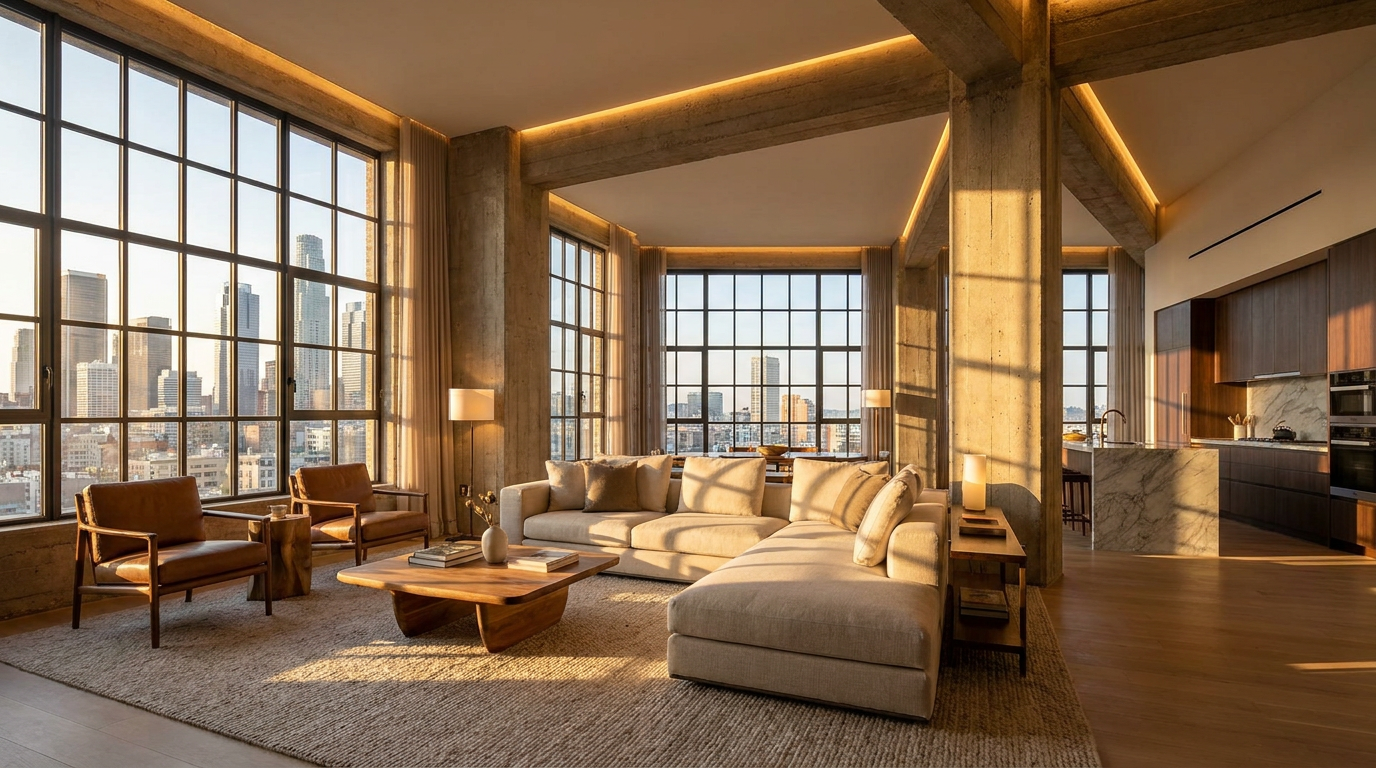
For years following the shift to remote work, the narrative surrounding downtown commercial districts was dominated by the "urban doom loop"—a cycle of empty offices, declining foot traffic, and plummeting municipal tax revenues. However, as the real estate market stabilizes in 2026, a more constructive reality is taking shape. The mass conversion of vacant office buildings into residential apartments has evolved from a theoretical architectural exercise into a measurable, data-backed market force.[1]
This synthesis of current economic, architectural, and policy research examines the hard evidence behind adaptive reuse. Rather than relying on speculative optimism, the data reveals a nuanced landscape: office-to-residential conversions are not a universal silver bullet for the housing crisis, but they represent a highly effective, targeted intervention. When the right building meets the right financial conditions, the results solve multiple urban crises simultaneously.[1]
The foundational question of adaptive reuse is one of physical scale: exactly how many empty offices can actually become homes? A landmark study by the National Bureau of Economic Research (NBER) evaluated the commercial districts of the 105 largest cities in the United States. The researchers concluded that approximately 11 to 15 percent of existing office buildings are physically suitable for residential conversion.[2]
While 15 percent may sound modest, the absolute numbers are substantial. The NBER estimates that converting these viable properties could add up to 400,000 new apartments to the national housing stock. Industry data confirms this pipeline is actively materializing; market trackers project that tens of thousands of newly converted residential units will be delivered across the country in the coming years, with adaptive reuse now accounting for a record share of all redevelopment projects.[2][6]

The reason only a fraction of buildings qualify lies in rigid architectural constraints. Global design firm Gensler, which has evaluated over 1,300 buildings across 170 cities using its proprietary Conversions+ algorithm, notes that modern office towers were built for maximum desk density, not human habitation.[4]
The primary physical hurdle is the "deep floor plate." Commercial buildings often feature massive, windowless interior spaces. Because residential building codes strictly require natural light and operable ventilation for bedrooms, a building that is too deep leaves vast amounts of un-leasable, dark space in the center of the floor plan, rendering the layout highly inefficient for apartments.[4][8]
Plumbing and mechanical systems present another severe bottleneck. Office buildings typically consolidate their plumbing into a single central core near the elevators. Residential buildings, by contrast, require distributed plumbing to service dozens of individual kitchens and bathrooms spread across every floor. Relocating stairwells to optimize facade frontage and drilling through post-tensioned concrete slabs to run new pipes requires immense structural engineering.[8]
Because of these architectural complexities, the financial math of adaptive reuse is notoriously difficult. Counterintuitively, it is often not cheaper to convert an existing building than to build a new one from scratch. Construction costs for a complex office conversion can reach $500 per square foot, significantly outpacing the roughly $350 per square foot average for equivalent ground-up residential construction.[8]
Because of these architectural complexities, the financial math of adaptive reuse is notoriously difficult.
For a conversion project to pencil out financially, the developer must acquire the underlying empty office building at a steep discount. The NBER research indicates that conversions only become economically viable when office towers change hands at their newly depressed, post-pandemic fair-market values. Inducing legacy owners to sell at these reduced prices, rather than holding out for a market rebound, remains one of the industry's primary frictions.[2]
Given the steep costs, why are municipalities so eager to subsidize these projects? The strongest evidence for public intervention lies in the massive environmental dividend. Adaptive reuse is widely considered the ultimate form of sustainable development because it preserves the "embodied carbon"—the emissions already spent manufacturing and pouring the original concrete and steel.[2]
The NBER study quantified this climate impact, finding that upgrading and converting older, energy-inefficient Class B and C office buildings into modern, green apartments can decrease greenhouse gas emissions by an astonishing 80 percent compared to new construction. At scale, this represents a potential reduction of 1.5 million tons of carbon emissions, aligning perfectly with aggressive municipal climate goals.[2]

To bridge the financial gap and secure these environmental and social benefits, governments at every level are deploying aggressive policy interventions. Recognizing that the free market alone cannot absorb the high costs of conversion, cities are rewriting zoning codes and offering direct financial incentives to developers willing to take on the risk.[7]
The Center for American Progress highlights several successful pilot programs currently reshaping the market. Boston has offered tax reductions of up to 75 percent for 25 years for downtown conversions, while Washington, D.C., introduced a 20-year, $2.5 million tax abatement program. At the state level, California allocated $400 million in direct grants to fund the adaptive reuse of commercial spaces into both affordable and market-rate housing.[7]
Internationally, Calgary’s Downtown Office Conversion Program serves as a premier case study. By co-investing directly with developers, the city aims to remove 6 million square feet of vacant office space by 2031. The program already has dozens of projects in the pipeline, successfully delivering thousands of new homes and proving that public-private partnerships can overcome the inherent financial hurdles of adaptive reuse.[8]

Beyond unit counts and carbon savings, the evidence points to a profound shift in urban sociology. Research from the Brookings Institution emphasizes that office-to-residential conversions are fundamentally about neighborhood revitalization. By injecting permanent residents into traditionally 9-to-5 financial districts, cities can create vibrant, 24/7 neighborhoods.[3]
This demographic shift supports ground-floor retail, restaurants, and transit systems that otherwise starve outside of traditional commuting hours. Furthermore, Brookings notes that conversions offer a unique opportunity to affirmatively further fair housing—integrating diverse residential options into high-opportunity, transit-rich commercial zones that were previously walled off from residential use.[3]
Looking at the broader 2026 real estate landscape, commercial analysts at CBRE note that adaptive reuse has moved from a niche architectural experiment to a core strategy for asset renewal. As interest rates gradually normalize and consumer demand for sustainable, mixed-use environments grows, the momentum behind conversions is expected to accelerate.[5][6]
The United States currently faces a shortage of roughly 3.8 million housing units. While converting 400,000 office units will not single-handedly close that gap, the evidence is clear: adaptive reuse is a vital, high-leverage tool. By turning obsolete commercial liabilities into sustainable residential assets, cities are actively writing the next chapter of urban resilience.[1][7]
How we got here
2020–2021
The shift to remote work empties downtown commercial districts, sparking early discussions of mass conversions.
October 2023
The NBER publishes a landmark study quantifying the physical viability of office-to-residential conversions.
Late 2023
The White House releases federal guidelines to unlock funding for commercial-to-residential adaptive reuse.
2025–2026
Conversion projects break records, with tens of thousands of units entering the market in major cities.
Viewpoints in depth
Urban Planners & Policymakers
View conversions as a catalyst for 24/7 downtowns and a tool for fair housing.
For city planners, the value of an office-to-residential conversion extends far beyond the raw number of housing units it provides. Organizations like the Brookings Institution emphasize that introducing permanent residents into traditionally commercial districts fundamentally alters the urban ecosystem. A 24/7 population supports ground-floor retail, restaurants, and public transit systems that otherwise struggle outside of traditional commuting hours. Furthermore, policymakers view these conversions as a rare opportunity to affirmatively further fair housing by integrating diverse residential options into high-opportunity, transit-rich zones that were previously walled off from residential use.
Real Estate Developers
Focus on the financial friction and architectural constraints of adaptive reuse.
While the concept of adaptive reuse is popular, developers are quick to point out the severe practical limitations. Firms like Gensler and Smart Density note that modern office towers were built for maximum desk density, resulting in deep, windowless floor plates that cannot legally or practically be converted into bedrooms. Furthermore, the cost of retrofitting centralized commercial plumbing and HVAC systems into distributed residential networks often pushes construction costs to $500 per square foot—significantly higher than building from scratch. For developers, conversions only make sense when the underlying building can be purchased at a massive discount, or when municipalities provide heavy subsidies.
Environmental Advocates
Champion adaptive reuse as the ultimate form of sustainable development.
From a climate perspective, the greenest building is the one that is already built. Environmental economists highlight that ground-up construction is incredibly carbon-intensive due to the manufacturing and transportation of concrete and steel. By repurposing existing structures, developers preserve this "embodied carbon." Studies from the National Bureau of Economic Research show that converting older, energy-inefficient Class B and C offices into modern, green apartments can reduce greenhouse gas emissions by up to 80 percent compared to new construction, making adaptive reuse a critical tool for cities trying to meet aggressive climate targets.
What we don't know
- Whether interest rates will drop enough to make unsubsidized conversions financially viable at scale.
- How the influx of residential units will permanently alter the retail and transit ecosystems of traditionally commercial downtowns.
Key terms
- Adaptive Reuse
- The process of repurposing an existing building for a use other than what it was originally designed for.
- Floor Plate
- The total leasable or usable area on a single floor of a building, which dictates how easily space can be divided into apartments.
- Class B and C Offices
- Older, less modern commercial buildings that typically lack premium amenities and are currently experiencing the highest vacancy rates.
- Embodied Carbon
- The greenhouse gas emissions associated with the manufacturing, transportation, and installation of building materials.
Frequently asked
Why can't all empty offices become apartments?
Many modern office buildings have deep floor plates, meaning the interior spaces are too far from windows to meet residential light and ventilation codes.
Is it cheaper to convert an office or build from scratch?
Surprisingly, conversions are often more expensive per square foot due to the complexities of retrofitting plumbing, HVAC, and structural elements.
Will office conversions solve the housing crisis?
No. While they provide a meaningful boost to urban housing stock, the total number of viable units is a fraction of the millions needed nationwide.
Sources
Source coverage
8 outlets
3 viewpoints surfaced








[1]Factlen Editorial TeamUrban Revitalization Advocates
Synthesis by Factlen editorial team
Read on Factlen Editorial Team →[2]National Bureau of Economic ResearchEnvironmental Economists
Converting Brown Offices to Green Apartments
Read on National Bureau of Economic Research →[3]Brookings InstitutionUrban Revitalization Advocates
Understanding Office-to-Residential Conversion: Lessons from Six U.S. Case Studies
Read on Brookings Institution →[4]GenslerPragmatic Developers
Office-to-Residential Conversions: Turning Constraints Into Competitive Advantage
Read on Gensler →[5]CBREPragmatic Developers
Adaptive Reuse and Sustainable Development
Read on CBRE →[6]New England Real Estate JournalPragmatic Developers
Navigating the next phase: How adaptive reuse and financial rebalancing will shape real estate in 2026
Read on New England Real Estate Journal →[7]Center for American ProgressUrban Revitalization Advocates
The Potential of Office-to-Residential Conversions
Read on Center for American Progress →[8]Smart DensityPragmatic Developers
Office Conversion to Affordable Housing? A Case Study
Read on Smart Density →
Every angle. Every day.
Get real estate stories with full source coverage and perspective breakdowns delivered to your inbox.