
The Evidence-Based Guide to Sleep Trackers: What Actually Works in 2026
We reviewed the latest clinical validation studies comparing top consumer sleep trackers against medical-grade polysomnography. Here is what the data says about the accuracy of Oura, Apple Watch, Whoop, and Fitbit.
By Factlen Editorial Team
- Clinical Researchers
- Argue that consumer wearables cannot reliably distinguish sleep stages without EEG brainwave data, emphasizing the gap between marketing claims and polysomnography validation.
- Sleep Specialists
- Value wearables for tracking long-term behavioral trends and total sleep duration, but warn against orthosomnia and obsessing over single-night stage data.
- Consumer Tech Reviewers
- Focus on the practical utility, ecosystem integration, and wearability of devices, evaluating how actionable the data is for everyday users and athletes.
What's not represented
- · Individuals with diagnosed sleep disorders
- · Algorithm developers at wearable companies
Why this matters
Millions of people make daily decisions about their health, workouts, and caffeine intake based on the 'sleep score' on their wrist. Understanding which metrics are scientifically validated—and which are algorithmic guesses—prevents unnecessary anxiety and helps you actually improve your rest.
Key points
- Top consumer wearables are highly accurate (≥95%) at detecting when you fall asleep and when you wake up.
- Sleep stage classification (light, deep, REM) remains scientifically flawed, with accuracy ranging from 50% to 86% across devices.
- The Oura Ring currently leads clinical validation for sleep staging and HRV, largely due to the superior signal quality of finger-based sensors.
- Sleep specialists recommend using wearables to track long-term behavioral trends rather than obsessing over a single night's deep sleep score.
Millions of people wake up every morning and immediately check their wrists or phones to see how well they slept. The "sleep score" has become a modern morning ritual, dictating whether we feel rested or exhausted before we even get out of bed. But are the numbers generated by devices from Apple, Oura, Whoop, and Fitbit actually real? To answer this, we compiled an evidence pack of the latest 2025 and 2026 clinical validation studies, comparing top consumer wearables against the medical gold standard. The data reveals a fascinating divide: while today's trackers are remarkably precise at certain physiological measurements, their ability to map the complex architecture of human sleep remains scientifically contested.[1][2][8]
To understand the evidence, you first have to understand the mechanism. The clinical gold standard for measuring sleep is polysomnography (PSG), a rigorous in-lab test that uses electroencephalography (EEG) to monitor actual brainwave activity, alongside eye movement and muscle tension. Consumer wearables do not measure brainwaves. Instead, they rely on a combination of accelerometry (movement) and photoplethysmography (PPG)—the green and red optical sensors that shine light into your skin to measure blood volume changes and heart rate. Wearables are essentially playing a sophisticated game of biological inference, using your heart rate and wrist movement to guess what your brain is doing.[1][8]
Claim 1: Sleep vs. Wake detection is highly accurate. If your primary goal is to measure total sleep duration—exactly when you fell asleep and when you woke up—the evidence strongly supports consumer wearables. A comprehensive 2024–2026 validation study published in the journal Sensors tested the Apple Watch, Oura Ring, and Fitbit against clinical PSG. The results were definitive: all three major devices demonstrated a sensitivity of 95% or higher for simply detecting sleep versus wakefulness. For basic behavioral tracking, such as ensuring you get eight hours of rest, the hardware on your wrist or finger is highly reliable.[1][4]

Claim 2: Sleep stage classification remains scientifically flawed. The data weakens significantly when devices attempt to separate your night into light, deep, and rapid eye movement (REM) sleep. Across multiple peer-reviewed evaluations, the accuracy for discriminating between specific sleep stages ranges broadly from 50% to 86%. Because heart rate and movement patterns can look remarkably similar during light sleep and deep sleep, the algorithms frequently misclassify these periods. The consensus among clinical researchers is that while multi-state categorization is improving, no consumer device currently matches the precision of an EEG for mapping sleep architecture.[1][2][8]
Looking specifically at the Apple Watch, independent validation shows a mixed performance profile. Apple's native sleep tracking algorithms are surprisingly adept at detecting REM sleep, achieving roughly 82% sensitivity in clinical trials. However, the device consistently struggles with deep sleep (N3 sleep). Studies show the Apple Watch often underestimates deep sleep by up to 43 minutes per night compared to PSG, frequently mislabeling it as light sleep. While its integration into the broader Apple Health ecosystem makes it a top choice for iPhone users, its stage-by-stage precision still leaves room for algorithmic improvement.[1]

Looking specifically at the Apple Watch, independent validation shows a mixed performance profile.
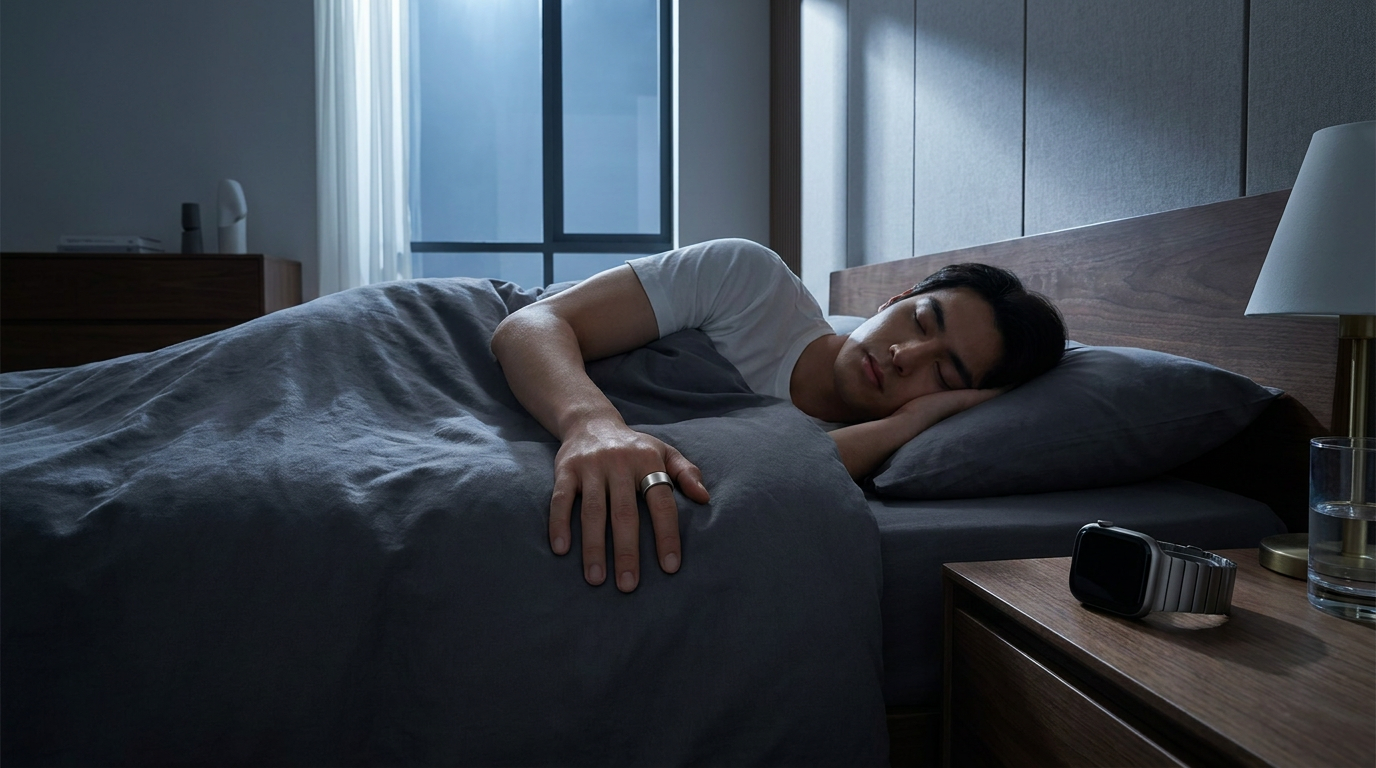
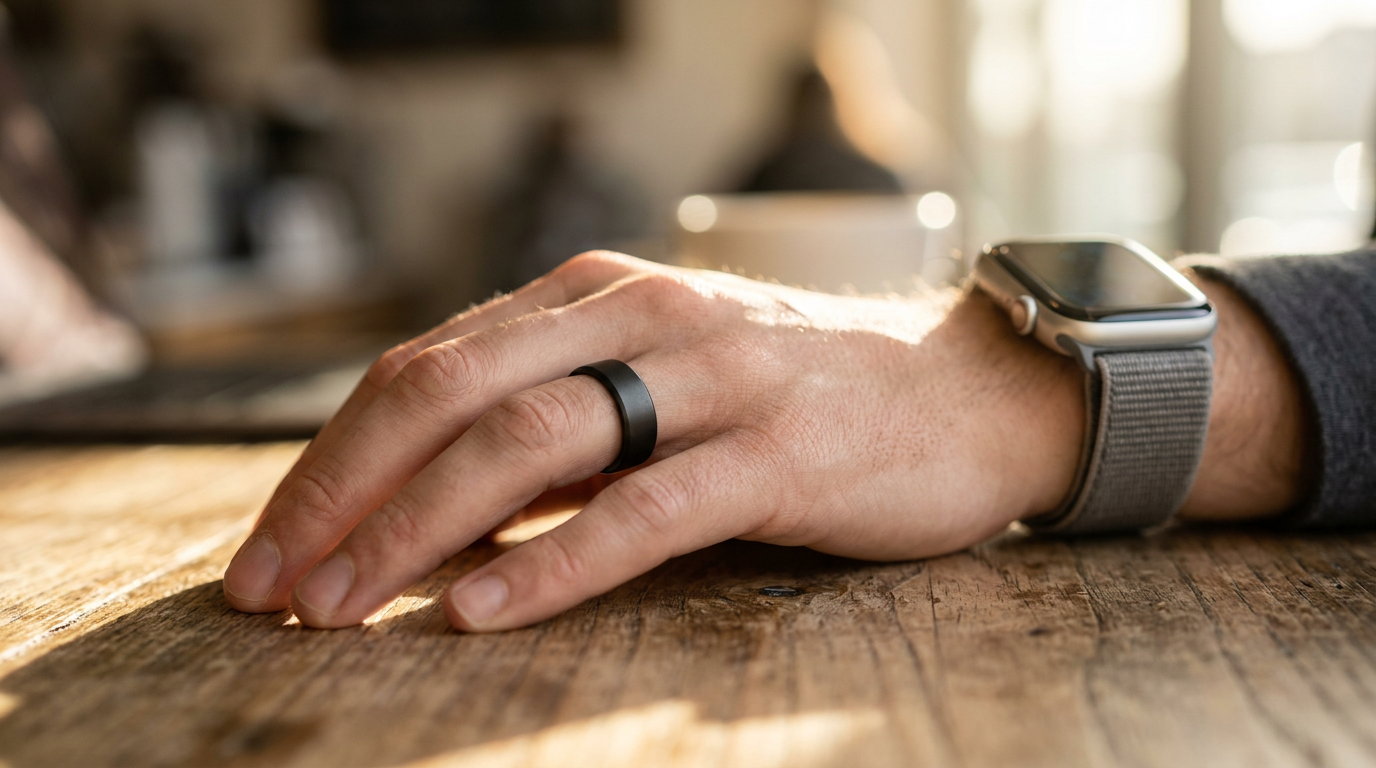
The Oura Ring, conversely, benefits immensely from its form factor. Research indicates that the blood vessels in the finger provide a much cleaner and stronger PPG signal than the wrist, especially when the user is moving or sleeping in awkward positions. In recent home-based validation studies analyzing hundreds of nights of sleep, the Oura Ring Gen 4 achieved an impressive 0.99 concordance for Heart Rate Variability (HRV) and led the consumer pack in overall stage accuracy, hitting up to 94% in some controlled metrics. Sleep specialists frequently recommend the ring because it is less intrusive to wear to bed than a bulky smartwatch.[1][3][8]
Fitbit and Whoop offer their own distinct trade-offs validated by the data. Clinical evaluations published in Sleep Advances note that while Fitbit devices show moderate to substantial agreement with PSG, they exhibit a known bias: consistently overestimating light sleep while underestimating deep sleep. Whoop, meanwhile, is heavily optimized for athletic performance rather than pure sleep staging. While its raw stage accuracy slightly trails Oura, its synthesis of HRV, resting heart rate, and respiratory rate into a daily "Recovery Score" is highly validated for managing training load. For athletes, the actionable recovery data often outweighs minor discrepancies in sleep stage classification.[2][4][7]
Claim 3: Skin tone, tattoos, and BMI introduce transparent uncertainty. The evidence pack highlights a critical caveat often buried in consumer marketing: optical PPG sensors are not universally accurate across all body types. Because the technology relies on light penetrating the skin and reflecting back, high body mass index (BMI), dark tattoos over the sensor area, and certain skin tones can significantly degrade signal fidelity. Furthermore, users with movement disorders, such as restless leg syndrome, or those who share a bed with a restless partner, often receive highly distorted sleep data due to motion artifacts confusing the accelerometers.[8]

Beyond wearables, the evidence for "nearables" is growing rapidly. Under-mattress trackers, such as the Withings Sleep Analyzer, use pneumatic sensors to detect heart rate, respiration, and movement through the mattress itself. Large-scale validation studies show these devices rival wrist-worn trackers for calculating total sleep time and detecting sleep apnea risks. For users who find wearing jewelry or watches to bed uncomfortable, nearables offer a frictionless, evidence-backed alternative that requires zero daily maintenance or charging.[4][5][8]
Claim 4: Long-term trends matter more than single-night precision. Sleep specialists and medical professionals emphasize that obsessing over a single night's "deep sleep score" is fundamentally counterproductive. The clinical consensus is that while the absolute numbers may be off by 15% to 20% on any given Tuesday, the relative trends are highly accurate and actionable. If your wearable shows your resting heart rate spiking and your HRV plummeting after a late meal or a few glasses of alcohol, that physiological response is real, even if the device miscalculated your REM sleep by twenty minutes.[7]

There is also a documented psychological risk to the sleep-tracking boom. Medical literature increasingly warns of "orthosomnia"—an unhealthy, anxiety-driven obsession with achieving perfect sleep tracker metrics. When users wake up, feel fine, but see a low recovery score on their app, it can induce a nocebo effect, making them feel artificially fatigued. Ironically, the pressure to achieve a high sleep score can cause performance anxiety that makes it harder to fall asleep the following night, creating a self-defeating cycle.[7][8]
Ultimately, the evidence reveals a maturing industry that has moved far beyond the era of glorified pedometers. Today's multi-sensor arrays capture genuine, high-fidelity physiological signals. The hardware on our wrists and fingers is increasingly clinical-grade; it is the algorithmic interpretation of that data that remains a work in progress. For consumers in 2026, the takeaway is clear: use these devices as compasses, not microscopes. Let them guide your habits and highlight your trends, but do not let their algorithms override how your body actually feels when you wake up.[3][6]
How we got here
2015
Early fitness trackers introduce basic movement-based sleep tracking, acting primarily as nighttime pedometers.
2018
Wearables integrate optical heart rate sensors (PPG), allowing algorithms to estimate sleep stages based on cardiovascular patterns.
2022
The Oura Ring Gen 3 and Apple Watch Series 8 launch, introducing advanced temperature sensing and more sophisticated sleep architecture algorithms.
2024–2025
Major clinical validation studies are published, confirming high accuracy for sleep/wake detection but revealing persistent flaws in deep sleep classification.
2026
The industry shifts toward holistic "recovery scores" and nearable under-mattress technology, prioritizing actionable trends over raw stage data.
Viewpoints in depth
Clinical Researchers' View
Emphasizes the limitations of optical sensors compared to medical-grade brainwave monitoring.
Researchers point out that wearables are fundamentally guessing sleep stages by using proxy metrics—heart rate and movement. Because the physiological signs of light sleep and deep sleep can overlap significantly, algorithms frequently misclassify them. Clinical literature insists that while devices are excellent for tracking total sleep time, their stage-by-stage breakdowns should not be treated as medically diagnostic.
Sleep Specialists' View
Focuses on behavioral change, long-term trends, and the psychological risks of tracking.
Medical professionals and sleep coaches argue that the true value of a wearable is not in its single-night accuracy, but in its ability to establish a baseline. They encourage users to look at relative trends—such as how alcohol or late meals affect resting heart rate—rather than obsessing over a low deep-sleep score. They also increasingly warn against "orthosomnia," where the anxiety of tracking actually degrades sleep quality.
Consumer Tech Reviewers' View
Prioritizes actionable insights, ecosystem integration, and daily wearability.
Tech analysts argue that a device is only useful if people actually wear it. They highlight that the Oura Ring's unobtrusive form factor makes it superior for nighttime use, while the Apple Watch's seamless integration with iOS makes it the most practical choice for general consumers. For this camp, the "Recovery Score" provided by devices like Whoop is highly valuable because it translates raw, confusing data into a simple, actionable daily metric.
What we don't know
- How accurately next-generation algorithms will be able to interpret sleep stages without relying on EEG brainwave data.
- The long-term psychological impact of widespread consumer sleep tracking, specifically regarding the rise of orthosomnia.
- Exactly how much skin tone and high BMI degrade the accuracy of the latest optical PPG sensors in real-world, non-clinical settings.
Key terms
- Polysomnography (PSG)
- The medical gold standard for sleep testing, which uses brainwaves (EEG), eye movement, and muscle activity to definitively determine sleep stages.
- Photoplethysmography (PPG)
- The optical sensor technology—typically visible as green or red LEDs—used by wearables to measure heart rate and blood flow through the skin.
- Heart Rate Variability (HRV)
- The microscopic variation in time between consecutive heartbeats, used by trackers as a primary metric to estimate physical recovery and nervous system stress.
- Sleep Architecture
- The cyclical pattern of sleep as the brain naturally shifts between light, deep (N3), and rapid eye movement (REM) stages throughout the night.
Frequently asked
Can a smartwatch diagnose sleep apnea?
No. While devices like the Apple Watch and Withings Sleep Analyzer can detect breathing disturbances and flag potential risks, a formal diagnosis requires a clinical sleep study.
Why does my tracker say I get almost no deep sleep?
Wrist-based optical sensors frequently misclassify deep sleep as light sleep. If you feel rested but your device shows low deep sleep, it is likely an algorithmic error rather than a health issue.
Is a smart ring more accurate than a watch for sleep?
Clinical evidence suggests finger-based PPG sensors (like the Oura Ring) often capture cleaner heart rate and HRV data during sleep than wrist sensors, as they are less prone to movement artifacts.
What is orthosomnia?
Orthosomnia is a psychological condition where an individual becomes unhealthily obsessed with achieving perfect sleep metrics on their tracker, often causing anxiety that ironically worsens their actual sleep.
Sources
Source coverage
8 outlets
3 viewpoints surfaced








[1]SensorsClinical Researchers
Accuracy of Three Commercial Wearable Devices for Sleep Tracking in Healthy Adults
Read on Sensors →[2]Sleep AdvancesClinical Researchers
Performance validation of six commercial wrist-worn wearable sleep-tracking devices
Read on Sleep Advances →[3]Sleep FoundationSleep Specialists
Best Sleep Trackers of 2026: Expert-Approved Wearables
Read on Sleep Foundation →[4]WareableConsumer Tech Reviewers
Best sleep trackers 2026: Tested and rated options
Read on Wareable →[5]Tom's GuideConsumer Tech Reviewers
Best sleep trackers 2026
Read on Tom's Guide →[6]Men's HealthConsumer Tech Reviewers
The 8 Best Sleep Trackers in 2026
Read on Men's Health →[7]MindBodyGreenSleep Specialists
4 Best Sleep Trackers + How To Use Them, From Sleep Specialists
Read on MindBodyGreen →[8]ResearchGateClinical Researchers
Beyond the Hype? A Standardised Real-World Evaluation of Consumer Sleep Trackers
Read on ResearchGate →

More in shopping
See all 5 stories →

Every angle. Every day.
Get shopping stories with full source coverage and perspective breakdowns delivered to your inbox.