
The Engineering Hurdles Standing Between Artemis III and the Moon
NASA has named the crew for Artemis III, but the mission's shift from a lunar landing to an orbital test highlights the immense technical challenges facing commercial spaceflight.
By Factlen Editorial Team
- NASA Mission Planners
- Prioritizes crew safety and iterative testing, viewing the shift to an orbital test as a necessary risk-reduction step.
- Government Oversight
- Focuses on realistic timelines and budget constraints, warning that historical data points to significant delays for unproven hardware.
- Commercial Space Partners
- Emphasizes rapid, iterative hardware development and the necessity of pushing technological boundaries despite setbacks.
- Aerospace Analysts
- Evaluates the geopolitical and technical stakes, noting that delays are preferable to risking a catastrophic failure in deep space.
Why this matters
Returning humans to the Moon requires solving unprecedented physics problems—from refueling rockets in microgravity to building suits that survive -200°C. Understanding these bottlenecks reveals why the timeline for a sustained lunar presence is shifting, and how NASA is prioritizing crew safety over speed.
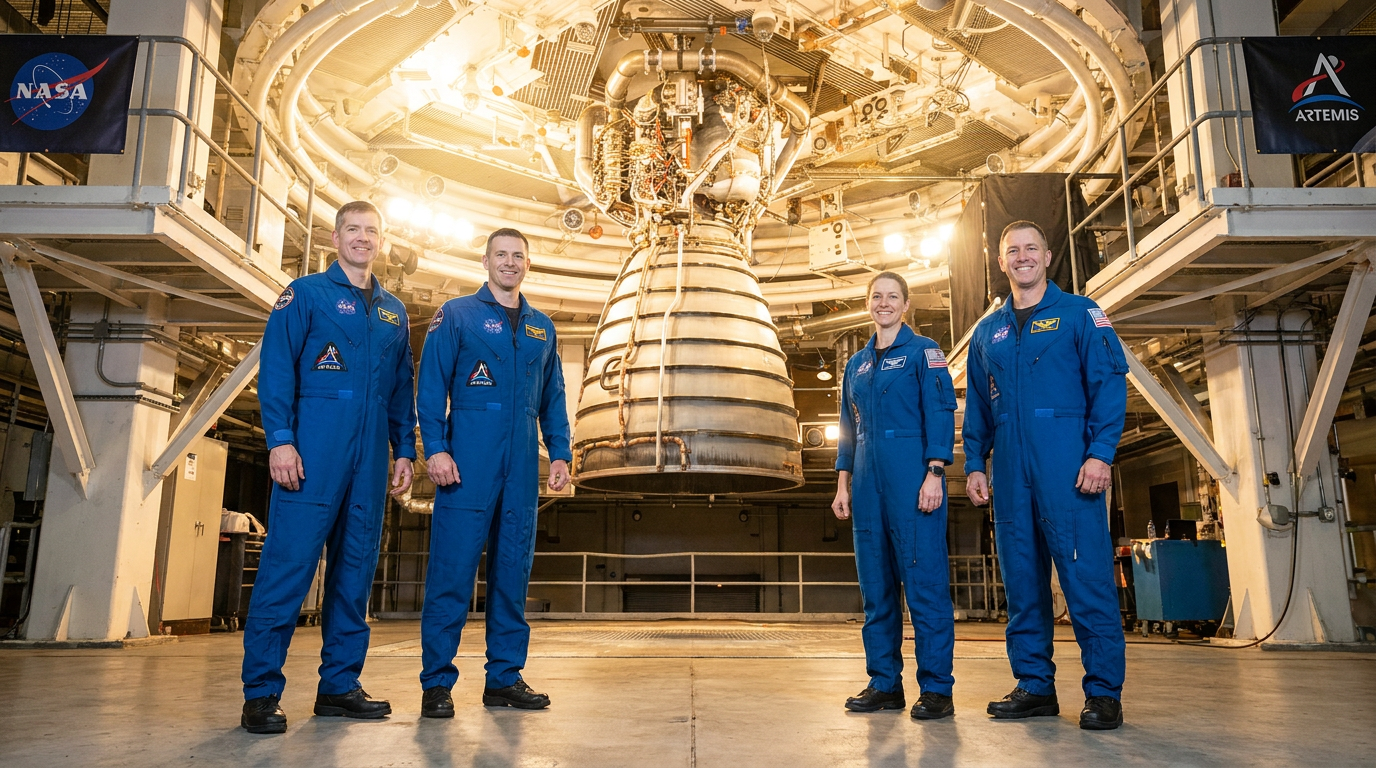
On June 9, 2026, NASA unveiled the four astronauts who will crew Artemis III: Commander Randy Bresnik, Pilot Luca Parmitano, and Mission Specialists Andre Douglas and Frank Rubio.[1][2]
Billed by NASA Administrator Jared Isaacman as the dawn of "Earth's first Starfleet," the mission represents a critical juncture in the United States' effort to establish a sustained human presence on the Moon.[3]
However, the Artemis III that launches in 2027 will look vastly different from the mission envisioned just a few years ago. Originally slated to be the first human lunar landing since 1972, NASA restructured the flight profile in early 2026.[4]
Instead of touching down on the lunar south pole, Artemis III will now serve as a high-stakes dress rehearsal in Low Earth Orbit (LEO). The crew will test rendezvous and docking procedures with commercial lunar landers, pushing the actual Moon landing to the Artemis IV mission in 2028.[4][5]

This strategic pivot underscores a transparent reality in modern spaceflight: the engineering bottlenecks required to return to the Moon are proving more complex than anticipated.[6]
A review of recent government audits, technical briefings, and contractor updates reveals three primary engineering hurdles driving the timeline: orbital propellant transfer, launch vehicle reliability, and next-generation spacesuit life support.[6][7]
The most significant architectural shift from the Apollo era is NASA's reliance on commercial Human Landing Systems (HLS). Rather than building a single, disposable lander, NASA has contracted SpaceX and Blue Origin to develop massive, reusable spacecraft.[5]
SpaceX’s Starship HLS presents a profound physics and logistics challenge: cryogenic propellant transfer. Because Starship is so massive, it cannot carry enough fuel from Earth's surface to reach the Moon and land.[6][8]
Instead, SpaceX must launch multiple "tanker" Starships to fill a fuel depot in Earth orbit. The lunar-bound Starship will then dock with this depot, transfer super-chilled liquid oxygen and methane in microgravity, and only then depart for the Moon.[8]
Instead, SpaceX must launch multiple "tanker" Starships to fill a fuel depot in Earth orbit.
According to the Government Accountability Office (GAO), SpaceX has made limited progress in maturing the technologies needed for this orbital refueling. A large-scale, vehicle-to-vehicle cryogenic transfer test—originally planned for early 2025—has been delayed to at least 2026.[8]

Blue Origin, contracted to provide the Blue Moon lander as a secondary option, faces its own hurdles. The lander relies on the company's heavy-lift New Glenn rocket, which suffered a catastrophic explosion on a Florida launchpad during a routine static fire test in May 2026.[2][4]
Until Blue Origin can rebuild the pad and identify the root cause of the anomaly, the Blue Moon system remains grounded, complicating NASA's hopes of having two competing landers ready for the 2027 orbital test.[4]
Even if the spacecraft are ready, the astronauts must be able to survive outside them. Axiom Space is currently developing the AxEMU (Axiom Extravehicular Mobility Unit), a next-generation spacesuit designed to withstand the punishing environment of the lunar south pole.[7]
The lunar south pole features jagged terrain and extreme temperature swings, plunging from -54°C (-65°F) in sunlight down to -203°C (-334°F) in shadowed craters.[5]

While Axiom has partnered with brands like Prada for the suit's protective outer layers, the internal life support systems are facing intense scrutiny.[6]
An April 2026 report from NASA's Office of Inspector General (OIG) revealed that early suit designs did not meet NASA's minimum requirements for emergency life support, necessitating potential redesigns.[7][8]
The OIG report offered a stark assessment of the timeline: noting that NASA's original 2025 delivery goal was "overly optimistic," the auditors warned that based on historical aerospace development averages, the suits might not be fully certified for lunar operations until 2031.[7]
Faced with these compounding technical risks, NASA's decision to convert Artemis III into an orbital test flight is widely viewed by aerospace analysts as a necessary safety measure.[4]
By conducting the first docking tests in Low Earth Orbit, the crew remains just hours away from a safe return to Earth if a lander's life support or propulsion systems fail. In lunar orbit, a similar failure would leave the crew days away from rescue.[4][5]
The success of the Artemis program now hinges on a delicate choreography of public oversight and private innovation. As the 2027 launch window approaches, the focus shifts from announcing crews to the grueling, unglamorous work of proving that these unprecedented machines can safely operate in the vacuum of space.[3][6]
Viewpoints in depth
NASA's Risk-Reduction Strategy
Prioritizing crew safety over aggressive timelines.
NASA leadership views the restructuring of Artemis III not as a setback, but as a necessary maturation of the program. By shifting the first docking and life-support tests to Low Earth Orbit, the agency ensures that if a critical system fails on a commercial lander, the crew can return to Earth within hours. This 'calculated risk' approach mirrors the Apollo program, which flew the Apollo 9 orbital test before attempting the Apollo 11 landing.
The Auditor's Warning
Highlighting historical delays and budget realities.
Government watchdogs, including the GAO and NASA's Office of Inspector General, have consistently warned that the Artemis timeline is overly optimistic. Auditors point to the unprecedented complexity of orbital cryogenic refueling and the stringent life-support requirements for lunar spacesuits. Based on the historical development timelines of similar aerospace projects, these oversight bodies suggest that key hardware may not be fully certified until the early 2030s.
The Commercial Bottleneck
The challenges of relying on private industry for deep-space infrastructure.
The Artemis architecture relies heavily on commercial partners like SpaceX, Blue Origin, and Axiom Space to fund and develop critical infrastructure. While this public-private model reduces NASA's upfront costs, it also ties the agency's schedule to the volatile realities of commercial aerospace development, where launchpad explosions and iterative testing failures can ground a mission indefinitely.
What we don't know
- How many 'tanker' launches SpaceX will actually need to fully refuel a Starship in orbit.
- Whether Blue Origin's New Glenn rocket will recover from its May 2026 explosion in time to participate in the 2027 tests.
- If Axiom Space can resolve the emergency life-support deficiencies identified by the OIG without causing multi-year delays.
Sources
Source coverage
8 outlets
4 viewpoints surfaced








[1]NASANASA Mission Planners
NASA Marches Toward Artemis III Mission in 2027, Names Crew Members
Read on NASA →[2]Al JazeeraAerospace Analysts
NASA announces astronauts for Artemis III spaceflight, scheduled for 2027
Read on Al Jazeera →[3]The GuardianAerospace Analysts
'Earth's first starfleet': Nasa reveals Artemis III crew and project's next steps
Read on The Guardian →[4]National GeographicAerospace Analysts
NASA just named the Artemis III crew. Here's what they'll do.
Read on National Geographic →[5]The Planetary SocietyNASA Mission Planners
Artemis III: Testing the tech to return to the Moon
Read on The Planetary Society →[6]MeteoredCommercial Space Partners
The future of NASA's space exploration: timeline and challenges of the upcoming Artemis III and Artemis IV missions
Read on Meteored →[7]SpacePolicyOnlineGovernment Oversight
NASA OIG Warns Spacesuits May Not Be Ready Until 2031
Read on SpacePolicyOnline →[8]Government Accountability OfficeGovernment Oversight
NASA Lunar Programs: Improved Visibility Needed into Commercial Partners' Progress
Read on Government Accountability Office →
Every angle. Every day.
Get science stories with full source coverage and perspective breakdowns delivered to your inbox.