
The end of the injection: How the new generation of weight-loss pills actually works
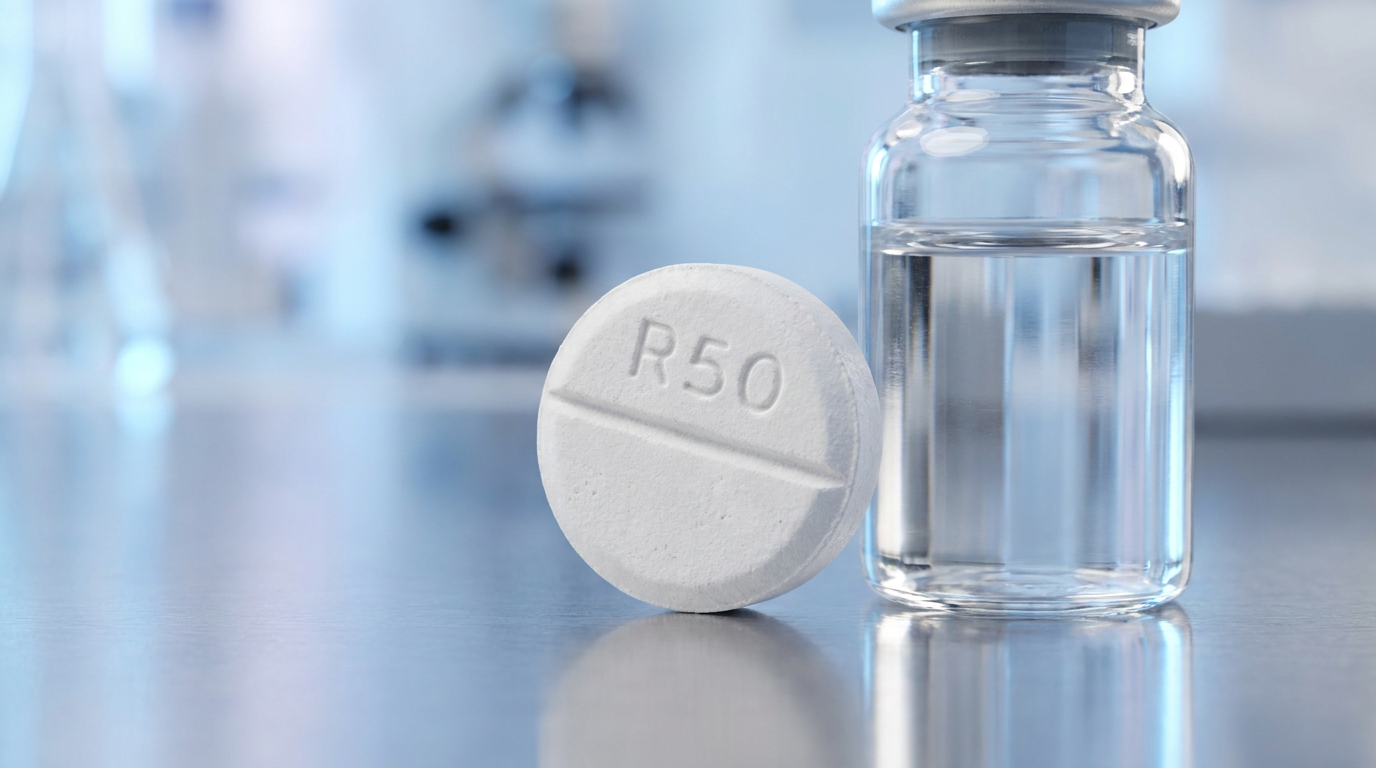
Pharmaceutical companies have successfully engineered oral versions of complex weight-loss peptides like semaglutide. By utilizing a chemical buffer to survive stomach acid, these daily pills are proving just as effective as weekly injections.
By Factlen Editorial Team
- Metabolic Researchers
- View the development of oral peptides and dual-agonists as a monumental biological and chemical engineering breakthrough.
- Public Health Advocates
- Emphasize that oral pills remove the stigma and logistical barriers of injections, potentially democratizing access to care.
- Healthcare Payers
- Focus on the financial implications and long-term sustainability of widespread daily peptide prescriptions.
What's not represented
- · Patients who experience severe gastrointestinal side effects from GLP-1 medications
- · Bariatric surgeons facing changing demand for weight-loss procedures
Why this matters
The shift from weekly injections to daily pills removes a massive psychological and logistical barrier to obesity treatment. By making these highly effective medications as easy to take as a daily vitamin, millions more people could gain access to life-changing metabolic care.
Key points
- Pharmaceutical companies have successfully converted fragile weight-loss peptides into daily oral pills.
- The breakthrough relies on a chemical called SNAC, which temporarily neutralizes stomach acid to protect the drug.
- Clinical trials show the 50mg daily pill produces a 15.1% weight loss, matching the efficacy of weekly injections.
- Patients must take the pill on a strictly empty stomach with minimal water for the absorption mechanism to work.
- The next generation of treatments includes 'dual agonists' that mimic multiple hormones for even greater metabolic benefits.
The introduction of highly effective weight-loss medications has fundamentally reshaped the landscape of metabolic health. Drugs like Wegovy and Zepbound have demonstrated that obesity is a treatable biological condition rather than a failure of willpower, offering unprecedented reductions in body weight and cardiovascular risk. [1][3][1][3]
Yet, the current generation of these therapies shares a significant hurdle: they require weekly subcutaneous injections. For millions of patients, the prospect of self-administering a needle remains a psychological and practical barrier to treatment, limiting the reach of these medical breakthroughs. [2][2]
That barrier is now dissolving. The pharmaceutical industry is crossing a major frontier by successfully converting these complex, fragile molecules into daily pills. [2][3] Understanding how this transition was achieved requires looking at the delicate biology of the hormones involved and the chemical engineering required to sneak them past the human digestive system. [5][7][2][3][5][7]
The medications in question are known as incretin mimetics. Incretins are naturally occurring hormones released by the gut within minutes of eating. The most famous of these is glucagon-like peptide-1, or GLP-1. [1][6][1][6]
When a person eats, GLP-1 travels through the bloodstream to perform several critical tasks. It signals the pancreas to release insulin, instructs the liver to halt glucose production, and slows the emptying of the stomach. [1][6] Crucially, it also crosses the blood-brain barrier to bind with receptors in the hypothalamus, the brain's appetite-control center, effectively signaling that the body is full. [6][1][6]

Native GLP-1 lasts only a few minutes in the body before being destroyed by enzymes. Scientists engineered synthetic versions—like semaglutide, the active ingredient in Wegovy—that resist enzymatic breakdown and remain active for a full week. [4][6][4][6]
However, semaglutide is a large peptide composed of 31 amino acids. [5] Historically, taking a peptide by mouth was considered biologically impossible. The human stomach is a hostile environment, filled with corrosive hydrochloric acid and digestive enzymes designed specifically to tear proteins and peptides apart. [5][5]
If a patient simply swallowed raw semaglutide, the stomach would digest it exactly like a piece of dietary protein, leaving zero active medication to enter the bloodstream. Furthermore, even if the peptide survived the acid, its large molecular size and hydrophilic (water-loving) nature prevent it from passing through the tightly packed cells of the stomach lining. [5][5]
The breakthrough that made oral semaglutide possible is a specialized absorption enhancer called SNAC (sodium N-[8-(2-hydroxybenzoyl) amino] caprylate). [5] By co-formulating the semaglutide peptide with a large dose of SNAC, researchers created a chemical Trojan horse. [5][5]
The breakthrough that made oral semaglutide possible is a specialized absorption enhancer called SNAC (sodium N-[8-(2-hydroxybenzoyl) amino] caprylate).
When the tablet reaches the stomach, SNAC acts as a localized buffer. It rapidly dissolves and neutralizes the stomach acid in the immediate microscopic vicinity of the pill, creating a temporary safe zone that protects the semaglutide from degradation. [5] Simultaneously, SNAC interacts with the lipid membranes of the stomach's epithelial cells, temporarily increasing their fluidity. This allows the large semaglutide molecule to slip between the cells and directly into the bloodstream. [5][5]

Because this absorption window is so fragile, the pill comes with strict rules: it must be taken on an empty stomach with no more than four ounces of water, and the patient must wait exactly 30 minutes before eating, drinking, or taking other medications. [5] Any deviation disrupts the SNAC buffer and ruins the absorption. [5][5]
Despite these strict conditions, the clinical results have been staggering. In the Phase 3 OASIS 1 trial, researchers tested a 50-milligram daily oral dose of semaglutide in adults with overweight or obesity. [4][4]
The trial revealed that patients taking the daily pill achieved an average weight loss of 15.1% over 68 weeks, compared to just 2.4% for those on a placebo. [4] Furthermore, 85% of the patients on the oral medication lost at least 5% of their body weight. [4] These figures are virtually identical to the efficacy seen with the weekly 2.4-milligram injectable version of the drug. [2][4][2][4]

While oral semaglutide represents a triumph of delivery, the next evolution of weight-loss science involves upgrading the payload itself. [3] Researchers are now moving beyond GLP-1 to create "dual agonists" that target multiple hormone receptors simultaneously. [6][3][6]
The most prominent example is tirzepatide, the active ingredient in Mounjaro and Zepbound. Tirzepatide mimics both GLP-1 and a second incretin hormone called GIP (glucose-dependent insulinotropic polypeptide). [1][6][1][6]
While GLP-1 primarily suppresses appetite and slows digestion, GIP acts directly on white adipose (fat) tissue. It enhances the clearance of triglycerides from the bloodstream and prevents the dangerous accumulation of ectopic fat in visceral organs. [6] When combined, the two hormones work synergistically, producing weight loss that consistently exceeds that of GLP-1 alone. [6][6]
The pipeline of future treatments is rapidly expanding to include oral versions of these dual agonists, as well as entirely new classes of small-molecule drugs that don't require the complex SNAC buffering system at all. [3][3]

By eliminating the needle, the medical community hopes to democratize access to metabolic care. [2][7] Transitioning from specialized injections to standard daily tablets could reduce manufacturing bottlenecks, lower long-term costs, and ultimately allow millions more people to reclaim their metabolic health. [3][7][2][3][7]
How we got here
2005
The FDA approves the first GLP-1 receptor agonist, exenatide, for the management of type 2 diabetes.
2017
Subcutaneous semaglutide is approved as a once-weekly injection, offering a longer-lasting GLP-1 option.
2019
The FDA approves Rybelsus, the first oral formulation of semaglutide, for type 2 diabetes.
2021
Wegovy (injectable semaglutide) is approved specifically for chronic weight management.
June 2023
The OASIS 1 trial results are published, proving that a high-dose oral version of semaglutide is highly effective for obesity.
Viewpoints in depth
Metabolic Researchers
View the development of oral peptides and dual-agonists as a monumental biological and chemical engineering breakthrough.
For decades, the idea of delivering a 31-amino-acid peptide via the digestive tract was considered a chemical impossibility. Researchers view the successful integration of SNAC technology as a watershed moment in pharmacology. Beyond just delivery, scientists are highly focused on the synergistic effects of dual agonists like tirzepatide. By engaging both GLP-1 and GIP receptors, they are proving that metabolic disease can be attacked on multiple fronts simultaneously—reducing appetite in the brain while actively clearing lipids from adipose tissue.
Public Health Advocates
Emphasize that oral pills remove the stigma and logistical barriers of injections, potentially democratizing access to care.
Public health experts argue that while injectable GLP-1s are miraculous, they are fundamentally unscalable for the global obesity epidemic due to manufacturing bottlenecks involving sterile pens and cold-chain storage. Furthermore, a significant percentage of the population suffers from needle phobia. Advocates believe that transitioning these therapies to standard, mass-produced daily tablets will drastically lower the barrier to entry, reduce the stigma associated with specialized medical injections, and allow primary care physicians to treat obesity as routinely as they treat high blood pressure.
Healthcare Payers
Focus on the financial implications and long-term sustainability of widespread daily peptide prescriptions.
Insurance companies, national health services, and corporate employers view the rise of highly effective oral weight-loss drugs with a mix of optimism and severe financial anxiety. While pills may eventually be cheaper to manufacture than complex auto-injector pens, the sheer volume of eligible patients threatens to overwhelm healthcare budgets. Payers argue that without significant price reductions, funding a lifetime supply of daily peptide medications for hundreds of millions of people is economically unsustainable, prompting strict coverage limitations.
What we don't know
- Whether the long-term cardiovascular benefits seen with injectable GLP-1s translate perfectly to the oral formulations.
- How the strict fasting requirements for the oral pill will affect real-world patient adherence over several years.
- When generic or small-molecule alternatives will arrive to significantly drive down the cost of these daily treatments.
Key terms
- Incretin mimetics
- A class of medications that mimic the action of natural gut hormones to stimulate insulin release, slow digestion, and reduce appetite.
- GLP-1 (Glucagon-like peptide-1)
- A naturally occurring hormone that regulates blood sugar and signals the brain that the body is full.
- GIP (Glucose-dependent insulinotropic polypeptide)
- A hormone that works alongside GLP-1 to regulate metabolism, specifically aiding in the clearance of fat from the bloodstream.
- SNAC
- A chemical absorption enhancer co-formulated with oral semaglutide that temporarily neutralizes stomach acid to let the drug enter the bloodstream.
- Peptide
- A short chain of amino acids; essentially a small protein. Peptides are typically destroyed by stomach acid, making them difficult to take as pills.
Frequently asked
What is the difference between Wegovy and Rybelsus?
Both contain the same active ingredient, semaglutide. Wegovy is a weekly subcutaneous injection approved for weight loss, while Rybelsus is a daily oral pill originally approved for type 2 diabetes, though higher doses of the pill are now being used for weight loss.
Why do you have to take oral semaglutide on an empty stomach?
The pill relies on a fragile chemical buffer called SNAC to protect the medication from stomach acid. Any food, liquid (other than a small sip of water), or other medications will disrupt this buffer and destroy the drug before it can be absorbed.
What is a dual agonist?
A dual agonist is a medication that mimics two different hormones at once. For example, tirzepatide (Mounjaro/Zepbound) mimics both GLP-1 and GIP, working synergistically to produce greater weight loss than GLP-1 alone.
Are the weight-loss pills as effective as the injections?
Yes. Clinical trials like OASIS 1 have shown that a 50mg daily dose of oral semaglutide results in an average weight loss of 15.1% over 68 weeks, which is virtually identical to the results of the 2.4mg weekly injection.
Sources
Source coverage
7 outlets
3 viewpoints surfaced





[1]BBCPublic Health Advocates
How do weight-loss drugs like Mounjaro and Wegovy work?
Read on BBC →Weight-loss drug Wegovy to be available in pill form in UK for first time
Read on BBC →[3]STAT NewsMetabolic Researchers
An obesity drug deep-dive, and peptides move mainstream
Read on STAT News →[4]The LancetMetabolic Researchers
Oral semaglutide 50 mg taken once per day in adults with overweight or obesity (OASIS 1): a randomised, double-blind, placebo-controlled, phase 3 trial
Read on The Lancet →[5]National Institutes of HealthMetabolic Researchers
Mode of action of SNAC in oral semaglutide: preclinical and early clinical studies
Read on National Institutes of Health →GIP and GLP-1 Receptor Signaling: How Simultaneous Activation Drives Synergistic Metabolic Effects
Read on National Institutes of Health →[7]Factlen Editorial TeamPublic Health Advocates
Synthesis by Factlen editorial team
Read on Factlen Editorial Team →

More in health
See all 6 stories →Metabolic Health
Muscle as an Organ of Longevity: The Science of Myokines and Metabolic Health
0 sources

Clinical Evidence
The Evidence for Exercise as a First-Line Mental Health Treatment
0 sources

Diabetes Research
FDA Approves First Disease-Modifying Therapy for Newly Diagnosed Stage 3 Type 1 Diabetes in Youth
0 sources

Longevity Science
The Science of 'Exercise Snacks': How 1-Minute Bursts of Movement Can Transform Longevity
0 sources

Every angle. Every day.
Get health stories with full source coverage and perspective breakdowns delivered to your inbox.