
The Emerging U.S.-Iran Truce: Secret Terms, Shipping Tolls, and Internal Skepticism
The United States and Iran have entered a short-term truce to pause hostilities, but the classified nature of the agreement has left global markets and intelligence officials questioning its long-term viability.
By Factlen Editorial Team
- U.S. Security Hawks
- Deeply skeptical of the truce, arguing that easing military pressure without verifiable nuclear concessions allows Iran to regroup.
- U.S. Administration Optimists
- View the truce as a necessary first step to end the war, stabilize global markets, and deliver on domestic economic promises.
- Iranian Leadership
- Seek to leverage the ceasefire to secure vital sanctions relief and assert sovereign control over regional maritime routes.
- Global Energy Markets
- Primarily concerned with the free flow of commerce through the Strait of Hormuz and the avoidance of new shipping tariffs.
What's not represented
- · Allied Middle Eastern nations (e.g., Saudi Arabia, UAE) who rely on the strait and are threatened by Iran's regional posture.
- · Civilian populations in Iran facing the brunt of economic sanctions.
Why this matters
A permanent resolution to the U.S.-Iran conflict would stabilize global energy markets and lower domestic gas prices, but the current fragile truce leaves international shipping vulnerable to new fees and keeps inflation risks elevated.
Key points
- The U.S. and Iran have entered a secret, short-term truce to pause military hostilities.
- The U.S. administration hopes the pause will lead to a permanent deal and lower domestic gas prices.
- Iran is reportedly considering charging commercial ships a fee to transit the Strait of Hormuz.
- CIA Director John Ratcliffe and other cabinet members have expressed serious doubts about Iran's willingness to make nuclear concessions.
The United States and Iran have quietly entered into a short-term truce, effectively pausing a period of intense military confrontation that has rattled global markets and reshaped Middle Eastern geopolitics. However, the specific terms of this de-escalation remain heavily guarded by both Washington and Tehran. The lack of public clarity has created a vacuum of information, leaving allied nations, energy markets, and international shipping conglomerates guessing about the immediate future of the region's security architecture.[1][5]
Diplomatic sources indicate that the current arrangement is merely a temporary ceasefire designed to stop the immediate exchange of fire, rather than a comprehensive peace treaty. The White House is operating on the hope that this pause will provide the necessary breathing room to negotiate a long-term diplomatic accord. Yet, the gap between a temporary halt in hostilities and a permanent, verifiable treaty is vast, and the pathway to bridging that divide is currently obscured by classified backchannel negotiations.[1]
A primary driver for the U.S. administration's push toward a resolution is deeply rooted in domestic economics. President Donald Trump has staked significant political capital on the promise of a rapid economic rebound, a pledge that is heavily dependent on lowering energy costs and stabilizing supply chains ahead of the midterm elections. The administration views the cessation of hostilities as a necessary prerequisite for bringing down inflation and restoring consumer confidence.[4]

Despite the pause in fighting, the lingering uncertainty means that the promised economic relief has not yet materialized. Gas prices and global crude benchmarks remain elevated, as commodities traders continue to price in a substantial risk premium. If the conflict were to officially and permanently end, markets broadly expect a significant drop in oil prices. However, the secret nature of the current truce is keeping that risk premium firmly in place, frustrating administration officials eager for a quick economic win.[4][5][8]
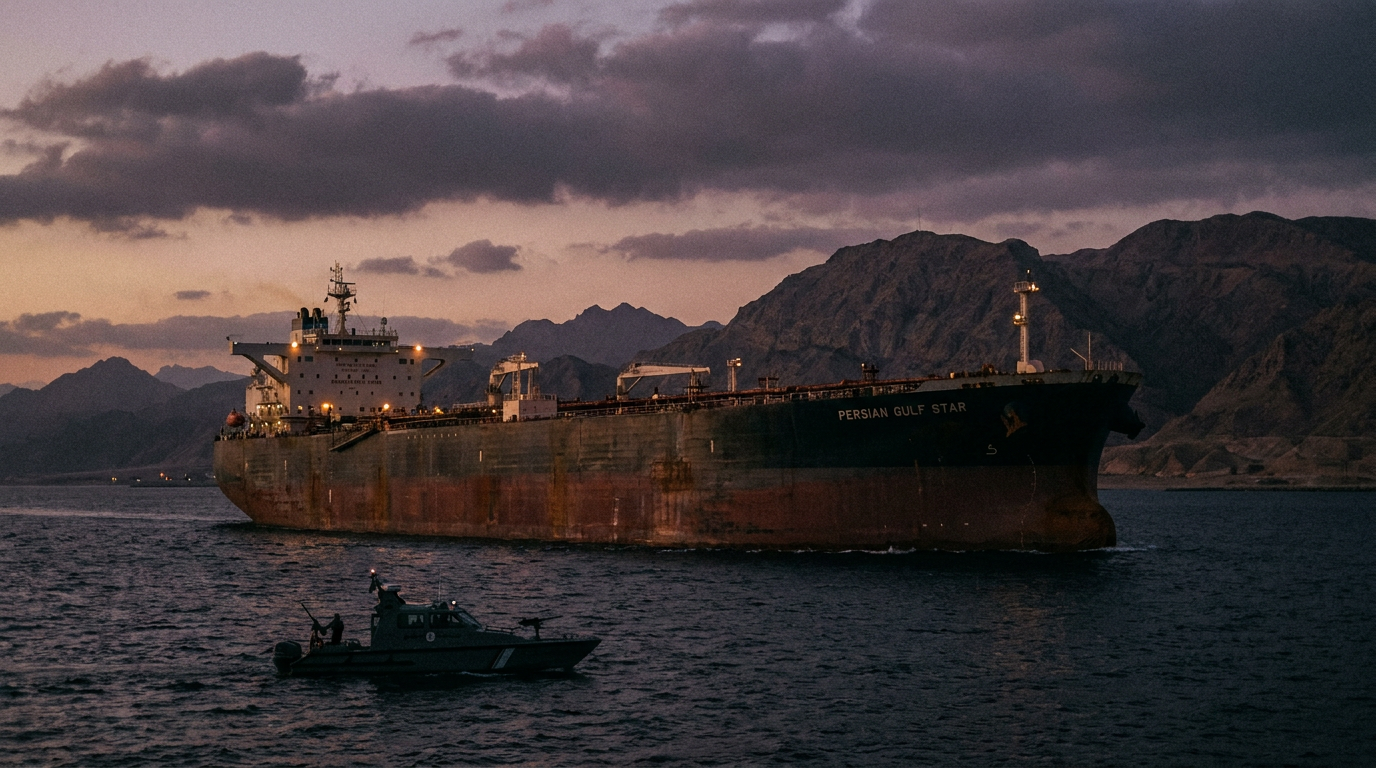
Complicating the economic picture is a major emerging dispute over the Strait of Hormuz, the critical maritime chokepoint through which roughly a fifth of the world's oil supply passes. Recent reports indicate that Iranian negotiators are floating the idea of charging commercial ships a toll or transit fee to pass through the strait. This proposal has sent shockwaves through the global shipping and energy sectors, who fear it could become a permanent backdoor tariff on global energy.[3][8]

Recent reports indicate that Iranian negotiators are floating the idea of charging commercial ships a toll or transit fee to pass through the strait.
Under the United Nations Convention on the Law of the Sea, charging a toll simply for "transit passage" through an international strait is illegal. However, international law does permit coastal states to levy fees for specific, tangible services rendered to vessels, such as piloting assistance, maritime traffic control, or search-and-rescue operations. It remains entirely unclear what specific services Iran intends to provide to justify these proposed fees.[3]
Prior to the recent outbreak of war, no such fees were levied on commercial vessels transiting the Strait of Hormuz. Energy importers and international legal experts warn that allowing Iran to establish a precedent of charging for transit—even under the guise of service fees—could fundamentally alter the economics of global shipping. Iranian state media, meanwhile, has consistently asserted Tehran's sovereign right to manage and secure its territorial waters, framing the potential fees as a necessary measure for regional maritime security.[3][6]
While diplomats attempt to iron out these economic and maritime disputes, severe skepticism is brewing within the highest levels of the U.S. intelligence community. CIA Director John Ratcliffe has reportedly briefed President Trump and other senior officials that recent intelligence gathering casts serious doubt on Tehran's actual willingness to make the long-term nuclear concessions the U.S. is demanding. This assessment suggests that Iran may be using the truce merely to regroup rather than to fundamentally alter its strategic posture.[2]

Ratcliffe is not the only skeptical voice within the administration's inner circle. The intelligence community's warnings are reportedly shared by key cabinet members, including Secretary of State Marco Rubio, creating significant internal friction. These hardliners are questioning the wisdom of trusting the current diplomatic framework, arguing that easing military pressure without ironclad, verifiable commitments from Tehran is a strategic misstep.[2][7]
From Tehran's perspective, the truce offers a desperately needed reprieve from devastating military strikes and a potential pathway to economic survival. Iranian officials have consistently maintained that any permanent agreement must include the lifting of crippling economic sanctions and formal recognition of their regional security interests. The ambiguity of the current secret truce allows Iranian leadership to project strength and resilience to their domestic audience while quietly exploring the limits of U.S. diplomatic flexibility.[1][6]

The transition from this fragile, secret pause to a public, binding peace deal is fraught with political landmines for both nations. If the U.S. demands strict, intrusive verification of nuclear rollbacks, Iranian negotiators are likely to walk away. Conversely, if the U.S. administration concedes too much on sanctions relief or shipping fees without securing definitive security guarantees, it faces an immediate and severe domestic backlash from defense hawks and allied nations in the Middle East.[1][2][7]
For now, the global economy, the international shipping industry, and the regional security apparatus remain trapped in a tense holding pattern. Markets are waiting to see if the guns will stay silent long enough for diplomats to draft a lasting accord, or if the internal skepticism in Washington and the economic demands from Tehran will cause the secret truce to collapse before a permanent peace can be realized.[4][5][8]
How we got here
Early 2026
Direct military confrontation escalates between U.S. and Iranian forces, spiking global oil prices.
May 2026
Secret backchannel negotiations begin in an attempt to de-escalate the immediate conflict.
June 2026
A short-term, classified truce framework is agreed upon, pausing direct hostilities.
Viewpoints in depth
U.S. Intelligence & Defense Hawks
Skeptical of the truce, viewing it as a tactical pause by Iran rather than a strategic shift.
Figures within the U.S. intelligence community, led by CIA Director John Ratcliffe, argue that the current truce framework is dangerously naive. They point to intelligence suggesting that Tehran has no intention of dismantling its nuclear infrastructure or curbing its regional proxies. From this perspective, easing military pressure without securing immediate, verifiable concessions allows Iran to rebuild its capabilities and wait out the current U.S. administration. They view the proposed shipping tolls not as a legitimate administrative fee, but as an aggressive attempt to extort the global economy.
Iranian Negotiators
Focused on securing sanctions relief and asserting sovereign control over regional waters.
For Tehran, the truce is a necessary maneuver to relieve the crushing weight of military strikes and economic isolation. Iranian leadership argues that any lasting peace must acknowledge their status as a primary regional power, which includes the right to manage and secure the maritime routes off their coast. They frame the potential Strait of Hormuz fees as a standard sovereign right to fund maritime security operations, pushing back against Western interpretations of international maritime law that they feel disproportionately benefit U.S. and European energy conglomerates.
Global Energy Importers
Prioritize the uninterrupted flow of oil and the avoidance of new transit tariffs.
International shipping companies and nations heavily reliant on imported energy view the U.S.-Iran diplomatic maneuvering strictly through the lens of market stability. Their primary concern is the Strait of Hormuz. While they welcome a cessation of kinetic military strikes that threaten tankers, they are deeply alarmed by the prospect of Iran institutionalizing transit fees. They argue that allowing such fees would set a dangerous precedent, effectively creating a permanent tax on global energy that would keep inflation high long after the guns have fallen silent.
What we don't know
- The specific, classified terms of the short-term truce agreed to by Washington and Tehran.
- Whether Iran will actually implement transit fees in the Strait of Hormuz, and how much they would charge.
- If the U.S. administration is willing to lift economic sanctions before securing verifiable nuclear concessions.
Key terms
- Strait of Hormuz
- A narrow waterway between the Persian Gulf and the Gulf of Oman through which approximately 20% of the world's oil supply is transported.
- Transit Passage
- A concept in international maritime law that allows all ships the freedom of navigation through straits used for international navigation.
- Risk Premium
- The extra cost added to the price of a commodity, like oil, by markets to account for the uncertainty and potential disruption caused by geopolitical instability.
Frequently asked
Is the war between the U.S. and Iran officially over?
No. The two nations have agreed to a short-term, classified truce to pause hostilities, but a formal, long-term peace agreement has not yet been reached.
Will gas prices go down immediately?
Not necessarily. Because the terms of the truce are secret and a permanent deal is uncertain, global energy markets are keeping a 'risk premium' on oil prices.
Can Iran legally charge ships to pass through the Strait of Hormuz?
Under international law, charging a toll simply for transit is illegal. However, countries can charge fees for specific services rendered, such as piloting or search-and-rescue, which Iran may attempt to claim.
Sources
Source coverage
8 outlets
4 viewpoints surfaced






[1]NYTU.S. Administration Optimists
The (Mostly) Unanswered Questions at the Heart of a U.S.-Iran Accord
Read on NYT →[2]AxiosU.S. Security Hawks
Scoop: CIA director doubts Iran's intentions on deal, sources say
Read on Axios →Will Commercial Ships Have to Pay to Pass Through the Strait of Hormuz? Maybe.
Read on NYT →Potential End of War Tests Trump’s Promise of Quick Economic Rebound
Read on NYT →[5]ReutersGlobal Energy Markets
Global markets weigh risks as US-Iran truce details remain hidden
Read on Reuters →[6]Al JazeeraIranian Leadership
Iran asserts maritime sovereignty amid ongoing US negotiations
Read on Al Jazeera →[7]Fox NewsU.S. Security Hawks
Trump cabinet divided over trust in Iranian peace framework
Read on Fox News →[8]WSJGlobal Energy Markets
Energy sector braces for potential Strait of Hormuz transit fees
Read on WSJ →
More in news politics
See all 9 stories →US-Iran Deal
U.S. and Iran Sign Agreement to End War; Vance Lashes Out at Israeli Critics
7 sources
U.S.-Iran Deal
U.S. and Iran Sign 14-Point Agreement to End War, Sparking Fierce Backlash from Israel
6 sources
U.S.-Iran Relations
Vance Rebukes Israeli Critics of U.S.-Iran Peace Agreement, Warning Against Alienating 'Only Powerful Ally'
8 sources
Cognitive Defense
The Science of 'Prebunking': How Psychological Inoculation is Defeating Misinformation
6 sources

Every angle. Every day.
Get news politics stories with full source coverage and perspective breakdowns delivered to your inbox.