
The Efficiency Redesign: How Induction Cooktops Use Electromagnets to Outperform Gas and Electric Stoves
Induction cooktops don't generate heat; they use magnetic fields to turn your cookware into the heat source. This mechanism cuts energy waste, boils water faster, and eliminates indoor emissions, but requires compatible magnetic pans.


- Electrification Advocates
- Focus on the environmental and health benefits of removing fossil fuels from the home.
- Appliance Manufacturers
- Emphasize the speed, safety, and efficiency upgrades over traditional cooking methods.
- Consumer Utility Analysts
- Focus on the practical trade-offs of installation costs versus long-term energy savings.
Why it matters
Understanding how induction works helps buyers justify the upfront electrical and cookware costs. By converting 90% of energy directly into cooking heat, induction lowers utility bills, keeps kitchens cooler, and eliminates the indoor air pollution associated with gas stoves.
Most shoppers assume an induction cooktop is just a premium version of a traditional electric stove—a smooth, featureless glass surface that gets dangerously hot when you turn a dial. That assumption is fundamentally incorrect. An induction stove does not generate heat at all. Instead, it houses a powerful electromagnet that induces a fast-moving electrical current directly inside the metal of your pots and pans. Your cookware literally becomes the heat source, while the stove itself remains relatively cool. This shift from radiant heat to electromagnetic physics represents one of the most significant upgrades in residential cooking technology in decades, fundamentally altering how energy is consumed in the kitchen.[1][5]
The actionable takeaway for buyers is straightforward: induction offers the precise, instantaneous temperature control of a high-end gas range and the easy, wipe-down cleanup of a flat electric cooktop, while boiling water up to three minutes faster than either. It is the most efficient way to cook food indoors. However, the upgrade comes with strict requirements. It mandates the use of magnetic cookware and, in many older homes transitioning from gas, the installation of a dedicated 240-volt electrical circuit. Understanding the mechanics behind the glass helps consumers weigh these upfront costs against the long-term utility and safety benefits.[3]
To understand the utility of induction, you have to look at the hardware hidden beneath the glass surface. Below each designated cooking zone sits a tightly wound coil of copper wire. When the stove is powered on, an alternating electric current flows through this copper coil. This electrical flow creates a rapidly oscillating magnetic field that extends just a few inches above the surface of the cooktop. On its own, this magnetic field does nothing; you could place your hand directly over the active coil and feel absolutely no heat, because human tissue does not react to the magnetic frequencies being generated.[1][4]
The cooking process only begins when a compatible piece of metal is introduced to the magnetic field. When a pan made of a ferromagnetic metal—such as cast iron or certain grades of stainless steel—is placed on the cooking zone, the magnetic field penetrates the bottom of the cookware. This interaction induces an electrical current inside the metal of the pan itself. These swirling loops of electricity are known in physics as eddy currents, and they are the invisible engine that powers every induction meal.[2][4]
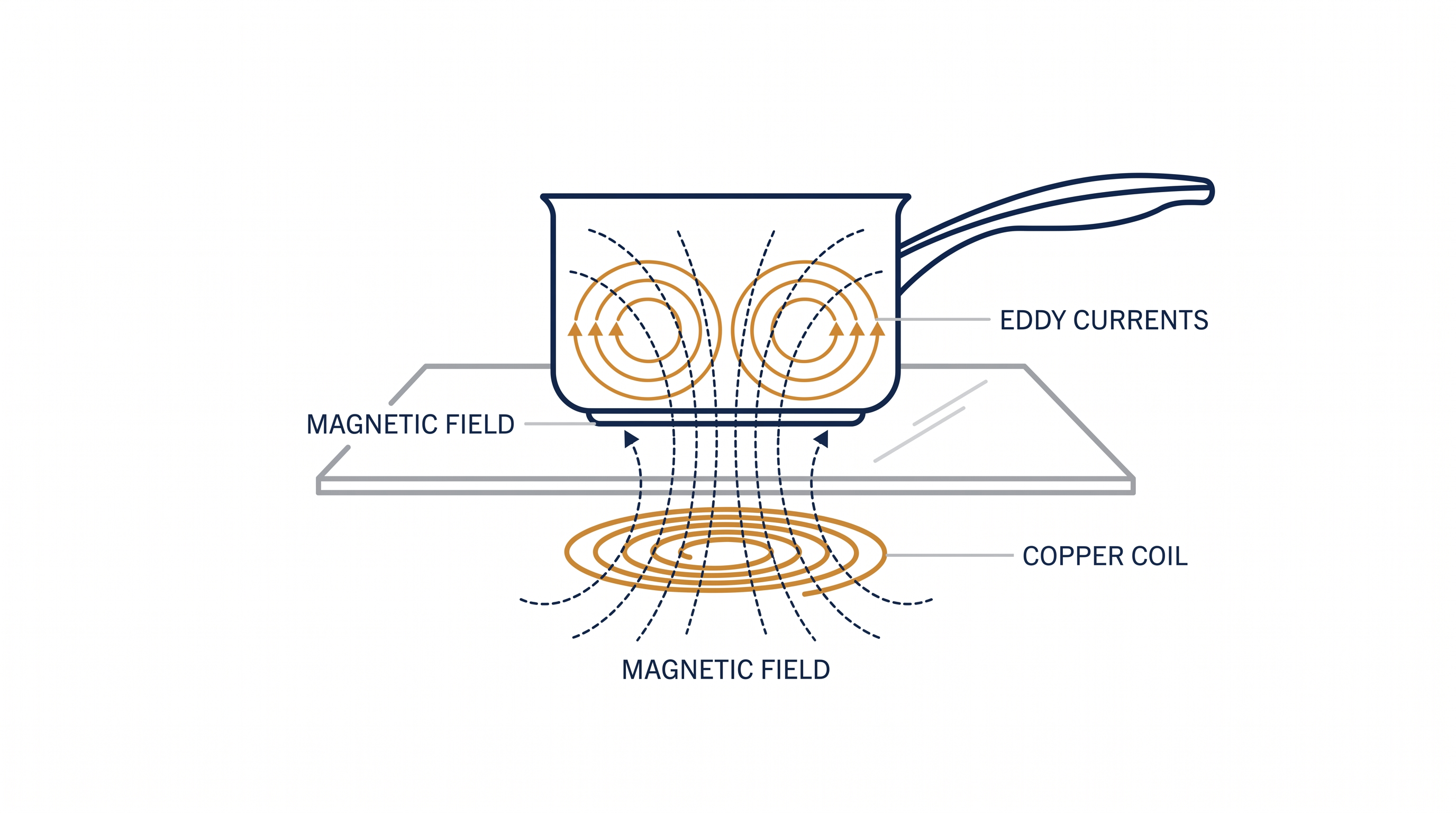
These fast-moving eddy currents do not flow freely; they encounter intense electrical resistance within the atomic structure of the pan's metal. In the world of electricity, resistance generates heat. Because the eddy currents are moving so rapidly against the resistance of the iron or steel, they generate intense, concentrated thermal energy directly within the base of the cookware. Because the heat is created inside the pan rather than transferred slowly from a glowing burner below, the heating process is nearly instantaneous, allowing for rapid boiling and immediate temperature adjustments.[4]
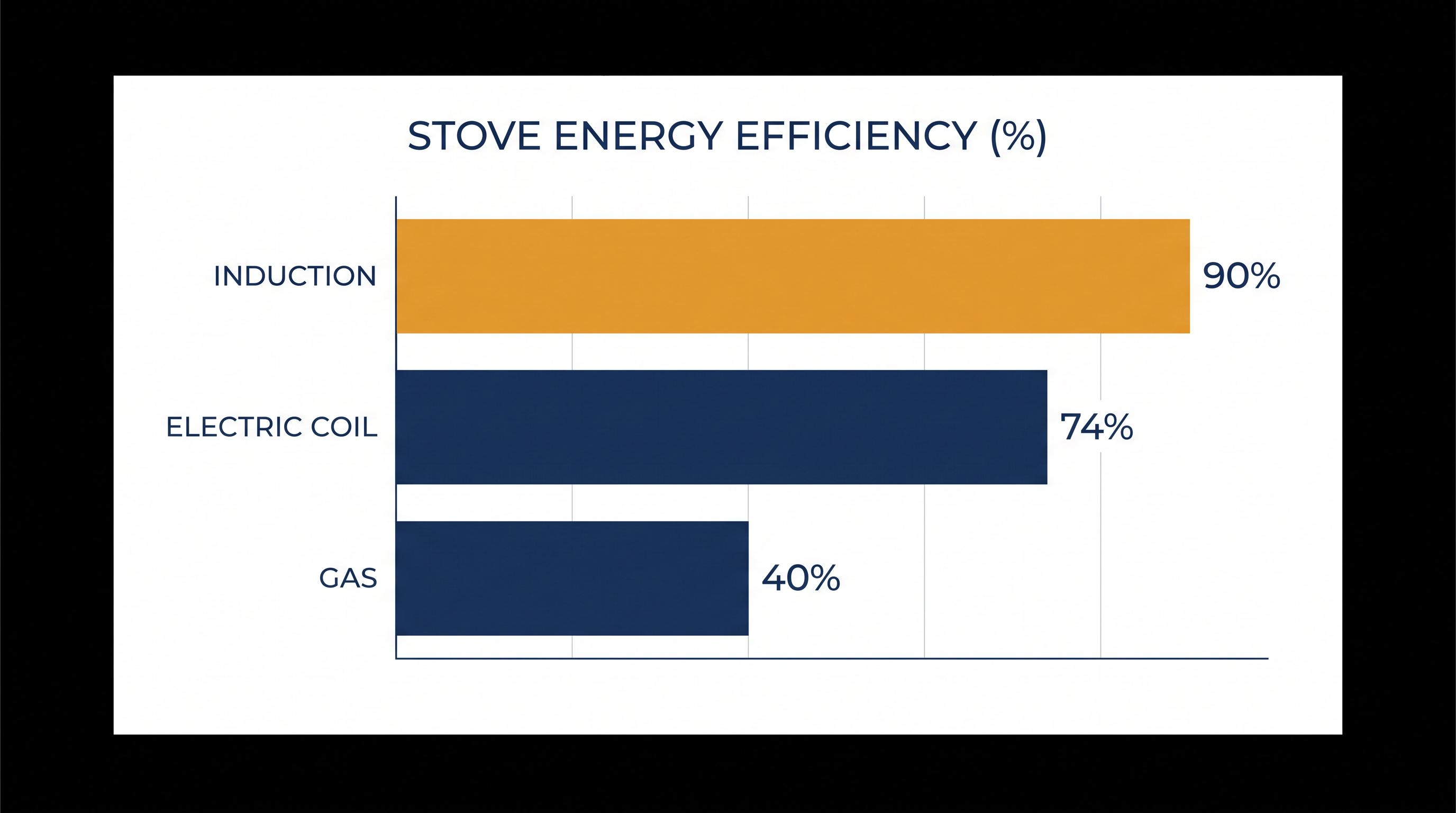
The efficiency gains from this direct-heating mechanism are substantial and easily measurable. According to energy analysts at Rewiring America, induction stoves convert roughly 90 percent of their electrical energy directly into cooking heat. In stark contrast, traditional electric coils operate at about 74 percent efficiency, losing a quarter of their energy to the air. Gas stoves are even more wasteful, languishing at just 40 percent efficiency because the majority of the thermal energy generated by the open flame escapes around the sides of the pan and dissipates into the surrounding room.
This dramatic reduction in ambient heat loss fundamentally changes the physical environment of the kitchen. Because an induction stove is not radiating excess thermal energy into the air, the kitchen stays noticeably cooler, even during heavy, multi-burner cooking sessions. For households in warmer climates, this provides a secondary utility benefit: it significantly reduces the strain on household air conditioning systems during the summer months, compounding the overall energy savings on the monthly utility bill.[3]
This dramatic reduction in ambient heat loss fundamentally changes the physical environment of the kitchen.
Beyond energy efficiency, safety is another major utility factor driving the rapid adoption of induction technology. Because the cooktop surface itself does not generate any heat, it only becomes warm by absorbing the residual thermal energy from the hot pan resting on top of it. Once the pan is removed from the burner, the electromagnetic connection is instantly broken. The heat generation stops immediately, and the glass surface cools down to a safe temperature in a matter of seconds, rather than remaining dangerously hot for several minutes like a traditional electric coil.
This precise mechanism virtually eliminates the risk of accidental kitchen fires. A paper towel, a plastic spatula, a wooden spoon, or a stray hand placed on an active induction burner will not heat up, melt, or ignite, simply because those materials are not magnetic. The stove only reacts to compatible metal. If a pot boils over, the spilled liquid will not bake and crust onto the glass, because the surface surrounding the pan remains too cool to burn the food, making cleanup as simple as a quick wipe with a damp cloth.
The primary caveat for consumers considering the switch is cookware compatibility. Aluminum, copper, ceramic, and glass pots will not work on an induction stove because their magnetic permeability is too low to generate sufficient eddy currents. The simplest and most reliable test for compatibility is to hold a standard refrigerator magnet to the bottom of a pan. If the magnet sticks firmly to the metal, the pan contains enough iron to function perfectly on an induction cooktop. If the magnet slides off, the pan is useless on the new stove.[2]
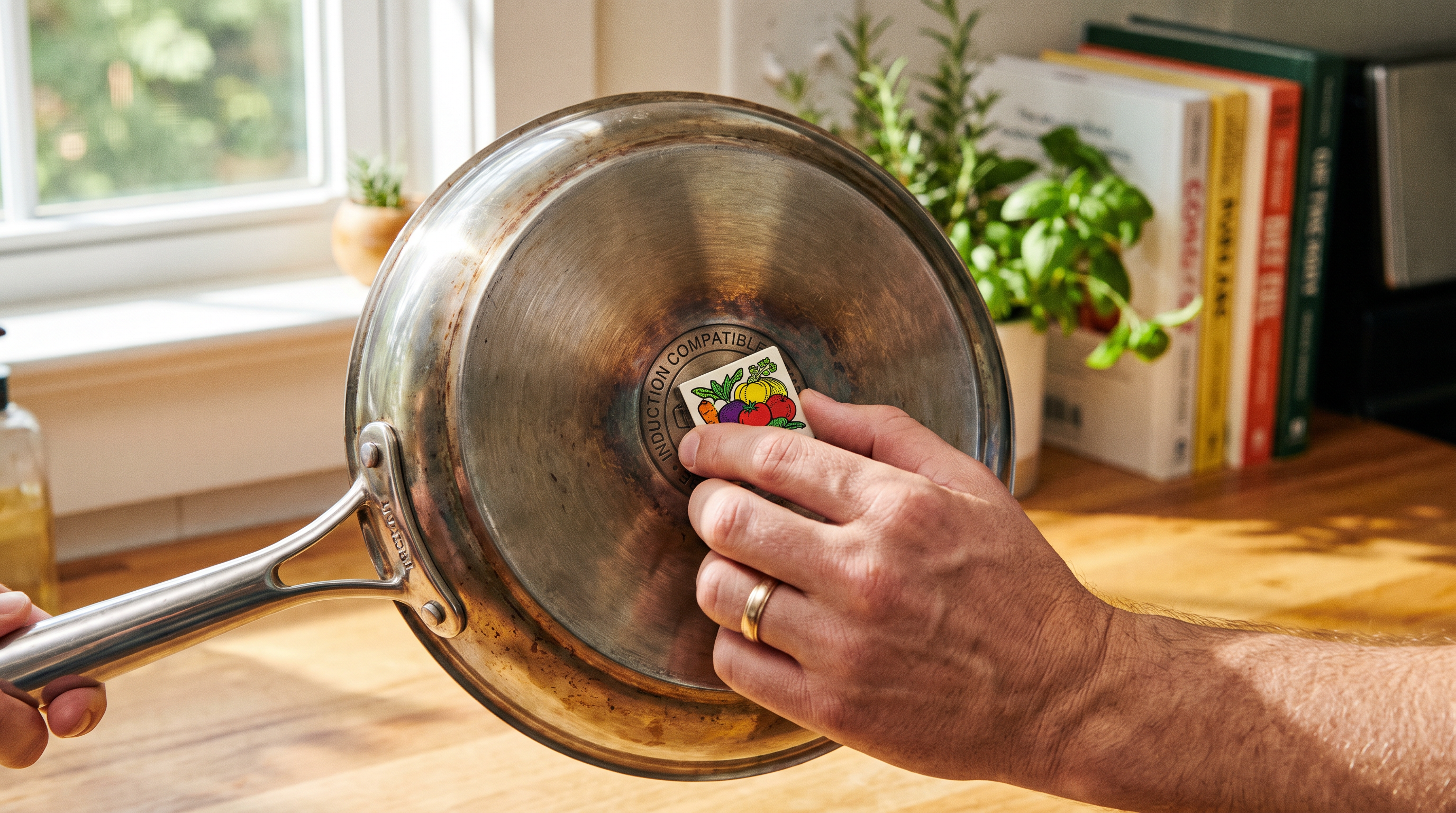
While many modern stainless steel and non-stick pans are now manufactured with a bonded magnetic base specifically designed for induction compatibility, buyers transitioning from gas or standard electric setups may need to budget for an entirely new cookware set. This hidden cost can add several hundred dollars to the appliance upgrade, forcing consumers to inventory their existing kitchen cabinets before committing to the purchase. Fortunately, classic, inexpensive cast iron skillets are naturally induction-ready and perform exceptionally well on magnetic stoves.[3]
Installation costs present another significant hurdle, particularly for homeowners looking to cap a gas line. While the induction cooktops themselves have become increasingly affordable—often priced between $1,000 and $2,500 depending on the brand and features—they require a robust electrical supply to function. Homes switching from a gas range will likely need to hire a licensed electrician to run a new 240-volt, 40- or 50-amp circuit from the breaker panel to the kitchen. Depending on the home's layout and the age of the electrical panel, this wiring work can add hundreds or even thousands of dollars to the total installation cost.
Despite these steep upfront costs, a wave of government incentives is actively accelerating the transition to magnetic cooking. Programs established under the High-Efficiency Electric Home Rebate Act (HEEHRA), alongside various state-level and municipal utility initiatives, offer substantial financial rebates to offset the purchase and installation of induction appliances. Policymakers and utility providers are heavily subsidizing these upgrades, framing them as a critical step in residential electrification and a necessary move to reduce the grid's reliance on fossil fuels.[2]
For households prioritizing indoor air quality, the switch to induction offers immediate and measurable health benefits. By eliminating the open combustion flame of a gas stove, induction completely removes indoor emissions of nitrogen dioxide, carbon monoxide, and unburned methane. Recent public health studies have linked gas stove emissions to increased rates of childhood asthma and respiratory irritation, making the zero-emission profile of induction a compelling selling point for health-conscious families looking to create a cleaner breathing environment inside their homes.[4]
Ultimately, the shift toward induction represents a fundamental redesign of how we approach food preparation. By leveraging the physics of electromagnetism rather than relying on the primitive mechanics of combustion or radiant electrical resistance, induction technology delivers a faster, safer, and vastly more efficient utility. As installation barriers decrease and consumer awareness grows, the magnetic cooktop is rapidly moving from a niche luxury item to the undisputed new standard for the modern, electrified kitchen.[5]
What to know
- Induction cooktops use electromagnets to induce heat directly inside the cookware, rather than transferring heat from a hot surface.
- The technology converts roughly 90% of its energy into cooking heat, making it significantly more efficient than gas (40%) or standard electric (74%).
- Because the glass surface does not generate heat, induction stoves eliminate the risk of accidental fires and keep kitchens noticeably cooler.
- Upgrading requires magnetic cookware and often necessitates a dedicated 240-volt electrical circuit, though government rebates can help offset installation costs.
Where opinion splits
Electrification Advocates
Focus on the environmental and health benefits of removing fossil fuels from the home.
For environmental groups and public health officials, induction cooktops are a critical tool for residential electrification. By replacing gas stoves, households eliminate a primary source of indoor air pollution, including nitrogen dioxide and methane leaks. Advocates argue that the superior performance of induction makes it the most viable technology to convince consumers to voluntarily abandon fossil fuel appliances.
Professional Chefs
Prioritize precision, speed, and kitchen comfort.
Many culinary professionals are transitioning to induction because of its immediate temperature control and rapid heating capabilities. Unlike gas, which wastes 60% of its heat to the surrounding air, induction keeps commercial kitchens significantly cooler. However, some traditionalists miss the visual feedback of an open flame and the ability to char ingredients directly on the burner.
Budget-Conscious Consumers
Weigh the long-term energy savings against the steep upfront installation costs.
For everyday buyers, the decision often comes down to installation math. While the cooktops themselves are dropping in price, the requirement for a dedicated 240-volt electrical circuit can add thousands to a kitchen renovation. These consumers must calculate whether the monthly utility savings and available government rebates justify the initial electrical upgrade and the potential need to replace incompatible cookware.
Key terms
- Electromagnetic induction
- The process of generating an electrical current in a conductive material by exposing it to a changing magnetic field.
- Eddy current
- Swirling loops of electrical current induced within a conductor (like a metal pan) by a changing magnetic field, which generate heat through resistance.
- Ferromagnetic
- Materials, such as iron or certain types of steel, that are highly susceptible to magnetization and are required for induction cooking.
- Radiant heat
- Heat that is transferred through the air from a hot surface, such as an electric coil or gas flame, to the cookware.
Unanswered questions
- How quickly the secondary market for used induction appliances will mature to make the technology accessible to lower-income renters.
- Whether upcoming advancements in multi-frequency induction coils will eventually allow the use of non-magnetic metals like aluminum and copper.
Reader questions
Do I need to buy all new pots and pans for an induction stove?
Not necessarily. Any cookware made of cast iron or magnetic stainless steel will work. You can test your current pans by seeing if a standard refrigerator magnet sticks firmly to the bottom.
Is an induction cooktop the same as an electric glass-top stove?
No. While they look similar, a standard electric stove uses radiant heat from coils under the glass to warm the surface. An induction stove uses electromagnets to heat the pan directly, keeping the glass relatively cool.
Does induction cooking use more electricity?
No, it uses significantly less. Induction is about 90% efficient at transferring energy to the food, compared to 74% for standard electric and 40% for gas, leading to lower overall energy consumption.
Are induction cooktops safe to touch?
The cooktop itself does not generate heat, so it remains cool when turned on without a pan. However, the glass directly under the pan will absorb some residual heat from the hot cookware during use.
Sources
Source coverage
5 outlets
3 viewpoints surfaced





[1]WhirlpoolAppliance Manufacturers
What Is Induction Cooking and How Does It Work?
Read on Whirlpool →[2]Silicon Valley Clean EnergyElectrification Advocates
How Does Induction Cooking Work?
Read on Silicon Valley Clean Energy →[3]KitchenAidAppliance Manufacturers
What is an Induction Cooktop and How Does it Work?
Read on KitchenAid →[4]Wikipedia
Induction cooking
Read on Wikipedia →[5]Factlen Editorial TeamConsumer Utility Analysts
Synthesis by Factlen editorial team
Read on Factlen Editorial Team →
Comments
Every angle. Every day.
Get shopping stories with full source coverage and perspective breakdowns delivered to your inbox.