
The Death of the Workhorse: Why Goalie Tandems Took Over the NHL
Advances in sports science and salary cap economics have transformed the NHL crease, making the 70-game starting goaltender an endangered species.
By Factlen Editorial Team
- Front Offices & Analysts
- View the crease as a math problem where splitting starts maximizes cap space and statistical probability of winning.
- Sports Medicine
- Advocate for strict load management to prevent chronic joint issues caused by the modern butterfly style.
- Traditionalists
- Worry that tandems prevent goalies from finding their rhythm and lack a clear leader for high-pressure playoff moments.
What's not represented
- · Goaltending Equipment Manufacturers
- · Player Agents negotiating mega-contracts
Why this matters
The shift toward goaltending tandems is a masterclass in how data analytics and sports science can optimize human performance and business efficiency. It demonstrates how challenging traditional assumptions can lead to healthier athletes and smarter financial resource allocation.
Key points
- The traditional 70-game starting goaltender has been replaced by the 1A/1B tandem rotation.
- Modern butterfly biomechanics require significant rest to prevent hip and groin injuries.
- Analytics show a steep drop in save percentage when goalies play fatigued.
- Tandems cost significantly less than a single elite starter, freeing up salary cap space.
- Rotating goalies provides built-in injury insurance for playoff runs.
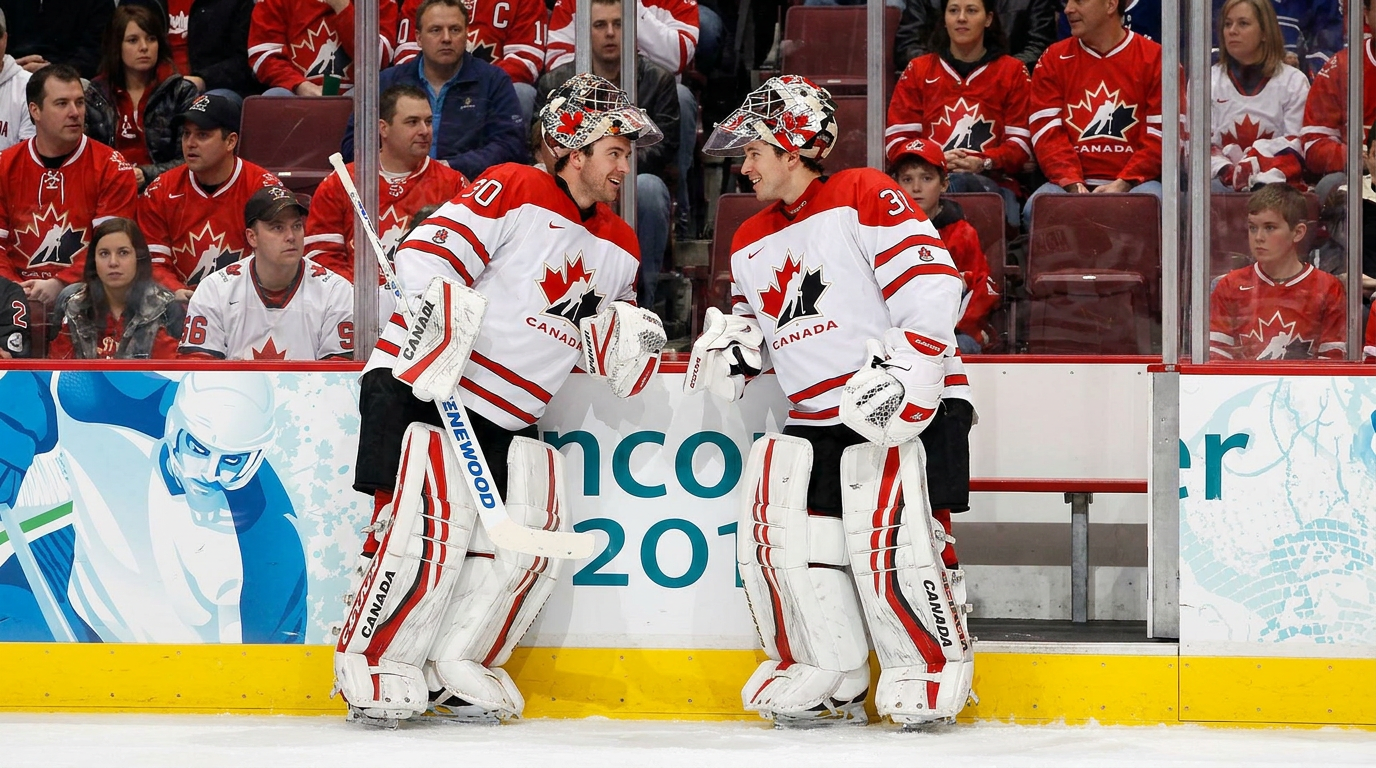
For decades, the blueprint for building a Stanley Cup contender was universally understood: draft a franchise goaltender, play him for 70 regular-season games, and ride him through the grueling two-month playoff gauntlet. Legends of the crease like Martin Brodeur and Patrick Roy cemented the myth of the undisputed number one, establishing a culture where backups were merely an afterthought.[2]
But as the 2026 Stanley Cup Final unfolds, that traditional model has been completely dismantled. The workhorse goaltender is now an endangered species, replaced by the strategic "tandem"—a 1A and 1B rotation designed to optimize on-ice performance, manage salary cap space, and prevent catastrophic injuries.[1]
This shift is not a temporary coaching fad; it represents a fundamental restructuring of hockey economics and sports science. Across the league, front offices have realized that investing heavily in a single netminder is a glaring market inefficiency that actively harms a team's chances of building a deep roster.[3]
To understand the tandem revolution, one must first look at the biomechanics of the modern position. Today's goaltenders rely almost exclusively on the "butterfly" style, a technique requiring explosive lateral movements, rapid drops to the ice, and immense torque on the hips and knees.[4]

A recent study in the Journal of Sports Sciences quantified this physical toll, revealing that the biomechanical load on a goaltender's lower body during a standard 60-minute game requires at least 48 hours of baseline recovery to prevent micro-tears in the hip labrum and groin muscles.[4]
When goalies play tired, their mechanics inevitably break down. Analytics departments have tracked a steep decline in high-danger save percentages when a goaltender starts on consecutive nights or plays more than three games in a single week.[1][6]
The data became impossible to ignore. A rested backup statistically outperforms a fatigued elite starter in almost every metric, making the decision to rotate a mathematical certainty rather than a mere coaching hunch.[6]
Then comes the business side: the NHL's hard salary cap. In an era where every dollar must be optimized, allocating $10 million or more to a single goaltender severely limits a general manager's ability to build a robust lineup of skaters.[3]
Financial analysts tracking NHL cap allocations note that teams employing a tandem usually spend a combined $5 million to $7 million on their crease, securing two highly capable players for a fraction of the cost of one superstar.[5]
This strategy creates millions in surplus cap space that can be redirected toward top-four defensemen or elite goal-scorers—assets that play every single night, unlike a goaltender who can physically only start about 60 percent of the games.[3][5]

Furthermore, the tandem model provides critical injury insurance. If a $10 million starter suffers a torn meniscus in April, a team's season is effectively over. If a $4 million 1A goes down, the 1B is already acclimated to the workload and can step into the primary role seamlessly.[2]
We are seeing this exact scenario play out in the 2026 playoffs. Teams making deep runs have masterfully utilized a rotation, keeping both netminders fresh deep into June and neutralizing the fatigue that typically plagues teams in the later rounds.[1]
However, the tandem approach does introduce new psychological complexities. Goaltenders are famously creatures of habit, and many veterans have historically thrived on the rhythm and confidence of playing every single game.[2]
Coaches now have to act as psychologists as much as tacticians, managing egos and ensuring both players feel valued without creating a divisive "goalie controversy" in the locker room.[1][6]

There is also the ultimate edge case: Game 7 of the Stanley Cup Final. When the season is entirely on the line, the tandem philosophy is severely tested. Does a coach stick to the data-driven rotation, or do they abandon the math to ride the "hot hand"?[6]
How we got here
1990s-2000s
The era of the workhorse, with goalies like Martin Brodeur regularly playing 70+ games a season.
2010s
The butterfly style becomes universal, leading to an increase in hip and groin injuries among heavily used starters.
2020-2023
A flat salary cap forces teams to find market inefficiencies, accelerating the shift toward cheaper, split-duty tandems.
2026
The tandem model becomes the dominant, data-backed strategy for Stanley Cup contenders.
Viewpoints in depth
Front Offices & Analysts
They view the crease as a math problem.
For general managers and analytics departments, the tandem is a pure efficiency play. By splitting starts, teams maximize their salary cap space and ensure they always have a rested player in net, optimizing the statistical probability of a win. They argue that paying a premium for a single goalie who can only physically play 60% of the games is a fundamental roster-building flaw.
Sports Medicine
They focus on the physical toll of the modern game.
Biomechanists and team doctors argue the human body isn't designed to execute the modern butterfly style 70 times a year. The explosive lateral pushes and rapid drops create immense torque on the hip labrum and knees. They advocate for strict load management to extend careers, prevent chronic joint issues, and ensure peak physical output during the playoffs.
Traditionalists
They worry about the loss of rhythm and leadership.
Former players and old-school coaches often express concern that tandems prevent a goalie from finding their "rhythm." They argue that goaltending is a highly mental position, and constantly looking over one's shoulder at a 1B partner can breed insecurity. Furthermore, they believe that in high-pressure Game 7 situations, a team needs an undisputed leader in the crease rather than a platoon.
What we don't know
- Whether a true generational talent could still successfully revert to the 70-game model in the modern era.
- How the tandem model will impact the long-term contract values of elite goaltenders entering free agency.
Key terms
- Butterfly style
- A goaltending technique where the player drops to their knees and flares their lower legs out to cover the bottom of the net.
- Salary cap
- The maximum amount of money a team is allowed to spend on player salaries in a single season.
- High-danger save percentage
- An advanced statistic measuring a goaltender's success rate at stopping shots taken from the most threatening scoring areas on the ice.
Frequently asked
What is a 1A/1B goalie tandem?
A system where two goaltenders split the starting duties roughly 55/45 or 50/50, rather than having one clear starter and a bench-warming backup.
Why don't goalies play 70 games anymore?
The modern butterfly style puts immense strain on the hips and knees, making frequent rest necessary to prevent injury and maintain high performance.
How does a tandem help with the salary cap?
Paying two good goalies $3 million each is cheaper than paying one superstar $10 million, freeing up money to sign better skaters.
Sources
Source coverage
6 outlets
3 viewpoints surfaced






[1]ESPNFront Offices & Analysts
Why goalie tandems have taken over the NHL -- even in the playoffs
Read on ESPN →[2]The AthleticTraditionalists
The death of the 70-game goalie: How NHL teams are rethinking the crease
Read on The Athletic →[3]SportsnetFront Offices & Analysts
Economics of the crease: Why paying a starter $10M is a market inefficiency
Read on Sportsnet →[4]Journal of Sports SciencesSports Medicine
Biomechanical load and fatigue recovery in elite ice hockey goaltenders
Read on Journal of Sports Sciences →[5]PuckPediaFront Offices & Analysts
NHL Salary Cap and Goaltender Allocation Trends 2016-2026
Read on PuckPedia →[6]Factlen Editorial TeamSports Medicine
Synthesis by Factlen editorial team
Read on Factlen Editorial Team →

More in sports
See all 13 stories →Olympic Sustainability
How the LA 2028 Olympics Will Run Entirely on Existing Stadiums
0 sources

NBA Finals
New York Knicks Win 2026 NBA Finals, Ending 53-Year Championship Drought
0 sources
NBA Finals
New York Knicks Capture First NBA Championship Since 1973
0 sources
Hockey Strategy
How the PWHL's 'Jailbreak' and 'No Escape' Rules Are Rewriting Hockey Strategy
0 sources
Every angle. Every day.
Get sports stories with full source coverage and perspective breakdowns delivered to your inbox.