
The Blended Wing Body: How a Radical Aircraft Redesign Could Cut Aviation Fuel Use by 50%
Aerospace startups and major airlines are advancing a tailless, blended-wing aircraft design that promises to revolutionize commercial flight. By merging the fuselage and wings, the new architecture aims to drastically reduce drag, fuel consumption, and emissions.
By Factlen Editorial Team
- Aerospace Innovators
- Engineers and startups pushing for a radical departure from traditional aircraft design.
- Commercial Airlines
- Carriers seeking to drastically cut their largest operating expense: jet fuel.
- Aviation Regulators & Analysts
- Aviation authorities and experts focused on safety, certification, and logistical integration.
What's not represented
- · Airport Infrastructure Operators
- · Passenger Advocacy Groups
Why this matters
Aviation accounts for roughly 2.5% of global carbon emissions, and traditional aircraft designs have reached their maximum aerodynamic efficiency. The blended wing body represents the most viable path to decarbonizing long-haul travel without waiting decades for new propulsion technologies.
Key points
- The blended wing body (BWB) design merges an aircraft's fuselage and wings, distributing aerodynamic lift across the entire airframe.
- By eliminating the tail and smoothing the airframe, the design reduces aerodynamic drag by 30% and promises to cut fuel consumption by half.
- California startup JetZero is currently flying a 1:8 scale demonstrator and has secured $235 million from the U.S. Air Force to build a full-scale prototype by 2027.
- Major airlines, including Delta, United, and easyJet, are backing the technology as a replacement for aging mid-market jets like the Boeing 767.
- The radical shape presents new engineering challenges, particularly regarding cabin pressurization and emergency evacuation protocols.
For more than six decades, the silhouette of commercial flight has remained stubbornly unchanged. The "tube-and-wing" architecture—a cylindrical fuselage designed to hold payload, attached to swept wings designed to generate lift—has defined everything from the dawn of the Jet Age to today's modern twin-engine airliners. But aerospace engineers have long known that this conventional design is approaching its aerodynamic limits. As the aviation industry faces mounting pressure to decarbonize and achieve net-zero emissions by 2050, incremental tweaks to engines and lightweight materials are no longer enough. A radical structural leap is required, and a century-old concept is finally moving from the drawing board to the runway.[6][7]
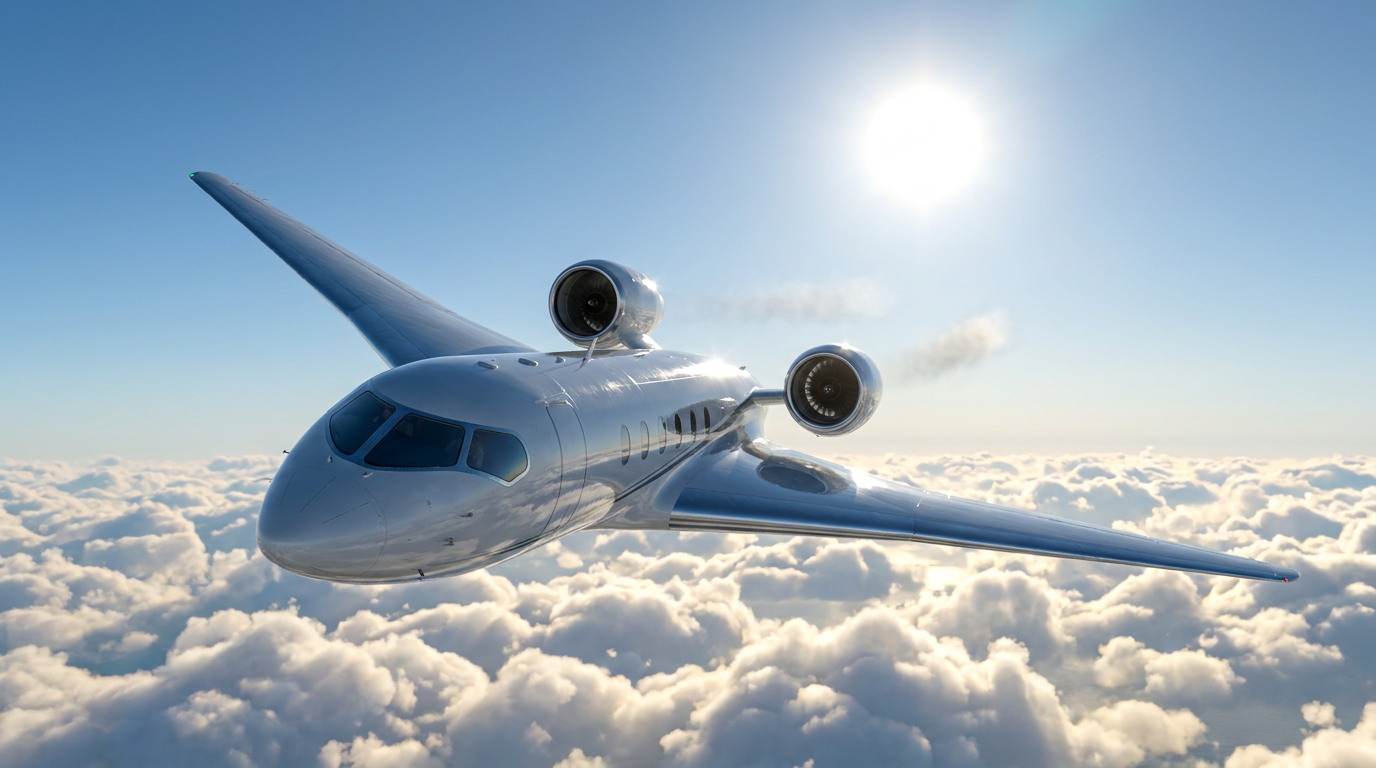
That leap is the Blended Wing Body (BWB), an aircraft configuration that seamlessly merges the fuselage and the wings into a single, continuous lifting surface. Unlike traditional airplanes where the central tube is essentially dead weight that must be carried by the wings, a BWB design distributes aerodynamic lift across the entire airframe. The result is a flattened, triangular shape that resembles a manta ray more than a traditional passenger jet. While military stealth bombers like the B-2 have utilized flying-wing designs for decades, translating this architecture to commercial passenger and cargo transport has historically been stymied by manufacturing complexities and control challenges.[1][7]
Now, a California-based aerospace startup named JetZero is accelerating the timeline for commercial BWB flights. The company's 1:8 scale demonstrator, nicknamed "Pathfinder," recently secured its airworthiness certificate from the Federal Aviation Administration and has been conducting test flights in California. With a 23-foot wingspan, the Pathfinder is actively gathering telemetry and flight dynamics data. This subscale testing is a critical stepping stone toward a much larger goal: a full-scale demonstrator aircraft slated to take to the skies in 2027, backed by a massive infusion of military and private capital.[3][5][6]
The mechanism behind the BWB's efficiency is rooted in drastically reduced aerodynamic drag. In a conventional aircraft, the sharp intersection where the wing meets the cylindrical fuselage creates significant "interference drag," and the large vertical and horizontal tail sections required for stability add further air resistance and weight. By eliminating the tail entirely and smoothing the transition between the body and the wings, a BWB aircraft reduces its total "wetted area"—the surface exposed to the airflow—by roughly a third. This streamlined shape slashes overall aerodynamic drag by at least 30 percent.[3][7]

This aerodynamic advantage translates directly into the primary claim driving the BWB renaissance: a projected 50 percent reduction in fuel consumption and greenhouse gas emissions compared to current aircraft of similar size. Because the airframe itself is so efficient, it requires significantly less thrust to stay aloft. JetZero plans to achieve these massive efficiency gains using existing, conventional turbofan engines rather than waiting for unproven electric or hydrogen propulsion systems to mature. By mounting the engines on top of the blended fuselage, the design also promises a drastic reduction in noise pollution, shielding the roar of the turbines from the ground below.[1][6]
The evidence supporting these claims is not merely theoretical. The current wave of development builds heavily on the X-48 program, a joint initiative between NASA and Boeing that concluded in 2013. Over dozens of test flights, the remotely piloted X-48 subscale models proved that a blended wing body could be flown safely and efficiently, validating the computer models that predicted massive fuel savings. Telemetry from JetZero's current Pathfinder flights has already confirmed that the new commercial concept shares the stable flight dynamics pioneered by the X-48, giving regulators and investors confidence in the underlying physics.[3][4][7]
That confidence has translated into serious financial backing. Recognizing the strategic value of an aircraft that can fly further on less fuel, the U.S. Air Force awarded JetZero a $235 million contract in 2023 to develop the full-scale demonstrator. The military envisions using the BWB architecture for next-generation aerial refueling tankers and cargo airlifters, which would benefit immensely from the increased range and payload capacity. Northrop Grumman's Scaled Composites division is currently fabricating the components for this full-size prototype, with ground testing scheduled to begin in early 2027.[3][4]

That confidence has translated into serious financial backing.
On the commercial side, the BWB design is being positioned to fill a highly lucrative gap in the aviation market. JetZero's proposed passenger variant, the Z4, is designed to carry between 200 and 250 passengers with a range of 5,000 nautical miles. This places it squarely in the "middle market," offering the passenger capacity of a small widebody jet but operating with the weight and engine requirements of a single-aisle aircraft. It is explicitly targeted as a replacement for aging fleets of Boeing 757s and 767s, a segment where both Boeing and Airbus have struggled to offer a clean-sheet replacement.[1][5]
Major airlines are already placing bets on the technology. Delta Air Lines and United Airlines have both announced partnerships with JetZero, with United signing a conditional purchase agreement for up to 200 aircraft if the demonstrator meets its development milestones. Alaska Airlines and European low-cost carrier easyJet have also joined as partners, drawn by the prospect of halving their fuel bills—which typically represent an airline's single largest operating expense. This level of early airline involvement is highly unusual for a startup and signals a genuine industry appetite for radical innovation.[1][2][7]

For passengers, the BWB architecture will fundamentally alter the in-flight experience. Because the fuselage is wide and flattened rather than a narrow tube, the cabin interior will resemble a theater or an auditorium more than a traditional airplane aisle. Renderings show seating arrangements that could stretch 15 rows across, broken up by multiple aisles and central lounge areas. The company claims this layout will allow for faster boarding times, dedicated overhead storage for every passenger, and a generally more spacious environment.[1][5]
However, this novel cabin shape also introduces significant engineering uncertainties. Traditional cylindrical fuselages are incredibly efficient at handling the stress of cabin pressurization, distributing the forces evenly like a soda can. A flattened, non-circular pressure vessel requires heavy internal structural reinforcements to prevent it from bowing outward at high altitudes. Engineers must balance the aerodynamic weight savings of the blended wing against the added weight of this complex internal structure, a challenge that has historically derailed previous BWB commercial concepts.[5][6]
Another major area of uncertainty revolves around airport infrastructure and emergency protocols. A blended wing aircraft carrying 250 passengers will inherently have a wider wingspan than a traditional single-aisle jet carrying the same payload. While JetZero claims its aircraft will fit seamlessly into existing airport gates, aviation analysts point out that integrating a radically new shape into taxiways and terminals designed strictly for tube-and-wing planes will require careful logistical planning. Furthermore, evacuating a massive, wide cabin in under 90 seconds—a strict FAA requirement—will necessitate entirely new emergency exit strategies.[5][6]

JetZero is not the only company racing to commercialize the blended wing. European aerospace giant Airbus has heavily featured BWB designs in its ZEROe initiative, which aims to develop a zero-emission, hydrogen-powered commercial aircraft by 2035. Airbus views the wide fuselage of the BWB as the perfect solution for storing bulky liquid hydrogen fuel tanks. Meanwhile, another California startup, Natilus, is developing autonomous BWB cargo aircraft, betting that the freight market will be an easier regulatory entry point for the novel airframe than passenger travel.[2][7]
The timeline for this aviation revolution remains aggressive. While the full-scale demonstrator is on track for its 2027 debut, JetZero's goal of entering commercial passenger service by 2030 is viewed by many aviation analysts as highly optimistic. Certifying an entirely new category of aircraft requires navigating a labyrinth of FAA safety regulations that were written exclusively for traditional airplanes. Every aspect of the plane, from its flight control software to its structural integrity, will face unprecedented regulatory scrutiny.[3][5]
Despite these hurdles, the momentum behind the blended wing body is undeniable. The convergence of advanced composite materials, sophisticated digital flight control systems, and an urgent mandate to reduce global carbon emissions has made the concept more viable today than at any point in aviation history. If successful, the transition away from the tube-and-wing design will mark the most significant visual and technological shift in commercial air travel since the introduction of the jet engine, fundamentally reshaping how humanity moves across the globe.[1][2][6]
How we got here
1997–2013
NASA and Boeing conduct extensive subscale testing of the X-48 blended wing body, proving the concept's aerodynamic stability.
2020
Airbus unveils its ZEROe initiative, featuring a blended wing body design as a potential hydrogen-powered aircraft.
August 2023
The U.S. Air Force awards JetZero a $235 million contract to develop a full-scale blended wing demonstrator.
Spring 2024
JetZero's 1:8 scale 'Pathfinder' demonstrator receives FAA airworthiness certification and begins test flights.
2027 (Target)
The full-scale JetZero demonstrator, built in partnership with Northrop Grumman, is scheduled to make its first flight.
Viewpoints in depth
Aerospace Innovators
Engineers and startups pushing for a radical departure from traditional aircraft design.
For aerospace engineers, the tube-and-wing design is a dead end. Companies like JetZero and Natilus argue that decades of incremental improvements to jet engines and lightweight composites have yielded diminishing returns. By fundamentally altering the physics of how the aircraft generates lift, innovators believe they can unlock a 50% reduction in fuel burn without waiting for unproven hydrogen or electric propulsion systems to mature. They view the blended wing body as the foundational architecture for the next century of flight.
Commercial Airlines
Carriers seeking to drastically cut their largest operating expense: jet fuel.
Airlines operate on notoriously thin margins, with fuel costs often dictating profitability. Carriers like Delta, United, and easyJet are backing the blended wing concept because it promises to halve those costs on crucial mid-range international routes. Furthermore, airlines are facing a looming shortage of capable 'middle market' aircraft as older Boeing 757s and 767s are retired. The blended wing offers the passenger capacity of a widebody with the operating economics of a smaller jet, making it a highly attractive fleet replacement.
Regulators & Infrastructure Operators
Aviation authorities and airports focused on safety and logistical integration.
While the aerodynamic math is sound, regulators and analysts caution that certifying a new aircraft shape is a monumental task. The FAA's safety regulations, particularly regarding emergency evacuations and cabin pressurization, are built entirely around cylindrical fuselages. A wide, theater-style cabin presents unprecedented challenges for 90-second evacuation mandates. Additionally, airport operators warn that accommodating aircraft with significantly wider wingspans could require costly modifications to taxiways, gates, and terminal infrastructure.
What we don't know
- How the FAA will adapt its strict 90-second emergency evacuation requirements for a cabin that is 15 seats wide.
- Whether the added weight of the structural reinforcements needed to pressurize a non-cylindrical cabin will offset some of the aerodynamic fuel savings.
- How seamlessly the wider wingspan of a blended wing aircraft will integrate into existing, crowded airport taxiways and gates.
Key terms
- Blended Wing Body (BWB)
- An aircraft design where the fuselage and wings are seamlessly integrated into a single lifting surface, eliminating the traditional cylindrical tube and tail.
- Wetted Area
- The total surface area of an aircraft that comes into contact with the external airflow, which directly impacts aerodynamic drag.
- Interference Drag
- Air resistance created when airflow over two intersecting aircraft parts, such as a wing and a fuselage, collides and creates turbulence.
- Tube-and-Wing
- The conventional aircraft architecture used for the last 60 years, featuring a cylindrical body for passengers and separate wings for lift.
Frequently asked
Will blended wing aircraft have window seats?
Because the cabin is much wider than a traditional airplane, a smaller percentage of passengers will have actual window seats. Designers are exploring virtual windows—high-definition screens projecting the outside view—for interior seats.
Are these planes electric or hydrogen-powered?
While Airbus is exploring hydrogen for its blended wing concepts, JetZero's initial commercial aircraft will use conventional jet fuel and existing turbofan engines to speed up regulatory certification.
When will passengers be able to fly on one?
JetZero is targeting 2030 for commercial entry, though aviation analysts suggest the mid-2030s is a more realistic timeline given the complex FAA certification process.
Will these planes fit at normal airport gates?
JetZero claims its commercial variant is designed to fit into existing airport infrastructure, though its wider wingspan may require careful logistical management at older terminals.
Sources
Source coverage
8 outlets
3 viewpoints surfaced








[1]AIN OnlineAerospace Innovators
JetZero Aims to Shake Up Commercial Aviation with BWB Design
Read on AIN Online →[2]Simple FlyingCommercial Airlines
Delta and JetZero's Blended Wing Partnership Signals Shift in Aviation
Read on Simple Flying →[3]Air & Space Forces MagazineAviation Regulators & Analysts
Air Force Tests Subscale Model of Blended-Wing Body Jet, on Track for First Flight in 2027
Read on Air & Space Forces Magazine →[4]The AviationistAviation Regulators & Analysts
USAF Collecting Data from JetZero Pathfinder Flights
Read on The Aviationist →[5]Business InsiderAviation Regulators & Analysts
California aerospace startup JetZero got the green light to fly its new 'Pathfinder' aircraft
Read on Business Insider →[6]CNNAviation Regulators & Analysts
JetZero: Groundbreaking 'blended-wing' demonstrator plane cleared to fly
Read on CNN →[7]AeroReportCommercial Airlines
Blended wing body for passenger flights
Read on AeroReport →[8]JetZeroAerospace Innovators
JetZero Demonstrator and Pathfinder Progress
Read on JetZero →
Every angle. Every day.
Get transportation stories with full source coverage and perspective breakdowns delivered to your inbox.