
The Black Stop Sign: How Chile's Warning Labels Are Rewriting the Rules of Global Nutrition
A decade after Chile mandated stark black warning labels on unhealthy foods, new data reveals the policy is not only changing consumer habits but forcing the global food industry to reformulate its products.
By Factlen Editorial Team
- Policy & Market Analysts
- Focus on the supply-side impact, noting that the policy's true success lies in forcing companies to change recipes.
- Public Health Advocates
- Argue that stark, mandatory warning labels are a necessary intervention to combat the global obesity epidemic.
What's not represented
- · Food & Beverage Manufacturers
- · Agricultural Export Groups
Why this matters
Diet-related chronic diseases are the leading cause of preventable death globally. Chile's proven success offers a scalable, evidence-based blueprint for how governments can effectively intervene to make the default food environment healthier for everyone.
Key points
- Chile's 2016 law mandated black octagonal warning labels on foods high in sugar, sodium, saturated fat, and calories.
- The policy bans the sale of labeled products in schools and restricts marketing directed at children.
- Data shows a 37% reduction in sugar purchases from labeled products and a 24% drop in sugary drink sales.
- The food industry aggressively reformulated products, dropping the percentage of items needing labels from 71% to 53%.
- New research links the comprehensive policy to a measurable reduction in early childhood obesity.
- At least eight other countries in the Americas have since adopted similar mandatory labeling laws.
For decades, the global fight against obesity has relied on a quiet, easily ignored tool: the nutritional information panel on the back of packaged foods. Dense with percentages, serving sizes, and scientific terminology, these panels were designed to inform consumers and encourage healthier choices. Instead, public health experts argue, they have largely failed to change behavior. The complex math required to decipher these labels is easily overpowered by the bright colors, cartoon mascots, and deceptive health halos plastered across the front of the box. As global obesity rates continued to climb, it became clear that a new approach was necessary—one that prioritized immediate clarity over exhaustive detail.
In 2016, the government of Chile decided to stop asking consumers to do the math. Facing one of the highest rates of childhood obesity in the world, the country implemented the Law of Food Labeling and Advertising (Law 20.606). It was a radical departure from the global regulatory norm, shifting the burden of nutritional transparency from the consumer's calculator directly to the manufacturer's packaging. Policymakers realized that to combat an environment saturated with ultra-processed foods, they needed a visual intervention that was impossible to ignore, regardless of a shopper's age, education level, or available time.
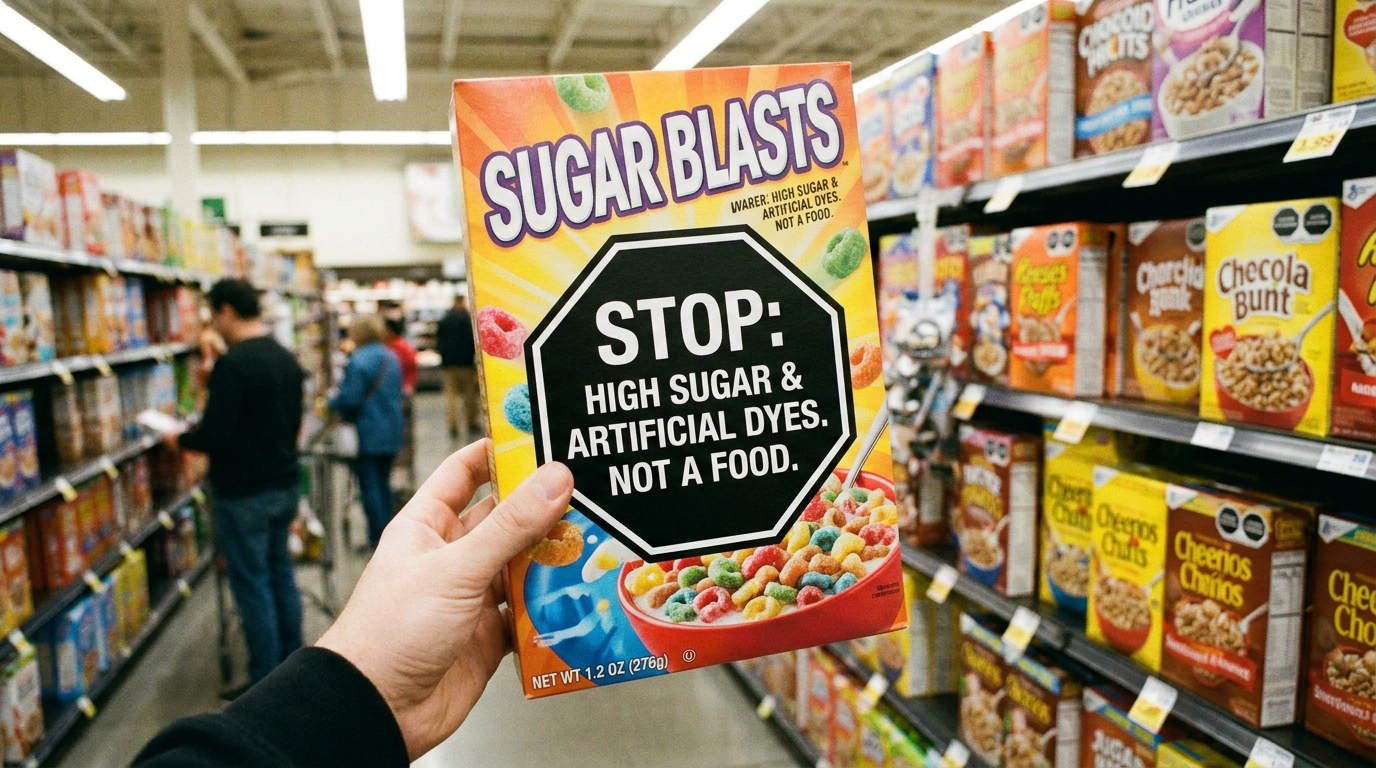
The centerpiece of the Chilean policy is stark and uncompromising. Any packaged food or beverage that exceeds strict regulatory thresholds for added sugar, sodium, saturated fat, or calories must bear a prominent, black octagonal warning label on the front of the package. Resembling a universal traffic stop sign, the label simply reads 'Alto en' (High in) followed by the specific nutrient of concern. Depending on its nutritional profile, a single product can carry up to four of these black stop signs, creating a highly visible deterrent. The design was intentional. 'Chilean officials wanted a simple way to make it immediately clear to consumers which foods had been linked to obesity and other chronic disease,' researchers noted. They emphasized that the binary nature of the label—a product either gets a stop sign or it does not—cuts through the noise of modern food marketing. There is no nuance or percentage to interpret; the presence of the black octagon is a direct warning from the Ministry of Health.[4]

But the labels were only the first pillar of a comprehensive, multi-pronged strategy. The Chilean law also fundamentally altered how these labeled products could be sold and marketed, recognizing that warning labels alone are insufficient if the surrounding environment remains toxic. Any product carrying a black warning label was immediately banned from being sold, promoted, or distributed in schools and nurseries across the country. This ensured that children, who are particularly vulnerable to aggressive marketing and peer pressure, were provided with a safe food environment during the school day. Furthermore, the law enacted some of the world's strictest marketing restrictions. Products burdened with warning labels could no longer be advertised on television programs or websites where children made up a significant portion of the audience. On the packaging itself, companies were legally forced to remove cartoon characters, toys, interactive games, and celebrity endorsements that might appeal to minors. Almost overnight, iconic cereal mascots and brightly colored brand ambassadors vanished from Chilean grocery store shelves, replaced by the austere black octagons.
The rollout of these regulations was designed in three distinct phases, giving the food industry a structured timeline to adapt. Phase 1 launched in June 2016 with initial, relatively lenient thresholds. In 2018 and 2019, Phases 2 and 3 progressively tightened those limits. For example, the threshold for a 'High in Sugar' label dropped from 22.5 grams per 100 grams of solid food in 2016 to a much stricter 10 grams by 2019. A decade later, a wave of new data is providing a definitive look at whether this aggressive intervention actually worked. The results, published across multiple peer-reviewed medical journals and highlighted in recent health dispatches, suggest a resounding public health victory. According to data from the Global Food Research Program, during Phase 2 of the law, Chilean households purchased 37% less sugar from products carrying the black warning labels. This massive reduction indicates that consumers are actively using the labels to guide their purchasing decisions at the point of sale.[1][7]
The rollout of these regulations was designed in three distinct phases, giving the food industry a structured timeline to adapt.
The purchasing declines were seen across the board, affecting nearly every category of targeted nutrients. Consumers bought 22% less sodium, 16% less saturated fat, and 23% fewer total calories from labeled products. The most dramatic shift occurred in the beverage aisle, where purchases of 'high-in' sugary drinks plummeted by nearly 24%, a critical win given the strong link between liquid calories and metabolic disease. Crucially, researchers found that these behavioral changes were equitable across all socioeconomic groups. The simplicity of the black stop sign meant that advanced nutritional literacy was no longer a prerequisite for making healthier choices. Whether a shopper had a university degree or had not finished high school, the warning was equally understood and acted upon.[1]

However, behavioral economists and policy analysts argue that the true genius of the Chilean law is not just how it changed consumer behavior, but how it forced the hand of the global food industry. Because companies are highly motivated to avoid the stigma of the black octagons—and the accompanying bans on lucrative school sales and child-directed marketing—they were forced to adapt their products. Rather than accept the labels and the resulting drop in sales, the industry embarked on a massive wave of product reformulation. A 2025 study published in BMC Medicine found that the proportion of packaged foods and drinks requiring a warning label dropped from 71% before the law to just 53% after the strictest phase went into effect. The food supply itself became objectively healthier.[3]
Food manufacturers quietly altered thousands of recipes to escape the regulations. The Food and Beverage Association of Chile reported that more than 1,500 products were reformulated to fall below the regulatory thresholds. Global conglomerates took notice of the shifting landscape; Nestlé, for instance, reportedly reformulated 6,500 products globally, demonstrating how a strict policy in one nation can ripple through international supply chains. 'We know that before this law, there were almost no significant nutritional improvements in the packaged food supply,' noted Dr. Natalia Rebolledo, a lead researcher on the reformulation study. The data underscores a vital lesson for regulators: mandatory warning labels are vastly more effective at driving industry-wide recipe changes than voluntary guidelines or industry self-regulation ever were.[3][4]

The ultimate goal of the policy, however, was not just to change recipes or alter grocery receipts, but to improve human health outcomes. In June 2026, a landmark study published in The Lancet provided the first real-world evidence linking the comprehensive policy package to a tangible reduction in early childhood obesity, the very crisis the law was designed to address. Analyzing health surveillance data from more than 300,000 Chilean schoolchildren, researchers found that within 18 months of the law's introduction, girls were 2.9% less likely to be overweight or obese, and boys were 2.4% less likely. While these percentages may appear modest in isolation, when applied across a national population, they represent a significant epidemiological shift and a rare, hard-won reversal in global obesity trends.[2]
The undeniable success of the Chilean experiment has not gone unnoticed by the international community. The black stop sign has rapidly become a major policy export. Across the Americas, at least eight countries—including Mexico, Peru, Uruguay, Argentina, and Colombia—have adopted similar mandatory front-of-package warning labels, increasingly prioritizing long-term public welfare over short-term corporate resistance and industry lobbying. Global health governing bodies, including the World Health Organization, are increasingly pointing to the Chilean model as the gold standard for nutritional policy. The accumulating evidence suggests that when governments combine clear, unavoidable labeling with strict marketing restrictions and protected school environments, they can successfully reshape the food environment and empower their citizens to live healthier lives.[4][5]

'These results offer strong evidence for policymakers around the world,' the Lancet study authors concluded. 'They support mandatory front-of-pack nutrition warning labels, restrictions on unhealthy food in schools, and marketing bans as effective, practical ways to tackle the childhood obesity epidemic.' The data leaves little room for debate regarding the policy's efficacy. As the global food supply becomes increasingly dominated by hyper-palatable, ultra-processed products, the Chilean data offers a proven blueprint for intervention. It demonstrates that the obesity epidemic is not an unsolvable crisis of individual willpower, but a systemic environmental issue that can be successfully mitigated through bold, evidence-based, and uncompromising public health regulation.[2][6]
How we got here
2012
Chile approves the initial framework for the Law of Food Labeling and Advertising.
June 2016
Phase 1 of the law takes effect, introducing the black octagonal warning labels and marketing restrictions.
2018–2019
Phases 2 and 3 are implemented, progressively tightening the nutritional thresholds required to trigger a warning label.
August 2021
Argentina introduces similar front-of-pack warning labels, joining a growing list of Latin American countries following Chile's lead.
June 2026
New research provides the first real-world evidence linking the Chilean policy package to a reduction in early childhood obesity.
Viewpoints in depth
Public Health & Medical Consensus
Stark, mandatory warning labels are a necessary intervention to combat the global obesity epidemic.
Public health researchers and medical professionals argue that traditional back-of-package nutritional panels are too complex and easily obscured by aggressive marketing. They point to the Chilean data as proof that simple, visually striking warnings—like a black stop sign—cut through the noise. By combining these labels with strict marketing bans, especially those targeting children, advocates believe governments can effectively reshape the food environment and reduce the long-term burden of non-communicable diseases like diabetes and heart disease.
The Food & Beverage Industry
Binary warning labels oversimplify nutrition and unfairly penalize certain products.
Industry groups have historically resisted mandatory front-of-package warning labels, arguing that they 'demonize' individual ingredients rather than promoting a balanced diet. Some manufacturers contend that a black stop sign fails to capture the overall nutritional profile of a food, potentially scaring consumers away from products that might have other benefits. However, in response to the Chilean law, many companies have shifted their focus from opposition to aggressive product reformulation, altering their recipes to fall below the regulatory thresholds and avoid the labels entirely.
Behavioral Economists
The policy's greatest success is supply-side reformulation, not just consumer choice.
Behavioral economists highlight that while the labels successfully 'nudge' consumers toward healthier choices, the most profound impact of the Chilean law occurred on the supply side. Because food companies are highly motivated to avoid the stigma of a black warning label, they voluntarily reformulated thousands of products. Economists argue this is a textbook example of effective regulatory design: the threat of a label forces an industry-wide improvement in food quality, meaning even consumers who ignore the labels end up eating less sugar and sodium.
What we don't know
- Whether the product reformulations (such as replacing sugar with artificial sweeteners) will have unintended long-term health consequences.
- How effective the labels remain over decades as consumers potentially become desensitized to the black stop signs.
- The exact economic impact on smaller, local food manufacturers who may lack the R&D budgets to quickly reformulate their products.
Key terms
- Front-of-Package (FOP) Labeling
- Nutritional information displayed on the front of food packaging, designed to be quickly understood by consumers at the point of purchase.
- Ultra-Processed Foods
- Industrial formulations made mostly or entirely from substances extracted from foods and additives, typically high in added sugars, unhealthy fats, and sodium.
- Product Reformulation
- The process by which food and beverage manufacturers alter the recipe of a product, often to reduce unhealthy ingredients and avoid regulatory penalties or warning labels.
- Nutrients of Concern
- Specific dietary components, such as sodium, added sugars, and saturated fats, that are linked to chronic diseases when consumed in excess.
Frequently asked
What exactly does the Chilean warning label look like?
It is a solid black octagon with a white border, resembling a stop sign, containing the words 'High in' followed by sugar, sodium, saturated fat, or calories.
Did food prices go up because of the new labels?
Studies evaluating the economic impact of the Chilean Food Labeling and Advertising Law have found no negative economic impact or significant price increases for consumers.
Can children still buy these labeled foods at school?
No. The law strictly prohibits the sale, promotion, or free distribution of any product carrying a black warning label within schools and nurseries.
Have food companies changed their recipes to avoid the labels?
Yes. Sweeping product reformulations have occurred, with the proportion of packaged foods requiring a warning label dropping significantly as companies reduce sugar and salt.
Sources
Source coverage
7 outlets
2 viewpoints surfaced







[1]PLOS MedicinePublic Health Advocates
Evaluations of Chile's Law of Food Labeling and Advertising
Read on PLOS Medicine →[2]The LancetPublic Health Advocates
Impact of Chile's food labelling and marketing reforms on childhood obesity
Read on The Lancet →[3]BMC MedicinePublic Health Advocates
Changes in Chile's packaged food supply under mandatory warning labels
Read on BMC Medicine →[4]Global Food Research ProgramPolicy & Market Analysts
Chile's trailblazing food policy package
Read on Global Food Research Program →[5]World Health OrganizationPublic Health Advocates
Front-of-package nutrition labelling to promote healthy diets
Read on World Health Organization →[6]Factlen Editorial TeamPolicy & Market Analysts
Synthesis by Factlen editorial team
Read on Factlen Editorial Team →[7]STAT NewsPolicy & Market Analysts
Chile offers new data on food warning label efficacy
Read on STAT News →

More in health
See all 6 stories →Metabolic Health
Muscle as an Organ of Longevity: The Science of Myokines and Metabolic Health
0 sources

Clinical Evidence
The Evidence for Exercise as a First-Line Mental Health Treatment
0 sources

Diabetes Research
FDA Approves First Disease-Modifying Therapy for Newly Diagnosed Stage 3 Type 1 Diabetes in Youth
0 sources

Longevity Science
The Science of 'Exercise Snacks': How 1-Minute Bursts of Movement Can Transform Longevity
0 sources

Every angle. Every day.
Get health stories with full source coverage and perspective breakdowns delivered to your inbox.