
The Best Air Purifiers of 2026: Top Picks for Wildfire Smoke, Allergies, and Pet Dander
As wildfire seasons lengthen and indoor air quality becomes a growing priority, reviewers have tested dozens of air purifiers to find the most effective models for 2026. Top recommendations consistently highlight brands like Coway, Levoit, and Dyson for their balance of filtration power, noise levels, and smart features.
By Factlen Editorial Team
- Value & Efficiency
- Focuses on maximizing clean air output while minimizing initial and ongoing filter costs.
- Heavy-Duty Filtration
- Prioritizes maximum particle and VOC removal for severe allergies and heavy wildfire smoke.
- Premium & Smart Features
- Values aesthetic design, app connectivity, and multi-functional use (e.g., cooling fans).
What's not represented
- · Renters in older buildings with poor HVAC systems who cannot install whole-home filtration and rely entirely on portable units.
- · Low-income households disproportionately affected by urban pollution who are often priced out of high-end HEPA models and ongoing filter costs.
Why this matters
As wildfire seasons lengthen and indoor air pollution is increasingly recognized as a health hazard, selecting the right air purifier can significantly reduce exposure to harmful particulate matter. The 2026 market offers highly efficient, quieter, and smarter options that make maintaining clean indoor air more accessible for households managing asthma, allergies, or smoke.
Key points
- Coway, Levoit, and Dyson are consistently ranked as top air purifier brands for 2026.
- True HEPA filters are essential, capturing 99.97% of particles down to 0.3 microns.
- Activated carbon filters are necessary for neutralizing odors and VOCs from wildfire smoke.
- Consumers must match the purifier's Clean Air Delivery Rate (CADR) to their room size.
- Long-term filter replacement costs significantly impact the overall value of a purifier.
Wildfire smoke, urban pollution, and a sustained post-pandemic focus on indoor air quality have transformed air purifiers from niche allergy appliances into household essentials. Reviewers across major consumer testing outlets have rigorously evaluated the 2026 landscape of air purifiers, focusing on filtration efficacy, noise levels, and overall design. The consensus reveals that while smart features and sleek aesthetics are appealing, the fundamental mechanics of moving air through dense mechanical filters remain the most critical factor in improving indoor air quality.[1][2][3]
The core technology driving the most effective units remains the High-Efficiency Particulate Air (HEPA) filter. By definition, True HEPA filters capture 99.97% of airborne particles down to 0.3 microns in size. This microscopic threshold is vital because it easily traps pet dander, pollen, dust mites, and the dangerous PM2.5 fine particulate matter commonly found in wildfire smoke and vehicle exhaust. Experts emphasize that consumers should be wary of marketing terms like "HEPA-type" or "HEPA-like," which do not meet these strict filtration standards.[1][4][5][6]
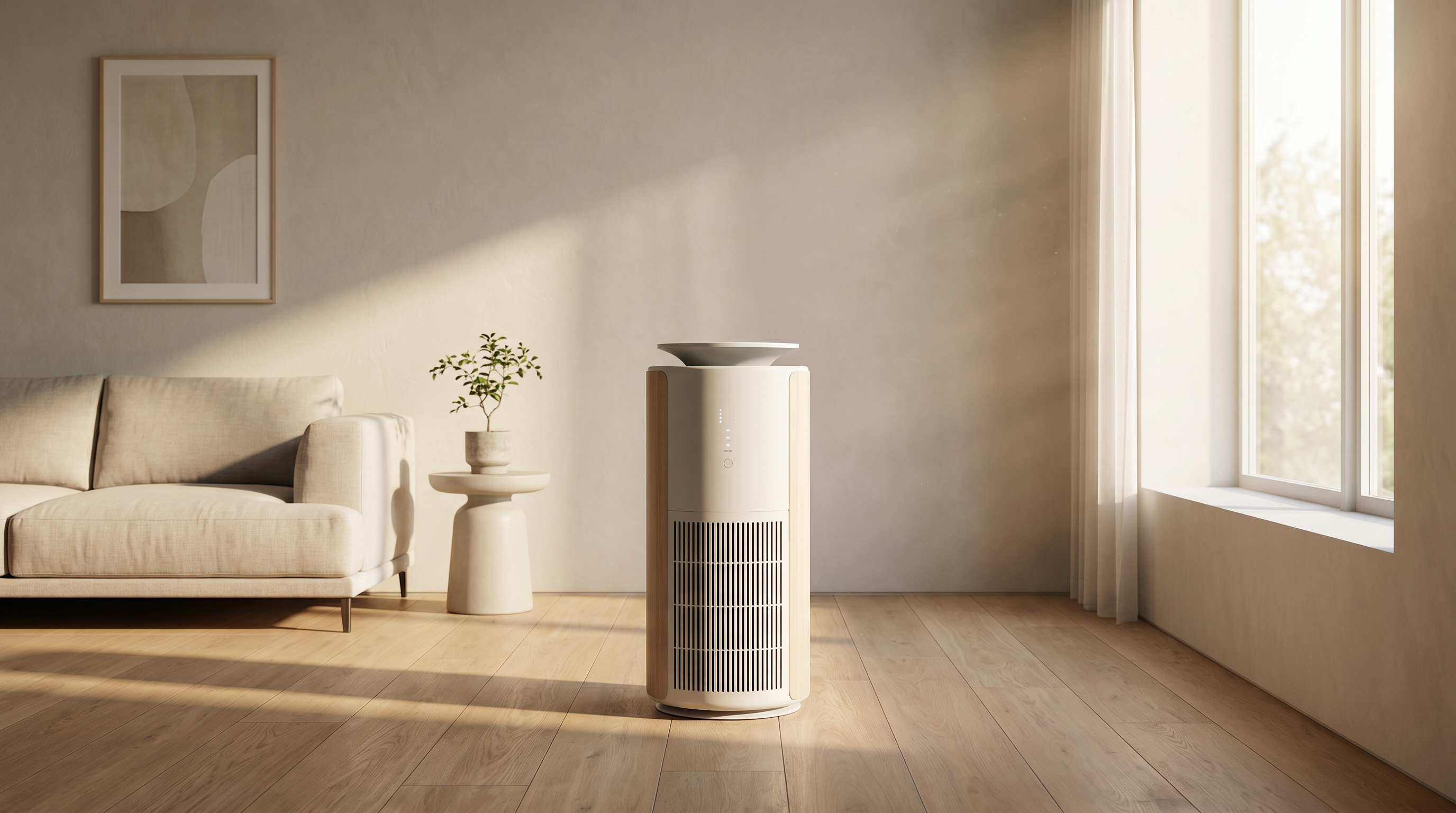
In the 2026 market, Coway continues to dominate top-pick lists, particularly with its Airmega line. The Coway Airmega AP-1512HH—often referred to as the "Mighty"—and its newer iterations are consistently praised for their optimal balance of upfront cost, long-term filter replacement affordability, and robust Clean Air Delivery Rate (CADR). Reviewers note that its multi-stage filtration system effectively neutralizes everyday household odors while capturing fine dust, making it a versatile choice for medium to large living spaces.[1][2][3][6]

For budget-conscious consumers or those outfitting smaller rooms, Levoit has solidified its position as the go-to brand. The Levoit Core series, particularly the Core 300 and 400S models, offers True HEPA filtration in a compact, cylindrical design that draws in air from 360 degrees. While these models lack the massive CADR required to clear open-concept living rooms quickly, they excel in bedrooms and home offices. Testers highlight that they operate quietly enough on low settings to avoid disrupting sleep, a crucial feature for nighttime allergy relief.[3][4][5][6]
For budget-conscious consumers or those outfitting smaller rooms, Levoit has solidified its position as the go-to brand.
At the premium end of the market, Dyson's 2026 lineup, including the Purifier Cool and Formaldehyde models, integrates air purification with the company's signature bladeless fan technology. Reviewers point out that Dyson models often come with a steep price premium and sometimes feature lower CADR ratings than dedicated, boxy purifiers. However, they excel in aesthetic design, real-time air quality monitoring via LCD screens, and targeted chemical filtration, making them popular for consumers who want an appliance that doubles as a high-end cooling fan.[1][3][5][6]
The rising threat of wildfire smoke has shifted how experts evaluate these devices. It is no longer just about seasonal pollen; purifiers must now handle heavy, sustained loads of fine ash and volatile organic compounds (VOCs). For effective smoke mitigation, reviewers heavily weight the inclusion of a substantial activated carbon pellet filter. Unlike thin carbon-impregnated sheets, thick pellet filters physically adsorb the harmful gases and acrid odors that HEPA filters, which only catch solid particles, leave behind.[1][2][4][5]

Noise levels and energy consumption are critical factors for devices meant to run continuously. The top 2026 models feature highly efficient brushless DC motors that consume less electricity than a standard LED lightbulb when running on low settings. Furthermore, "auto modes" that adjust fan speed based on onboard laser particle sensors have become a standard feature. This ensures the machine only ramps up its fan—and its noise—when a spike in indoor pollution, such as from cooking or an open window, is actually detected.[3][4][6]
Maintenance costs are a frequently overlooked aspect of air purifier ownership that reviewers urge consumers to calculate before purchasing. Brands that require proprietary, expensive filters every three to six months can quickly outpace their initial purchase price. Models from Coway and Levoit typically require annual or semi-annual filter changes that are more budget-friendly, making their lifetime cost of ownership significantly lower than some heavily marketed competitors.[1][3][4][5]
Looking ahead, the integration of smart home ecosystems allows users to track historical air quality data and automate their purifiers based on local outdoor AQI (Air Quality Index) forecasts. However, the fundamental advice from testers remains grounded in physics: buy a unit with a True HEPA filter, ensure its CADR matches your room's square footage, and keep the windows closed when outdoor air quality drops. Technology can optimize the experience, but the physical filter remains the undisputed core of clean indoor air.[2][3][5][6]
How we got here
1940s
HEPA filters are originally developed during the Manhattan Project to capture airborne radioactive particles.
2000s
HEPA air purifiers become widely available and popular for residential allergy and asthma management.
2020
The COVID-19 pandemic drives a massive global surge in demand for indoor air purification and ventilation.
2023-2025
Record-breaking wildfire seasons across North America shift consumer focus heavily toward smoke and VOC filtration.
2026
Smart purifiers featuring advanced laser sensors and auto-adjusting modes become the standard in the consumer market.
Viewpoints in depth
Value & Practicality Focus
Prioritizes the highest Clean Air Delivery Rate (CADR) per dollar spent, including long-term filter costs.
This perspective, often championed by consumer advocacy groups and budget-conscious shoppers, argues that air purifiers are fundamentally simple machines: a fan and a filter. From this viewpoint, spending $600 on a purifier with smart screens and app integration is unnecessary when a $200 unit from Coway or Winix moves the same or more volume of clean air. The primary metric of success here is the lifetime cost of ownership, heavily weighting the price and longevity of replacement HEPA filters.
Design & Tech Integration
Values aesthetics, multi-functionality, and smart home connectivity alongside air cleaning.
Consumers and reviewers focused on home design and tech integration argue that an air purifier is a prominent piece of furniture that runs 24/7. Therefore, it should look good and offer advanced features. This camp favors brands like Dyson, willing to pay a premium for bladeless designs, real-time LCD air quality readouts, voice control, and devices that double as cooling fans or heaters. For these users, the convenience and aesthetic appeal justify a higher price tag and potentially lower raw CADR.
Severe Allergy & Smoke Mitigation
Demands maximum filtration capability, particularly heavy carbon for volatile organic compounds (VOCs).
For individuals with severe asthma, allergies, or those living in high-risk wildfire zones, standard HEPA filtration is only the baseline. This viewpoint prioritizes heavy-duty machines with massive amounts of activated carbon—sometimes weighing several pounds—to physically adsorb the toxic gases, VOCs, and acrid odors associated with smoke. They prioritize continuous, high-volume air turnover and are often willing to tolerate larger, louder, and more expensive units to ensure medical-grade indoor air quality.
What we don't know
- How long current supply chains can maintain inventory during sudden, severe wildfire events that cause massive spikes in demand.
- Whether emerging filtration technologies, such as electrostatic precipitation or PECO, will eventually surpass traditional HEPA filters in independent consumer testing.
Key terms
- HEPA
- High-Efficiency Particulate Air; a mechanical filter standard that captures at least 99.97% of airborne particles sized 0.3 microns.
- CADR
- Clean Air Delivery Rate; a metric indicating the volume of filtered air a purifier delivers, used to determine the maximum room size the unit can effectively clean.
- PM2.5
- Fine particulate matter 2.5 microns or less in diameter, commonly found in smoke and vehicle exhaust, which is small enough to enter the bloodstream.
- VOCs
- Volatile Organic Compounds; harmful gases emitted by certain solids or liquids, including wildfire smoke, paint, and household cleaning supplies.
- Activated Carbon
- A highly porous form of carbon used in filters to adsorb gases, odors, and VOCs that mechanical HEPA filters cannot catch.
Frequently asked
Do air purifiers help with wildfire smoke?
Yes, provided they have a True HEPA filter to capture fine ash particles (PM2.5) and an activated carbon filter to absorb the smoke's odors and harmful gases.
Can an air purifier cool a room?
No. While some models, like those from Dyson, act as fans to circulate air and create a cooling breeze on your skin, they do not contain refrigerants to lower the actual room temperature.
How often should I change the filter?
Most HEPA filters need replacing every 6 to 12 months depending on usage and indoor air quality, though carbon pre-filters may require more frequent changes.
Is an ozone generator a good air purifier?
No. Health agencies strongly warn against ozone generators. Ozone is a lung irritant that can exacerbate asthma and respiratory issues, making it unsafe for occupied spaces.
Sources
Source coverage
6 outlets
3 viewpoints surfaced





[1]CNET
Best Air Purifiers of 2026: Allergy Season Is Here, These Models Can Help
Read on CNET →[2]VICE
The Best Air Purifiers for Wildfire Smoke, Allergies, and Whatever's Floating Around In Your Home
Read on VICE →[3]The Good Trade
10 Best Air Purifiers For Indoors (2026)
Read on The Good Trade →[4]Clean Air Kits
Best Air Purifiers for Wildfire Smoke 2026 — High-CADR HEPA Protection
Read on Clean Air Kits →[5]Sylvane
Best Air Purifiers for Wildfire Smoke (2026)
Read on Sylvane →[6]Nest Alpha
Best Air Purifiers for Wildfire Smoke 2026 (PM2.5 Guide)
Read on Nest Alpha →

More in shopping
See all 5 stories →

Every angle. Every day.
Get shopping stories with full source coverage and perspective breakdowns delivered to your inbox.