
The AI Tutors Are Here: How Education is Finally Solving the 'Two Sigma' Problem
For forty years, educators have known that one-on-one tutoring dramatically improves student performance, but scaling it was economically impossible. Now, a new generation of generative AI tutors is attempting to democratize elite, personalized learning for everyone.
By Factlen Editorial Team
- EdTech Optimists
- Believe generative AI will finally crack the Two Sigma problem, democratizing elite one-on-one tutoring for all students.
- Pedagogical Realists
- Note that current AI achieves roughly a 0.8 sigma gain, not 2.0, and emphasize that human teachers remain essential for motivation and empathy.
- Data & Ethics Advocates
- Warn about the risks of general-purpose AI bypassing critical thinking, data harvesting, and the loss of academic integrity.
What's not represented
- · Students without reliable broadband access
- · Traditional public school teachers' unions
Why this matters
If AI can successfully replicate the benefits of a human tutor, it could level the educational playing field, allowing students of all income levels to learn at their own pace and achieve mastery in subjects they previously struggled with.
Key points
- Benjamin Bloom's 1984 research showed 1-on-1 tutoring improves student performance by two standard deviations, a historically unscalable goal.
- Generative AI platforms like Khanmigo and Duolingo Max are now attempting to replicate personalized tutoring at a global scale.
- Current educational AI systems use Socratic methods to guide students to answers rather than simply doing the work for them.
- While AI tutors show impressive gains of roughly 0.76 standard deviations, they have not yet reached the 2.0 human benchmark.
- Experts warn that general-purpose AI must be carefully constrained in classrooms to prevent a decline in critical thinking and academic integrity.
In 1984, educational psychologist Benjamin Bloom published a landmark paper that would haunt and inspire educators for the next four decades. Through rigorous testing, Bloom discovered what became known in academic circles as the 'Two Sigma Problem.' He found that average students who received dedicated, one-on-one tutoring performed two standard deviations—or two 'sigmas'—better than students learning the exact same material in a traditional, one-size-fits-all classroom setting. To put that into perspective, an average student sitting at the 50th percentile in a standard classroom would suddenly skyrocket to the 98th percentile if given a personal tutor. It was a staggering revelation that proved the vast majority of students are capable of absolute mastery if instruction is tailored to their specific pace and cognitive needs.[5][6]
The catch, of course, was the brutal reality of economics and scalability. Providing a dedicated, highly trained human tutor for every single student on Earth is a logistical and financial impossibility. For forty years, the Two Sigma Problem remained a tantalizing but unreachable utopia—a known cure for educational stagnation that society simply could not afford to manufacture or distribute. Schools instead relied on the next best thing: standardizing curricula, grouping students by age, and hoping that a single teacher could somehow meet the divergent needs of thirty different minds simultaneously.[3][5]

Enter the era of generative artificial intelligence. As we move through 2026, the integration of Large Language Models (LLMs) into online learning platforms has fundamentally shifted the educational paradigm. We are no longer relying on passive video lectures or rigid multiple-choice quizzes. Instead, the industry is deploying hyper-personalized, interactive AI tutors capable of understanding not just what a student gets wrong, but exactly why they are getting it wrong. This technological leap is finally offering a scalable, low-cost pathway to replicate the elusive benefits of one-on-one tutoring at a global scale.[8]
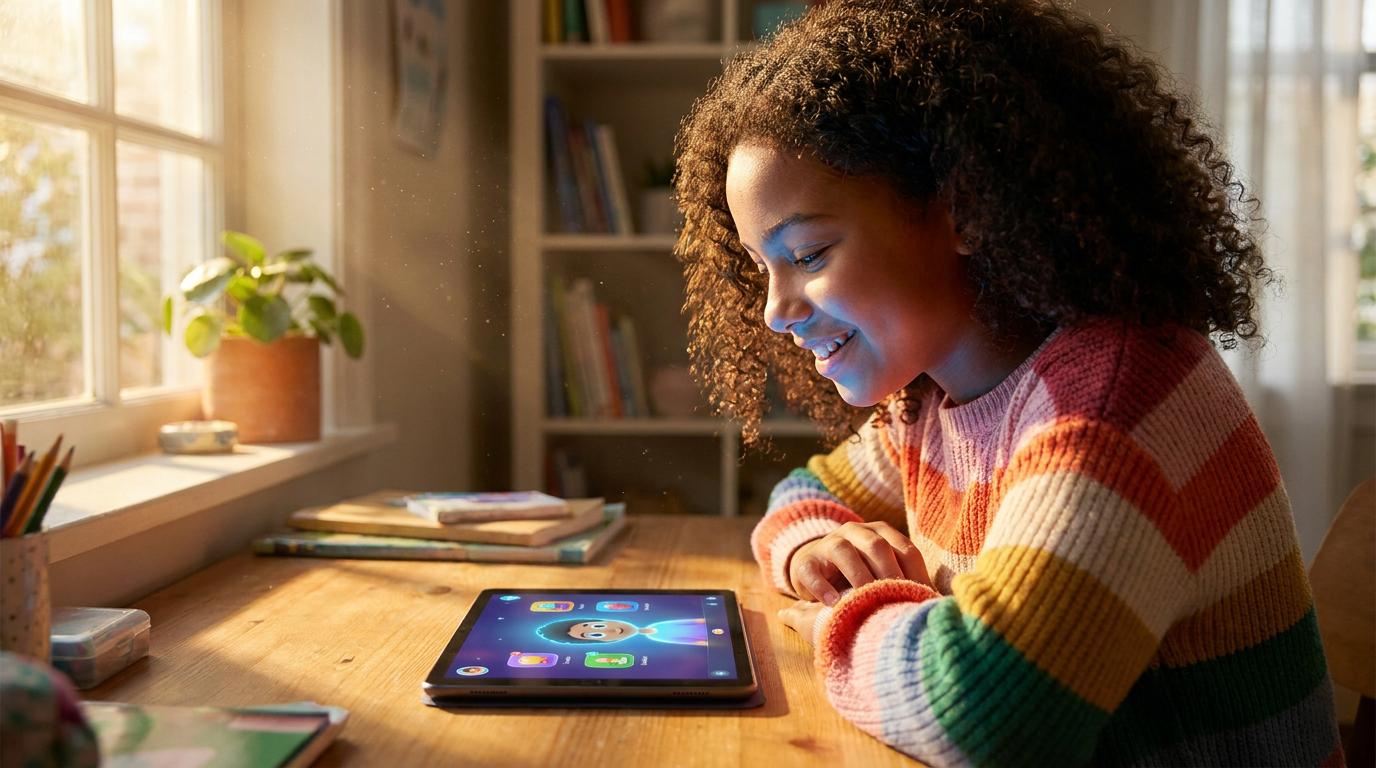
The most prominent pioneer in this space is Khanmigo, an AI-powered teaching assistant developed by the non-profit education giant Khan Academy. Unlike general-purpose chatbots such as the standard version of ChatGPT—which often short-circuit the learning process by simply handing students the final answers—Khanmigo is explicitly programmed with pedagogical guardrails. It operates with limitless patience, acting as a cognitive partner rather than an answer key.[1]
When a student struggles with a complex algebra equation or a historical essay, Khanmigo employs the Socratic method. If a student inputs an incorrect mathematical step, the AI does not correct the number directly. Instead, it responds with a guiding question: 'I see how you got there, but what happens if we try to isolate the variable on the left side first?' By forcing the student to engage in productive struggle, the AI mimics the nuanced scaffolding provided by an expert human tutor, building the student's critical thinking skills and long-term retention.[1]
The language learning sector has experienced a similar structural revolution. Duolingo, the ubiquitous language app, recently elevated its platform with 'Duolingo Max,' a tier entirely powered by OpenAI's GPT-4 architecture. The system relies on an underlying adaptive learning engine known as 'Birdbrain,' which constantly runs dual estimates: it evaluates the inherent difficulty of every single exercise while simultaneously calculating the learner's exact current proficiency.[2]
Because the AI updates these complex estimates after every single user interaction, it successfully keeps the learner in an 'optimal challenge zone'—never so easy that they become bored, and never so difficult that they become frustrated. Furthermore, Duolingo Max introduces immersive features like 'Roleplay' and 'Video Call,' where users converse in real-time with an AI character named Lily. This allows learners to practice spontaneous, real-world conversation—like ordering coffee in Paris or debating a friend—without the paralyzing anxiety that often accompanies speaking to a live human native speaker.[2]
Furthermore, Duolingo Max introduces immersive features like 'Roleplay' and 'Video Call,' where users converse in real-time with an AI character named Lily.
The efficacy of these AI interventions is now being rigorously tested by leading economic and educational researchers. The Abdul Latif Jameel Poverty Action Lab (J-PAL) is currently evaluating these tools through their 'Khoaching with Khan Academy' project. The study aims to measure how AI assistants can support student progress in real-world classrooms, noting that while tutoring stands out as a highly effective educational policy, its implementation has historically been severely hindered by cost. Early indicators suggest that AI can dramatically increase the dosage of personalized practice students receive.[3]
Beyond text-based chat and voice interactions, the frontier of personalized learning is rapidly expanding into the realm of spatial computing. Educational platforms like Optima are combining virtual and augmented reality with generative AI to create hyper-personalized, immersive environments. In these digital classrooms, a student doesn't just read a textbook chapter about the American Revolution; they can walk up to an AI-powered avatar of Benjamin Franklin and ask him specific, unscripted historical questions, receiving answers tailored to their exact reading level and learning style.[7]
But despite these breathtaking technological advancements, pedagogical realists are urging the public to temper their expectations. Has the legendary Two Sigma Problem actually been solved? The empirical data suggests we are not quite there yet. Recent meta-analyses of Intelligent Tutoring Systems (ITS) show that these platforms typically yield test score improvements in the range of 0.3 to 0.76 standard deviations over traditional classroom instruction.[6]

While a 0.76 standard deviation gain is objectively massive—roughly equivalent to an extra half-year of academic learning—it still falls significantly short of Bloom's magical 2.0 sigma threshold. AI systems excel at targeted cognitive support, closing the loop on specific academic problems, and providing infinite patience. However, they fundamentally lack the complex empathy, the intuitive emotional reading, and the deep motivational capacity of a human mentor who can look a struggling student in the eye and inspire them to keep trying.[6][8]
Furthermore, prominent policy organizations are raising alarms about the unconstrained use of this technology. The Brookings Institution recently released a comprehensive report warning that while narrowly tailored, purpose-built AI can be a powerful tool for educators, the widespread use of general-purpose AI in classrooms poses severe risks. If students use unfiltered AI to bypass the productive struggle of learning, it can actively diminish their cognitive development and critical thinking capabilities.[4]
There are also profound, unresolved concerns regarding data privacy and the preservation of academic integrity. The University of London's Centre for Online and Distance Education notes that while AI provides immediate, personalized feedback, the ethical considerations surrounding algorithmic bias and the mass harvesting of student cognitive data require robust, transparent governance frameworks. Institutions must ensure that these tools do not inadvertently profile students or misuse their learning data.[5]

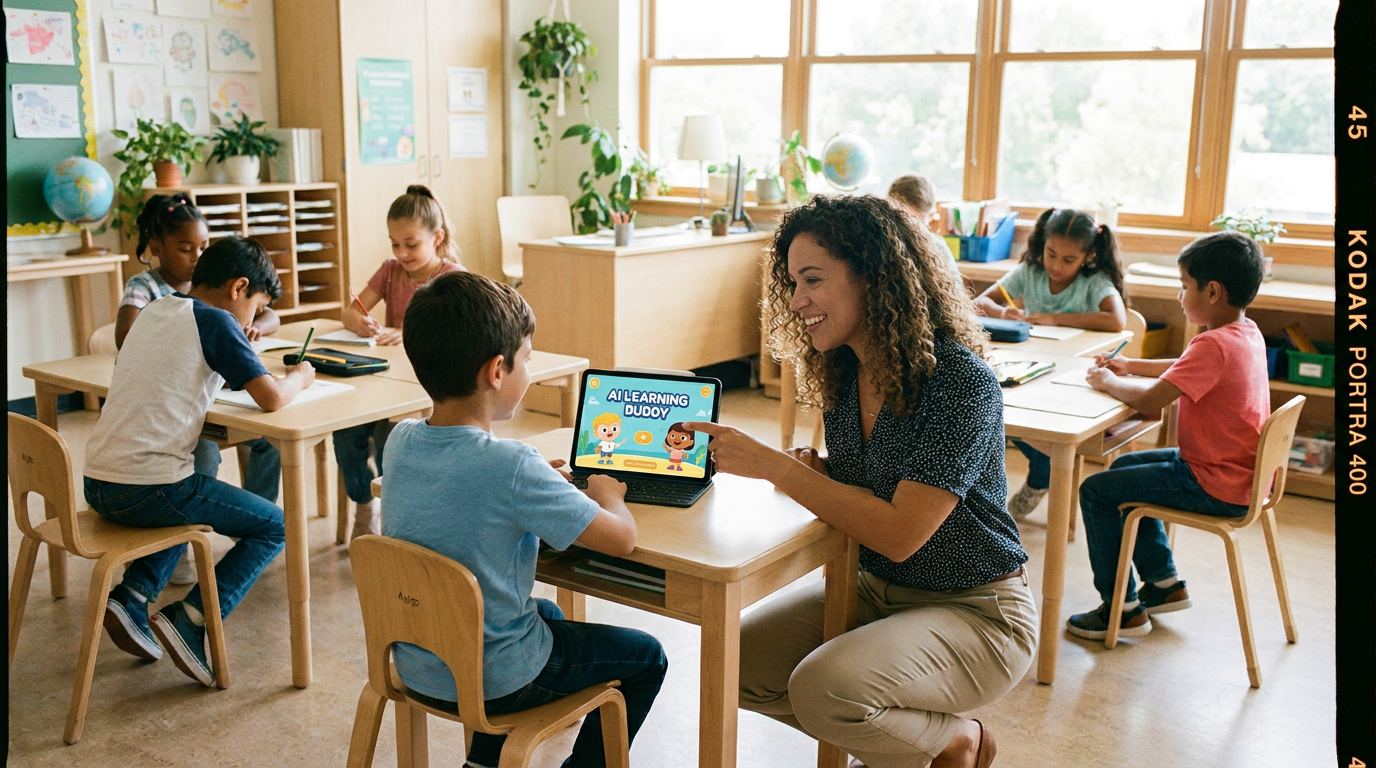
The consensus emerging among educators in 2026 is that AI will never fully replace human teachers. Instead, it will trigger a necessary rebranding of the profession, shifting teachers from lecturers to 'guides' or mentors. By offloading the repetitive, time-consuming tasks of grading, basic concept explanation, and adaptive quizzing to AI algorithms, human educators are finally freed to focus on what they do best: providing emotional support, facilitating complex group collaboration, and mentoring the whole child.[6][8]
The Two Sigma Problem may not be entirely erased, but the gap is closing more rapidly than anyone in 1984 could have predicted. For the first time in human history, the prospect of a patient, knowledgeable, and infinitely scalable tutor for every child on Earth is no longer a theoretical thought experiment. It is a tangible, downloadable reality that is fundamentally reshaping the future of human potential.[8]
How we got here
1984
Educational psychologist Benjamin Bloom publishes his landmark paper defining the 'Two Sigma Problem.'
2023
Khan Academy launches Khanmigo and Duolingo introduces Duolingo Max, bringing GPT-4 capabilities to online learning.
Jan 2026
The Brookings Institution publishes a major report outlining the necessary guardrails for AI in education.
June 2026
J-PAL and other research institutions begin evaluating the real-world efficacy of AI tutoring interventions in classrooms.
Viewpoints in depth
EdTech Optimists' view
Advocates who believe AI is the ultimate democratizer of elite education.
This camp argues that the historical barrier to high-quality education has always been the cost of human labor. By utilizing Large Language Models, platforms can now offer infinite patience and personalized pacing to every student on Earth for pennies on the dollar. They point to features like Duolingo's 'Birdbrain' and Khanmigo's Socratic prompting as evidence that AI can successfully keep students in an optimal challenge zone, effectively solving the scalability issue of Bloom's Two Sigma Problem.
Pedagogical Realists' view
Educators who acknowledge AI's benefits but emphasize its current limitations compared to human mentors.
Realists look closely at the data, noting that while a 0.76 standard deviation improvement from Intelligent Tutoring Systems is excellent, it is not the 2.0 sigma revolution promised by tech evangelists. They argue that learning is an inherently social and emotional process. While an AI can explain algebra perfectly, it cannot read a student's body language, understand their home life, or provide the complex emotional motivation that a human teacher uses to keep a frustrated student engaged.
Data & Ethics Advocates' view
Researchers warning about the unintended consequences of integrating AI into the cognitive development of children.
This perspective focuses on the risks of algorithmic dependency and data harvesting. Organizations like the Brookings Institution warn that if students rely on general-purpose AI to bypass the 'productive struggle' of learning, their critical thinking skills will atrophy. Furthermore, they raise alarms about the massive amounts of cognitive and behavioral data being collected by private tech companies as students interact with these platforms, demanding strict governance and transparency to protect student privacy.
What we don't know
- Whether AI tutors can maintain long-term student motivation without the emotional bond of a human teacher.
- How the massive data sets generated by student interactions will be governed and protected over time.
- Whether the widespread adoption of AI tutoring will widen or narrow the digital divide for low-income districts.
Key terms
- Two Sigma Problem
- The educational phenomenon discovered in 1984 where students receiving one-on-one tutoring perform two standard deviations better than those in traditional classrooms.
- Socratic Method
- A form of cooperative dialogue that stimulates critical thinking by asking guiding questions rather than simply providing the answers.
- Intelligent Tutoring System (ITS)
- Computer software designed to simulate a human tutor's behavior and guidance, adapting in real-time to the learner's pace and mistakes.
- Spatial Computing
- Technology that blends the physical and digital worlds, such as virtual reality (VR) and augmented reality (AR), often used for immersive learning.
Frequently asked
Does AI tutoring completely replace human teachers?
No. AI handles repetitive explanations and adaptive practice, allowing human teachers to transition into mentors who focus on motivation, complex problem-solving, and emotional support.
Is AI tutoring as effective as a human tutor?
Not quite yet. Current data suggests AI tutoring provides about a 0.76 standard deviation improvement—better than traditional classrooms, but still below the 2.0 improvement of expert human tutors.
What is the risk of using AI for homework?
If students use general-purpose AI to simply generate answers, it bypasses the 'productive struggle' necessary for actual learning and critical thinking, which is why educational AI is programmed to guide rather than solve.
Sources
Source coverage
8 outlets
3 viewpoints surfaced








[1]Khan AcademyEdTech Optimists
Khanmigo: AI for Education
Read on Khan Academy →[2]DuolingoEdTech Optimists
Introducing Duolingo Max
Read on Duolingo →[3]J-PALPedagogical Realists
Khoaching with Khan Academy: Evaluating AI in the Classroom
Read on J-PAL →[4]Brookings InstitutionData & Ethics Advocates
A new direction for students in an AI world
Read on Brookings Institution →[5]University of LondonData & Ethics Advocates
Ethical Considerations in AI Tutoring
Read on University of London →[6]MediumPedagogical Realists
The Reality of AI Tutoring and the Two Sigma Problem
Read on Medium →[7]EdChoiceEdTech Optimists
State of Choice: Revolutionizing Education with AI
Read on EdChoice →[8]Factlen Editorial TeamPedagogical Realists
Synthesis by Factlen editorial team
Read on Factlen Editorial Team →
Every angle. Every day.
Get education stories with full source coverage and perspective breakdowns delivered to your inbox.