
The 3% Loophole: How Assumable Mortgages Are Bypassing High Housing Rates
With mortgage rates hovering near 7 percent, buyers are increasingly taking over sellers' pandemic-era loans to secure massive interest savings.
By Factlen Editorial Team
- Homebuyers & Consumer Advocates
- View assumable mortgages as a vital lifeline to achieve affordability in a high-rate market, despite the complex process.
- Real Estate Sellers
- Treat their low-rate mortgages as premium marketing assets that justify higher asking prices and attract more bids.
- Lenders & Servicers
- Acknowledge the legality of assumptions but often process them slowly due to capped fees and low profit margins.
What's not represented
- · Real Estate Agents
- · Secondary Lenders
Why this matters
For homebuyers priced out by 2026's elevated interest rates, assuming a seller's existing mortgage offers a rare backdoor to pandemic-era affordability. For sellers, it transforms their locked-in low rate into a highly marketable asset that can command a premium price.
Key points
- Assumable mortgages allow buyers to take over a seller's existing loan, including their low pandemic-era interest rate.
- Buyers must cover the 'equity gap' between the home's purchase price and the remaining loan balance with cash or a second mortgage.
- Most conventional loans are not assumable; the process is generally restricted to government-backed FHA, VA, and USDA loans.
- The assumption process requires full lender approval and typically takes 60 to 120 days to close.
The 2026 housing market is stuck in a standoff. With 30-year fixed mortgage rates hovering near 7 percent, buyers are priced out, and sellers are paralyzed by the "golden handcuffs" of the sub-4 percent rates they locked in years ago. The result is a frozen market where families who want to move simply cannot afford to trade their current low-rate mortgage for a new, much more expensive one.[1][5]
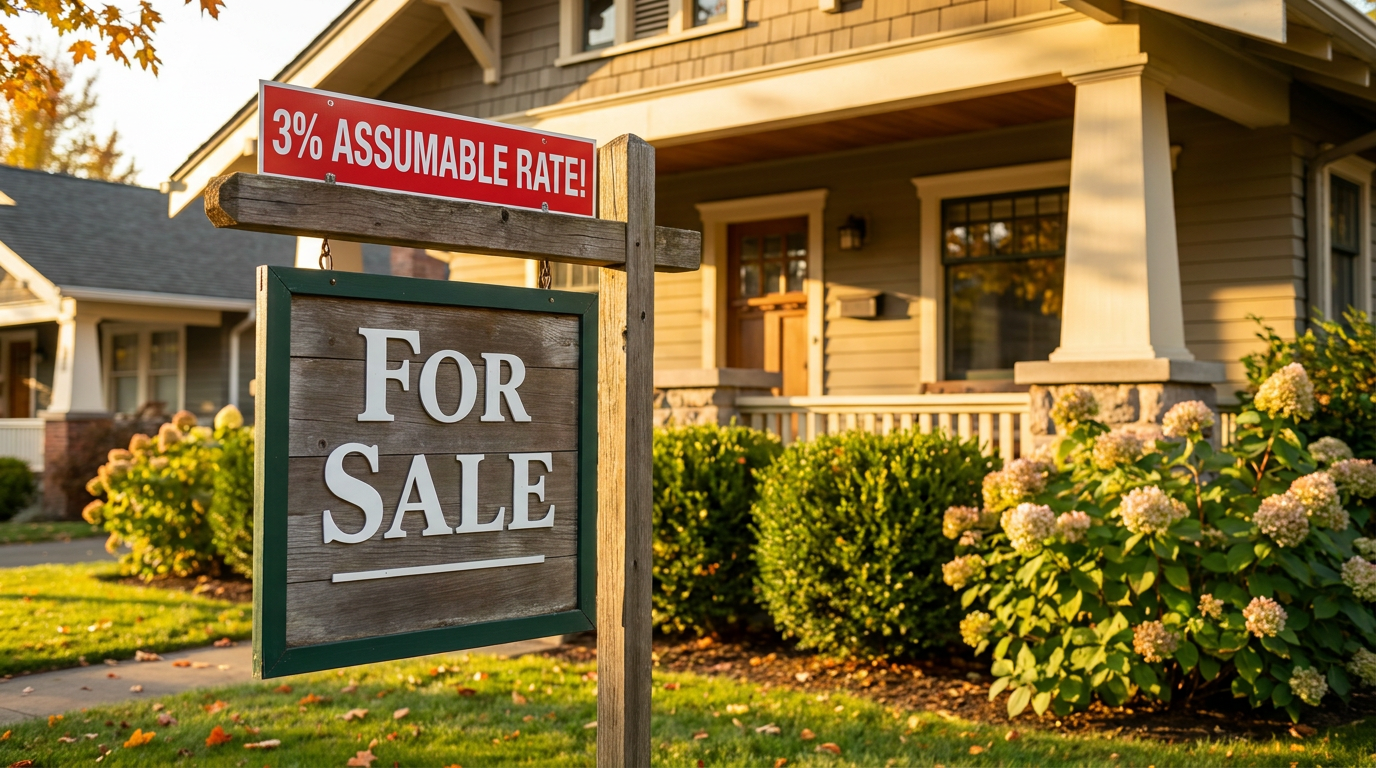
But a little-known real estate loophole is offering a way out: the assumable mortgage. Rather than applying for a brand-new loan at today's elevated market rates, a buyer simply steps into the seller's shoes, taking over their exact interest rate, remaining balance, and repayment schedule.[2][3]
The financial advantage of this maneuver is staggering. Inheriting a 3 percent rate instead of taking on a 7 percent loan can save a buyer hundreds of dollars every single month. Over the life of a 30-year loan, that rate difference frequently translates to hundreds of thousands of dollars in saved interest, making homeownership viable for buyers who would otherwise be sidelined.[1][4]

For sellers, an assumable mortgage transforms a standard property listing into a highly coveted asset. In a sluggish real estate market, advertising a home with a 3 percent rate attached allows sellers to attract bidding wars, stand out from new construction, and often command a premium purchase price.[1][3]
However, this real estate cheat code comes with a major structural catch known as the "equity gap." When a buyer assumes a mortgage, they only assume the remaining balance of the loan, not the total purchase price of the home. The difference between the two must be made up by the buyer.[2][5]
If a home is selling for $500,000 and the seller's assumable mortgage balance is only $300,000, the buyer is responsible for the $200,000 difference. That gap must be covered in cash, or through a secondary loan—which will be subject to today's higher interest rates, slightly diluting the overall savings of the assumption.[1][2]

If a home is selling for $500,000 and the seller's assumable mortgage balance is only $300,000, the buyer is responsible for the $200,000 difference.
Furthermore, not every home on the market qualifies for this process. The vast majority of conventional mortgages contain a "due-on-sale" clause, which legally requires the loan to be paid off entirely when the property changes hands, preventing any assumption from taking place.[3]
Instead, the assumable market is almost entirely restricted to government-backed loans: those insured by the Federal Housing Administration (FHA), the Department of Veterans Affairs (VA), and the U.S. Department of Agriculture (USDA). Currently, roughly 11.6 million active mortgages—about 23 percent of the U.S. market—fall into these assumable categories.[2][4]
Even if a home has an eligible FHA or VA loan, the assumption is not automatic. The buyer cannot bypass the underwriting process; they must apply directly with the seller's mortgage servicer and prove their creditworthiness, income stability, and debt-to-income ratios just as they would for a new loan.[2][4]

For VA loans, there is an additional layer of complexity regarding the seller's military benefits. While a non-veteran can legally assume a VA loan, the seller's VA "entitlement"—the government guarantee that allows them to get another VA loan—remains tied to the property until the assumed loan is fully paid off.[1][5]
Because of this entitlement trap, many veteran sellers will only allow another veteran to assume their mortgage. If a veteran buyer substitutes their own entitlement during the transaction, the seller's benefits are freed up to purchase their next home without penalty.[1]
Finally, buyers and sellers must be prepared for a test of patience. Because mortgage servicers make far less money processing an assumption than they do originating a brand-new loan—FHA assumption fees are legally capped at $500—these files are rarely prioritized by lenders.[4][5]
Real estate professionals warn that an assumption can take anywhere from 60 to 120 days to close, compared to the 30 days typical of a standard transaction. That drawn-out timeline can create logistical headaches for families trying to coordinate cross-country moves, job starts, or school enrollments.[1][5]
Despite the bureaucratic hurdles and the daunting equity gap, the math remains undeniably attractive. For buyers with strong cash reserves or equity from a previous home sale, assuming a pandemic-era mortgage is one of the only ways to turn back the clock on 2026's housing affordability crisis.[1][3]
Viewpoints in depth
Homebuyers & Consumer Advocates
View assumable mortgages as a vital lifeline to achieve affordability in a high-rate market.
For buyers, the assumable mortgage is seen as the ultimate real estate hack in an otherwise unaffordable market. Consumer advocates point out that while the equity gap requires significant upfront capital, the long-term savings on interest make the hurdle worthwhile. Buyers are increasingly willing to endure the 120-day closing times and bureaucratic red tape if it means securing a monthly payment hundreds of dollars cheaper than what a new 7 percent loan would dictate.
Real Estate Sellers
Treat their low-rate mortgages as premium marketing assets that justify higher asking prices.
Sellers who locked in 3 percent rates during the pandemic often feel trapped in their current homes, unable to afford a move. However, those with FHA or VA loans realize they hold a highly valuable asset. By marketing their home as 'assumable,' sellers can attract a wider pool of buyers, generate bidding wars, and often sell their property for a premium price, effectively monetizing their low interest rate to help fund their next purchase.
Mortgage Servicers
Acknowledge the legality of assumptions but often process them slowly due to capped fees.
From the perspective of lenders and mortgage servicers, assumptions are a low-margin administrative burden. Federal regulations cap the fees servicers can charge for processing an FHA assumption at just $500, making it far less profitable than originating a new loan. As a result, servicers rarely dedicate significant staff or resources to assumption departments, leading to the notorious 60-to-120-day processing delays that frustrate both buyers and sellers.
What we don't know
- Whether the Federal Housing Finance Agency (FHFA) will eventually allow conventional loans to become assumable to unfreeze the broader housing market.
- How secondary lenders will adapt their loan products to better serve buyers trying to bridge large equity gaps without exorbitant interest rates.
Key terms
- Assumable Mortgage
- A home loan that allows a buyer to take over the seller's existing interest rate, remaining balance, and repayment schedule.
- Equity Gap
- The financial difference between the home's agreed purchase price and the remaining balance of the assumed mortgage, which the buyer must cover.
- Due-on-Sale Clause
- A standard provision in conventional mortgages requiring the borrower to pay off the full loan balance if the property is sold or transferred.
- VA Entitlement
- The specific dollar amount the government guarantees on a VA loan, which can remain tied to a property if assumed by a non-veteran.
Frequently asked
Can I assume a conventional mortgage?
Generally, no. Most conventional loans include a 'due-on-sale' clause, which requires the loan to be paid in full when the property is sold. Assumptions are primarily limited to FHA, VA, and USDA loans.
Do I need good credit to assume a mortgage?
Yes. You cannot bypass the underwriting process. You must apply with the seller's mortgage servicer and meet their specific credit, income, and debt-to-income requirements.
Do I have to be a veteran to assume a VA loan?
No, non-veterans can legally assume VA loans. However, the seller's VA entitlement remains tied to the property until the loan is paid off, which makes some veteran sellers hesitant to allow non-veterans to assume their loans.
Sources
Source coverage
5 outlets
3 viewpoints surfaced





[1]TheStreetReal Estate Sellers
What is an assumable mortgage? Pros, cons & how it works
Read on TheStreet →[2]U.S. BankLenders & Servicers
What is an assumable mortgage and how does it work?
Read on U.S. Bank →[3]RedfinHomebuyers & Consumer Advocates
What is an Assumable Mortgage? Everything You Need to Know
Read on Redfin →[4]LendingTreeHomebuyers & Consumer Advocates
What Is an Assumable Mortgage and How Does It Work?
Read on LendingTree →[5]Factlen Editorial TeamLenders & Servicers
Synthesis by Factlen editorial team
Read on Factlen Editorial Team →
Every angle. Every day.
Get real estate stories with full source coverage and perspective breakdowns delivered to your inbox.