
The 2026 Minimalism Recalibration: How 'Underconsumption Core' and Analog Buffers Replaced the Sterile Aesthetic
Minimalism has evolved from a stark, empty aesthetic into a practical philosophy focused on financial mindfulness, digital compartmentalization, and warm, lived-in spaces.
By Factlen Editorial Team
- Pragmatic Consumers
- Focuses on the financial and practical benefits of using what you already own.
- Digital Minimalists
- Prioritizes the protection of human attention in an increasingly AI-driven world.
- Design & Brand Strategists
- Champions the shift toward warm, tactile, and emotionally resonant physical spaces.
What's not represented
- · Retailers and brands reliant on fast-fashion volume
- · Low-income consumers for whom underconsumption is a necessity, not a choice
Why this matters
As economic pressures and digital noise reach all-time highs, the 2026 evolution of minimalism offers a practical roadmap for reclaiming your time, money, and attention. By shifting from a sterile aesthetic to a lived-in philosophy, this movement provides actionable ways to reduce daily overwhelm and build a more intentional life.
Key points
- The 'Underconsumption Core' trend normalizes wearing older clothes and fully using products, rejecting influencer haul culture.
- 'Loud budgeting' empowers consumers to openly state financial boundaries, resisting the pressure of hyper-consumption events.
- Digital minimalism now focuses on compartmentalization, utilizing an 'Analog Buffer' to recover from spatial computing fatigue.
- E-ink tablets and mechanical watches are surging as tools to protect human attention from algorithmic harvesting.
- Interior design has shifted to 'Welcoming Minimalism,' replacing sterile white spaces with warm textures and meaningful curation.
The 2010s version of minimalism was often defined by what it lacked. It was an era of stark white living rooms, aggressively empty digital detoxes, and highly curated wardrobes that paradoxically required buying entirely new items to achieve the "simple" look. But as we navigate 2026, the cultural understanding of minimalism has undergone a profound recalibration. We are no longer chasing an aesthetic of absence. Instead, minimalism has evolved into a practical, lived-in philosophy of presence, utility, and cognitive protection. This shift is not just a passing design trend; it is a multi-front response to economic inflation, algorithmic exhaustion, and the relentless pace of an AI-saturated world.[6]
At the forefront of this shift is the viral "Underconsumption Core" movement. Originating on social media platforms as a direct counter-narrative to influencer "haul" culture, this trend normalizes the reality of normal consumption. Creators are proudly showcasing seven-year-old leggings, heavily panned makeup palettes, and mended clothing. Rather than the pristine emptiness of traditional minimalism, underconsumption core celebrates utility and the visible wear-and-tear of a life well-lived. It is a visual rebellion against the pressure to constantly upgrade, replacing the desire for the new with an appreciation for the durable.[1][3]
The driving force behind this material shift is largely economic. Following years of cost-of-living pressures, consumers are increasingly adopting "loud budgeting"—the practice of openly communicating financial boundaries to resist social pressure to spend. This mindset offers a calm counterbalance to hyper-consumption events like Black Friday and Cyber Monday, which recently drove a staggering $315 billion in global sales. By embracing the "art of enough," individuals are finding that financial mindfulness is far more empowering than the fleeting dopamine hit of a discount purchase.[2][3]

This behavioral pivot is also reshaping global sustainability conversations. The United Nations Environment Programme has even recognized the underconsumption trend as a vital cultural shift, calling for an end to the glorification of overconsumption. The focus is moving away from the exhausting 40-season cycles of fast fashion toward circularity: swapping, renting, and repairing. However, cultural observers warn against "de-coring" the movement. Underconsumption is fundamentally a practice, not an aesthetic. Buying new, perfectly distressed items to look like an "underconsumer" entirely defeats the purpose of the philosophy.[1][3]
Beyond our physical possessions, the 2026 minimalism recalibration is deeply transforming how we interact with technology. In an era where AI agents and spatial computing environments are ubiquitous, the old advice to simply "delete social media and move to the woods" is no longer practical for most professionals. Instead, digital minimalism has become an exercise in strict compartmentalization. The goal is no longer to disconnect entirely, but to design a digital life that serves personal goals rather than algorithmic impulses.[4][6]
Beyond our physical possessions, the 2026 minimalism recalibration is deeply transforming how we interact with technology.
A cornerstone of this new digital discipline is the "Analog Buffer" rule. For every hour spent immersed in a spatial computing environment or collaborating with AI tools, practitioners are encouraged to spend twenty minutes engaged in a purely physical, screen-free activity. Whether it is reading a physical book, writing in a paper journal, or taking a walk without wearable sensors, this buffer allows the nervous system to down-regulate from the high-frequency stimulation of the modern internet. It is a deliberate hard-reboot for our baseline dopamine levels.[4]

To support this boundary-setting, the 2026 digital minimalist's toolkit looks surprisingly analog. E-ink tablets are surging in popularity for focused reading and writing without the distraction of blue light or push notifications. Mechanical watches are replacing smartwatches for those who want to reclaim their time without the constant, low-grade anxiety of heart-rate monitoring and step-counting. These tools represent a conscious choice to protect human attention, treating focus as a sovereign asset rather than a commodity to be harvested by tech platforms.[4][6]
Interestingly, artificial intelligence is playing a dual role in this movement. While AI contributes to the overall digital noise, savvy minimalists are using it to compress their workloads rather than expand them. By automating repetitive tasks and drafting ideas faster, workers are reclaiming hours of their day. This efficiency forces an uncomfortable but liberating realization: constant availability is not the same thing as providing value. By stepping back from the pressure to be perpetually visible online, people are finding that their clarity and creativity actually improve.[6]
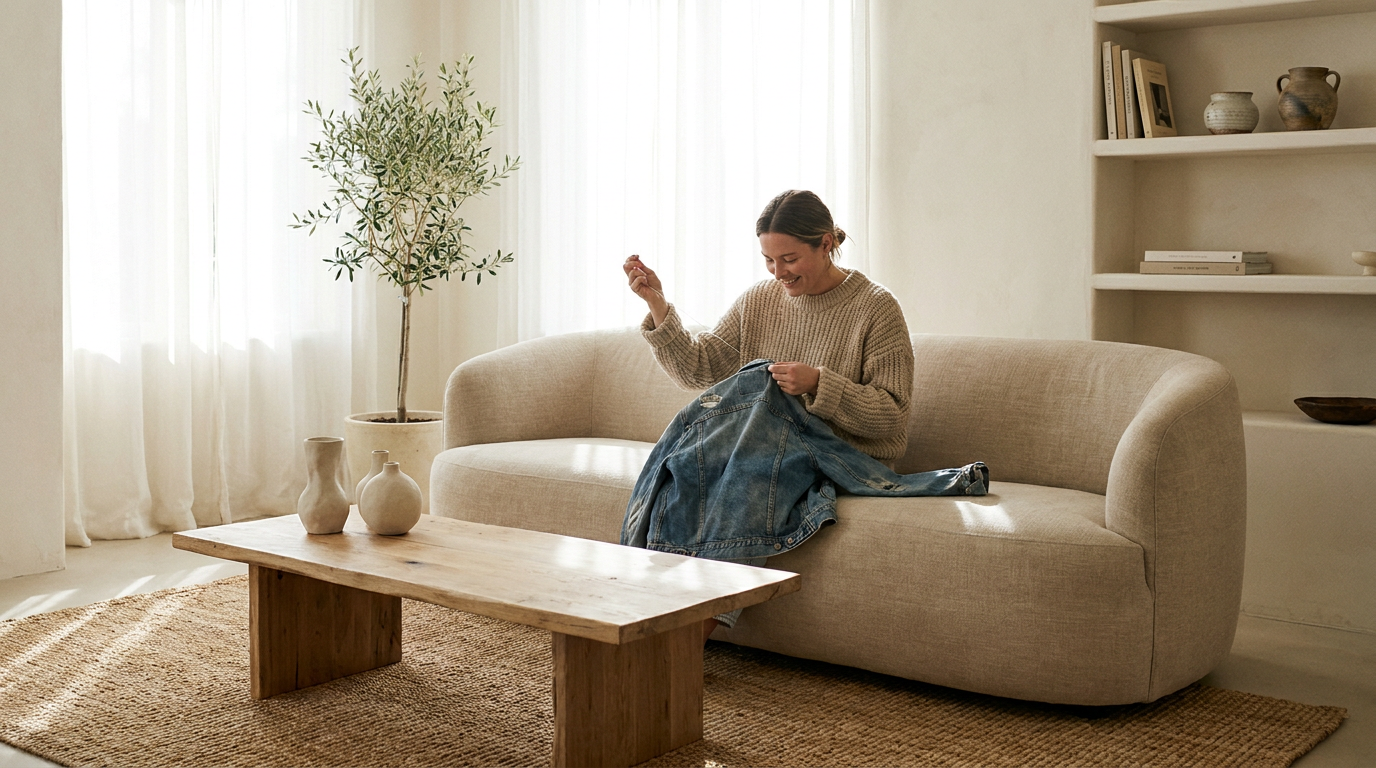
This desire for warmth and authenticity extends directly into the physical spaces we inhabit. The sterile, hospital-like interiors that dominated minimalist design a decade ago are being replaced by "Welcoming Minimalism." This 2026 evolution transforms homes into true emotional refuges by balancing aesthetic simplicity with deep comfort. It proposes fewer excesses, but significantly more essence. The rigid, geometric lines of the past have softened into rounded, organic forms inspired by nature, proving that a space does not need to be harsh to be uncluttered.[5]

Texture and tactility are the defining characteristics of this new interior approach. Because there are fewer objects in a room, the items that remain must work harder to provide sensory warmth. Handcrafted weaves, natural woods, and soft, embracing color palettes are prioritized over glossy, manufactured perfection. Lighting, too, plays a crucial role; harsh overhead LEDs have given way to soft, layered illumination that creates a calming, emotionally resonant atmosphere. The space feels intentionally curated rather than aggressively emptied.[5]
The practice of this lifestyle relies on simple, repeatable friction points. Financial experts and minimalists alike advocate for the "48-hour rule": if you see an item you want, wait two full days before buying it. Impulse desires rarely survive that window. Similarly, the "one-in, one-out" rule ensures that for every new item brought into a home, an existing one is donated or recycled. These small, daily acts of friction prevent the slow creep of clutter and keep consumption aligned with actual needs rather than manufactured wants.[2][3]
Ultimately, the 2026 minimalism movement—whether applied to our wallets, our screens, or our living rooms—is about intentional curation. It is the recognition that in a world overflowing with choices, algorithms, and advertisements, simplicity is the ultimate luxury. By embracing the reality of normal consumption, enforcing analog buffers, and surrounding ourselves only with objects that hold genuine meaning, we are not depriving ourselves. Instead, we are clearing away the noise to make room for a richer, more focused, and deeply intentional life.[5][6]
How we got here
2010s
Minimalism peaks as a stark, highly curated aesthetic, often requiring consumers to buy new items to achieve a 'simple' look.
2024
The 'Underconsumption Core' trend emerges on TikTok as a response to inflation and influencer haul culture.
Late 2025
Interior design shifts noticeably toward 'Welcoming Minimalism,' prioritizing texture and warmth over sterile emptiness.
2026
Digital minimalism evolves to include 'Analog Buffers' as a necessary countermeasure to ubiquitous AI and spatial computing.
Viewpoints in depth
Pragmatic Consumers
Focuses on the financial and practical benefits of using what you already own.
This camp views the "underconsumption core" trend primarily as an economic defense mechanism. Faced with inflation and the rising cost of living, these consumers reject the pressure of influencer marketing and fast fashion. They advocate for "loud budgeting" and the normalization of wearing older, mended clothing, arguing that true financial freedom comes from stepping off the endless treadmill of hyper-consumption.
Digital Minimalists
Prioritizes the protection of human attention in an increasingly AI-driven world.
For this group, minimalism is a cognitive survival strategy. They argue that as spatial computing and AI agents become ubiquitous, human attention is the most valuable sovereign asset. Rather than completely disconnecting, they advocate for strict compartmentalization—using tools like e-ink tablets and enforcing "Analog Buffers" to down-regulate the nervous system and maintain deep focus amidst digital noise.
Design & Brand Strategists
Champions the shift toward warm, tactile, and emotionally resonant physical spaces.
Interior designers and brand strategists argue that the sterile, hospital-like minimalism of the 2010s is dead. They champion "Welcoming Minimalism," a philosophy that balances aesthetic simplicity with emotional comfort. By incorporating organic shapes, natural textures, and meaningful curation, they believe physical spaces should serve as warm refuges from an overstimulating world, rather than rigid showrooms of absence.
What we don't know
- Whether the 'underconsumption' trend will permanently alter fast-fashion sales, or simply become another passing social media aesthetic.
- How effectively the 'Analog Buffer' rule can be maintained as workplaces increasingly mandate spatial computing and AI integration.
Key terms
- Underconsumption Core
- A social media movement emphasizing the use, repair, and repurposing of existing possessions rather than buying new ones.
- Loud Budgeting
- The practice of openly communicating financial boundaries and savings goals to resist social pressure to spend.
- Analog Buffer
- A dedicated period of screen-free, physical activity used to down-regulate the nervous system after heavy digital immersion.
- Welcoming Minimalism
- An interior design evolution that replaces stark, sterile spaces with warm textures, soft lighting, and meaningful curation.
- Spatial Computing
- Technology that blends digital content with the physical world, often requiring intentional breaks to prevent cognitive fatigue.
Frequently asked
How is underconsumption core different from traditional minimalism?
Traditional minimalism often focuses on a highly curated, empty aesthetic that can paradoxically require buying new items. Underconsumption core emphasizes utility, financial mindfulness, and the 'lived-in' reality of using older, repaired items.
What is the 'Analog Buffer' rule?
It is a 2026 digital minimalism practice where users spend 20 minutes engaged in physical, screen-free activities for every hour spent in immersive digital or spatial computing environments.
Does welcoming minimalism mean buying more home decor?
No. It focuses on keeping fewer objects, but ensuring those remaining items offer emotional comfort, tactile warmth, and personal meaning rather than sterile perfection.
What is 'loud budgeting'?
Loud budgeting is the practice of openly communicating your financial boundaries and savings goals to friends and family, making it easier to resist social pressure to spend money on unnecessary trends.
Sources
Source coverage
6 outlets
3 viewpoints surfaced






[1]WikipediaPragmatic Consumers
Underconsumption core
Read on Wikipedia →[2]DiscoverPragmatic Consumers
What is underconsumption core?
Read on Discover →[3]EconylPragmatic Consumers
The TikTok trend Underconsumption Core
Read on Econyl →[4]Silver ScoopDigital Minimalists
The Digital Minimalist's 2026 Toolkit
Read on Silver Scoop →[5]TidelliDesign & Brand Strategists
Welcoming Minimalism in 2026
Read on Tidelli →[6]Factlen Editorial TeamDigital Minimalists
Synthesis by Factlen editorial team
Read on Factlen Editorial Team →

Every angle. Every day.
Get lifestyle stories with full source coverage and perspective breakdowns delivered to your inbox.