
The 2025 California Energy Code: How the New Prescriptive Standard Effectively Bans Gas Furnaces
California's latest building code uses strict energy budgets to make electric heat pumps the mandatory baseline for new homes, bypassing federal legal challenges to outright gas bans.
By Noor Saidi

On January 1, 2026, California fundamentally changed how new homes are built. The 2025 update to the state's Title 24, Part 6 Building Energy Efficiency Standards officially took effect, bringing a quiet but massive shift to residential architecture. For developers, architects, and homeowners planning major renovations, the new rules rewrite the baseline of residential comfort and energy use.[1]
The headline change is a decisive pivot away from fossil fuels. While the new code does not explicitly outlaw natural gas, it structurally favors electrification to such a degree that installing a traditional gas furnace in a newly constructed single-family home is now practically and economically unviable. The state has engineered a regulatory environment where the path of least resistance is entirely electric.[4]
To understand how the state achieved this without a ban, one must look at the two ways builders can comply with California's energy code: the Prescriptive Approach and the Performance Approach. These two pathways dictate every material choice, from window glazing to attic insulation.
The Prescriptive Approach acts as a straightforward checklist. If a builder installs the exact equipment and insulation specified by the state, the home automatically passes inspection. Under the 2025 code, the prescriptive baseline for both space and water heating is now exclusively electric heat pump technology. Gas space heating is explicitly disallowed on this checklist.[4]
If a developer still wants to install a gas furnace, they are forced onto the Performance Approach. This requires running the home's design through state-approved energy modeling software to prove it meets a strict overall "energy budget." The software compares the proposed home against a hypothetical baseline model.[1]
Because the 2025 baseline assumes the ultra-high efficiency of a modern heat pump, swapping in a standard gas furnace generates a massive energy penalty in the software. To offset that penalty and get the math to balance, the builder must add expensive upgrades elsewhere—such as ultra-high-performance windows, thicker wall insulation, or expanded solar arrays.[4]
In almost all of California's climate zones, these compensatory upgrades cost significantly more than simply installing a heat pump in the first place. Consequently, the building industry is defaulting to all-electric heating to keep construction budgets intact and avoid the architectural headaches of extreme envelope upgrades.[4]
This convoluted mechanism is not an accident; it is a calculated legal strategy. In 2023, the Ninth Circuit Court of Appeals struck down the city of Berkeley’s outright ban on natural gas hookups, ruling that local bans were preempted by the federal Energy Policy and Conservation Act. That ruling threatened to derail California's climate agenda.
By utilizing energy budgets rather than explicit prohibitions, the California Energy Commission successfully bypasses federal preemption. The state is merely setting an efficiency standard, which falls squarely within its regulatory authority, while achieving the exact same decarbonization outcome as a ban.
The environmental and economic stakes of this shift are immense. Buildings account for roughly a quarter of California’s total greenhouse gas emissions. The Energy Commission projects that the 2025 code will drive the installation of at least 500,000 new heat pumps over its first three years, fundamentally reshaping the state's energy demand.[1]
Over the lifespan of the code, state officials estimate this single-fuel baseline will save Californians $4.8 billion in energy costs while cutting 4 million metric tons of carbon emissions. It represents one of the most impactful climate policies enacted in the state's history.
The code also introduces strict "electric-ready" mandates. In multifamily buildings and commercial kitchens where gas appliances might still be installed, developers must now pre-wire the spaces with adequate electrical panel capacity and stubbed conduit. This ensures that when the gas equipment eventually fails, swapping it for an electric alternative will not require tearing open walls.[2]
For existing homeowners, the immediate impact is minimal. The 2025 standards apply only to new construction, major additions, and specific alterations permitted after January 1, 2026. If a home's current gas furnace is functioning, it does not need to be replaced, shielding current residents from forced upgrade costs.[4]
However, the commercial sector faces stricter retrofit rules. The new code requires that end-of-life rooftop HVAC units on existing retail, school, and office buildings be replaced with high-efficiency heat pump systems. This mandate affects hundreds of thousands of existing structures statewide, forcing commercial landlords to plan for more complex equipment swaps.
The transition does present logistical hurdles for residential architects and builders. Heat pump water heaters, for example, extract heat from the surrounding air and require specific ventilation clearances. In smaller coastal homes with tight utility closets, accommodating these spatial requirements demands creative floor-plan adjustments and louvered doors.[4]
Furthermore, the code mandates that heat pump systems must be sized to meet a home's full heating load without relying on supplementary electric resistance heating, except during defrost cycles in freezing temperatures. This ensures the grid is not overwhelmed by inefficient backup heaters during winter cold snaps.[3]
Because recent state legislation has paused the scheduled 2028 residential code update, the 2025 standards will serve as California's primary building decarbonization lever for the remainder of the decade. By rewriting the baseline, the state has effectively ensured that the next generation of California homes will be built without fossil fuel connections.
Key points
- The 2025 California Energy Code took effect January 1, 2026, setting heat pumps as the prescriptive baseline for new homes.
- While not an outright ban, installing a gas furnace now triggers massive 'energy penalties' that require expensive compensatory upgrades.
- The energy budget approach allows California to bypass federal preemption laws that previously struck down local gas bans.
- The code is projected to save $4.8 billion in energy costs and cut 4 million metric tons of carbon emissions over three years.
What we don’t know
- How the increased electrical load from 500,000 new heat pumps will impact local grid stability during extreme winter weather.
- Whether the cost of compensatory upgrades will drive some luxury developers to absorb the penalty and install gas anyway.
How we got here
April 2023
The Ninth Circuit Court of Appeals strikes down Berkeley's natural gas ban, forcing California to rethink its decarbonization strategy.
September 2024
The California Energy Commission officially adopts the 2025 Building Energy Efficiency Standards.
December 2024
The California Building Standards Commission grants final approval to the updated Title 24 codes.
January 1, 2026
The 2025 Energy Code takes effect for all new building permit applications statewide.
2028
California's scheduled residential code update is skipped due to legislative changes, extending the lifespan of the 2025 baseline.
- State Regulators & Climate Advocates
- Focus on legally resilient decarbonization and long-term consumer savings.
- Residential Builders & Architects
- Focus on compliance costs, spatial constraints, and the reality of the performance penalty.
- Commercial HVAC Contractors
- Focus on the logistical challenges of the end-of-life rooftop replacement mandates.
Perspectives this story doesn't cover
- Natural gas utility providers facing declining residential demand
- Low-income housing developers managing upfront construction costs
Sources
Source coverage
4 outlets
3 viewpoints surfaced




- [1]California Energy CommissionState Regulators & Climate Advocates
2025 Building Energy Efficiency Standards
Read on California Energy Commission → - [2]UpCodesResidential Builders & Architects
California 2025 Building Code Checklist
Read on UpCodes → - [3]Electrical Contractor MagazineCommercial HVAC Contractors
Updates to the recently adopted 2025 California Energy Code
Read on Electrical Contractor Magazine → - [4]Pacific Beach BuilderResidential Builders & Architects
California's 2025 Title 24 Heat Pump Requirements
Read on Pacific Beach Builder →
More in Home
See all →Robotic Construction
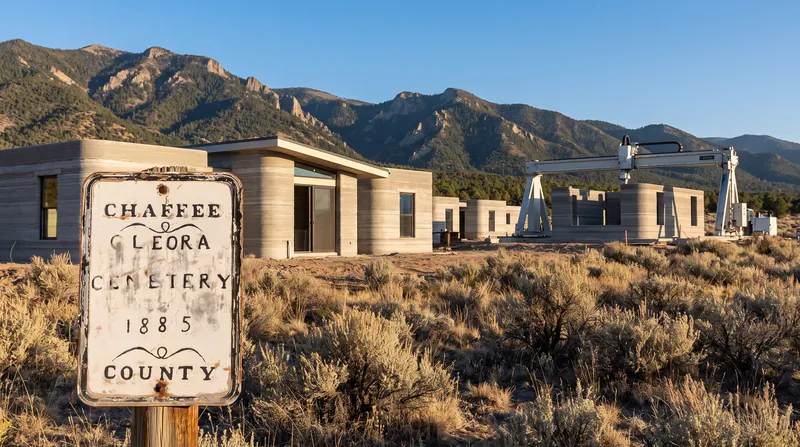
World's Largest 3D-Printed Township Advances, Proving Scalability of Robotic Construction
7 sources
Federal Architecture
Trump's 250-Foot Triumphal Arch Wins Preliminary Federal Approval, Challenging D.C.'s Century-Old Height Act
5 sources

Transit-Oriented Development
California's 'Abundant Homes Near Transit' Law Overrides Local Height and Density Limits in Eight Major Counties
2 sources
Building Codes
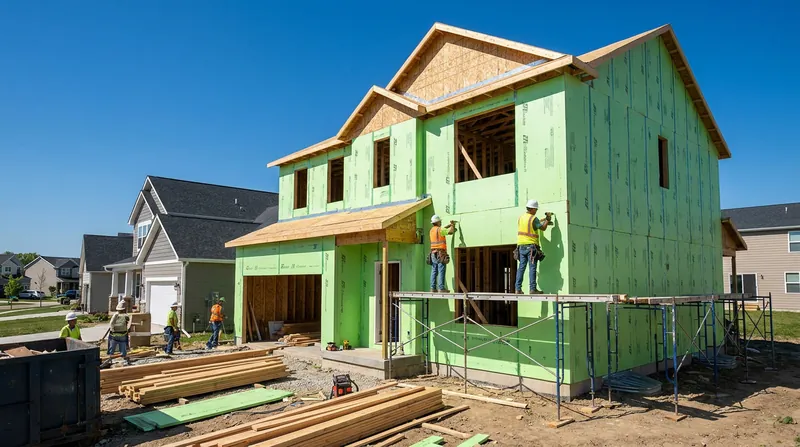
The 2021 IECC Explainer: The Math Behind the Federal Energy Code Mandate for New Homes
4 sources
Comments
Every angle. Every day.
Get Home stories with full source coverage and perspective breakdowns, free every day.