
Sweeping Federal Student Loan Overhaul Takes Effect July 1, Capping Borrowing and Eliminating Grad PLUS Loans
Starting July 1, 2026, the federal student loan system will undergo its most significant restructuring in decades, introducing strict borrowing caps, eliminating Grad PLUS loans, and streamlining repayment plans.
By Factlen Editorial Team
- Higher Education Advocates
- Warns that eliminating Grad PLUS loans will lock low-income students out of advanced degrees and professional fields.
- Federal Administration
- Argues that capping federal loans will curb excessive student debt and force universities to lower tuition costs.
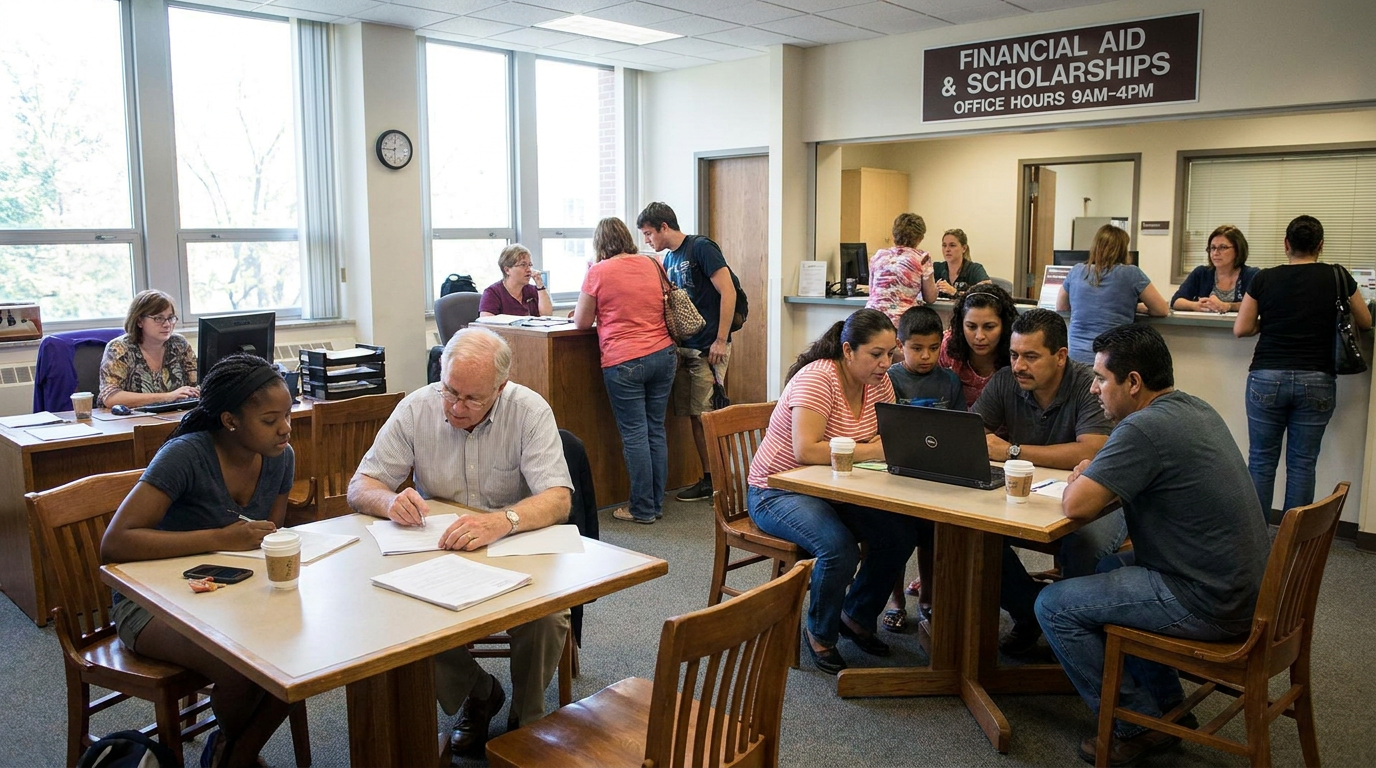
- University Financial Aid Offices
- Focused on the logistical challenges of implementing the new rules and advising students on legacy provisions.
- Private Market Analysts
- Anticipates a surge in demand for private student loans to fill the funding gap left by federal caps.
What's not represented
- · Undergraduate students who rely heavily on Parent PLUS loans but whose parents have poor credit.
- · Private student loan lenders who stand to gain significant market share.
Why this matters
Millions of incoming college and graduate students will lose access to unlimited federal borrowing starting this July. Families will be forced to rely on private loans, out-of-pocket savings, or cheaper institutions to cover the substantial gap between the new federal caps and the actual cost of higher education.
Key points
- Starting July 1, 2026, the Grad PLUS loan program is eliminated for new borrowers, ending unlimited federal funding for graduate school.
- Parent PLUS loans will be strictly capped at $20,000 annually and $65,000 over a dependent student's lifetime.
- New lifetime federal borrowing limits are set at $100,000 for graduate students and $200,000 for professional degree candidates.
- Legacy income-driven repayment plans like SAVE and PAYE are being phased out in favor of the new Repayment Assistance Plan (RAP).
- Current students who borrowed before July 1 can keep their existing loan limits under a legacy provision, provided they stay in the same program.
On July 1, 2026, the landscape of American higher education financing will fundamentally change. The provisions of the Working Families Tax Cuts Act—also known as the One Big Beautiful Bill Act (OBBBA)—take full effect, executing the most drastic overhaul of federal student loans in a generation. The new regulations dismantle the existing framework of unlimited federal borrowing, replacing it with strict lifetime caps and a streamlined set of repayment options.[1][2][8]
For decades, graduate students and parents of undergraduates could borrow up to the full cost of attendance through the federal PLUS loan programs. That era is now over. Beginning next month, the Grad PLUS loan program is entirely eliminated for new borrowers. The shift removes a longstanding safety net that historically allowed students to cover both direct tuition and indirect living expenses entirely through federal aid.[2][6][7]
Parents helping to finance their children's undergraduate education face similarly strict new boundaries. Parent PLUS loans, which previously had no specific dollar limit beyond the school's cost of attendance, are now capped at $20,000 annually per dependent student. Furthermore, a new lifetime limit of $65,000 per student has been established, forcing families to find alternative funding sources for more expensive four-year institutions.[2][6][8]

Graduate students are now limited to $20,500 annually in Direct Unsubsidized Loans, with a strict lifetime cap of $100,000. Recognizing the exceptionally high costs of medical, veterinary, pharmacy, and law schools, the Department of Education carved out a specific "professional degree" tier. Students in these designated programs can borrow up to $50,000 annually, with a $200,000 lifetime limit. However, an absolute ceiling of $257,500 across all levels of study combined now applies to every borrower.[5][6]
The overhaul extends beyond borrowing limits to completely restructure how loans are repaid. The complex web of legacy income-driven repayment (IDR) plans—including SAVE, PAYE, and ICR—is being dismantled. New borrowers will now choose between just two streamlined options: the Tiered Standard Repayment Plan and the Repayment Assistance Plan (RAP).[1][2][4]
The new RAP plan simplifies the income-driven model, setting monthly bills between 1% and 10% of a borrower's adjusted gross income. To prevent balances from ballooning due to unpaid interest, RAP introduces a $40 monthly interest waiver and a $50 principal matching payment for on-time payers. It also offers a $50 monthly credit per dependent, with any remaining loan balance forgiven after 30 years of qualifying payments.[1][2]

The new RAP plan simplifies the income-driven model, setting monthly bills between 1% and 10% of a borrower's adjusted gross income.
For borrowers who prefer a fixed schedule, the Tiered Standard Plan replaces the traditional 10-year standard model. It automatically extends the repayment term to 10, 15, 20, or 25 years based on the total amount borrowed. This sliding-scale structure is designed to make monthly payments more manageable for those with higher balances without requiring them to submit annual income documentation.[1][6]
Current students are not immediately cut off from their existing funding streams. A "legacy provision" allows students who received a federal loan disbursement before July 1, 2026, to continue borrowing under the old rules. However, this grandfather clause requires the student to remain continuously enrolled in the exact same academic program; changing majors or transferring schools will trigger the new limits.[7][8]
The impending deadline has triggered a scramble among current borrowers and financial aid offices. Borrowers currently enrolled in sunsetting IDR plans have a limited window to consolidate their loans or select a new plan. Financial aid administrators are working overtime to advise students on whether they qualify for legacy status, warning that consolidation requests submitted now may not be processed before the July 1 cutoff.[4][8]
Higher education advocates and professional associations are sounding the alarm over the impact on graduate education. Organizations representing pharmacy and veterinary schools warn that eliminating Grad PLUS loans will disproportionately harm low-income and minority students. Without generational wealth to bridge the gap between the new federal caps and actual tuition costs, many fear these students will be locked out of advanced degrees entirely.[4][5]

Financial analysts predict a massive surge in the private student loan market as families seek to cover the new funding gaps. Lenders are already marketing new products tailored to graduate students and parents who have hit their federal caps. However, private loans often require creditworthy cosigners, carry variable interest rates, and lack the robust borrower protections and forgiveness options inherent in the federal system.[3][6]
The administration defends the overhaul as a necessary correction to a broken and inflationary system. Officials argue that unlimited federal lending has historically given universities a blank check to raise tuition year after year. By capping federal loans, the government aims to force institutions to compete on price, lower their costs, and protect students from taking on unpayable mountains of debt.[1][5]
As the July 1 implementation date approaches, universities are also grappling with new enrollment intensity rules. Starting this fall, federal loan amounts will be strictly prorated for students enrolled less than full-time. The higher education sector is bracing for a turbulent transition as millions of families adjust to a reality where federal financial aid is a baseline contribution rather than a comprehensive solution.[6][7]
How we got here
July 4, 2025
The Working Families Tax Cuts Act (also known as the One Big Beautiful Bill Act) is signed into law, authorizing the overhaul.
April 30, 2026
The Department of Education publishes the final RISE rule detailing the implementation of the loan changes.
June 30, 2026
The final deadline for current borrowers to consolidate loans or receive disbursements to qualify for legacy provisions.
July 1, 2026
The new borrowing caps, elimination of Grad PLUS loans, and new repayment plans officially take effect.
July 1, 2028
The final sunset date for legacy income-driven repayment plans like PAYE and ICR.
Viewpoints in depth
The Administration's View
Capping federal loans is necessary to curb tuition inflation and protect students from unpayable debt.
Proponents of the overhaul argue that the previous system of unlimited federal borrowing created a perverse incentive for universities to continuously raise tuition. By capping the amount of federal money available, the administration believes institutions will be forced to compete on price and lower their costs. They also argue that the new Repayment Assistance Plan (RAP) provides a more sustainable safety net by matching principal payments and waiving interest, ensuring that borrowers who make good-faith efforts actually see their balances decrease rather than balloon over time.
Higher Education Advocates
The new caps will lock low-income students out of advanced degrees and push them toward predatory private loans.
Organizations representing graduate and professional schools warn that eliminating Grad PLUS loans removes a critical ladder for social mobility. Because the new $20,500 annual limit falls far short of the actual cost of attendance at most graduate programs, students without generational wealth will be forced to turn to the private market. Advocates argue that private lenders, who require creditworthy cosigners and offer fewer borrower protections, will effectively redline lower-income and minority students out of fields like medicine, law, and academia.
Private Market Analysts
The federal pullback creates a massive growth opportunity for private student lenders.
Financial analysts view the July 2026 changes as a watershed moment for the private student loan industry. With the federal government stepping back from fully funding graduate education and capping Parent PLUS loans, billions of dollars in unmet need will shift to private capital. Analysts note that while this presents a lucrative opportunity for banks and specialized lenders, it will also require them to innovate their underwriting models, as many young graduate students lack the credit history typically required for large, unsecured private loans.
What we don't know
- Whether universities will actually lower tuition in response to the federal borrowing caps, as the administration predicts.
- How strictly private lenders will adjust their underwriting standards to accommodate the influx of graduate students needing to cover tuition gaps.
- The exact impact on enrollment diversity in high-cost professional programs like medical, veterinary, and law schools.
Key terms
- Grad PLUS Loan
- A federal student loan previously available to graduate and professional students to cover the full cost of attendance, which is being eliminated for new borrowers.
- Repayment Assistance Plan (RAP)
- The new federal income-driven repayment plan that replaces older models, capping payments based on income and offering principal matching.
- Tiered Standard Plan
- A new fixed-payment plan that automatically extends the repayment term from 10 to up to 25 years based on the total amount borrowed.
- Legacy Provision
- A rule allowing current students who borrowed before July 1, 2026, to continue accessing old loan limits as long as they remain in their current academic program.
- Cost of Attendance (COA)
- The total estimated cost to attend a college for one year, including tuition, housing, food, and books.
Frequently asked
What happens to my current Grad PLUS loan?
If you received a disbursement before July 1, 2026, and stay in the exact same academic program, you are grandfathered in under a 'legacy provision' and can continue borrowing under the old rules.
Can I still apply for the SAVE repayment plan?
No. The SAVE plan and other legacy income-driven plans are being phased out. New borrowers will choose between the Repayment Assistance Plan (RAP) and the Tiered Standard Plan.
How does the new RAP plan work?
RAP caps monthly payments at 1% to 10% of your income, provides a $50 monthly credit per dependent, and waives $40 in unpaid interest each month to keep balances from growing.
Are Parent PLUS loans going away?
No, but they are now strictly capped at $20,000 per year and $65,000 over a dependent student's lifetime, whereas they previously covered the full cost of attendance.
Sources
Source coverage
8 outlets
4 viewpoints surfaced








[1]U.S. Department of EducationFederal Administration
Fact Sheet: The Trump Administration Is Simplifying Student Loan Repayment
Read on U.S. Department of Education →[2]Connecticut Public RadioPrivate Market Analysts
Major changes to federal student loans begin July 1. Here's what to know
Read on Connecticut Public Radio →[3]ForbesPrivate Market Analysts
Navigating Private Student Loan Options in June 2026: What Borrowers Should Know
Read on Forbes →[4]AVMA NewsHigher Education Advocates
Major student loan changes taking effect soon
Read on AVMA News →[5]American Association of Colleges of PharmacyHigher Education Advocates
Reimagining and Improving Student Education (RISE) Final Rule
Read on American Association of Colleges of Pharmacy →[6]NASFAAHigher Education Advocates
Loan Changes from the One Big Beautiful Bill Act: Brief for Overview
Read on NASFAA →[7]Liberty UniversityUniversity Financial Aid Offices
Important Federal Student Loan Changes Effective July 1, 2026
Read on Liberty University →[8]Columbia International UniversityUniversity Financial Aid Offices
Federal Student Loan Changes – July 2026
Read on Columbia International University →
More in news politics
See all 9 stories →US-Iran Deal
U.S. and Iran Sign Agreement to End War; Vance Lashes Out at Israeli Critics
7 sources
U.S.-Iran Deal
U.S. and Iran Sign 14-Point Agreement to End War, Sparking Fierce Backlash from Israel
6 sources

U.S.-Iran Relations
Vance Rebukes Israeli Critics of U.S.-Iran Peace Agreement, Warning Against Alienating 'Only Powerful Ally'
8 sources

Cognitive Defense
The Science of 'Prebunking': How Psychological Inoculation is Defeating Misinformation
6 sources

Every angle. Every day.
Get news politics stories with full source coverage and perspective breakdowns delivered to your inbox.