
Stem Cell Transplant Banishes Severe Autoimmune Disease for 15 Years in Landmark Study
Two patients with a devastating autoimmune disorder that attacks the spinal cord and optic nerve have achieved more than 15 years of drug-free remission following an allogeneic stem-cell transplant.
By Factlen Editorial Team
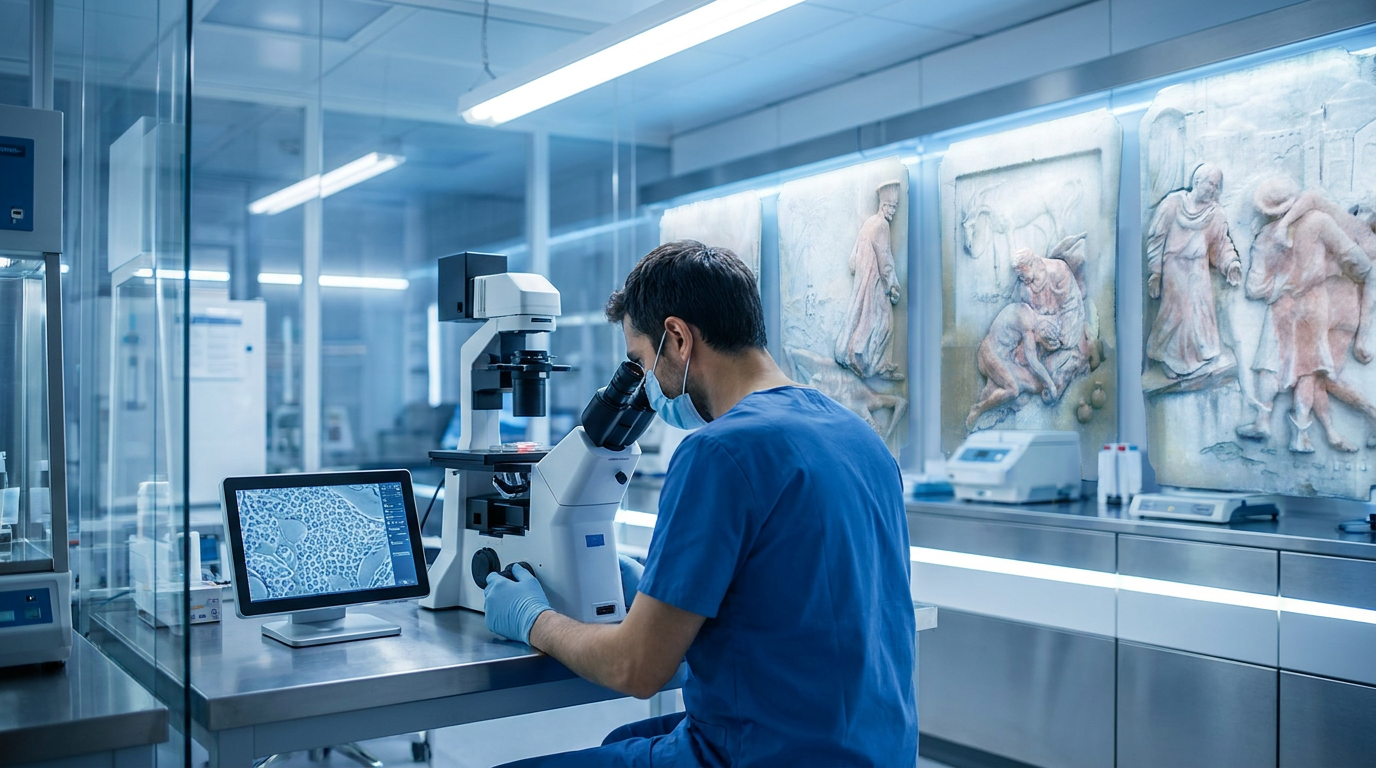
- Clinical Researchers
- Focus on the curative potential of resetting the immune system via allo-HSCT.
- Medical Skeptics & Safety Regulators
- Emphasize the severe risks and toxicity associated with allogeneic transplants.
- Scientific Observers & Analysts
- Highlight the broader implications and life-altering benefits of long-term remission.
What's not represented
- · Patients who underwent similar experimental transplants but suffered severe complications or mortality.
- · Health economists evaluating the immense cost of allogeneic transplants versus lifelong immunosuppressive therapy.
Why this matters
This breakthrough provides the first long-term evidence that severe, treatment-resistant autoimmune diseases can be effectively halted by completely replacing the patient's immune system. If the procedure can be made safer, it could eventually offer a permanent escape from lifelong immunosuppressive drugs for millions suffering from debilitating conditions.
Key points
- Two patients with a severe autoimmune disorder have achieved over 15 years of drug-free remission.
- The patients suffer from NMOSD, a condition where the immune system attacks the spinal cord and optic nerve.
- Doctors used an allogeneic stem-cell transplant to completely replace their faulty immune systems with donor cells.
- The male patient regained neurological function and had children, while the female patient regained arm mobility.
- Researchers caution that the procedure carries high risks and is currently reserved for cases where standard drugs fail.
- The success paves the way for larger clinical trials to test the therapy's safety and broader applicability.
For individuals suffering from severe autoimmune diseases, the immune system transforms from a biological shield into a relentless aggressor. Treatments typically focus on suppressing this friendly fire, requiring lifelong medication that leaves patients vulnerable to infections.[3]
But a landmark study published in the journal Med has demonstrated that it is possible to completely replace a faulty immune system and achieve lasting peace. Two patients suffering from a devastating and potentially fatal autoimmune condition have remained in drug-free remission for more than 15 years following an experimental stem-cell transplant.[1][2]
The results represent a paradigm shift in neuroimmunology. By utilizing donor stem cells to rebuild the patients' immune defenses from scratch, researchers have provided the first published evidence that allogeneic transplantation can effectively banish this specific disease for over a decade.[1][2]
The patients in the study suffered from neuromyelitis optica spectrum disorder (NMOSD), a rare condition characterized by severe inflammation of the central nervous system. In NMOSD, the body's immune cells mistakenly produce antibodies—specifically targeting a protein called aquaporin-4 (AQP4)—that attack the optic nerve and the spinal cord.[4]
The consequences of these attacks are catastrophic. Symptoms typically manifest in sudden, severe episodes that can last for days or months, causing intense eye pain, profound vision loss, intractable vomiting, and progressive weakness or paralysis in the limbs.[1][4]
For most patients, standard care involves a regimen of powerful immunosuppressive drugs designed to prevent future flare-ups. However, for the two individuals in this study, conventional therapies had failed completely, leaving them facing a trajectory of compounding disability and potential mortality.[1][8]

Facing a lack of alternatives, a medical team led by researchers including Massimo Filippi, a neurologist at the IRCCS San Raffaele Hospital in Milan, Italy, opted for a radical intervention: an allogeneic haematopoietic stem-cell transplant (allo-HSCT).[1][5]
While stem cell transplants are well-established treatments for certain blood cancers and sickle-cell disease, their application in autoimmune disorders is largely experimental. Furthermore, most autoimmune trials have utilized autologous transplants, which harvest and clean the patient's own stem cells before returning them.[7][8]
In contrast, an allogeneic transplant replaces the patient's immune system with stem cells collected from a healthy donor. The procedure requires a grueling conditioning phase to wipe out the patient's existing, defective immune cells and make room for the new graft.[2][7]
The pretransplant conditioning regimen for these two patients was intense. It included a combination of fludarabine and treosulfan—powerful chemotherapy agents—alongside targeted antibody treatments designed to specifically deplete the rogue B-cells responsible for producing the destructive AQP4 antibodies.[1][2]
The pretransplant conditioning regimen for these two patients was intense.
The first patient, a man experiencing severe neurological decline, underwent the procedure in 2009, receiving healthy stem cells donated by his sister. The following year, the second patient, a woman with similarly refractory NMOSD, received a transplant using stem cells from an unrelated matched donor.[1]
The recovery from an allogeneic transplant is fraught with peril. Patients are left entirely without an immune system for weeks, highly susceptible to opportunistic infections, and face the looming threat of graft-versus-host disease—a condition where the newly transplanted donor cells recognize the patient's body as foreign and attack it.[7]
Both patients navigated this perilous window successfully, and the long-term outcomes have been nothing short of extraordinary. Following the engraftment of the new stem cells, the destructive autoimmune attacks ceased entirely.[1][2]
Over the subsequent 15 years, the male patient saw significant improvements in his neurological function. Freed from the cycle of relapses and the burden of heavy immunosuppression, he was able to resume a normal life and went on to have two children.[1]

The female patient experienced similar life-altering benefits. Her motor function improved, allowing her to use her arms much more effectively than she could prior to the transplant. Crucially, she no longer requires any medication to manage NMOSD symptoms.[1]
"I don't think we can say it's a cure, but then again, it has addressed the problem the disease has caused over this very long period of time," noted Jiao Jiao Li, a biomedical engineer at the University of Technology Sydney, highlighting the profound impact of the intervention.[1][6]
The success of these two cases provides compelling evidence that allo-HSCT can induce a deep, durable reset of immune tolerance. By entirely replacing the cellular machinery that produces autoantibodies, the therapy addresses the root cause of the disease rather than merely suppressing its symptoms.[3][4][7]
However, the broader medical community remains cautious about positioning allogeneic transplants as a frontline therapy. The European Society for Blood and Marrow Transplantation notes that while HSCT is the fastest-growing indication for severe autoimmune diseases, it carries substantial short-term risks.[3][7]
The mortality rate associated with allogeneic transplants, while improving, remains a significant barrier. The toxicity of the conditioning chemotherapy and the lifelong risk of secondary complications mean the procedure is currently reserved strictly for patients who have exhausted all other pharmacological options.[7][8]
Despite these hurdles, the 15-year milestone achieved by the Milan team is a beacon of hope. It proves that the biological mechanisms driving even the most aggressive, treatment-resistant autoimmune disorders can be permanently dismantled.[2][5]

Researchers are now calling for larger, multi-center clinical trials to systematically evaluate the safety and efficacy of allo-HSCT for NMOSD. These trials will be critical in refining the conditioning regimens to minimize toxicity while preserving the curative potential of the graft.[1][3]
If the results can be safely replicated, this approach could eventually be expanded to treat a wider array of severe, refractory autoimmune conditions, from progressive multiple sclerosis to systemic lupus erythematosus.[7][8]
For now, the two patients stand as living proof of concept. Their 15 years of remission represent not just a personal triumph over a devastating illness, but a foundational victory for the field of regenerative medicine.[3]
How we got here
2004
The AQP4 antibody is discovered, allowing doctors to distinguish NMOSD from multiple sclerosis.
2009
The first patient in the study, a man with severe NMOSD, receives an allogeneic stem cell transplant from his sister.
2010
A second patient, a woman with the same condition, receives a transplant from an unrelated matched donor.
2026
Researchers publish a 15-year follow-up in the journal Med, confirming both patients remain in drug-free remission.
Viewpoints in depth
Clinical Researchers
Focus on the curative potential of resetting the immune system via allo-HSCT.
Medical researchers view these long-term results as a profound proof of concept for neuroimmunology. By demonstrating that a defective immune system can be entirely replaced with a self-tolerant donor graft, they argue that allogeneic transplantation addresses the root biological cause of autoimmune disease rather than merely suppressing its symptoms. This camp is advocating for larger clinical trials to refine the procedure and potentially expand its use to other refractory conditions.
Medical Skeptics & Safety Regulators
Emphasize the severe risks and toxicity associated with allogeneic transplants.
While acknowledging the remarkable 15-year remission, safety regulators and cautious experts highlight the perilous nature of the intervention. Allogeneic transplants carry a significant risk of transplant-related mortality, severe opportunistic infections, and graft-versus-host disease. This perspective maintains that the intense toxicity of the pre-transplant conditioning regimen means the procedure must remain a strict salvage therapy, utilized only when all conventional immunosuppressive drugs have failed.
Patient Advocates
Highlight the life-altering benefits of achieving long-term, drug-free remission.
For patient advocacy groups, the focus is on the profound quality-of-life improvements demonstrated by the study. Escaping the cycle of devastating neurological relapses and the heavy burden of lifelong immunosuppressive medication allows patients to reclaim their independence. Advocates celebrate the restoration of motor function and the ability to hit normal life milestones—such as starting a family—as the ultimate validation of pursuing aggressive, experimental treatments.
What we don't know
- Whether the 15-year remission achieved in these two specific cases can be reliably replicated in a larger cohort of NMOSD patients.
- The optimal, least toxic conditioning regimen required to safely wipe out the faulty immune system without causing fatal complications.
- How effectively this allogeneic approach will translate to other severe autoimmune diseases like progressive multiple sclerosis.
Key terms
- Neuromyelitis optica spectrum disorder (NMOSD)
- A rare autoimmune disease where the immune system attacks the optic nerve and spinal cord, causing vision loss and paralysis.
- Allogeneic stem-cell transplant
- A medical procedure that replaces a person's faulty immune system with healthy stem cells collected from a donor.
- Autologous stem-cell transplant
- A transplant procedure that uses a patient's own cleaned stem cells rather than those from a donor.
- Aquaporin-4 (AQP4)
- A specific protein in the central nervous system that is mistakenly targeted and attacked by antibodies in NMOSD patients.
- Conditioning regimen
- The intense chemotherapy and antibody treatment given before a transplant to wipe out the existing immune system.
- Graft-versus-host disease
- A severe complication of allogeneic transplants where the newly donated immune cells attack the recipient's body.
Frequently asked
What is the difference between an allogeneic and autologous transplant?
An autologous transplant uses the patient's own stem cells, which are extracted, cleaned, and reinfused. An allogeneic transplant uses stem cells from a healthy donor, completely replacing the patient's original immune system.
Is this a guaranteed cure for autoimmune diseases?
While the 15-year drug-free remission is unprecedented, researchers hesitate to call it a definitive cure until larger clinical trials can replicate the safety and long-term efficacy across a broader patient population.
Why isn't this treatment used for everyone with NMOSD?
The procedure carries severe short-term risks, including high toxicity from the conditioning chemotherapy and the potential for fatal infections or graft-versus-host disease, making it a last resort for patients who fail standard therapies.
Sources
Source coverage
8 outlets
3 viewpoints surfaced







[1]NatureScientific Observers & Analysts
Stem cells banish severe autoimmune disease for 15 years
Read on Nature →[2]MedClinical Researchers
Long-term remission of neuromyelitis optica spectrum disorder following allogeneic hematopoietic stem cell transplantation
Read on Med →[3]Factlen Editorial TeamScientific Observers & Analysts
Synthesis by Factlen editorial team
Read on Factlen Editorial Team →[4]National Institutes of HealthScientific Observers & Analysts
Neuromyelitis Optica Spectrum Disorder: Pathogenesis and Treatment
Read on National Institutes of Health →[5]IRCCS San Raffaele HospitalClinical Researchers
Neurology and Neurorehabilitation Research Unit
Read on IRCCS San Raffaele Hospital →[6]University of Technology SydneyClinical Researchers
Biomedical Engineering and Stem Cell Research
Read on University of Technology Sydney →[7]European Society for Blood and Marrow TransplantationMedical Skeptics & Safety Regulators
EBMT Guidelines for Hematopoietic Stem Cell Transplantation in Autoimmune Diseases
Read on European Society for Blood and Marrow Transplantation →[8]NeurologyMedical Skeptics & Safety Regulators
Autologous nonmyeloablative hematopoietic stem cell transplantation for neuromyelitis optica
Read on Neurology →

Every angle. Every day.
Get science stories with full source coverage and perspective breakdowns delivered to your inbox.