
Stackable Micro-Credentials: How "Agile Upskilling" is Rewiring Career Pivots
As artificial intelligence and the green economy rapidly reshape the job market, workers and employers are abandoning slow traditional degrees in favor of fast, verifiable "stackable" micro-credentials.
By Paige Carter

In short
- Stackable micro-credentials are short, targeted learning blocks that can be combined into larger professional certifications.
- Enterprises are shifting to a 'build instead of buy' strategy, upskilling existing workers rather than hunting for scarce external talent.
- 53% of green economy hires are now professionals in standard roles who have acquired specific sustainability competencies.
The modern professional landscape is moving faster than traditional education can keep up. As artificial intelligence integration accelerates and the global economy pivots toward sustainable practices, the half-life of a learned skill is shrinking rapidly. For decades, the standard response to a career plateau or an industry shift was to return to university for a multi-year master's degree.
Today, that model is being actively dismantled and replaced by a more agile, targeted approach: the stackable micro-credential. This shift is democratizing access to career advancement, allowing workers to pivot into high-demand sectors without taking on crippling debt or pausing their careers for years at a time.[2]
Stackable micro-credentials are short, highly focused learning blocks designed to master a singular, practical competency. Rather than forcing a professional to complete a broad, generalized curriculum, these programs target exact operational outcomes. For a software developer, a micro-credential might focus exclusively on building a secure internal chatbot; for a logistics manager, it might cover sustainable supply chain auditing; and for an educator, it could certify mastery in trauma-informed classroom practices. The goal is immediate utility—ensuring that the learner can apply the new skill on the job the very next day.[1]
The true power of this educational model lies in its modularity and digital verification. Each micro-credential stands on its own as a verifiable digital badge, complete with embedded metadata that outlines the specific skill, the assessment criteria used, and the issuing institution. When an employee earns multiple related credentials over time, they can "stack" them together to form a comprehensive professional certification. In many emerging programs, these stacked badges can even be applied as formal academic credit toward a traditional degree, bridging the gap between corporate training and higher education.
This paradigm shift is largely being driven by sheer economic necessity and the rapid pace of technological adoption. According to recent industry analyses, an overwhelming 92 percent of top economists expect artificial intelligence adoption to surge across corporate sectors this year. However, actual productivity gains are lagging significantly because companies lack the targeted, role-specific human capital required to implement these complex systems. Businesses are quickly realizing that traditional, multi-month training programs are too slow to meet daily market demands.[1]
Faced with this bottleneck, corporate leaders are abandoning the idea that they can simply hire their way out of the talent shortage. Instead, enterprises are adopting a "build instead of buy" strategy, investing heavily in agile upskilling for their existing workforces. By utilizing micro-credentials, companies can close immediate talent gaps and increase internal efficiency without enduring the lengthy onboarding processes associated with external hiring.[1]
The global transition to a green economy perfectly illustrates this dynamic in action. LinkedIn's 2025 Green Skills Report highlights a widening gap between corporate sustainability ambitions and workforce readiness, noting that the demand for green talent is growing twice as fast as the supply of skilled workers. To meet ambitious climate targets, the market is pivoting away from hunting for niche environmental experts and toward upskilling standard professionals across all corporate functions.
Remarkably, for the first time, the majority of green hires—53 percent—are not entering traditional environmental science roles. Instead, they are professionals in standard operations, logistics, or finance roles who have acquired specific green competencies. Energy management has emerged as the fastest-growing skill category worldwide, driven by the massive power demands of AI data centers and heavy industry. Workers who adapt to this trend are reaping the rewards; professionals who list at least one green skill on their profile currently enjoy a hiring rate 46.6 percent higher than the global average.
Higher education institutions, once the undisputed gatekeepers of professional advancement, are recognizing this existential shift and actively adapting their models. Rather than viewing micro-credentials as a threat to the four-year degree, forward-thinking universities are embracing them as a vital complement to traditional academic pathways. By unbundling their curricula, universities can serve a much broader demographic of adult learners and career switchers.
For example, the University of Hawaiʻi at Mānoa is officially launching a comprehensive suite of stackable micro-credentials in the fall of 2026. Offered through its Outreach College, the initiative provides short, career-focused programs in high-demand fields such as AI for business, applied economics, and remote sensing. These programs are explicitly designed to bridge the gap between academic theory and immediate workforce demands, allowing students to earn shareable digital badges that verify their specialized competencies to prospective employers.
This hybrid approach offers a critical lifeline for adult learners. Pathways courses and micro-credentials are typically far more affordable and accessible than traditional degree programs, removing significant financial and temporal barriers. For working parents, busy professionals, or individuals in industries vulnerable to automation, the ability to upskill in manageable stages without committing to a years-long program is a transformative equalizer.
Furthermore, the rise of micro-credentials aligns perfectly with the corporate world's broader shift toward skills-based hiring. Recent surveys reveal that 85 percent of employers now prioritize practical, job-ready skills over traditional academic pedigrees. By evaluating candidates based on specific, verified competencies rather than rigid job titles or university prestige, companies can unlock broader, more diverse talent pools that were previously filtered out by automated resume scanners.
Despite the overwhelming momentum, the micro-credential ecosystem is still navigating significant growing pains. The rapid proliferation of digital badges has led to valid concerns regarding trust, quality assurance, and standardization. Unlike bachelor's or master's degrees, which are governed by established regional accreditation bodies, the micro-credential market remains highly fragmented and largely unregulated.
Human resources departments are currently grappling with how to accurately evaluate these new qualifications. Hiring managers must determine how to weigh a badge issued by a specialized tech startup against one issued by a legacy university or a corporate giant like Google or Microsoft. Without widely recognized quality-assurance frameworks, the legitimacy of some digital badges remains difficult for employers to verify at scale, creating friction in the hiring process.
To combat this fragmentation, industry leaders and educational technologists are pushing for the universal adoption of open standards. When stackable credentials are issued as "Open Badges," they follow a universal technical framework that allows learners to securely store them in portable digital backpacks. This ensures that the credential remains verifiable, tamper-proof, and permanently tied to the learner, regardless of the platform they use to display it to future employers.
Ultimately, the mainstream adoption of stackable micro-credentials represents a fundamental rewiring of how society approaches lifelong learning and career mobility. As the pace of technological innovation and environmental transition continues to accelerate, the traditional "one-and-done" college degree is no longer sufficient. The ability to rapidly acquire, verify, and apply new skills in real-time will become the defining characteristic of a resilient and successful modern workforce.[1][2]
Key terms
- Stackable Micro-Credential
- A short, targeted educational module that can stand alone as a recognized qualification or be combined with others to build a larger degree or certification.
- Agile Upskilling
- The practice of rapidly training employees in specific, immediately applicable skills to meet evolving business needs, rather than relying on broad, long-term educational programs.
- Open Badges
- A universal technical standard for digital credentials that allows learners to securely store, verify, and share their achievements across different platforms.
- Skills-Based Hiring
- A recruitment strategy where employers evaluate candidates based on their specific, verifiable competencies rather than requiring a traditional four-year college degree.
- Green Skills
- Competencies and knowledge needed to support sustainable practices and environmental efficiency, increasingly required in standard corporate roles outside of traditional environmental science.
Reader questions
What exactly is a stackable micro-credential?
It is a short, highly focused learning program designed to teach a specific practical skill. Multiple micro-credentials can be 'stacked' or combined to earn a larger professional certification or university degree.
Are employers actually hiring based on these badges?
Yes. Recent surveys indicate that 85% of employers now prioritize practical, job-ready skills over traditional academic credentials, and workers with verified niche skills see significantly higher hiring rates.
How do I prove my micro-credential is legitimate?
Reputable micro-credentials use digital badges with embedded metadata. This metadata contains verifiable information about the issuer, the specific skills learned, and the assessment criteria used to evaluate the learner.
Can I use micro-credentials to get a traditional degree later?
Many universities are now designing their micro-credentials to be credit-bearing. This allows adult learners to earn immediate certificates for their careers while banking those credits toward a future bachelor's or master's degree.
Where opinion splits
Corporate Employers' View
Enterprises are abandoning slow, generic training in favor of rapid, targeted skill acquisition.
Faced with rapid technological shifts and a widening talent gap, corporate leaders are shifting from a 'buy' to a 'build' mentality. They argue that traditional multi-month training programs and four-year degrees are too slow to meet the demands of AI integration and sustainable operations. By utilizing stackable micro-credentials, employers can target exact operational bottlenecks—such as energy management or automated data workflows—ensuring that employees return to their desks with immediately applicable skills.
Higher Education's View
Universities are adapting their models to remain relevant in a skills-based economy.
Traditional academic institutions recognize that the monopoly of the four-year degree is fracturing. To stay competitive, universities are unbundling their curricula into stackable micro-credentials. Academic leaders argue that this hybrid approach offers the best of both worlds: it provides learners with immediate, workforce-ready digital badges while maintaining the rigorous academic standards and long-term pathways that culminate in formal degrees.
Quality Assurance Advocates
Industry watchdogs warn of a fragmented ecosystem lacking universal standards.
While the flexibility of micro-credentials is widely praised, credentialing experts caution against a 'Wild West' of digital badges. Without centralized accreditation bodies, HR departments struggle to weigh a badge issued by a tech startup against one from a legacy university. These advocates are pushing for the universal adoption of 'Open Badges'—standardized digital credentials with embedded, verifiable metadata—to ensure that alternative education remains trustworthy and portable across different employers.
- Corporate Employers
- Enterprises prioritizing agile upskilling and speed to competency over traditional degrees.
- Higher Education Institutions
- Universities adapting to offer flexible, stackable credits that bridge academic theory and workforce needs.
- Workforce Advocates
- Groups viewing micro-credentials as an affordable, accessible equalizer for adult learners.
- Credentialing Skeptics
- Industry watchdogs highlighting the lack of standardization across fragmented digital badges.
Perspectives this story doesn't cover
- Current undergraduate students deciding between traditional degrees and modular pathways
- Labor unions negotiating for employer-funded micro-credential programs
Sources
Source coverage
2 outlets
4 viewpoints surfaced

- [1]AI CertsCorporate Employers
The High Cost of Vague Training and the Shift to Agile Upskilling
Read on AI Certs → - [2]Factlen Editorial TeamWorkforce Advocates
Synthesis by Factlen editorial team
Read on Factlen Editorial Team →

More in Education
See all →AI Enablement
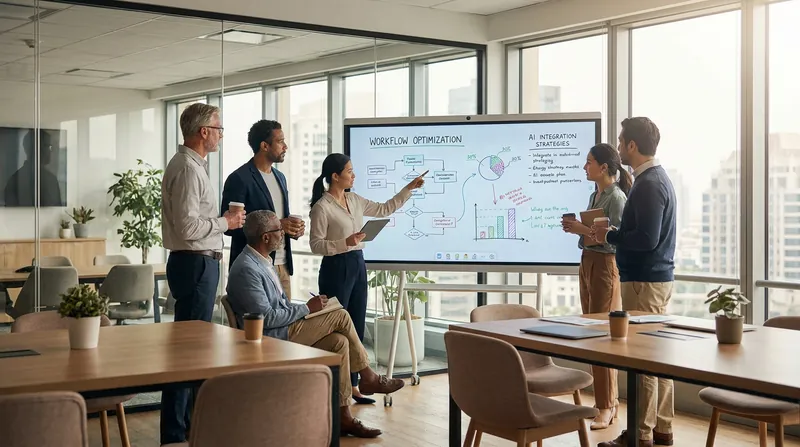
The Evidence on AI Enablement: Why 95% of Businesses See Zero ROI on AI Tools
2 sources
Federal Policy
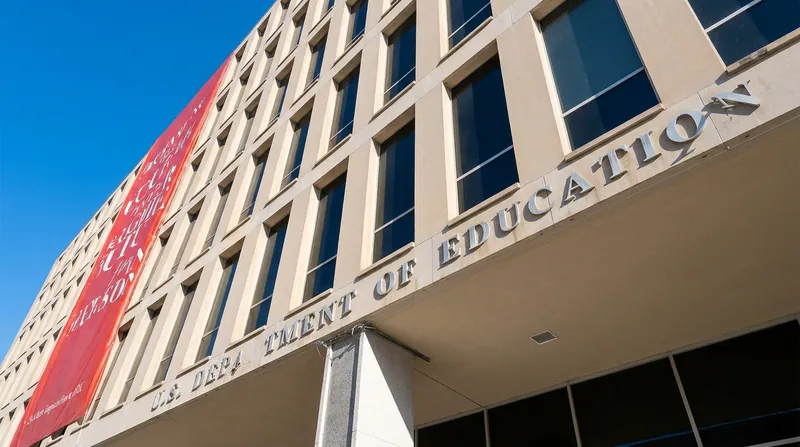
The Evidence on DOE Outsourcing: How Interagency Agreements Are Restructuring the Department of Education
5 sources
Workforce Training
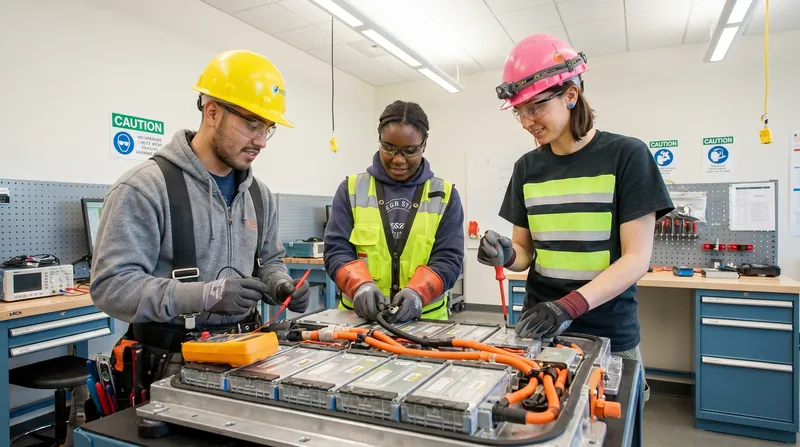
The Rise of 'New Collar' Apprenticeships and Stackable Credentials in 2026
6 sources

Green Collar Jobs
The Rise of the Green-Collar Workforce: How Clean Energy is Rewriting Vocational Education
4 sources
Comments
Every angle. Every day.
Get Education stories with full source coverage and perspective breakdowns, free every day.