
SpaceX's $2 Trillion IPO Rewrites Market Rules, Forcing 401(k)s to Buy In
SpaceX shattered global financial records with a $75 billion public debut, but fast-track index rules mean millions of Americans will automatically purchase the unprofitable space giant through their retirement accounts.
By Factlen Editorial Team
- Growth Investors & Tech Optimists
- Argue the valuation is justified by SpaceX's monopoly on orbit and the democratization of wealth.
- Market Mechanics & Index Trackers
- Focus on the mechanical distortions caused by fast-track index inclusion and forced passive buying.
- Valuation Skeptics & Consumer Advocates
- Warn that the 110x revenue multiple is a bubble that offloads venture risk onto everyday retirees.
What's not represented
- · Traditional Aerospace Competitors
- · NASA & Government Regulators
- · Labor & Workforce Representatives
Why this matters
Even if you never actively choose to buy a single share of Elon Musk's rocket company, its unprecedented $2 trillion debut is about to become a cornerstone of your retirement. Because major stock indices bent their rules to fast-track SpaceX's inclusion, trillions of dollars in passive 401(k) funds will be forced to purchase the stock, permanently tying the savings of everyday Americans to the volatile economics of the space industry.
Key points
- SpaceX raised a record-shattering $75 billion in its Nasdaq debut, achieving a valuation of over $2 trillion.
- The company reserved 30% of its shares for retail investors, prompting brokerages to lower participation minimums.
- Nasdaq waived its standard waiting period, fast-tracking SpaceX into the Nasdaq-100 index in just 15 trading days.
- Passive index funds and 401(k) retirement accounts will be forced to purchase the stock to track the benchmark.
- Despite generating $18.7 billion in revenue in 2025, the company remains unprofitable and trades at a massive 110x revenue multiple.
- The successful listing is viewed as a critical stress test ahead of anticipated mega-IPOs from AI firms like OpenAI and Anthropic.
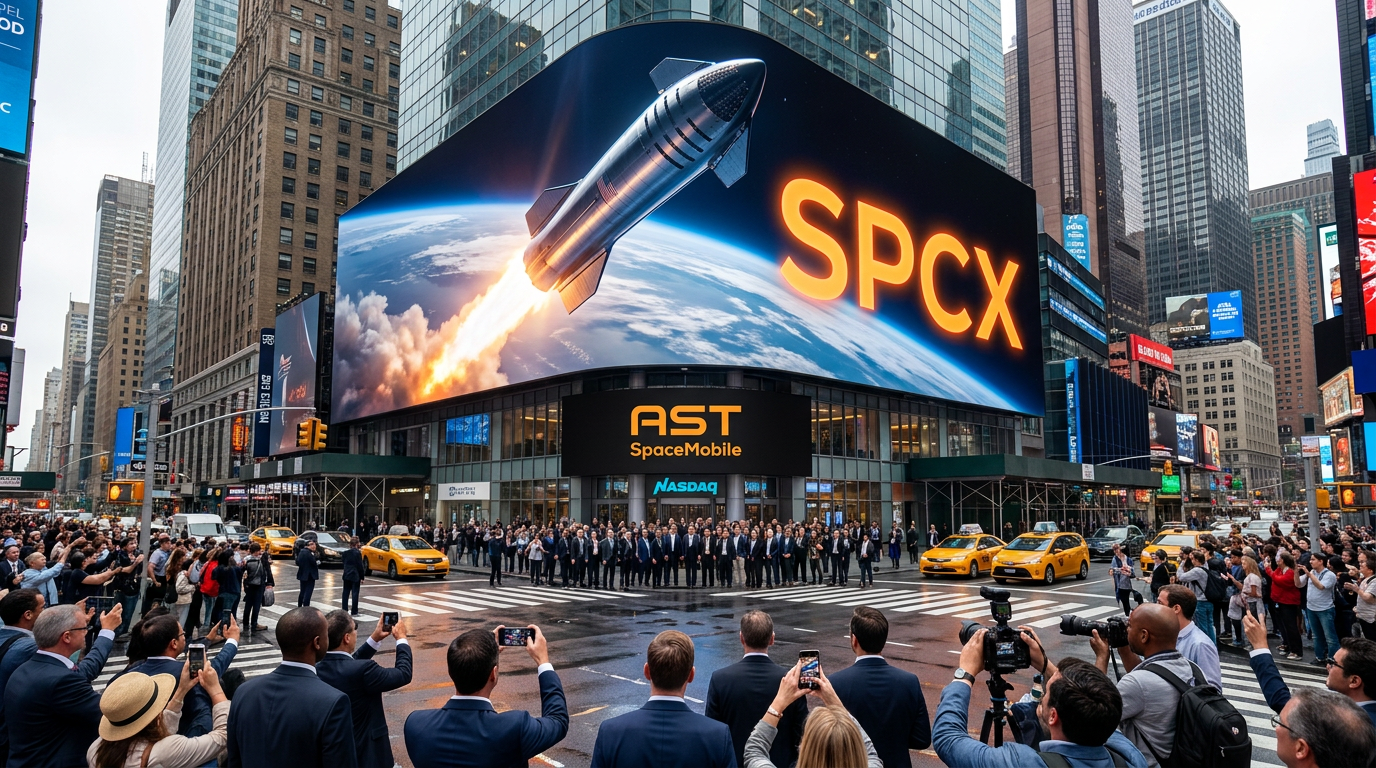
Friday, June 12, 2026, rewrote the rules of modern capital markets. SpaceX debuted on the Nasdaq in an initial public offering that shattered every existing financial record, raising $75 billion and instantly catapulting the aerospace giant to a valuation north of $2 trillion.[2][5][7]
The sheer scale of the debut makes SpaceX the sixth-largest publicly traded company in the United States on its very first day. Shares priced at $135 on Thursday night surged 19 percent to roughly $161 by Friday's close, defying skeptics who warned the market could not absorb such a massive equity float.[5][7][8]
But the true significance of the SpaceX IPO extends far beyond the ticker tape or the fact that it cemented founder Elon Musk as the world's first trillionaire. This listing engineered a fundamental rewiring of how retail investors and passive retirement funds interact with mega-cap private technology.[4][7]

Historically, the most explosive growth of Silicon Valley darlings happened behind closed doors, accessible only to venture capitalists and institutional heavyweights. By the time companies went public, the steepest valuation climbs were already exhausted. SpaceX, however, actively courted the retail public.[3]
In an unprecedented move, the company reserved roughly 30 percent of its offered shares for retail investors—triple the traditional 10 percent allocation. Brokerages scrambled to accommodate the demand. Fidelity Investments, which typically restricts IPO participation to clients with at least $500,000 in assets to shield them from early volatility, slashed its threshold to just $2,000 for the SpaceX offering.[3]
This democratization of access has drawn sharp criticism from some financial watchdogs. Skeptics argue that Wall Street is offloading an intensely hyped, highly speculative asset onto small investors at the absolute top of the market.[3]
The valuation metrics are undeniably staggering. SpaceX generated $18.7 billion in revenue in 2025 but remains unprofitable. At a $2 trillion market capitalization, the company is trading at a price-to-revenue ratio of roughly 110—a multiple that dwarfs even the most aggressive tech mega-caps.[5]

Yet, for millions of Americans, the decision of whether to buy into Musk's vision won't be a choice at all. It will happen automatically through their 401(k) retirement accounts.[4]
Yet, for millions of Americans, the decision of whether to buy into Musk's vision won't be a choice at all.
Major stock indices, which dictate the holdings of trillions of dollars in passive mutual funds and exchange-traded funds (ETFs), bent their own rules to accommodate the aerospace behemoth. Nasdaq waived its standard three-month 'seasoning' period, a rule originally designed to protect index investors from the wild price swings typical of newly public companies.[4][6]
Under Nasdaq's new 'fast-entry' provisions, SpaceX will be added to the benchmark Nasdaq-100 index in just 15 trading days. The index also eliminated its 10 percent minimum public float requirement, meaning SpaceX's relatively low float will still command a massive weighting multiplier.[6]
The mechanical consequences of this fast-track inclusion are profound. Approximately $1.4 trillion in capital tracks the Nasdaq-100. When SpaceX is added, every passive fund benchmarked to that index will be forced to buy the stock at market price, regardless of underlying fundamentals.[6]

Bloomberg Intelligence estimates that between the S&P 500, Russell 1000, and Nasdaq-100, passive funds will need to absorb nearly half of SpaceX's public float. This creates a scenario where the stock's price discovery is driven less by quarterly earnings and more by an inescapable supply-demand imbalance.[6]
For the bulls, the financial mechanics are secondary to the underlying business reality. SpaceX is not merely a rocket manufacturer; it is a sovereign economic ecosystem. The company is responsible for more than 80 percent of the mass launched into orbit globally over the past three years.[7]
Proponents argue that its Starlink satellite internet constellation and its deepening integration with artificial intelligence justify the premium. As one Sequoia Capital partner noted, the market is pricing in a $28.5 trillion total addressable market—what the company calls the largest commercial opportunity in human history.[7]
The success of the SpaceX offering is also serving as a critical stress test for the broader technology sector. Market participants are treating this IPO as a dress rehearsal for the next wave of artificial intelligence mega-listings, with both OpenAI and Anthropic reportedly preparing their own public debuts.[1][7]

If the market can seamlessly absorb a $75 billion capital raise without triggering a broader liquidity crisis, it clears the runway for these AI titans to bypass traditional venture funding rounds and tap the public markets directly.[1]
However, the risks remain heavily two-sided. If SpaceX stumbles—whether due to a catastrophic launch failure, regulatory crackdowns, or an inability to turn its massive revenue into consistent profit—the fallout will no longer be contained to Silicon Valley boardrooms.[2][3]
Because of its immediate integration into the bedrock indices of the American financial system, a significant correction in SpaceX's valuation would drag down the retirement portfolios of millions of ordinary workers.[4]
Wall Street has successfully transformed the final frontier into a cornerstone of the modern 401(k). Whether that represents the ultimate democratization of wealth or the peak of a new Gilded Age bubble will be decided in the trading sessions to come.[4]
How we got here
2002
Elon Musk founds SpaceX with the stated goal of reducing space transportation costs and enabling the colonization of Mars.
2020
SpaceX becomes the first private company to send human astronauts to the International Space Station.
Dec 2019
Saudi Aramco sets the global IPO record by raising $29.4 billion, a record that would stand for nearly seven years.
Early 2026
Rumors intensify that SpaceX will go public, alongside AI giants Anthropic and OpenAI, to fund massive capital expenditures.
June 11, 2026
SpaceX prices its initial public offering at $135 per share, raising a record-shattering $75 billion.
June 12, 2026
Shares debut on the Nasdaq, surging 19% to push the company's valuation past $2 trillion and making Musk the first trillionaire.
Viewpoints in depth
Retail Investors & Tech Bulls
Viewing the IPO as a long-overdue democratization of Silicon Valley's most explosive growth.
For years, retail investors have been locked out of the steepest valuation climbs of private tech companies, only allowed to buy in after venture capitalists have extracted the highest multiples. Proponents argue that SpaceX's decision to reserve 30% of its shares for the public, combined with brokerages lowering minimum investment thresholds, finally allows everyday Americans to participate in the foundational infrastructure of the space economy. They point to the company's $28.5 trillion total addressable market as justification for the premium.
Passive Index Managers
Grappling with the mechanical realities of forced buying and index weighting.
Institutional managers who run passive ETFs and mutual funds are less concerned with rockets and more concerned with liquidity. Because Nasdaq waived its standard seasoning period to fast-track SpaceX into the Nasdaq-100, passive funds are forced to buy the stock at market price to accurately track the benchmark. This creates an artificial supply-demand imbalance, where price discovery is driven by mandatory institutional purchasing rather than fundamental earnings analysis.
Skeptical Analysts & Watchdogs
Warning of extreme overvaluation and the offloading of risk onto retirement accounts.
Financial watchdogs and skeptical analysts point to SpaceX's 110x price-to-revenue ratio and its lack of current profitability as glaring red flags. They argue that Wall Street underwriters are using the hype surrounding Elon Musk to stuff overpriced, highly speculative shares into the 401(k) accounts of unwitting workers. If the company fails to execute on its massive promises, these critics warn that the fallout will directly impact the retirement savings of millions who never actively chose to invest in space exploration.
What we don't know
- Whether the market can sustain the $2 trillion valuation once the initial retail euphoria and forced passive buying subside.
- How quickly competitors like Blue Origin or international space agencies will cut into SpaceX's 80% market share of orbital launches.
- The exact timeline for when SpaceX will achieve full profitability given the massive ongoing capital requirements for Starship and Starlink.
Key terms
- Initial Public Offering (IPO)
- The process by which a private company offers shares of its stock to the public for the first time, allowing it to raise capital from everyday investors.
- Passive Index Fund
- A mutual fund or ETF designed to automatically track the performance of a specific market benchmark, like the S&P 500 or Nasdaq-100, rather than relying on a manager to pick stocks.
- Public Float
- The portion of a company's total shares that are freely available to be traded by the general public on the open market.
- Price-to-Revenue Ratio
- A valuation metric that compares a company's total market capitalization to its annual sales, often used for companies that are not yet profitable.
- Seasoning Period
- A standard waiting period required by stock indices before a newly public company can be added, designed to let the stock's initial volatility settle.
Frequently asked
Can I buy SpaceX stock in my retirement account?
Yes. Even if you don't buy it directly, if your 401(k) holds broad market index funds like those tracking the Nasdaq-100, you will automatically own SpaceX shares once it is added to the index.
Why did Fidelity lower its investment threshold?
Fidelity reduced its IPO participation minimum from $500,000 to $2,000 to allow smaller retail investors to buy into the highly anticipated offering, citing the unusually large 30% retail allocation.
Is SpaceX currently a profitable company?
No. Despite generating an estimated $18.7 billion in revenue in 2025, the company remains unprofitable as it continues to invest heavily in its Starship rocket and Starlink satellite network.
How does this compare to previous record IPOs?
SpaceX raised $75 billion, which is more than double the previous global record set by Saudi Aramco's $29.4 billion IPO in 2019.
Sources
Source coverage
8 outlets
3 viewpoints surfaced








[1]BloombergMarket Mechanics & Index Trackers
Can Tech Justify a Trillion-Dollar Valuation?
Read on Bloomberg →[2]CNBCGrowth Investors & Tech Optimists
From 10% chance of success to $2 trillion market cap: SpaceX's historic IPO
Read on CNBC →[3]Los Angeles TimesValuation Skeptics & Consumer Advocates
Wall Street is moving to stuff SpaceX shares into small investors' portfolios
Read on Los Angeles Times →[4]QuartzMarket Mechanics & Index Trackers
Your 401(k) probably won't stand by when SpaceX goes public. It'll buy shares instead.
Read on Quartz →[5]ReutersValuation Skeptics & Consumer Advocates
SpaceX value surges past $2 trillion in historic IPO debut
Read on Reuters →[6]CME GroupMarket Mechanics & Index Trackers
The SpaceX Mega-IPO: Why Index Choice Matters
Read on CME Group →[7]CBC NewsGrowth Investors & Tech Optimists
SpaceX soars in Nasdaq debut, making Elon Musk the first trillionaire
Read on CBC News →[8]The Japan TimesGrowth Investors & Tech Optimists
SpaceX surges past $2 trillion in Nasdaq debut, closes in on Amazon
Read on The Japan Times →

Every angle. Every day.
Get business stories with full source coverage and perspective breakdowns delivered to your inbox.