
SpaceX Raises Record $75 Billion in Largest IPO in History
SpaceX has successfully completed the largest initial public offering on record, raising $75 billion and opening the commercial space economy to public market investors for the first time.
By Factlen Editorial Team
- Space Economy Optimists
- View the IPO as the foundational infrastructure play of the 21st century, driven by Starlink's recurring revenue and reusable rocket monopolies.
- Financial Sector Beneficiaries
- Focused on the immediate trading volume, underwriting fees, and market liquidity generated by the sheer size of the mega-IPO.
- Long-Term Realists
- Concerned about the capital intensity of deep-space exploration and the friction between quarterly earnings pressure and multi-decade goals.
Why this matters
For the first time, everyday investors can directly buy into the foundational infrastructure of the modern space economy. This mega-IPO also injects massive liquidity into the financial sector and sets a new benchmark for how generation-defining tech companies transition to public markets.
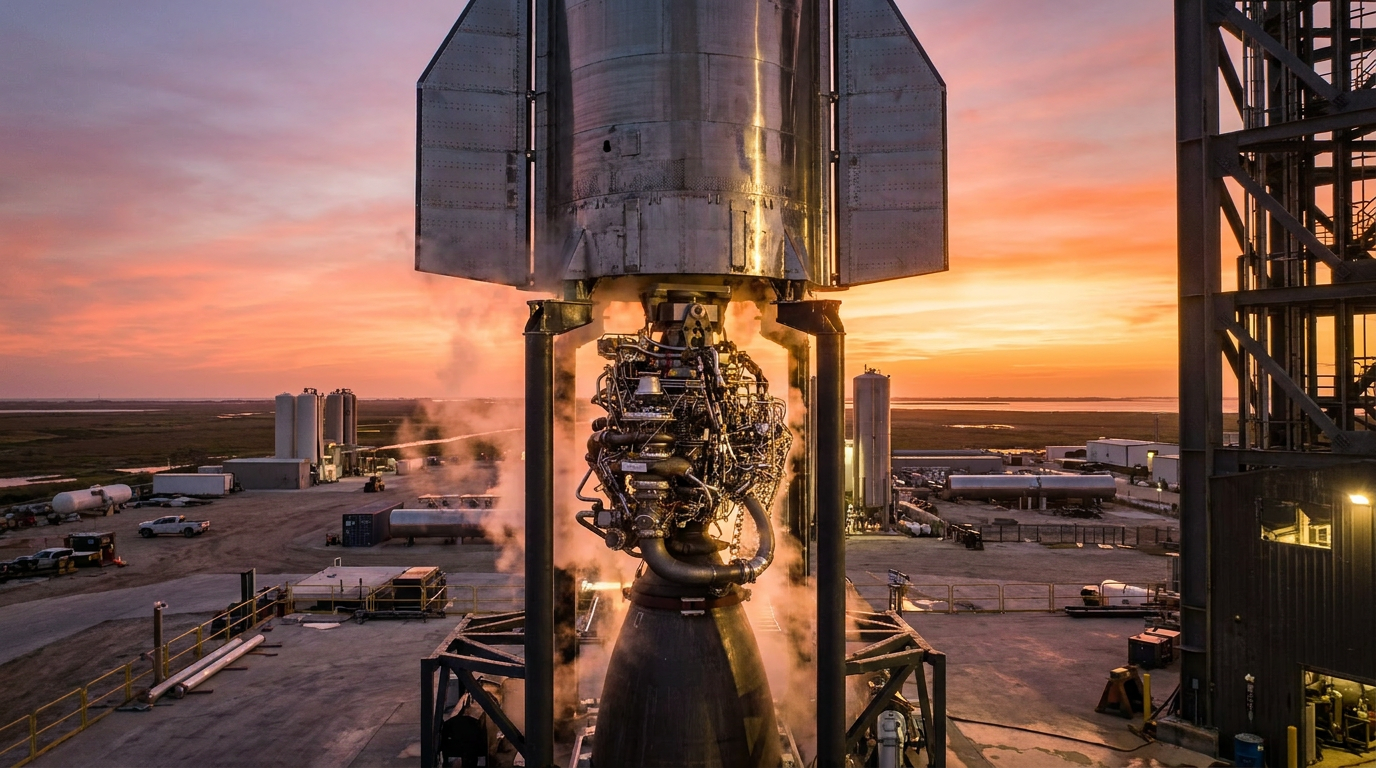
Space Exploration Technologies Corp., universally known as SpaceX, has officially transitioned from a closely guarded private enterprise to a publicly traded juggernaut, raising a staggering $75 billion in its initial public offering. The landmark debut shattered previous records set by corporate giants like Saudi Aramco and Alibaba, instantly reshaping the landscape of public equities. For years, retail investors could only watch from the sidelines as venture capitalists and private equity firms reaped the rewards of the commercial space race. Now, the financial gates have opened, allowing the public to directly buy into the foundational infrastructure of the modern space economy.[1][4]
The sheer scale of the capital raised underscores a profound shift in market appetite, signaling that investors are ready to underwrite generation-defining hardware and deep-tech ventures. While software and artificial intelligence have dominated Wall Street narratives over the past decade, SpaceX’s debut proves that physical engineering—specifically, the business of leaving Earth’s atmosphere—commands equal, if not greater, financial gravity. The $75 billion injection provides the company with an unprecedented war chest to accelerate its most ambitious projects, from global broadband networks to interplanetary transport systems.[1][6]
What makes this public debut particularly notable is how the company actively bucked traditional Wall Street norms throughout the process. Rather than relying entirely on the standard playbook of exclusive roadshows tailored strictly for institutional gatekeepers, leadership opted for a highly transparent, democratized allocation model. By leveraging digital platforms to communicate directly with retail investors, the company ensured that a significant portion of the offering was accessible to everyday buyers, bypassing the usual institutional lock-out that often leaves retail traders buying at a premium on the open market.[1]
This unconventional approach extended to the pricing mechanism itself. The underwriting syndicate, while managing the massive logistical hurdles of the largest IPO in history, utilized a modified auction system to discover the clearing price. This strategy minimized the classic 'IPO pop'—a phenomenon where shares are intentionally underpriced to create a first-day surge, which effectively leaves money on the table for the issuing company. Instead, SpaceX managed to capture the maximum possible capital directly for its balance sheet, a move that Silicon Valley investors have praised as a masterclass in corporate finance.[1][3]

Beneath the headline-grabbing numbers lies the true economic engine driving Wall Street’s enthusiasm: Starlink. While launching rockets captures the public imagination, the company’s satellite internet constellation represents a recurring, high-margin revenue stream that fundamentally alters its valuation model. By blanketing low Earth orbit with thousands of interconnected satellites, the company has effectively built a global telecommunications provider capable of servicing remote regions, maritime fleets, and aviation networks that traditional fiber-optic cables cannot reach.[3][4]
Financial analysts point to Starlink as the critical differentiator that separates SpaceX from legacy aerospace contractors. Traditional space companies rely on lumpy, unpredictable government contracts and infrequent commercial satellite launches. In contrast, Starlink operates on a subscription-based software-as-a-service model, providing the predictable cash flow necessary to fund the company’s more speculative, capital-intensive exploration goals. This dual-engine business model—monopolizing orbital delivery while simultaneously operating the payload—creates a vertically integrated moat that competitors are struggling to replicate.[3][5]
On the launch side of the ledger, the workhorse Falcon 9 rocket continues to dominate the global market, effectively serving as the freight train of the modern space age. By perfecting the art of propulsive landing and rapid reuse, the company has drastically lowered the cost per kilogram to orbit. This technological breakthrough didn't just capture existing market share; it expanded the total addressable market by making space access affordable for a new generation of startups, academic institutions, and international governments.[4][5]
On the launch side of the ledger, the workhorse Falcon 9 rocket continues to dominate the global market, effectively serving as the freight train of the modern space age.
The economic implications of reusable rockets cannot be overstated. Historically, launching a payload into orbit was akin to flying a commercial airliner from New York to London and then throwing the airplane away upon landing. By recovering and refurbishing the first-stage boosters, the company has fundamentally rewritten the unit economics of aerospace engineering. This cost advantage has allowed them to launch at a cadence that outpaces the combined efforts of rival nations, cementing a near-monopoly on commercial launch services.[5][6]

Looking ahead, the market is heavily pricing in the successful commercialization of Starship, the fully reusable super-heavy lift vehicle currently in development. If Falcon 9 is a freight train, Starship is designed to be an ocean liner, capable of delivering unprecedented mass to orbit at a fraction of current costs. Leading Silicon Valley investors view Starship not just as a rocket, but as a platform technology—an infrastructure layer that will enable entirely new industries, from orbital manufacturing and space tourism to asteroid mining, which are currently economically unviable.[3][6]
The ripple effects of this mega-IPO extend far beyond the aerospace sector, providing a massive windfall for the broader financial industry. Major investment banks, which have navigated a relatively sluggish period for public offerings, are reaping the rewards of underwriting fees, trading commissions, and increased market volatility. Financial analysts note that the sheer volume of shares changing hands is generating substantial trading income, offering a significant boost to the quarterly earnings of Wall Street's largest institutions.[2]
JPMorgan recently highlighted that investors are largely overlooking this secondary benefit to the banking sector. When a company of this magnitude goes public, it forces a massive reallocation of capital across mutual funds, index trackers, and institutional portfolios. This portfolio rebalancing requires the intermediation of prime brokerages and market makers, creating a highly profitable environment for the financial plumbing that facilitates global equity markets.[2][6]
Furthermore, the successful public debut serves as a critical catalyst for the broader space economy, which Morgan Stanley projects could reach a trillion-dollar valuation within the next two decades. By establishing a liquid, publicly traded benchmark for space infrastructure, the IPO provides venture capitalists with a clear exit strategy for their investments in smaller aerospace startups. This clarity is expected to unlock a new wave of private funding for companies developing adjacent technologies, such as orbital debris removal, lunar habitats, and advanced propulsion systems.[5][6]

However, the transition to public markets introduces a new set of challenges, primarily the relentless pressure of quarterly earnings expectations. For two decades, the company operated with the luxury of long-term, multi-decade horizons, shielded from the immediate demands of private shareholders. Now, executive leadership must balance the capital-intensive, high-risk development of interplanetary transport with the market's demand for consistent revenue growth and margin expansion from its commercial operations.[4][6]
Regulatory scrutiny is also expected to intensify as the company’s footprint expands. The Federal Aviation Administration and international regulatory bodies are increasingly focused on the environmental impact of high-frequency launch cadences and the management of orbital traffic. With thousands of satellites currently in low Earth orbit, concerns over space debris and the preservation of the night sky for astronomical research remain persistent friction points that could invite tighter operational restrictions.[4][5]
Competition, while currently lagging, is mobilizing. Well-funded private rivals are accelerating their own heavy-lift programs, while legacy defense contractors are restructuring to offer more competitive launch services. Internationally, state-sponsored space programs in Asia and Europe are heavily subsidizing their domestic aerospace sectors to reduce reliance on American commercial infrastructure, viewing independent space access as a critical matter of national security and economic independence.[5][6]

Despite these hurdles, the prevailing sentiment among market participants remains overwhelmingly optimistic. The $75 billion raised provides an unparalleled financial buffer to weather developmental setbacks and regulatory delays. More importantly, it signals a collective belief that the commercialization of space is no longer a speculative science fiction concept, but a tangible, investable sector of the global economy.[1][3]
Ultimately, this historic IPO represents a democratization of the final frontier. Everyday investors now have a direct stake in the infrastructure that will dictate humanity's expansion beyond Earth. Whether the company achieves its ultimate goal of multi-planetary colonization remains to be seen, but its public market debut ensures that the financial journey will be shared by millions.[6]
Viewpoints in depth
Space Economy Optimists
Investors who see SpaceX as the foundational layer for all future off-Earth commerce.
This camp argues that valuing SpaceX purely as a rocket manufacturer misses the broader picture. By drastically lowering the cost of access to space, the company is building the 'railroads' of the 21st century. Optimists point to Starlink's subscription model as a cash-printing engine that justifies the massive valuation, providing the financial stability needed to fund speculative ventures like Starship. They believe the company's vertically integrated approach gives it an insurmountable lead over legacy aerospace contractors.
Financial Sector Beneficiaries
Wall Street institutions capitalizing on the massive liquidity event.
For major investment banks and prime brokerages, the mechanics of the IPO are just as important as the company's mission. This perspective focuses on the immediate windfall of underwriting fees, trading commissions, and the massive portfolio rebalancing required by index funds. Analysts in this camp note that a $75 billion public offering injects a vital surge of activity into capital markets, benefiting the financial plumbing of Wall Street regardless of how many rockets successfully land.
Long-Term Realists
Analysts weighing the friction between public market demands and interplanetary ambitions.
While acknowledging the company's engineering triumphs, realists caution that public markets are notoriously impatient. This camp highlights the inherent tension between delivering consistent quarterly earnings and funding the highly experimental, capital-intensive development of Mars colonization architecture. They also point to escalating regulatory scrutiny regarding orbital debris and environmental impacts as potential headwinds that could slow the company's aggressive launch cadence now that it operates under the public microscope.
What we don't know
- How the pressure of quarterly earnings reports will impact the timeline for experimental, high-risk projects like the Mars colonization effort.
- Whether international regulatory bodies will impose stricter limits on the number of satellites allowed in low Earth orbit to prevent space debris.
- How quickly competitors like Blue Origin can develop fully reusable, super-heavy lift vehicles to challenge the Starship platform.
Sources
Source coverage
6 outlets
3 viewpoints surfaced




[1]MarketWatchFinancial Sector Beneficiaries
How Elon Musk nailed the SpaceX IPO: ‘I’m not sure that this could have gone much better’
Read on MarketWatch →JPMorgan says investors are overlooking the upside to Wall Street banks that comes from SpaceX and other mega IPOs
Read on MarketWatch →Here’s what could be SpaceX’s biggest upside surprise, according to a leading Silicon Valley investor
Read on MarketWatch →[4]U.S. Securities and Exchange CommissionLong-Term Realists
Space Exploration Technologies Corp. Form S-1 Registration Statement
Read on U.S. Securities and Exchange Commission →[5]Morgan Stanley ResearchSpace Economy Optimists
The Space Economy: Trillion-Dollar Trajectory
Read on Morgan Stanley Research →[6]Factlen Editorial TeamLong-Term Realists
Synthesis by Factlen editorial team
Read on Factlen Editorial Team →
More in finance
See all 123 stories →Retirement Planning
How Fixed-Index Annuities Work: Decoding the Retirement Seminar Pitch
7 sources

Creator Economy
The Rise of the AI-Augmented Side Hustle: How Generative Tools are Reshaping Freelance Economics
6 sources

Retirement Planning
The Mechanics of Fixed-Indexed Annuities: What the Free Dinner Seminars Don't Tell You
6 sources

Behavioral Finance
The 'Echo Chamber Penalty': How Political Polarization is Costing Retail Investors
6 sources

Every angle. Every day.
Get finance stories with full source coverage and perspective breakdowns delivered to your inbox.