
SpaceX Acquires AI Coding Startup Cursor for $60 Billion in Post-IPO Tech Mega-Deal
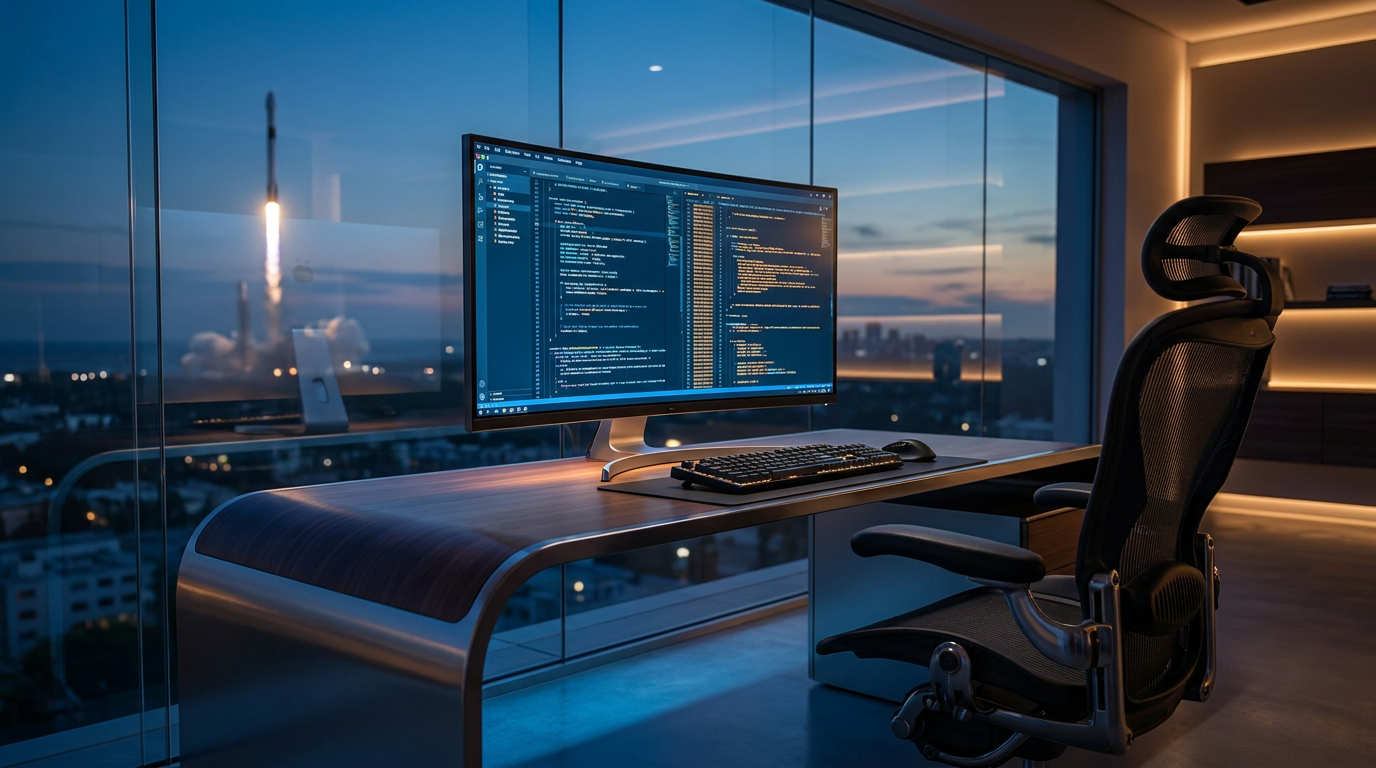
Fresh off its record-breaking public debut, SpaceX is using its stock to purchase Anysphere, the maker of the popular AI coding assistant Cursor. The $60 billion transaction merges the world's most valuable aerospace company with Silicon Valley's fastest-growing software tool.
By Factlen Editorial Team
- Strategic Consolidators
- Investors and executives who view the acquisition as a necessary vertical integration of compute and distribution.
- Independent Developers
- Software engineers concerned about the potential loss of model-agnostic flexibility.
- Silicon Valley Ecosystem
- Industry observers focused on the unprecedented speed of wealth creation and the repricing of the developer tools market.
What's not represented
- · Enterprise CIOs evaluating long-term software vendor lock-in
- · Competing AI model providers like Anthropic and OpenAI losing a neutral distribution channel
Why this matters
This $60 billion acquisition signals that AI coding assistants are no longer just helpful plugins, but the foundational infrastructure of the future digital economy. For the 7 million developers using Cursor, the deal brings massive computing power but raises questions about whether the tool will remain open to competing AI models.
Key points
- SpaceX is acquiring AI coding startup Cursor for $60 billion in an all-stock transaction.
- The deal follows SpaceX's recent record-breaking IPO, which valued the aerospace company at over $2.5 trillion.
- Cursor has experienced explosive growth, reaching an estimated $4 billion in annualized revenue and 7 million daily users.
- The acquisition provides Cursor with access to SpaceX's Colossus supercomputer to train advanced agentic AI models.
- Developers have expressed concern that SpaceX may abandon Cursor's model-agnostic approach in favor of its in-house Grok AI.
Fresh off a record-breaking initial public offering that pushed its valuation past $2.5 trillion, SpaceX is making its first major acquisition as a public company. Elon Musk's aerospace and technology behemoth has agreed to purchase Anysphere, the parent company of the wildly popular AI coding assistant Cursor, in an all-stock deal valued at $60 billion. The transaction merges the world's most valuable heavy-industry company with Silicon Valley's fastest-growing software startup, signaling a massive consolidation in the artificial intelligence sector.[1][2][3]
The acquisition caps a meteoric two-year rise for Cursor, which was founded in 2022 by four Massachusetts Institute of Technology graduates. Initially operating out of a small apartment in San Francisco's Hayes Valley, the startup built a customized code editor that uses natural language processing to help developers write, debug, and deploy software at unprecedented speeds. By early 2026, the tool had become a staple for over 7 million developers, including engineering teams at Nvidia, Adobe, and even rival AI labs like OpenAI.[2][4]
The financial mechanics of the deal highlight the immense leverage SpaceX now wields in public markets. The $60 billion purchase will be funded entirely through the issuance of SpaceX Class A shares, capitalizing on the stock's post-IPO momentum. The arrangement stems from a peculiar strategic partnership struck in April, which granted SpaceX the option to either acquire Cursor outright for $60 billion or pay a $10 billion breakup fee to maintain a joint computing partnership. SpaceX ultimately chose to absorb the company entirely, a move that sent its own shares surging 10% in premarket trading and added nearly $247 billion to its market capitalization—more than quadruple the cost of the acquisition itself.[1][2][3]

For SpaceX, the rationale extends far beyond financial engineering. While the company's Starlink division dominates global satellite connectivity, its artificial intelligence segment—anchored by the xAI subsidiary and its Grok chatbot—has struggled to gain traction among enterprise developers. Grok has consistently lagged behind Anthropic's Claude Code and OpenAI's Codex in the lucrative market for automated software engineering. By acquiring Cursor, SpaceX instantly secures a beloved product layer and a direct pipeline into the daily workflows of millions of software engineers.[1][5]
The synergy between the two companies is rooted in raw computing power. Cursor's leadership has openly stated that their ambitions to build fully autonomous, "agentic" coding models have been bottlenecked by a lack of server infrastructure. SpaceX solves this problem immediately. The integration grants Cursor unfettered access to Colossus, SpaceX's massive supercomputer cluster equipped with hundreds of thousands of advanced GPUs. This compute advantage is expected to accelerate the training of Cursor's proprietary models, allowing the software to handle increasingly complex, multi-file codebase architectures without human intervention.[2][6]
The synergy between the two companies is rooted in raw computing power.
The speed of Cursor's commercial success has forced Wall Street to recalibrate its expectations for AI software multiples. In June 2025, the startup was valued at $9.9 billion. By November 2025, a Series D funding round pushed that figure to $29.3 billion as annualized revenue crossed the $1 billion mark. Today, industry analysts estimate Cursor's annualized revenue has surged past $4 billion, driven by aggressive enterprise adoption and the rollout of background "Cloud Agents" that autonomously resolve software bugs. While a $60 billion price tag represents a steep 15x multiple on current revenue, investors appear willing to pay a premium for a tool that fundamentally alters the economics of software production.[1][2][4][5]

The windfall for Cursor's founders and employees is staggering, even by Silicon Valley standards. The all-stock transaction is expected to mint hundreds of new millionaires among the company's 800-person workforce. The four co-founders—Michael Truell, Aman Sanger, Sualeh Asif, and Arvid Lunnemark, all in their mid-twenties—will see their individual net worths eclipse $2.7 billion once the deal closes in the third quarter of 2026. At a recent developer conference in San Francisco, CEO Michael Truell framed the acquisition not as an exit, but as a necessary escalation in the race to build "frontier AI capabilities."[1][4]
Despite the financial euphoria, the acquisition has sparked intense debate within the open-source and developer communities. Cursor's primary competitive advantage has always been its model-agnostic architecture. Unlike GitHub Copilot, which is tethered to OpenAI's models via Microsoft, Cursor allowed developers to seamlessly toggle between Anthropic's Claude, Google's Gemini, and OpenAI's GPT-4 depending on the specific coding task. This flexibility earned the platform deep trust among engineers who are wary of vendor lock-in.[5]

The central question now is whether SpaceX will maintain this neutrality. Skeptics fear that Elon Musk's mandate to monetize the xAI division will inevitably transform Cursor into a walled garden designed to force-feed the Grok model to enterprise clients. If Cursor becomes a "soft Grok-first" environment where competing models are throttled or made artificially expensive, the platform risks alienating the very user base that made it valuable. SpaceX executives have so far declined to comment on the future of third-party model integration, leaving developers in a state of cautious optimism.[2][5]
Beyond the immediate product implications, the deal signals a permanent upward repricing of the developer tools market. Historically, software utilities like code editors were viewed as low-margin, niche products incapable of supporting mega-cap valuations. Cursor has shattered that paradigm by proving that enterprise chief information officers are willing to pay massive subscription premiums for tools that deliver measurable, 20-to-30 percent gains in engineering productivity.[5]
The ripple effects are already being felt across the venture capital landscape. Competing AI coding startups like Replit, Cognition, and Windsurf are seeing their own valuations bid up as legacy tech giants scramble to secure their own footholds in the automated development space. The era of the standalone code editor appears to be ending, replaced by a new paradigm where the interface for writing software is inextricably linked to the massive data centers required to train the AI that writes it.[1][5]

Ultimately, SpaceX's $60 billion gamble represents a bet that the future of technology will not be built by humans typing syntax, but by AI agents orchestrating vast codebases under human supervision. By uniting the world's most powerful rockets, the largest satellite internet constellation, and now the leading AI software factory under one corporate umbrella, SpaceX is positioning itself not just as an aerospace company, but as the foundational infrastructure layer for the next decade of the digital economy.[2][3][6]
How we got here
2022
Cursor is founded by four MIT graduates.
Nov 2025
Cursor raises a Series D at a $29.3 billion valuation after crossing $1 billion in annualized revenue.
April 2026
SpaceX secures an option to acquire Cursor for $60 billion or pay a $10 billion breakup fee.
June 2026
Following its massive IPO, SpaceX exercises the option, acquiring Cursor in an all-stock deal.
Viewpoints in depth
Strategic Consolidators
Investors and executives who view the acquisition as a necessary vertical integration of compute and distribution.
For SpaceX and its institutional backers, the $60 billion price tag is justified by the strategic necessity of owning the developer workflow. xAI's Grok model has struggled to win enterprise market share on its own merits against Anthropic and OpenAI. By acquiring Cursor, SpaceX instantly buys a distribution channel of 7 million daily active developers. Proponents argue that combining this massive user base with the raw training power of SpaceX's Colossus supercomputer will create an insurmountable moat in the AI software production market.
The Developer Community
Software engineers concerned about the potential loss of model-agnostic flexibility.
Independent developers and open-source advocates are approaching the mega-deal with deep skepticism. Cursor built its massive user base precisely because it did not force developers into a single ecosystem; users could seamlessly switch between Claude, GPT-4, and Gemini depending on the task. The community fears that SpaceX's mandate to monetize its xAI division will inevitably turn Cursor into a 'Grok-first' walled garden. If competing models are throttled or made artificially expensive, developers warn they will simply migrate to the next independent coding assistant.
Market Analysts
Financial observers focused on the unprecedented repricing of the developer tools sector.
Wall Street analysts are focused on the sheer math of the transaction. Historically, developer tools like code editors were viewed as low-margin utilities incapable of supporting mega-cap valuations. Cursor's ability to command a $60 billion valuation—roughly 15 times its estimated forward annualized revenue—signals a fundamental repricing of the sector. Analysts note that enterprise chief information officers are now willing to pay massive subscription premiums for tools that deliver measurable, 20-to-30 percent gains in engineering productivity, permanently altering the economics of software-as-a-service.
What we don't know
- Whether SpaceX will maintain Cursor's ability to seamlessly integrate with competing AI models like Anthropic's Claude and OpenAI's GPT-4.
- How the integration of Cursor's 800 employees into SpaceX's sprawling corporate structure will affect the startup's rapid product iteration speed.
- The exact number of SpaceX Class A shares that will be issued to fund the transaction, which depends on volume-weighted average pricing.
Key terms
- Annualized Revenue Run Rate (ARR)
- A forecasting metric that projects a company's total yearly revenue based on its current monthly earnings.
- Model-Agnostic
- Software that is not locked into a single artificial intelligence model, allowing users to choose between different providers like OpenAI, Google, or Anthropic.
- Agentic AI
- Artificial intelligence systems designed to autonomously plan, execute, and iterate on complex tasks—such as writing and testing software—with minimal human intervention.
- Compute
- The raw processing power, typically provided by massive clusters of specialized GPUs, required to train and run large artificial intelligence models.
Frequently asked
Why is SpaceX buying a coding startup?
SpaceX's AI division, xAI, has struggled to gain enterprise market share against rivals like Anthropic and OpenAI. Buying Cursor gives them an immediate, beloved product layer used by 7 million developers.
How is the $60 billion deal being funded?
The acquisition is an all-stock transaction. SpaceX is issuing Class A shares to Cursor's parent company, Anysphere, capitalizing on its recent $2.5 trillion IPO valuation.
Will Cursor stop supporting other AI models like Claude or GPT-4?
SpaceX has not officially announced changes to Cursor's model-agnostic approach, but developers are concerned the platform may eventually prioritize SpaceX's in-house Grok model.
Sources
Source coverage
6 outlets
3 viewpoints surfaced






[1]ForbesStrategic Consolidators
SpaceX announced it will acquire the AI coding platform Cursor for $60 billion
Read on Forbes →[2]Seeking AlphaStrategic Consolidators
SpaceX officially acquiring AI startup Cursor for $60B in stock
Read on Seeking Alpha →[3]ReutersStrategic Consolidators
Elon Musk's SpaceX said on Tuesday it would acquire Anysphere, the software firm behind the popular AI coding agent Cursor, for $60 billion
Read on Reuters →[4]The San Francisco StandardSilicon Valley Ecosystem
A young North Beach-based AI startup and its hundreds of employees are in the spotlight after a $60 billion SpaceX acquisition
Read on The San Francisco Standard →[5]MarketWatchIndependent Developers
Social media declared Cursor dead. Then SpaceX handed the AI startup a $60 billion lifeline.
Read on MarketWatch →[6]CursorSilicon Valley Ecosystem
Cursor partners with SpaceX on model training
Read on Cursor →

Every angle. Every day.
Get finance stories with full source coverage and perspective breakdowns delivered to your inbox.