
Space-Tech Enters the Mainstream as Rocket Lab Joins Nasdaq 100 and SpaceX Prepares Mega-IPO
The commercial space economy is crossing a major financial threshold as pure-play aerospace companies enter premier stock indices and prepare for record-breaking public offerings.
By Factlen Editorial Team
- Institutional Investors
- Focuses on risk-adjusted returns through infrastructure and supply chain investments.
- Retail & Tech Investors
- Driven by enthusiasm for mega-cap tech debuts and visionary leadership.
- Space Industry Analysts
- Evaluates the sector based on launch cadence, payload mass, and orbital infrastructure metrics.
What's not represented
- · Environmental advocates concerned about orbital debris
- · Astronomers impacted by satellite light pollution
Why this matters
The financialization of the space economy means everyday investors can now directly participate in an industry projected to reach $1 trillion. As space-tech enters mainstream indices like the Nasdaq-100, it will increasingly become a standard fixture in standard retirement portfolios and passive index funds.
Key points
- Rocket Lab will officially join the Nasdaq-100 index on June 22, 2026, marking a major milestone for commercial space companies.
- SpaceX is reportedly preparing for a record-breaking IPO that could value the company at up to $2 trillion.
- The global space economy is rapidly expanding, with orbital launches surging 25% year-over-year in 2025.
- Financial institutions are advising a 'picks and shovels' investment strategy, focusing on the supply chain rather than just launch vehicles.
The commercialization of space has officially crossed the threshold from speculative venture capital to mainstream public equities. For years, the aerospace sector was dominated by legacy defense contractors and private billionaires, leaving everyday investors with few pure-play options. That paradigm is fracturing in the summer of 2026, driven by a series of landmark market events that are forcing Wall Street to treat the cosmos as a standard asset class.[6]
The most immediate catalyst arrives on June 22, when launch provider Rocket Lab will be officially added to the Nasdaq-100 index. The inclusion places the Long Beach-based company alongside tech titans like Apple, Microsoft, and Nvidia, marking the first time a dedicated new-space startup has breached the premier index of non-financial giants.[1][3]
Index inclusion is a mechanical milestone that fundamentally alters a stock's trajectory. Because the Nasdaq-100 is tracked by more than 200 investment products with over $800 billion in global assets under management, passive index funds are now mandated to purchase Rocket Lab shares to mirror the index's composition. This institutional buying pressure provides a floor of credibility and liquidity that the broader space sector has historically lacked.[3][6]
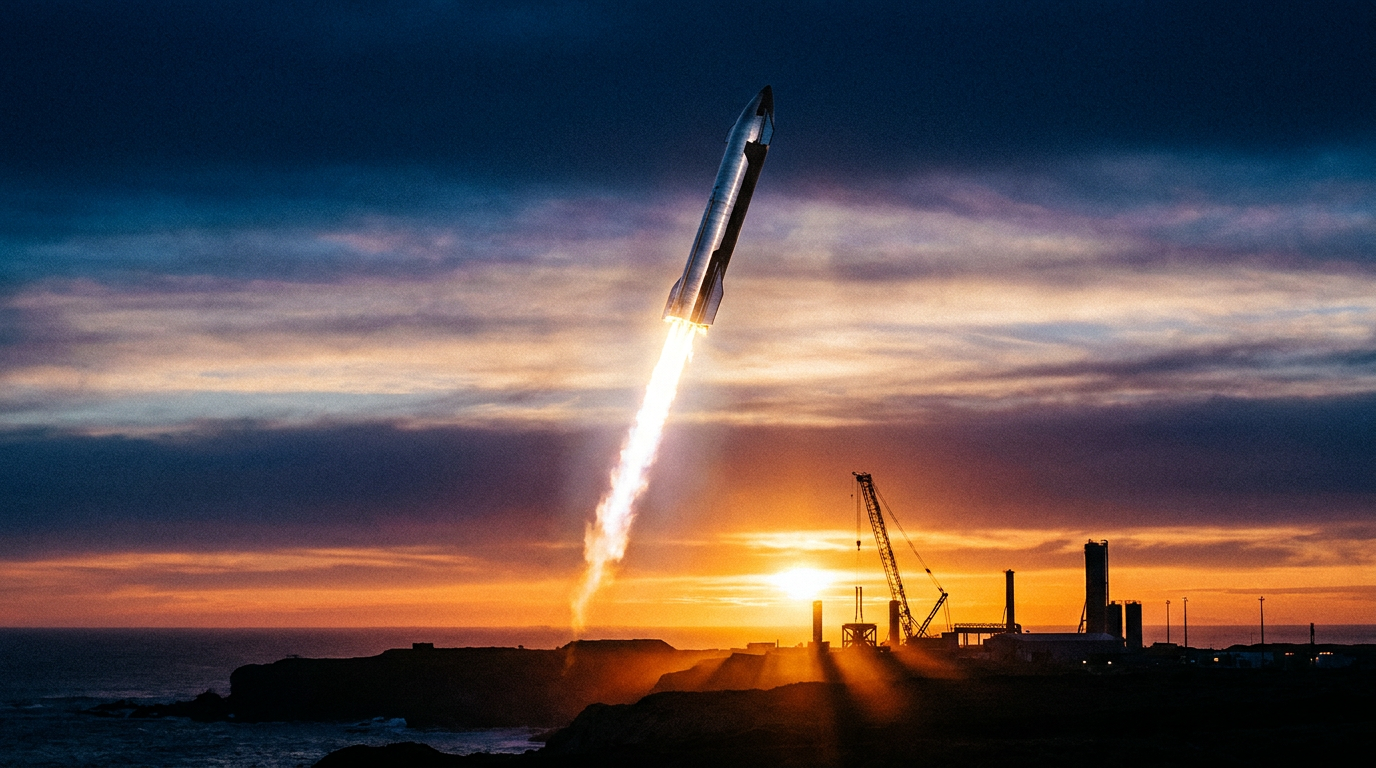
Yet, Rocket Lab's ascension is largely viewed as the opening act for a much larger seismic event: the impending initial public offering of SpaceX. Following a confidential filing with the Securities and Exchange Commission, Elon Musk's aerospace behemoth is reportedly targeting a valuation between $1.75 trillion and $2 trillion.[1][6]
If executed at those upper estimates, SpaceX would seek to raise roughly $75 billion, easily eclipsing Saudi Aramco's $29.4 billion listing in 2019 to become the largest IPO in global financial history. The sheer scale of the offering is already rippling through the financial sector, with analysts at JPMorgan noting that investors are underestimating the massive trading and underwriting windfalls that Wall Street banks will reap from the deal.[1][2]

To understand why markets are assigning trillion-dollar valuations to space companies, one must look past the rockets themselves. Launch vehicles are simply the delivery trucks; the actual economic engine lies in the "backbone and reach" infrastructure deployed in Low Earth Orbit (LEO).[6]
To understand why markets are assigning trillion-dollar valuations to space companies, one must look past the rockets themselves.
The primary revenue driver is satellite telecommunications, specifically broadband internet constellations like SpaceX's Starlink. By blanketing the globe with thousands of small satellites, these companies generate highly predictable, recurring subscription revenue from both retail consumers and enterprise clients, transforming a hardware-heavy aerospace business into a high-margin software-as-a-service model.[6]
The physical expansion of this infrastructure is accelerating at an unprecedented rate. According to industry analytics firm BryceTech, nations and corporations worldwide completed a collective 325 orbital launches in 2025, representing a massive 25% year-over-year jump. Crucially, commercial launch providers supported 87% of those missions, underscoring the shift away from government-monopolized spaceflight.[4]

For investors wary of the binary risks associated with rocketry—where a single anomaly can vaporize millions of dollars—financial institutions are advocating for a "picks and shovels" strategy. This approach, popularized during the 19th-century gold rushes, involves investing in the supply chain rather than the prospectors.[5][6]
In a recent report titled "The Space 60," analysts at Morgan Stanley outlined this indirect investment thesis. Rather than betting solely on launch providers, the firm highlights opportunities in semiconductor manufacturers, raw material miners, and ground-station operators. These companies provide the critical components necessary for orbital operations, allowing investors to capture the sector's growth without absorbing the catastrophic risk of a launch failure.[5]
Furthermore, the space economy is increasingly intersecting with the artificial intelligence boom. Modern satellites require immense onboard processing power to manage collision avoidance and route data efficiently. SpaceX's recent integration with xAI points toward a future of orbital data centers, where computation happens in space to reduce latency and bypass terrestrial energy constraints.[6]

Despite the surging optimism, the sector remains fraught with uncertainty. Space-tech requires staggering upfront capital expenditures, and profitability often lags years behind initial investments. Regulatory bottlenecks regarding spectrum allocation and orbital debris management could also throttle the deployment of mega-constellations.[6]
As the summer of 2026 unfolds, the financialization of the final frontier will test whether retail and institutional portfolios are ready to absorb the extreme volatility of orbital mechanics. With Rocket Lab securing its place in the Nasdaq-100 and SpaceX preparing to rewrite the record books, the space economy is no longer a futuristic bet—it is a measurable, investable reality.[1][3][6]
How we got here
2019
Saudi Aramco sets the global IPO record by raising $29.4 billion.
2021
Rocket Lab goes public on the Nasdaq via a SPAC merger.
2025
Global orbital launches surge by 25% to 325, driven heavily by commercial providers.
April 2026
SpaceX confidentially files for an IPO, targeting a record-breaking $75 billion raise.
June 22, 2026
Rocket Lab officially joins the Nasdaq-100 index, cementing space-tech as a mainstream asset.
Viewpoints in depth
Institutional Investors
Focuses on risk-adjusted returns through infrastructure and supply chain investments.
Large financial institutions view the space economy through the lens of recurring revenue and risk mitigation. Rather than gambling on binary launch outcomes, they prefer the "picks and shovels" approach—investing in the semiconductor manufacturers, raw material miners, and ground-station operators that supply the industry. They see satellite broadband as the true economic engine, transforming hardware-heavy aerospace into a high-margin software-as-a-service model.
Retail & Tech Investors
Driven by enthusiasm for mega-cap tech debuts and visionary leadership.
Retail investors and tech-focused funds are highly motivated by the sheer scale and ambition of pure-play space companies. The impending SpaceX IPO is viewed as a generational wealth-creation event, drawing comparisons to the early days of Apple or Amazon. This camp is more willing to tolerate high capital expenditures and delayed profitability in exchange for exposure to speculative futures like orbital data centers and interplanetary exploration.
Space Industry Analysts
Evaluates the sector based on launch cadence, payload mass, and orbital infrastructure metrics.
Industry analysts track the physical realities of the space economy, focusing on the 25% year-over-year surge in orbital launches and the rapid deployment of mega-constellations. They emphasize that the transition from government-led programs to commercial dominance is the true catalyst for growth. However, they also closely monitor regulatory bottlenecks, spectrum allocation disputes, and the growing risk of orbital debris as potential limiters on the sector's expansion.
What we don't know
- The exact date and final pricing of SpaceX's initial public offering.
- How regulatory bodies will manage the increasing congestion and orbital debris from mega-constellations.
- Whether the high capital expenditures required for space infrastructure will yield near-term profitability for new entrants.
Key terms
- Low Earth Orbit (LEO)
- An Earth-centered orbit with an altitude of 2,000 km or less, favored for communication satellites due to low latency.
- Nasdaq-100
- A stock market index made up of 100 of the largest non-financial companies listed on the Nasdaq exchange.
- Picks and shovels strategy
- An investment approach that targets the underlying suppliers and infrastructure of a booming industry rather than the final product.
- Mega-constellation
- A network of hundreds or thousands of artificial satellites working together to provide global coverage, such as broadband internet.
Frequently asked
When is the SpaceX IPO expected to happen?
While an exact date is not public, reports indicate SpaceX has confidentially filed with the SEC and is targeting a mid-to-late 2026 debut.
Why is Rocket Lab joining the Nasdaq-100 important?
It forces passive index funds to buy the stock, providing massive institutional investment and validating the commercial space sector alongside legacy tech giants.
How do space companies actually make money?
Beyond launching rockets, the primary revenue driver is satellite telecommunications, providing recurring subscription income for global broadband.
Sources
Source coverage
6 outlets
3 viewpoints surfaced





[1]MarketWatchInstitutional Investors
Rocket Lab and these four stocks are joining the Nasdaq 100, with SpaceX waiting in the wings
Read on MarketWatch →JPMorgan says investors are overlooking the upside to Wall Street banks that comes from SpaceX and other mega IPOs
Read on MarketWatch →[3]Investing.comRetail & Tech Investors
Rocket Lab to join Nasdaq-100 Index
Read on Investing.com →[4]BryceTechSpace Industry Analysts
Orbital Launches Year in Review 2025
Read on BryceTech →[5]Morgan StanleyInstitutional Investors
The Space 60: Picks & Shovels for the Final Frontier
Read on Morgan Stanley →[6]Factlen Editorial TeamSpace Industry Analysts
Synthesis by Factlen editorial team
Read on Factlen Editorial Team →
More in finance
See all 125 stories →Medical Debt
How Medical Debt is Disappearing from Credit Reports in 2026
7 sources

Mega IPO
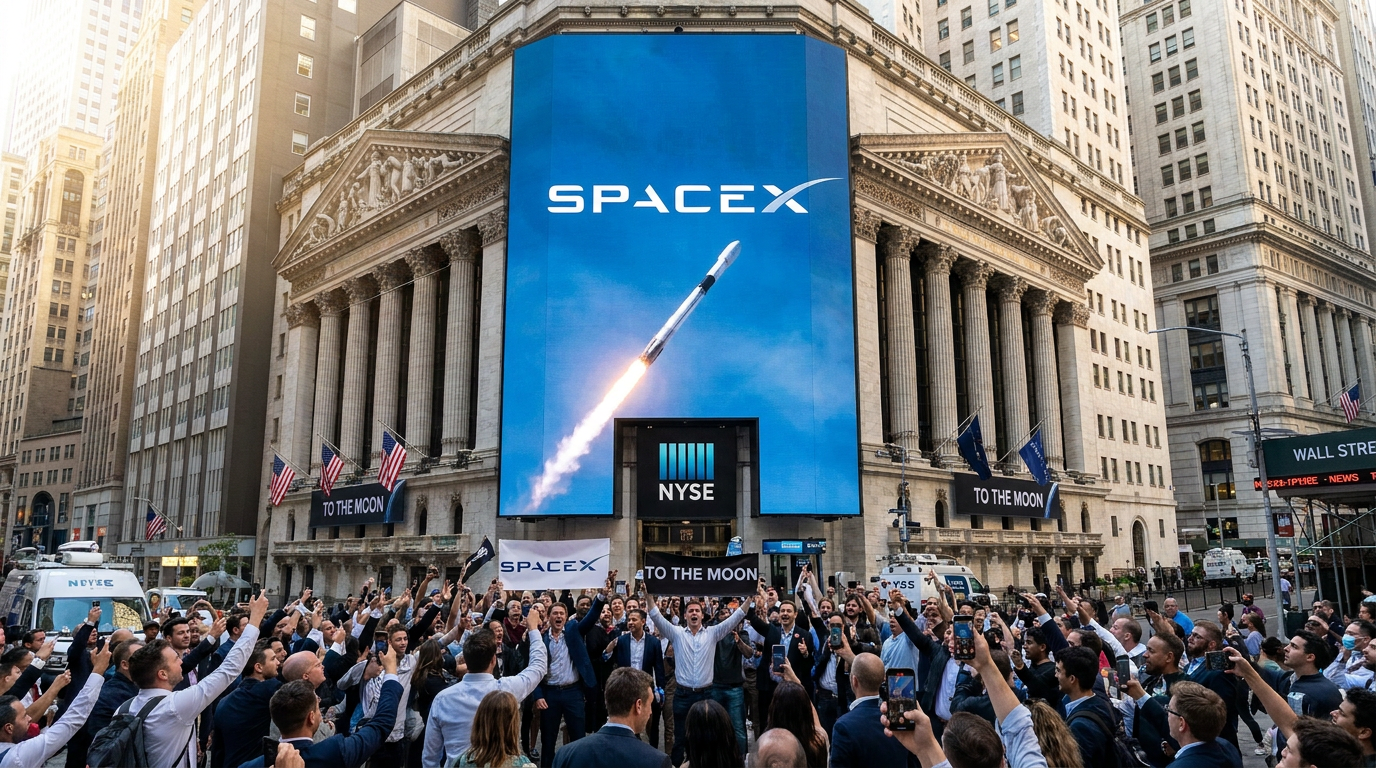
SpaceX Completes Historic $75 Billion IPO, Shattering Wall Street Records
10 sources
Retirement Planning
How Fixed-Index Annuities Work: Decoding the Retirement Seminar Pitch
7 sources

Creator Economy
The Rise of the AI-Augmented Side Hustle: How Generative Tools are Reshaping Freelance Economics
6 sources

Every angle. Every day.
Get finance stories with full source coverage and perspective breakdowns delivered to your inbox.