
Sony Sets 2028 End Date for Physical PlayStation Discs as Xbox Tests 'Disc-to-Digital' Conversion
The video game industry is finalizing its transition to an all-digital future, with Sony phasing out physical discs by 2028 and Microsoft developing tools to digitize existing physical libraries.

Share this story
The era of the physical video game is officially drawing to a close. Sony has confirmed it will cease the production of physical copies for PlayStation games by 2028, setting a hard expiration date on a format that has defined console gaming for nearly three decades. The announcement marks the most definitive step yet toward an all-digital ecosystem, effectively confirming that the next generation of PlayStation hardware will abandon the optical drive entirely.[1][3]
The shift has been accelerating for years, driven by consumer convenience and the expanding footprint of broadband internet. By the end of 2025, digital sales accounted for an estimated 85% of total console software revenue, leaving physical discs as a niche product primarily sustained by collectors and players in regions with restrictive data caps. Sony's 2028 timeline simply formalizes a transition that the market had already largely completed.
While Sony is setting a sunset date for new physical media, Microsoft is actively engineering a bridge for legacy collections. Sources familiar with Microsoft's hardware division reveal the company is quietly testing a "disc-to-digital" feature designed to allow Xbox owners to digitize their existing physical game libraries. Rather than stranding players who invested heavily in optical media, the program aims to convert physical licenses into permanent digital entitlements.[2]
The mechanics of this disc-to-digital conversion represent a complex technical and logistical challenge. To prevent a single physical disc from being passed around and digitized by dozens of different accounts, the system requires a one-time cryptographic validation. When a user inserts a disc into an authenticated drive—either a legacy console or a specialized external peripheral—the system reads a unique identifier stamped on the disc's inner ring, binds the license to the user's digital account, and permanently flags the physical media as "redeemed" in a central database.[2]
Once flagged, the physical disc effectively becomes a coaster; it can no longer be installed on another console or traded in at a retail store. This mechanism solves the double-dipping problem for publishers but fundamentally destroys the secondary market. Retailers like GameStop, which built their empires on the high-margin buying and selling of used games, will find their primary revenue stream entirely cut off by the end of the decade.[2][3]
For platform holders and publishers, the economic incentives of an all-digital future are overwhelming. Selling a game digitally eliminates the costs of manufacturing plastic cases, pressing Blu-ray discs, global shipping logistics, and retail shelf-space fees. More importantly, it allows publishers to capture 100% of the revenue from a sale, bypassing the 20% to 30% cut traditionally taken by brick-and-mortar retailers.[3]
Beyond the balance sheet, the transition carries significant environmental implications. The video game industry has historically produced over 100 million plastic game cases annually, the vast majority of which eventually end up in landfills. Phasing out physical media eliminates a massive stream of single-use plastics and the carbon emissions associated with transporting heavy pallets of games across the globe.
However, environmental analysts caution that the shift is not a pure ecological win. The burden simply moves from plastic manufacturing to data center power consumption. Hosting, distributing, and repeatedly downloading 150-gigabyte game files requires massive server infrastructure. As games continue to balloon in size, the energy required to deliver them digitally is scaling exponentially, creating a new kind of invisible carbon footprint.
The most vocal opposition to the digital transition comes from game preservationists and consumer rights advocates. When a player buys a physical disc, they own a tangible good protected by the First Sale Doctrine, allowing them to lend, sell, or keep the game forever. When a player buys a digital game, they are merely purchasing a revocable license to access the software—a license that can be altered or revoked at any time.[1]
This distinction becomes critical when digital storefronts shut down or games are delisted due to expired music or automotive licenses. If a publisher loses the rights to a soundtrack, a digital game can be permanently removed from sale. Without physical copies circulating in the secondary market, those games effectively cease to exist for future generations, creating a massive blind spot in the medium's cultural history.
The Video Game History Foundation has warned that the industry is facing a "preservation crisis," noting that the vast majority of classic games are already commercially unavailable. An all-digital future places the entire burden of preservation on the platform holders themselves, requiring companies like Sony and Microsoft to maintain legacy servers indefinitely—a promise that historically rarely holds up against corporate cost-cutting.
To mitigate these concerns, Microsoft has heavily emphasized backward compatibility as a core pillar of the Xbox ecosystem. By ensuring that digital purchases from the Xbox 360 and Xbox One eras carry forward to modern hardware, the company is attempting to build trust in the permanence of digital libraries. The disc-to-digital initiative is an extension of this philosophy, offering an olive branch to physical collectors before the optical drive is retired entirely.[2]
Sony's approach has traditionally been more generational, though the PlayStation 5's compatibility with PlayStation 4 titles signaled a shift in strategy. With the 2028 cutoff now public, pressure will mount on Sony to unveil a similar digital-conversion pathway for players sitting on massive libraries of physical PlayStation discs. Without one, millions of physical games will be stranded on aging hardware.[1][3]
The next two years will serve as a messy transition period. Consumers will likely see the final wave of physical collector's editions, which may soon ship with download codes inside empty steelbooks rather than actual discs. Meanwhile, independent game stores will be forced to pivot entirely to retro hardware, merchandise, and tabletop gaming to survive the evaporation of modern physical inventory.[3]
Ultimately, the 2028 deadline represents the final step in a long-anticipated evolution. Just as the music and film industries transitioned from CDs and DVDs to streaming and digital lockers, video games are embracing the friction-free, highly controlled reality of the digital cloud. The medium will be more accessible and profitable than ever, but the concept of truly owning a video game is quietly being retired.[1]
Key points
- Sony will officially stop manufacturing physical game discs for PlayStation platforms by 2028.
- Microsoft is testing a 'disc-to-digital' feature to let Xbox users convert physical libraries into digital licenses.
- Converting a physical disc to digital will permanently flag the disc, preventing it from being resold or shared.
- The shift eliminates plastic waste but raises major concerns about game preservation and consumer ownership rights.
What we don’t know
- Whether Sony will offer a disc-to-digital conversion tool similar to Microsoft's leaked feature.
- How the industry will handle digital game preservation if major storefront servers ever go offline.
- If the next generation of consoles (PS6 and next Xbox) will offer optional, external disc drives or abandon optical media entirely.
How we got here
2020
Sony and Microsoft launch the PS5 and Xbox Series X/S, offering cheaper 'Digital Edition' consoles without disc drives.
2023
Major retailers like Best Buy and Tesco begin phasing out physical media sections in their stores.
2025
Digital game sales surpass 85% of total console software revenue globally.
July 2026
Sony announces a hard 2028 cutoff for physical disc production; leaks reveal Xbox's disc-to-digital conversion tool.
- Digital-First Publishers
- Argue that digital distribution lowers costs, allows for seamless updates, and prevents revenue loss to the secondary used-game market.
- Game Preservationists
- Warn that an all-digital future threatens the historical record of the medium, as games can be permanently delisted or lost when servers shut down.
- Retail & Secondary Market
- Highlight the loss of consumer choice, the inability to resell purchased goods, and the economic impact on brick-and-mortar game stores.
Perspectives this story doesn't cover
- Rural gamers with restrictive internet bandwidth caps
- Independent physical game retailers
Sources
Source coverage
3 outlets
3 viewpoints surfaced



- [1]Ars TechnicaRetail & Secondary Market
Sony will stop making physical copies of PlayStation games in 2028
Read on Ars Technica → - [2]The VergeRetail & Secondary Market
Xbox testing disc-to-digital feature that digitizes a physical game collection
Read on The Verge → - [3]WiredRetail & Secondary Market
Sony’s PlayStation Puts a Nail in Physical Media’s Coffin
Read on Wired →
More in Technology
See all →Hardware Emulation
Open-Source ZLUDA v6 Breaks NVIDIA Lock, Enabling 3x Performance Boost for PhysX Games on AMD Radeon
2 sources
Game Engines
Epic Games Unveils Unreal Engine 6, Bypassing UE5 for Rocket League's Next Era
2 sources
PC Hardware
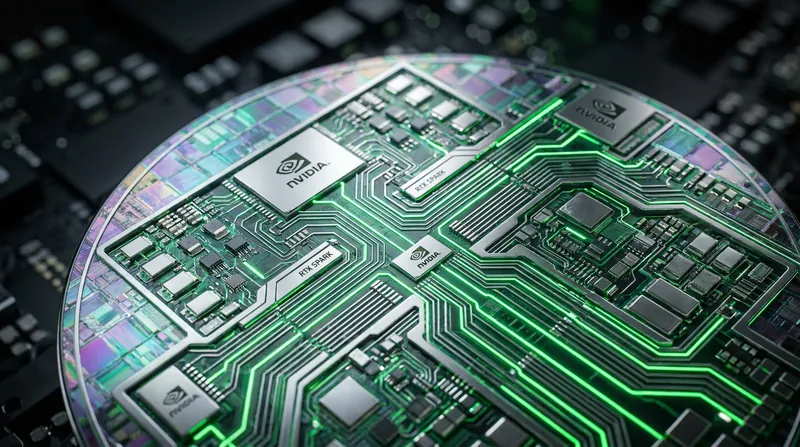
NVIDIA Unveils RTX Spark, Its First ARM-Based 'Superchip' to Redefine Windows Gaming and AI PCs
3 sources
Xbox Strategy
Microsoft Weighs Xbox Spin-Off to Accelerate Game Development as Studio Head Departs
2 sources
Comments
Every angle. Every day.
Get Technology stories with full source coverage and perspective breakdowns, free every day.