
Solid-State EV Batteries Move from Lab to Road in 2026
After years of development, solid-state batteries are entering real-world vehicle testing and pilot production in 2026, promising to double EV ranges and slash charging times.
By Factlen Editorial Team
- Automakers & OEMs
- Focused on integrating the technology into consumer vehicles and securing supply chains.
- Battery Tech Developers
- Focused on cell chemistry breakthroughs and scaling manufacturing processes.
- Materials Science Community
- Focused on the fundamental physics and the remaining hurdles of mass production.
What's not represented
- · Lithium-ion Gigafactory Operators
- · Raw Material Miners
Why this matters
Solid-state batteries represent the biggest technological leap in electric vehicles in a decade. By eliminating range anxiety and matching gas-station refueling times, this technology is poised to remove the final barriers to mass EV adoption.
Key points
- Solid-state batteries replace flammable liquid electrolytes with stable solid materials, drastically improving safety.
- The technology enables energy densities of 350 to 500 Wh/kg, pushing EV ranges past 1,000 kilometers.
- Charging times are expected to drop to 10-15 minutes, mimicking the speed of traditional gas stations.
- Major players like Toyota, Stellantis, and Dongfeng are moving from lab testing to real-world vehicle integration in 2026.
- Initial rollouts will be limited to luxury vehicles due to the high costs and complexities of manufacturing solid electrolytes at scale.
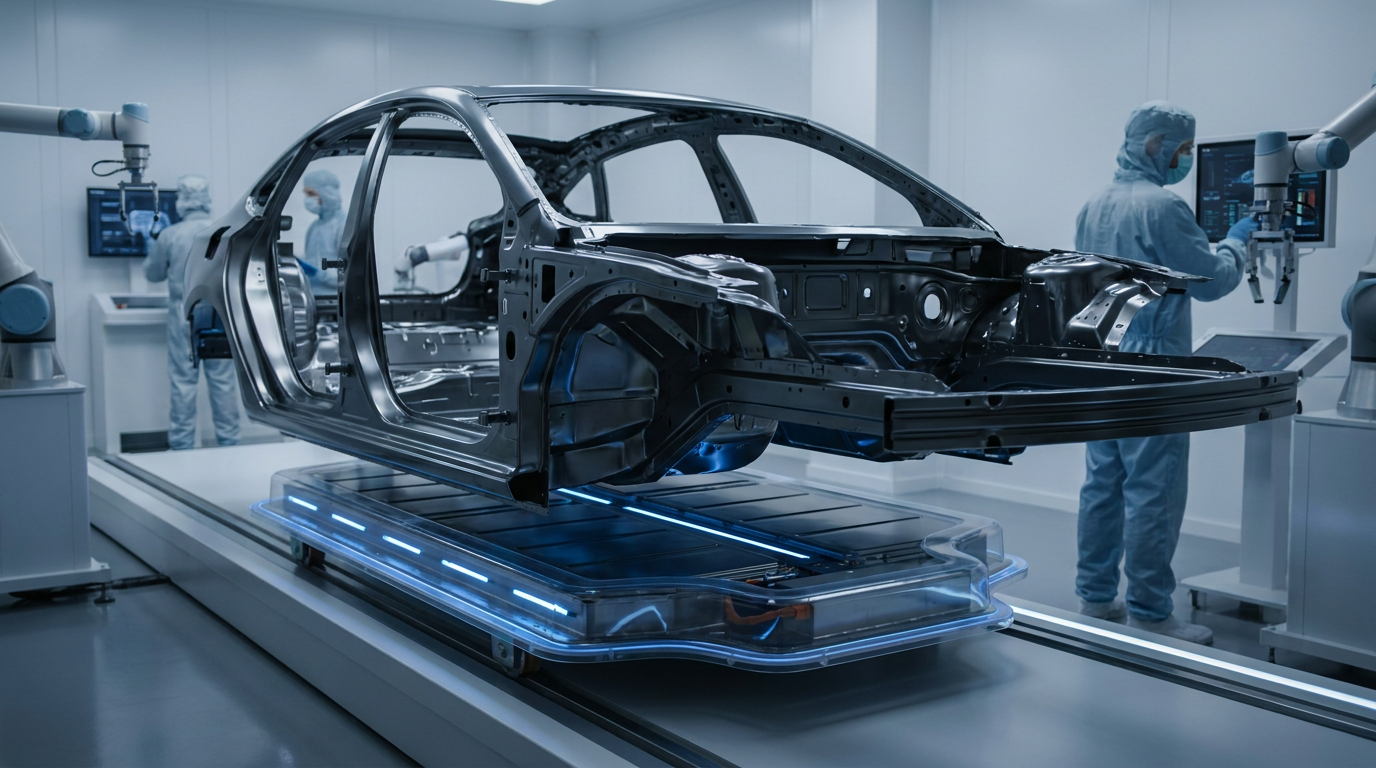
For over a decade, the electric vehicle industry has chased a singular, elusive holy grail: the solid-state battery. Promising to double driving ranges, slash charging times to mere minutes, and eliminate the risk of battery fires, the technology has long been dismissed as a perpetual "five years away." But in mid-2026, the narrative has definitively shifted. Solid-state batteries have officially graduated from laboratory prototypes to real-world roads and pilot production lines, marking the beginning of a new era in automotive engineering.[1][3]
The transition represents a fundamental rewiring of how electric vehicles store and deliver power. To understand the breakthrough, one must first look at the conventional lithium-ion batteries that currently power everything from smartphones to electric SUVs. In a standard battery cell, lithium ions travel back and forth between two electrodes—the anode and the cathode—through a liquid or gel electrolyte.[7]
While effective, this liquid electrolyte is the Achilles' heel of modern electric vehicles. It is inherently flammable, heavy, and susceptible to chemical degradation over time. Furthermore, it requires a physical plastic separator to prevent the anode and cathode from touching, which would cause a catastrophic short circuit and potential fire.[7]
A solid-state battery, as the name implies, replaces this volatile liquid with a stable, solid material—typically a specialized ceramic, sulfide, or solid polymer. This solid electrolyte acts as both the conductive medium for the ions and the physical separator between the electrodes. By removing the bulky, heavy, and flammable liquid components, engineers can pack significantly more energy-storing materials into a smaller, lighter footprint.[7]

The immediate result is a massive leap in energy density. Traditional lithium-ion cells generally max out around 250 to 300 watt-hours per kilogram. In contrast, the latest solid-state cells are consistently clearing 350 watt-hours per kilogram, with some developers targeting up to 500. For the consumer, this translates directly to driving range. Automakers are now projecting that first-generation solid-state vehicles will comfortably exceed 600 miles—roughly 1,000 kilometers—on a single charge, effectively neutralizing range anxiety for good.[2][6]
Beyond sheer distance, the solid architecture fundamentally alters the charging experience. Because solid electrolytes are vastly more resistant to heat and chemical degradation, they can accept electrical current at much higher rates without sustaining damage or degrading the battery's lifespan.[7]
QuantumScape, a leading solid-state developer backed by Volkswagen, recently demonstrated this capability by running its cells through 400 consecutive fast-charge cycles. The batteries consistently replenished from 10% to 80% capacity in just 15 minutes, while retaining over 80% of their original health. This brings electric vehicle charging times remarkably close to the duration of a traditional gas station visit, removing one of the largest remaining hurdles to mass adoption.[4][8]

QuantumScape, a leading solid-state developer backed by Volkswagen, recently demonstrated this capability by running its cells through 400 consecutive fast-charge cycles.
Safety and durability are also seeing dramatic improvements. Without flammable organic solvents, the risk of thermal runaway—the chain reaction that causes severe battery fires—is virtually eliminated. During rigorous physical testing, cells developed by Chinese automaker Dongfeng remained fully operational even after heavy machinery compressed and deformed them by 50%. In thermal endurance trials, the same components survived direct heat exposure at 338 degrees Fahrenheit without emitting smoke or fire.[5]
This resilience extends to the other end of the thermometer. Winter weather notoriously saps the performance of liquid-based electric vehicles, as freezing temperatures thicken the electrolyte and impede ion flow. Solid materials do not suffer from this freeze-thaw vulnerability. In early 2026, Dongfeng subjected its solid-state prototypes to extreme cold-weather calibration in Mohe, China. At temperatures plummeting to -22 degrees Fahrenheit, the battery packs successfully retained more than 74% of their electrical charge.[2][5]
The shift from theoretical benefits to tangible hardware is accelerating rapidly across the globe. In North America, Jeep parent company Stellantis and US-based Factorial Energy have officially begun testing solid-state batteries in Dodge Charger Daytona development vehicles. This marks the first time the advanced cells have been integrated into road-going test fleets on the continent, moving the technology out of the lab and into real-world traffic.[1]
Meanwhile, in Japan, Toyota is moving aggressively to secure its supply chain. The automaker, which holds over 1,000 patents in solid-state technology, has partnered with oil refiner Idemitsu Kosan to build a large-scale pilot plant for solid sulfide electrolytes. The facility, slated for completion by the end of 2027, is designed to produce hundreds of tonnes of the critical material annually, supporting Toyota's goal of launching a consumer-ready solid-state vehicle between 2027 and 2028.[3]

QuantumScape has also crossed a major manufacturing threshold, inaugurating its highly automated "Eagle Line" in San Jose, California, in early 2026. The facility serves as a blueprint for scaled production, demonstrating the proprietary manufacturing processes needed to build the company's unique ceramic separators at high volumes. Rather than building its own gigafactories, QuantumScape plans to license this manufacturing blueprint to major automakers and battery suppliers.[4][8]
However, the most aggressive timelines are emerging from China. Dongfeng Motor has announced plans to begin mass production and vehicle integration of its solid-state batteries in the second half of 2026. If successful, this would make Dongfeng one of the first automakers to bring a true solid-state electric vehicle to the consumer market, beating out rivals who are targeting 2027 or 2028.[2][6]

Despite the momentum, significant uncertainties remain regarding mass commercialization. Manufacturing solid-state cells requires extreme precision. Sulfide-based electrolytes, for instance, are highly sensitive to air and moisture, requiring hermetically sealed production environments that add complexity and cost. Scaling these delicate laboratory processes to produce millions of flawless cells per year remains the industry's final, most daunting hurdle.[3][4]
Because of these initial manufacturing costs, the first wave of solid-state vehicles arriving in 2026 and 2027 will not be budget-friendly commuter cars. They will debut as high-end luxury vehicles and technology flagships, where the premium price tag can absorb the cost of the advanced batteries. But as production scales and manufacturing techniques are refined, the technology is expected to trickle down, eventually becoming the new standard for the entire automotive industry.[1][3]
How we got here
1970s
First solid-state lithium/iodine batteries are used in medical pacemakers.
Late 2010s
Automakers and startups begin heavy investment in solid-state tech for EVs, targeting the 2020s.
2023
Toyota announces a major breakthrough in highly durable cathode materials, setting a 2027 target.
Early 2026
QuantumScape inaugurates its Eagle Line pilot facility; Dongfeng completes extreme cold-weather testing.
June 2026
Stellantis and Factorial Energy begin real-world road testing of solid-state Dodge Chargers in North America.
Late 2026
Dongfeng targets the start of mass production for its first-generation solid-state vehicles.
Viewpoints in depth
Automakers & OEMs
Focused on integrating the technology into consumer vehicles and securing supply chains.
For legacy automakers, solid-state batteries represent a chance to reset the competitive landscape of the EV market. Companies like Toyota and Stellantis view the technology as the key to winning over consumers who are currently hesitant due to range anxiety and charging times. Their primary focus is on securing raw materials, building pilot plants for solid electrolytes, and ensuring the batteries can withstand the rigors of daily driving and extreme weather.
Battery Tech Developers
Focused on cell chemistry breakthroughs and scaling manufacturing processes.
Specialized battery developers like QuantumScape and Factorial Energy approach the solid-state race as an intellectual property and licensing play. Rather than manufacturing millions of cars, they are focused on perfecting the underlying chemistry—such as ceramic separators and lithium-metal anodes. Their main argument is that the fundamental science is now solved, and the remaining challenge is purely engineering: designing automated assembly lines that can produce these sensitive cells at gigawatt-hour scales without defects.
Materials Science Community
Focused on the fundamental physics and the remaining hurdles of mass production.
Academic researchers and materials scientists maintain a slightly more cautious outlook. While they acknowledge the massive leaps in energy density and safety, they emphasize the extreme difficulty of manufacturing sulfide and ceramic electrolytes at scale. Because these materials are highly sensitive to moisture and require immense pressure to maintain contact between layers, scientists warn that achieving the low defect rates required for mass-market affordability will take years of iterative manufacturing improvements.
What we don't know
- Whether automakers can scale solid-state manufacturing fast enough to meet their 2027-2028 mass-market targets.
- How quickly the cost of solid-state cells will fall to achieve price parity with traditional lithium-ion batteries.
- Which specific solid electrolyte chemistry—sulfides, ceramics, or polymers—will ultimately dominate the industry.
Key terms
- Solid-State Battery
- A battery that uses a solid material, rather than a liquid or gel, to conduct ions between its electrodes.
- Electrolyte
- The medium inside a battery that allows ions to flow between the anode and cathode to generate electricity.
- Energy Density
- The amount of energy a battery can store relative to its weight, typically measured in watt-hours per kilogram (Wh/kg).
- Thermal Runaway
- A dangerous chain reaction in liquid-based batteries where excess heat causes the battery to catch fire or explode.
- Sulfide Electrolyte
- A type of solid electrolyte favored by companies like Toyota for its high conductivity, though it requires strict moisture control during manufacturing.
Frequently asked
Will solid-state batteries make EVs cheaper?
Initially, no. The first solid-state EVs arriving in 2026 and 2027 will be premium luxury models due to high manufacturing costs. Prices are expected to drop as production scales.
How fast can they charge?
Current testing by companies like QuantumScape and Toyota shows solid-state batteries can charge from 10% to 80% in 10 to 15 minutes.
Are they safer than current EV batteries?
Yes. Because they replace flammable liquid solvents with stable solid materials, the risk of battery fires and thermal runaway is virtually eliminated.
Do they work in cold weather?
Yes. Unlike liquid electrolytes that thicken and lose efficiency in freezing temperatures, solid electrolytes maintain high performance even at -30°C.
Sources
Source coverage
8 outlets
3 viewpoints surfaced








[1]ElectrekBattery Tech Developers
Solid-state batteries are now powering EVs in the real world
Read on Electrek →[2]CarNewsChinaAutomakers & OEMs
Dongfeng Motor's solid-state batteries scheduled for mass production in second half of 2026
Read on CarNewsChina →[3]Driven Car GuideAutomakers & OEMs
Toyota's solid-state battery plan gets real with new electrolyte factory
Read on Driven Car Guide →[4]BatteryTech OnlineBattery Tech Developers
QuantumScape CEO Details Commercialization Progress
Read on BatteryTech Online →[5]ArenaEVAutomakers & OEMs
Dongfeng targets late 2026 for mass production of long-range solid-state batteries
Read on ArenaEV →[6]CarsGuideAutomakers & OEMs
Dongfeng solid-state batteries to be mass-produced in 2026 with 1000km-plus of driving range
Read on CarsGuide →[7]WikipediaMaterials Science Community
Solid-state battery
Read on Wikipedia →[8]QuantumScapeBattery Tech Developers
QuantumScape inaugurates Eagle Line pilot for solid-state battery production
Read on QuantumScape →
Every angle. Every day.
Get transportation stories with full source coverage and perspective breakdowns delivered to your inbox.