
Solid-State Batteries Move from Lab to Factory Floor in 2026
After years of theoretical research, automakers and battery startups are successfully scaling the production of solid-state EV batteries. The technology promises to dramatically increase range and slash charging times, marking a pivotal shift in automotive engineering.
By Factlen Editorial Team
- Automotive Pioneers
- Legacy automakers viewing solid-state as the key to dominating the premium EV market and eliminating range anxiety.
- Battery Startups
- Pure-play technology firms focused on proving the fundamental physics and licensing their proprietary separator designs.
- Cost Pragmatists
- Analysts arguing that traditional, cheaper LFP batteries will remain the dominant force for mass-market adoption.
- Materials Scientists
- Researchers focused on the microscopic challenges of ion transfer, dendrite suppression, and manufacturing scale.
What's not represented
- · Lithium mining communities
- · Independent auto repair shops
Why this matters
Solid-state chemistry eliminates the biggest remaining compromises of electric vehicles—range anxiety, long charging times, and fire risks. As this technology hits the market, it will fundamentally change how cars are designed, how far they can travel, and how quickly they can be refueled.
Key points
- Solid-state batteries replace flammable liquid electrolytes with a solid ceramic or polymer barrier.
- The technology promises to nearly double energy density, allowing for 450+ mile ranges or significantly lighter vehicles.
- Major automakers and startups are currently moving from lab prototypes to multi-layer commercial cell manufacturing in 2026.
- Initial rollouts will be limited to premium luxury vehicles due to high early manufacturing costs.
- The shift could redraw global supply chains by reducing reliance on graphite and cobalt.
For the better part of a decade, the electric vehicle industry has chased a singular, elusive holy grail: the solid-state battery. Promised as the technology that would finally eliminate range anxiety, slash charging times to match a trip to the gas pump, and eradicate the risk of battery fires, solid-state chemistry has long been trapped in the purgatory of laboratory breakthroughs. But in 2026, the narrative is fundamentally shifting from theoretical physics to commercial manufacturing. Automakers and specialized battery startups are now moving beyond coin-sized prototype cells, successfully producing multi-layer, high-capacity battery packs that are currently being integrated into test fleets. This transition marks one of the most significant hardware milestones in the history of consumer transportation, signaling that the next generation of EVs is no longer a distant concept, but a tangible engineering reality.[1][5]
To understand why this shift is so monumental, one must first understand the limitations of the technology currently powering everything from smartphones to electric SUVs. Traditional lithium-ion batteries rely on a liquid electrolyte—a chemical soup that allows lithium ions to flow back and forth between the battery’s anode and cathode during charging and discharging. While this liquid medium is highly efficient at facilitating ion transfer, it carries inherent compromises. The liquid is highly flammable, requiring heavy, complex cooling systems and protective armor to prevent thermal runaway in the event of a crash. Furthermore, liquid electrolytes are susceptible to the formation of dendrites—microscopic, needle-like structures of lithium metal that can grow across the battery over time, eventually piercing the separator and causing a short circuit.[2][7]
Solid-state batteries solve these fundamental problems by replacing the volatile liquid electrolyte with a solid material, typically a specialized ceramic, glass, or polymer. This solid separator acts as an impenetrable physical barrier that prevents dendrite growth while still allowing lithium ions to pass through. By eliminating the flammable liquid, battery engineers can safely use a pure lithium metal anode instead of the heavier graphite used in conventional batteries. This single architectural change dramatically increases the battery's energy density—the amount of energy it can store relative to its weight and size. According to the U.S. Department of Energy, solid-state architectures can theoretically achieve energy densities exceeding 400 to 500 watt-hours per kilogram, nearly double the capacity of today’s best commercial lithium-ion cells.[3][8]

The real-world implications of this increased energy density are transformative for the consumer experience. A vehicle that currently achieves 300 miles of range on a standard lithium-ion pack could theoretically travel over 450 miles using a solid-state pack of the exact same physical size and weight. Alternatively, automakers could choose to keep the range at 300 miles but shrink the battery pack by a third, resulting in lighter, more agile, and ultimately cheaper vehicles. Beyond range, the solid electrolyte's resistance to heat allows for vastly accelerated charging speeds. Without the bottleneck of managing extreme thermal loads, solid-state cells can comfortably accept massive influxes of power, with companies demonstrating the ability to charge from 10% to 80% in roughly 10 to 15 minutes without degrading the battery's long-term lifespan.[4][7]

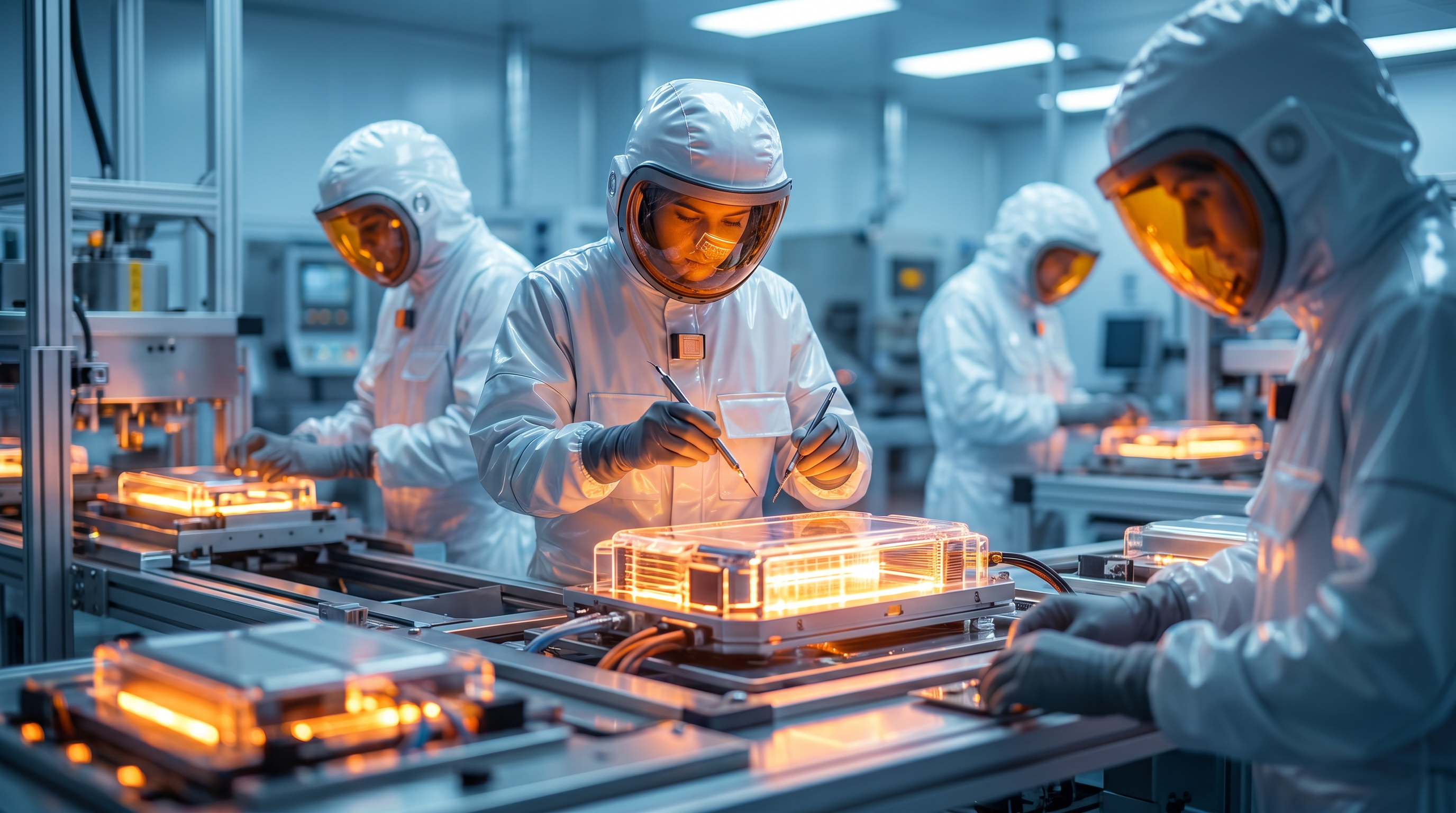
However, moving this technology from a controlled laboratory environment to a high-volume factory floor has proven to be one of the most complex manufacturing challenges of the 21st century. In a lab, building a single-layer solid-state cell the size of a watch battery is relatively straightforward. But an electric vehicle requires hundreds of large-format, multi-layer cells working in perfect unison. The primary engineering hurdle has been maintaining perfect physical contact between the solid electrolyte and the electrodes. Unlike a liquid, which naturally flows into every microscopic crevice, a solid separator requires immense, uniform pressure to ensure the ions can cross the boundary without resistance. If microscopic gaps form as the battery expands and contracts during charging, the cell's performance plummets.[6]
In a lab, building a single-layer solid-state cell the size of a watch battery is relatively straightforward.
To overcome this contact problem, materials scientists have spent the last several years developing novel manufacturing techniques. Some approaches involve applying high external pressure to the battery pack itself, essentially clamping the cells together to force contact. Others have focused on engineering hybrid electrolytes—using a predominantly solid ceramic matrix infused with a trace amount of gel to bridge the microscopic gaps. Recent peer-reviewed research published in Joule highlights how advanced roll-to-roll manufacturing—similar to how newsprint is produced—is being adapted to create ultra-thin, perfectly uniform ceramic separators at scale. These manufacturing innovations are what finally allowed companies to transition from producing single-layer test cells to the 24-layer and 30-layer cells required for automotive applications.[6][7]
The commercial landscape of 2026 reflects these hard-won engineering victories. Toyota, long a pioneer in solid-state research, has officially begun integrating its first-generation solid-state packs into a limited run of premium hybrid and fully electric test vehicles, adhering to its previously announced timeline for late-decade commercialization. Their approach heavily leverages proprietary sulfide-based solid electrolytes, which offer excellent ion conductivity but require highly controlled, moisture-free manufacturing environments to prevent the release of toxic hydrogen sulfide gas. By mastering these complex clean-room manufacturing processes, Toyota aims to secure a dominant position in the next era of automotive powertrains, targeting a commercial rollout that prioritizes high-performance and luxury segments first.[5][8]

Simultaneously, pure-play battery technology companies are operating as the crucial research and development arms for the rest of the automotive industry. QuantumScape, backed by major automotive investments, has spent early 2026 shipping high-volume B-sample cells to its partners for rigorous real-world testing. These samples represent the final validation stage before mass production. Their architecture, which utilizes a proprietary ceramic separator that completely resists dendrite penetration, has shown remarkable resilience in extreme temperature testing, maintaining high performance even in sub-zero conditions where traditional lithium-ion batteries typically struggle. This cold-weather reliability addresses one of the most persistent consumer complaints regarding current electric vehicles.[4][7]
Despite these monumental leaps forward, the transition to solid-state will not be an overnight revolution, but rather a phased integration. The initial cost of manufacturing these advanced cells remains significantly higher than traditional lithium-ion production, which has benefited from decades of economies of scale and billions of dollars in optimized supply chains. Consequently, the first commercially available solid-state EVs will almost certainly be high-end luxury sedans and supercars, where the premium price tag can absorb the cost of the advanced battery pack. The International Energy Agency projects that it will take several years of scaled production and supply chain maturation before solid-state technology reaches price parity with current batteries, pushing mass-market affordability into the early 2030s.[3][8]
This cost dynamic introduces a fascinating tension into the broader electric vehicle market. While solid-state represents the absolute pinnacle of performance, traditional lithium-ion technology is not standing still. The rapid rise of Lithium Iron Phosphate (LFP) batteries—which are cheaper, highly durable, and rely on abundant materials rather than scarce metals like nickel and cobalt—has created a highly competitive standard for the mass market. LFP batteries are already dominating entry-level EVs globally, offering reliable range at a fraction of the cost. The ultimate success of solid-state will depend not just on its technical superiority, but on how quickly it can slide down the cost curve to compete with an increasingly optimized and affordable baseline technology.[1][8]

Furthermore, the geopolitical implications of a shift to solid-state chemistries are profound. The current lithium-ion supply chain is heavily concentrated, with a few nations dominating the processing of critical minerals like graphite, cobalt, and nickel. Because many solid-state designs eliminate graphite entirely in favor of a pure lithium metal anode, and often reduce or eliminate the need for cobalt, the technology offers a pathway to fundamentally redraw the global battery supply chain. The U.S. Department of Energy has aggressively funded domestic solid-state research precisely for this reason, viewing the technology not just as an environmental imperative, but as a matter of national security and industrial independence.[3][5]
Ultimately, the breakthroughs of 2026 signify that the electric vehicle industry is entering its second major technological epoch. The first epoch proved that EVs could be viable, desirable, and capable of replacing internal combustion engines for daily use. This new era, powered by solid-state chemistry, is about eliminating the remaining compromises. By offering the energy density to travel cross-country without range anxiety, the charging speed to make road trips seamless, and the inherent safety to build lighter, more efficient vehicles, solid-state batteries are poised to transform the automobile once again. While the road to mass-market affordability remains long, the physics have been proven, the factories are being built, and the future of transportation has never looked more capable.[1][2][4]
How we got here
2010s
Early laboratory research proves the theoretical viability of solid ceramic electrolytes.
2020
Battery startups like QuantumScape go public, raising billions to scale solid-state research.
2023
Major automakers announce aggressive late-decade targets for commercial solid-state integration.
Early 2026
Startups deliver high-volume 'B-sample' cells to automotive partners for final real-world validation.
Mid 2026
First prototype vehicles equipped with multi-layer solid-state packs begin on-road testing.
Viewpoints in depth
Automotive Pioneers
Legacy automakers view solid-state as the key to dominating the premium EV market and eliminating range anxiety.
For legacy automakers, solid-state technology is the ultimate differentiator in an increasingly crowded EV market. Companies like Toyota are investing heavily in proprietary sulfide-based chemistries to maintain control over the core technology. Their strategy is to debut solid-state packs in high-margin luxury and performance vehicles, where buyers are willing to pay a premium for 10-minute charging and 500-mile ranges. This top-down approach allows them to recoup massive R&D costs while gradually scaling production to lower the price for mass-market models in the next decade.
Battery Startups
Pure-play technology firms are focused on proving the fundamental physics and licensing their proprietary separator designs.
Firms like QuantumScape and Solid Power operate as the outsourced R&D departments for the broader automotive industry. Their primary focus has been solving the microscopic physics of dendrite suppression and maintaining uniform cell pressure. Rather than building their own cars, these startups aim to perfect the manufacturing of the cells themselves—specifically the complex roll-to-roll production of ceramic separators—and then license the technology or supply cells directly to multiple automotive partners, positioning themselves as the 'Intel Inside' of the next-generation EV market.
Cost Pragmatists
Analysts argue that traditional, cheaper LFP batteries will remain the dominant force for mass-market adoption.
While acknowledging the superior performance of solid-state, market pragmatists and cost analysts point out that traditional lithium-ion technology is a moving target. The rapid maturation of Lithium Iron Phosphate (LFP) batteries has created a highly durable, cheap, and safe alternative that is already 'good enough' for the average consumer. These analysts argue that while solid-state will win the luxury and long-haul trucking sectors, the sheer cost advantage of LFP will keep it the dominant chemistry for commuter cars and entry-level EVs well into the 2030s.
What we don't know
- Exactly how quickly the manufacturing cost of solid-state cells will drop to match current lithium-ion prices.
- How well the solid ceramic separators will hold up to a decade of real-world physical vibrations and pothole impacts on the road.
- Whether the supply chain for pure lithium metal anodes can scale fast enough to meet projected demand.
Key terms
- Electrolyte
- The medium inside a battery that allows ions to flow between the positive and negative ends during charging and discharging.
- Dendrites
- Microscopic, needle-like structures of lithium metal that can grow inside a battery over time, potentially causing short circuits and fires.
- Energy Density
- The amount of energy a battery can store relative to its physical weight or volume, typically measured in watt-hours per kilogram (Wh/kg).
- LFP (Lithium Iron Phosphate)
- A cheaper, highly durable type of traditional lithium-ion battery that is currently dominating the mass-market EV sector.
Frequently asked
Will my current electric vehicle become obsolete?
No. Current lithium-ion EVs will remain perfectly viable and supported for decades. Solid-state technology will initially debut in luxury vehicles, taking years to reach the broader market.
Are solid-state batteries truly fireproof?
While no energy storage device is entirely without risk, solid-state batteries eliminate the highly flammable liquid electrolyte found in current cells, drastically reducing the risk of thermal runaway and battery fires.
When will solid-state EVs be affordable for the average buyer?
Industry analysts project that while premium solid-state vehicles are entering testing now, economies of scale won't bring the technology to price parity with current mass-market EVs until the early 2030s.
Sources
Source coverage
8 outlets
4 viewpoints surfaced








[1]Factlen Editorial Team
Synthesis by Factlen editorial team
Read on Factlen Editorial Team →[2]Nature EnergyMaterials Scientists
Overcoming interfacial resistance in solid-state lithium metal batteries
Read on Nature Energy →[3]U.S. Department of Energy
Next-Generation Battery Supply Chain and Manufacturing Report 2026
Read on U.S. Department of Energy →[4]QuantumScapeBattery Startups
Q1 2026 Shareholder Letter: B-Sample Delivery and Manufacturing Scale-Up
Read on QuantumScape →[5]Toyota Global NewsroomAutomotive Pioneers
Toyota Commences On-Road Testing of Next-Generation Solid-State EV Prototypes
Read on Toyota Global Newsroom →[6]JouleMaterials Scientists
Roll-to-roll manufacturing paradigms for ceramic solid electrolytes
Read on Joule →[7]MIT Technology ReviewMaterials Scientists
How the battery industry finally solved the dendrite problem
Read on MIT Technology Review →[8]International Energy AgencyCost Pragmatists
Global EV Outlook 2026: The Shift to Advanced Chemistries
Read on International Energy Agency →

Every angle. Every day.
Get technology stories with full source coverage and perspective breakdowns delivered to your inbox.