
Solid-State Batteries Are Finally Here: How the 2026 Breakthrough Changes EVs
After years of laboratory development, solid-state EV batteries are entering pilot production in 2026, promising 600-mile ranges, 15-minute charging, and unprecedented safety.
By Factlen Editorial Team
- Battery Innovators
- Startups focused on rapid commercialization through specialized licensing and niche vehicle integration.
- Legacy Automakers
- Established manufacturers balancing solid-state R&D with current market realities and hybrid strategies.
- Chinese Manufacturers
- Firms leveraging state support and existing supply chains to aggressively scale mass production first.
- Industry Realists
- Analysts emphasizing that high manufacturing costs mean lithium-ion will remain the budget standard for years.
What's not represented
- · Lithium Mining Communities
- · Independent Repair Shops
Why this matters
Solid-state batteries solve the three biggest hurdles to widespread EV adoption: range anxiety, slow charging times, and fire risks. As this technology moves into mass production, it will fundamentally change how far we can drive and how quickly we can refuel, making electric vehicles vastly more practical for the average consumer.
Key points
- Solid-state batteries replace flammable liquid electrolytes with solid materials, drastically improving EV safety.
- The technology enables lithium-metal anodes, which can nearly double a battery's energy density.
- QuantumScape inaugurated its 'Eagle Line' pilot production facility in California in early 2026.
- Chinese manufacturer Greater Bay Technology aims to launch mass-producible solid-state cells by the end of 2026.
- Toyota received government approval for solid-state production, targeting a mass-market rollout later this decade.
- High initial manufacturing costs mean the technology will likely debut in luxury and performance vehicles first.
For the better part of a decade, the solid-state battery has been the automotive industry's holy grail—a revolutionary technology perpetually promised to be "five years away." But in 2026, the timeline has finally collapsed. Across the globe, from Silicon Valley pilot lines to massive Chinese manufacturing hubs, next-generation solid-state cells are moving out of the laboratory and onto the factory floor.[1][2]
The stakes for this transition are monumental. Industry analysts project that commercial solid-state batteries will enable electric vehicles to travel over 600 miles on a single charge, recharge in under 15 minutes, and last for decades. More importantly, they promise to eliminate the fire risks that have occasionally plagued conventional EVs, fundamentally altering the safety profile of electric transportation.[4]
To understand why this breakthrough matters, it helps to look at how today's standard lithium-ion batteries function. In a conventional EV battery, lithium ions travel back and forth between an anode (usually made of graphite) and a cathode through a liquid electrolyte. This liquid acts as the highway for the ions during charging and discharging cycles.[4]
However, that liquid electrolyte is inherently problematic. It is composed of lithium salts dissolved in highly flammable organic solvents. If the battery is subjected to extreme stress—such as a severe impact, overcharging, or extreme heat—the liquid can ignite. In conventional lithium-ion cells, thermal runaway events can begin at temperatures as low as 90 degrees Celsius, leading to intense, difficult-to-extinguish fires.[4]
Furthermore, liquid electrolytes are susceptible to the formation of dendrites. These are microscopic, needle-like metallic structures that grow from the anode during rapid charging. Over time, dendrites can pierce the porous separator between the battery's positive and negative sides, causing a catastrophic short circuit. This physical limitation is why current EVs throttle their charging speeds to protect the battery's lifespan.[4]

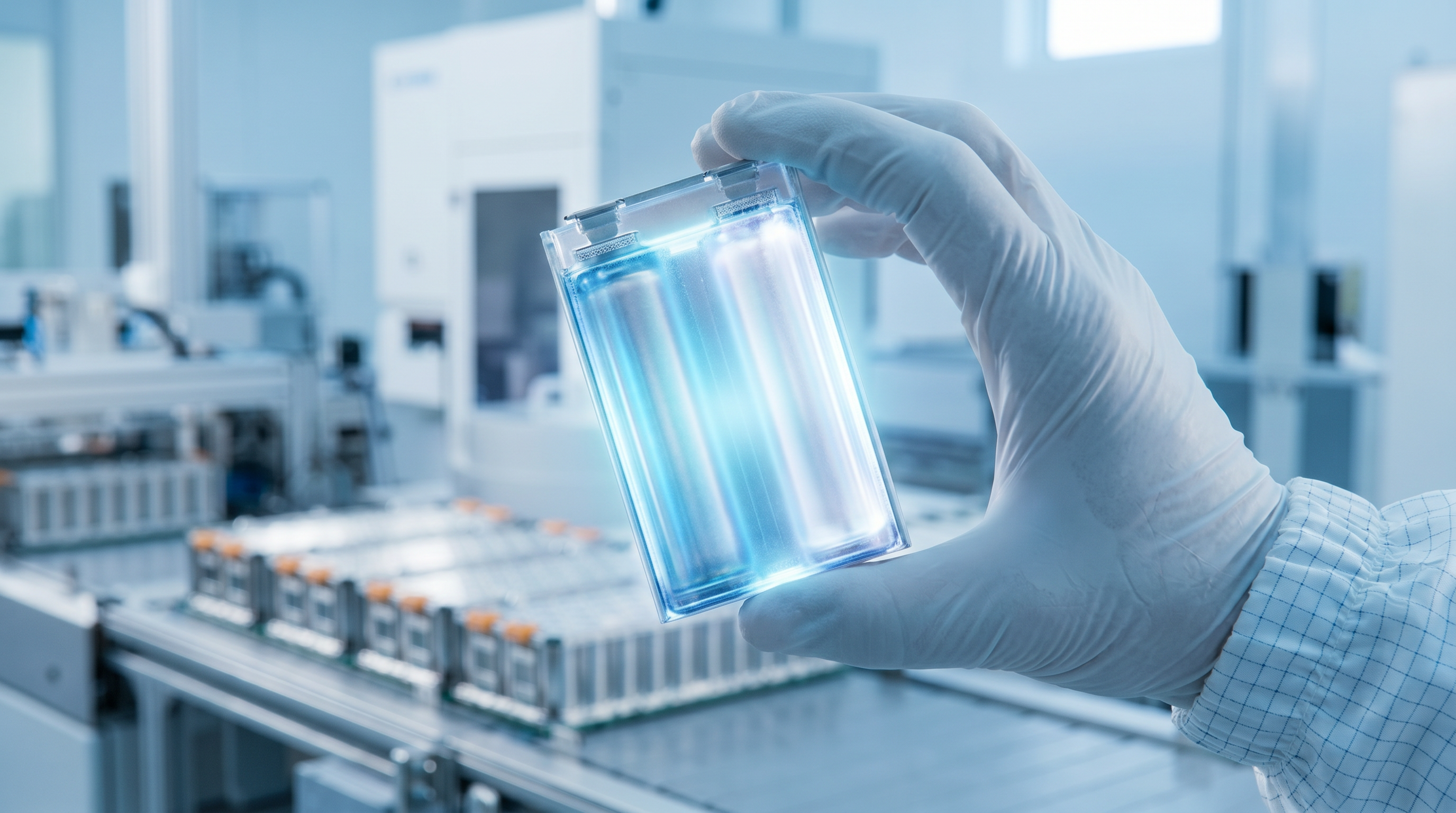
Solid-state batteries solve these issues by replacing the flammable liquid with a solid, non-flammable material—typically advanced polymers, oxides, or sulfides. This solid electrolyte acts as both the ion highway and a robust physical barrier. Because the material is solid, it inherently resists dendrite penetration and pushes the threshold for thermal events up to roughly 247 degrees Celsius, making the batteries vastly safer.[4]
Safety, however, is just the baseline. The true revolution lies in energy density. Because the solid electrolyte prevents dendrite growth, battery engineers can replace the bulky graphite anode with pure lithium metal. This "golden combination" drastically shrinks the size and weight of the battery while packing in significantly more power. While today's best lithium-ion cells hover around 200 to 300 watt-hours per kilogram (Wh/kg), solid-state cells are targeting 400 to 500 Wh/kg.[4]

Because the solid electrolyte prevents dendrite growth, battery engineers can replace the bulky graphite anode with pure lithium metal.
The race to commercialize this chemistry hit a major milestone in February 2026, when California-based QuantumScape inaugurated its "Eagle Line" in San Jose. The highly automated pilot facility is designed to produce solid-state cells featuring the company's proprietary ceramic separator. The Eagle Line serves as a blueprint for scalable manufacturing, producing cells for automotive partners to test and integrate into prototype vehicles.[2][7]
Rather than attempting to build massive gigafactories on its own, QuantumScape is adopting a licensing model. CEO Dr. Siva Sivaram recently detailed a strategy akin to the semiconductor industry, where QuantumScape will develop the core technology and license its manufacturing processes to established battery makers and automotive giants. This ecosystem approach aims to accelerate global distribution without the crushing capital requirements of heavy manufacturing.[2]
Meanwhile, in China, the push for mass production is accelerating rapidly. In April 2026, Greater Bay Technology (GBT), a battery manufacturer backed by the GAC Group, announced that its first A-sample all-solid-state battery cells had successfully rolled off the production line. The cells reportedly passed rigorous needle penetration and thermal shock tests without catching fire.[1]
GBT is targeting an aggressive timeline, aiming to launch the world's first mass-producible all-solid-state battery for in-vehicle use by the end of 2026. With a projected energy density of up to 500 Wh/kg, the Chinese manufacturer is positioning itself to supply not just automakers, but also the emerging electric vertical takeoff and landing (eVTOL) aircraft sector, where weight is the ultimate constraint.[1]
While passenger cars grab the headlines, the first commercial applications of solid-state technology are already hitting the streets in smaller formats. In early 2026, startup Donut Lab announced that its solid-state batteries are actively powering Verge Motorcycles. These high-performance electric bikes boast a 10-minute charge time and up to 600 kilometers of range, proving that the technology can withstand real-world road conditions.[6]

Legacy automakers are also deeply invested in the solid-state transition, with Toyota leading the charge. Holding over 1,000 patents in the space, Toyota recently secured validation from the Japanese government to begin solid-state battery production in 2026, with plans to scale up volume toward the end of the decade.[5]
Toyota's path, however, reflects the complex realities of the current automotive market. In May 2026, the automaker canceled the planned mass-production of its Lexus LF-ZC electric sedan—which was slated to feature a solid-state battery—citing a sluggish global EV market and a strategic pivot toward high-demand SUVs. Despite this vehicle cancellation, Toyota confirmed it is continuing its aggressive research and development into solid-state cells for future integration.[3]
The primary hurdle remaining for solid-state technology is cost. Current lithium iron phosphate (LFP) batteries have benefited from years of massive scale, driving prices down to roughly $60 per kilowatt-hour at the cell level. Early solid-state batteries will be significantly more expensive to manufacture, requiring pristine clean-room environments and novel production equipment.[4]

Because of this cost premium, industry analysts expect a tiered rollout. Solid-state batteries will likely debut in high-end luxury vehicles, performance sports cars, and commercial applications where the benefits of extreme range and rapid charging justify the price tag. Budget and mid-market EVs will likely continue relying on steadily improving liquid-electrolyte lithium-ion batteries well into the 2030s.[1][4]
Nevertheless, the developments of 2026 mark a permanent shift in the automotive landscape. The fundamental chemistry of energy storage has been rewritten, and the manufacturing blueprints are now operational. The era of the solid-state battery is no longer a distant promise; it is actively rolling off assembly lines, setting the stage for the next great leap in electric mobility.[1][2][7]
How we got here
2020
QuantumScape goes public, raising significant capital to fund solid-state R&D.
2023
Toyota announces a major breakthrough in solid-state durability, increasing theoretical range by 20%.
Feb 2026
QuantumScape inaugurates its 'Eagle Line' pilot production facility in San Jose.
April 2026
China's Greater Bay Technology produces its first A-sample all-solid-state cells.
May 2026
Toyota adjusts its EV roadmap, canceling the solid-state LF-ZC sedan but maintaining its battery production targets.
Viewpoints in depth
The Innovators' Licensing Model
Startups are avoiding the massive capital costs of gigafactories by acting as technology licensors.
Companies like QuantumScape believe that the fastest way to scale solid-state technology globally is to partner with existing industrial giants rather than competing with them directly. By developing the core technology—such as proprietary ceramic separators—and licensing the manufacturing blueprints, these startups aim to integrate their breakthroughs into the established supply chains of major automakers and battery manufacturers.
China's Mass Production Push
Chinese firms are leveraging massive state support to brute-force the manufacturing challenges of solid-state cells.
Manufacturers like Greater Bay Technology are taking a vertically integrated approach, aiming to achieve GWh-level mass production as quickly as possible. Backed by robust government initiatives and an already dominant position in the global battery supply chain, these companies are aggressively pushing to ensure China maintains its market leadership through the next major technological leap in energy storage.
The Legacy Automaker Balancing Act
Established automakers are taking a measured approach, balancing solid-state R&D against a cooling global EV market.
Companies like Toyota hold the most patents in solid-state technology but are cautious about immediate deployment. They view the technology as a premium differentiator for future models, but are currently balancing their massive R&D investments against shifting consumer demands. By pivoting short-term focus to hybrids and SUVs while preparing for a late-decade solid-state rollout, legacy automakers are hedging their bets during the transition.
What we don't know
- How quickly manufacturing yields can be improved to make solid-state cells cost-competitive with lithium iron phosphate (LFP) batteries.
- Whether extreme fast-charging capabilities will require significant upgrades to existing public charging infrastructure.
- How the shift to pure lithium-metal anodes will impact global lithium supply chains and commodity pricing.
Key terms
- Solid Electrolyte
- A non-flammable solid material (like ceramics or polymers) that conducts ions between a battery's anode and cathode, replacing traditional liquid solvents.
- Dendrites
- Microscopic, needle-like metallic structures that can grow inside a battery during charging, potentially causing short circuits and fires.
- Lithium-Metal Anode
- A battery component made of pure lithium that stores significantly more energy than traditional graphite anodes, enabled by solid-state technology.
- Energy Density
- A measure of how much power a battery can store relative to its weight, typically expressed in watt-hours per kilogram (Wh/kg).
- Thermal Runaway
- A dangerous chain reaction inside a battery where excess heat causes further heating, potentially leading to an uncontrollable fire.
Frequently asked
What makes a solid-state battery different?
It replaces the flammable liquid electrolyte found in current EV batteries with a stable, solid material, which improves safety and allows for more energy-dense components.
Will solid-state batteries charge faster?
Yes. Because the solid electrolyte prevents the formation of damaging dendrites, these batteries can safely accept much higher charging currents, with targets of 10 to 15 minutes for a near-full charge.
When can I buy a car with a solid-state battery?
While early pilot production began in 2026, mass-market passenger vehicles featuring solid-state batteries are generally expected to arrive between 2027 and 2030, likely debuting in premium models first.
Sources
Source coverage
7 outlets
4 viewpoints surfaced







[1]ElectrekChinese Manufacturers
China ramps up solid-state EV battery production
Read on Electrek →[2]Battery Tech OnlineBattery Innovators
QuantumScape CEO details Eagle Line and licensing model
Read on Battery Tech Online →[3]The Japan TimesLegacy Automakers
Toyota to pull plug on next-gen EV development
Read on The Japan Times →[4]Future Green TechIndustry Realists
The Chemistry Behind Solid-State Batteries
Read on Future Green Tech →[5]CBT NewsLegacy Automakers
Japanese Government approves Toyota's plans for Solid State Battery production
Read on CBT News →[6]Donut LabBattery Innovators
Donut Lab Introducing New High-Performance Solid State Batteries
Read on Donut Lab →[7]QuantumScapeBattery Innovators
QuantumScape inaugurates Eagle Line pilot for solid-state battery production
Read on QuantumScape →
Every angle. Every day.
Get automotive stories with full source coverage and perspective breakdowns delivered to your inbox.