
Smart Ring vs. Smartwatch: Which Wearable Fits Your 2026 Health Goals?
As wearable technology evolves, the choice between a smart ring and a smartwatch comes down to a fundamental trade-off: passive recovery tracking versus active fitness coaching.
By Factlen Editorial Team
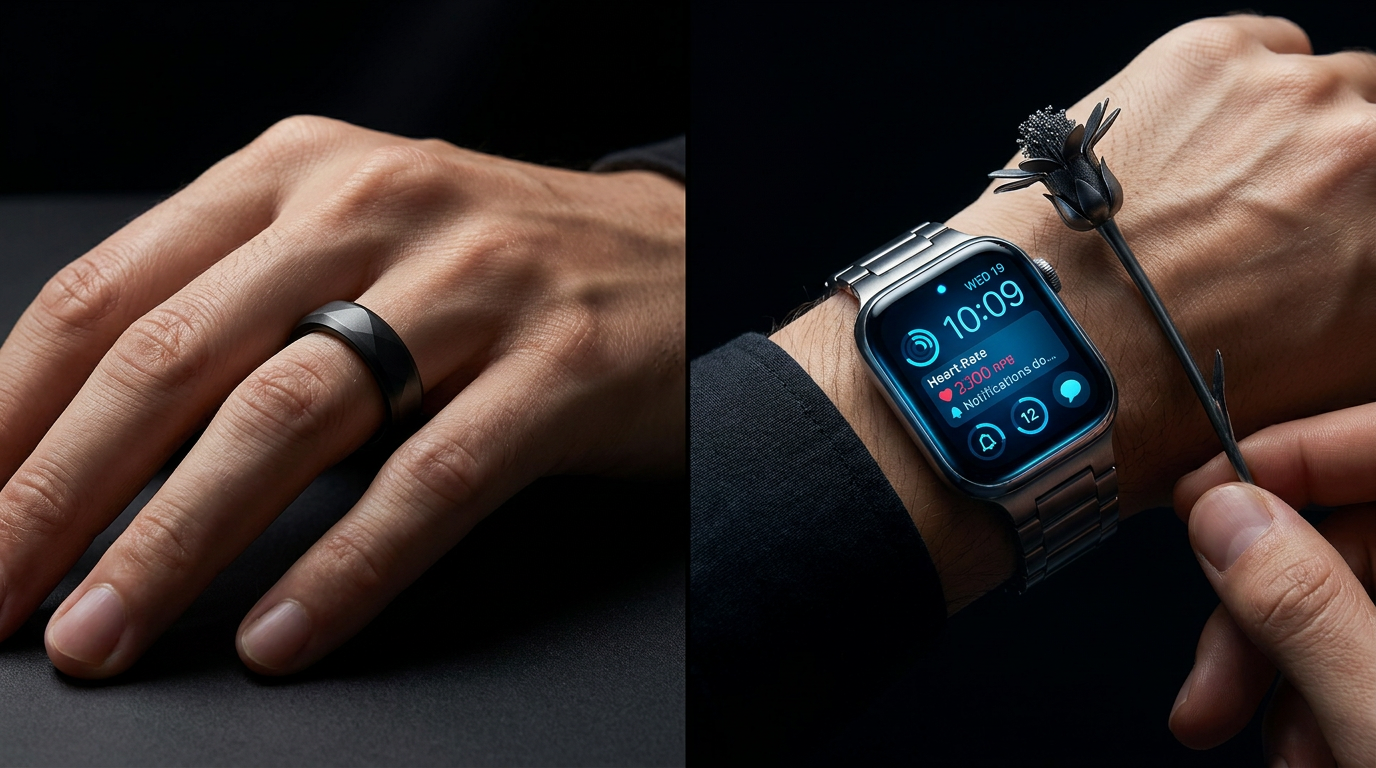
- Active Fitness Enthusiasts
- Prioritize real-time workout data, GPS tracking, and active coaching.
- Sleep & Recovery Optimizers
- Focus on overnight comfort, HRV accuracy, and passive long-term health trending.
- Digital Minimalists
- Value screenless devices that collect health data without contributing to notification fatigue.
- Ecosystem Integrators
- View wearables as extensions of their smartphones for communication and apps.
What's not represented
- · Traditional Watchmakers
- · Medical Professionals
Why this matters
Choosing the right wearable dictates whether you will actually use it long-term. Understanding the distinct strengths of rings versus watches ensures you invest in a device that seamlessly supports your specific fitness, sleep, and lifestyle goals without becoming a costly distraction.
Key points
- The wearable market is divided between active smartwatches and passive smart rings.
- Smartwatches excel at real-time workout tracking, GPS routing, and smartphone integration.
- Smart rings provide superior comfort for sleep tracking and boast battery life of up to a week.
- The finger offers a stronger physiological signal for resting heart rate and blood oxygen measurements.
- Smart rings often struggle to track active workouts accurately and lack on-device displays.
- Consumers must weigh the upfront cost of a smartwatch against the potential subscription fees of a smart ring.
The wearable technology landscape of 2026 has matured into a definitive two-front market, forcing consumers to choose between two fundamentally different form factors. On one side sits the smartwatch, dominated by the Apple Watch Series 11 and Garmin's robust fitness lineup, acting as a glowing, interactive extension of the smartphone. On the other side is the smart ring, led by the Oura Ring 4 and the Samsung Galaxy Ring, which strips away the screen entirely in favor of discreet, continuous biometric monitoring. This divide is no longer just about aesthetics; it represents a core philosophical difference in how individuals choose to interact with their health data. Shoppers are no longer simply comparing battery life and step counts; they are deciding whether they want an active digital coach barking real-time metrics on their wrist, or a passive observer quietly collecting data in the background.[1][2][4][6]
The fundamental trade-off between these devices centers on active engagement versus passive observation. The smartwatch is inherently demanding. It vibrates with notifications, lights up when the wrist is raised, and requires the user to actively start and stop workouts. This interactivity is exactly what makes it a powerful tool for those who want to stay connected without pulling out their phones. Conversely, the smart ring is designed to be forgotten. Weighing between four and eight grams, it lacks a screen, haptic feedback, and buttons. It simply sits on the finger, collecting heart rate, temperature, and movement data, which the user reviews on their phone at their own convenience. This screenless approach significantly reduces digital fatigue, making the ring highly appealing to consumers looking to disconnect from constant notifications while still monitoring their underlying health.[3][5]
When evaluating the case for the smartwatch, the primary advantage lies in real-time data delivery and active fitness coaching. For runners, cyclists, and gym-goers, the ability to glance at a wrist and instantly see current heart rate zones, pacing, and interval timers is a non-negotiable feature. Devices like the Apple Watch and Garmin Forerunner utilize built-in GPS to map outdoor routes accurately without requiring the user to carry a smartphone. Furthermore, smartwatches can automatically detect when a workout has started, actively guiding the user through the session with on-screen prompts and haptic taps. This immediate feedback loop allows athletes to adjust their effort mid-workout, a critical function that a screenless ring simply cannot replicate.[1][3][6]
However, the smartwatch's greatest strengths—its bright display and constant connectivity—are also the source of its most significant drawbacks. Powering an OLED screen, GPS chips, and constant Bluetooth communication requires substantial energy, limiting the battery life of most mainstream smartwatches to one or two days. This creates a daily charging chore that inevitably leads to gaps in health data, often occurring overnight when the watch is placed on a nightstand. Additionally, many users find the physical bulk of a 40-gram metal and glass device uncomfortable to wear to bed. The glowing screen and incoming notifications can actively disrupt the very sleep cycles the user is attempting to track, leading to lower overnight compliance rates compared to more discreet wearables.[1][2][4]

Enter the smart ring, which elegantly solves both the comfort and battery equations. By eliminating the screen and interactive features, smart rings can stretch a single charge to anywhere from five to eight days. This extended battery life means the device rarely leaves the user's body, providing a much more complete and uninterrupted picture of their baseline health. More importantly, the ring form factor is vastly superior for overnight wear. Its lightweight, unobtrusive design allows users to sleep naturally without a bulky watch pressing into their wrist or lighting up the dark room. For consumers whose primary health goal is optimizing their sleep architecture and recovery, the smart ring offers a frictionless experience that smartwatches struggle to match.[2][4][6]
Enter the smart ring, which elegantly solves both the comfort and battery equations.
Beyond mere comfort, the finger actually provides a superior physiological site for capturing resting biometric data. The digital arteries located in the fingers are closer to the surface of the skin and feature a denser capillary network than the top of the wrist. This anatomical advantage allows the photoplethysmography (PPG) sensors inside a smart ring to capture a much cleaner, stronger signal for resting heart rate and blood oxygen levels. Independent testing consistently shows that smart rings achieve near-clinical accuracy for overnight heart rate variability (HRV) and temperature tracking, metrics that are highly sensitive to sensor placement. Because the ring fits snugly and moves less during sleep than a heavy watch on a flexible wrist, the resulting data is significantly less prone to motion artifacts.[2][4][5]
Leveraging this highly accurate resting data, smart rings excel at generating holistic readiness and recovery scores. Rather than just counting steps or active minutes, platforms like Oura and Samsung Health analyze the user's overnight HRV, resting heart rate, and temperature deviations to calculate a daily energy score. This single metric tells the user how well their body has recovered from previous stress and whether they should push hard in a workout or take a rest day. While smartwatches also offer recovery metrics, the superior consistency of overnight ring data makes these readiness scores highly reliable. For biohackers and wellness enthusiasts focused on long-term trends rather than immediate workout stats, this passive, deep-dive analysis is the primary draw of the smart ring ecosystem.[2][3][6]

Yet, the smart ring's passive nature becomes a distinct liability the moment a user steps into the gym or onto a track. Without a screen, there is no way to check a heart rate mid-run or see how much time is left in a high-intensity interval. Users must pull out their smartphones to view live metrics, which entirely defeats the convenience of wearing a dedicated fitness tracker. Furthermore, the ring form factor can be actively detrimental during certain exercises. Gripping heavy barbells, dumbbells, or kettlebells while wearing a titanium ring can be uncomfortable and may scratch the device. The intense flexing of the finger muscles during weightlifting also pushes blood away from the skin, causing the ring's optical sensors to lose accuracy precisely when the user is working their hardest.[1][3][5]
The financial models of these two wearable categories also diverge significantly, impacting the long-term cost of ownership. Smartwatches typically require a higher upfront investment, often ranging from $300 to $800, but they generally provide full access to their health ecosystems without ongoing fees. In contrast, while a smart ring might cost slightly less at checkout, market leaders like Oura lock their most valuable insights—such as detailed sleep staging and personalized readiness advice—behind a monthly subscription paywall. Over a three-year lifespan, a $300 ring with a $6 monthly fee ultimately costs more than a premium smartwatch. While newer entrants like RingConn and Samsung have introduced subscription-free rings, consumers must carefully weigh the total cost of ownership before committing to a platform.[1][2][3][4]

Ultimately, determining which device fits well depends entirely on the user's daily habits and primary health objectives. The smartwatch fits perfectly for the active fitness enthusiast who demands real-time pacing, GPS tracking, and the ability to leave their phone at home during a run. It is the ideal choice for those who want their wearable to act as a digital assistant, handling text messages, contactless payments, and calendar alerts directly from the wrist. However, it does not fit well for individuals who suffer from digital fatigue, those who find sleeping with a bulky watch uncomfortable, or traditional watch enthusiasts who prefer to wear mechanical timepieces on their wrists during the day.[1][4][5][6]
Conversely, the smart ring fits exceptionally well for consumers whose primary focus is sleep optimization, stress management, and long-term health trending. It is the ultimate tool for passive data collection, offering a week of battery life and a form factor so discreet that users often forget they are wearing it. It allows users to track their vitals comprehensively without sacrificing their personal style or adding another glowing screen to their lives. However, the smart ring does not fit well for serious athletes who need live workout metrics, individuals who frequently lift heavy weights, or those who expect their wearable to notify them of incoming calls and messages. For those with the budget to support it, the emerging trend in 2026 is dual-wearing: relying on a smartwatch during the day for connectivity and workouts, and switching to a smart ring at night for unparalleled sleep tracking.[1][2][3][6]
How we got here
2015
Apple Watch launches, establishing the modern standard for wrist-worn interactive health tracking.
2018
Oura introduces the Ring Gen 2, proving that advanced sleep tracking can fit into a traditional ring form factor.
2022
Smartwatches begin incorporating advanced clinical sensors, including ECG and skin temperature tracking.
2024
Samsung enters the smart ring market with the Galaxy Ring, validating the screenless wearable category for mainstream Android users.
2026
Subscription-free smart rings gain major market share, forcing consumers to weigh long-term software costs against upfront hardware prices.
Viewpoints in depth
Active Fitness Enthusiasts
Athletes who prioritize real-time data, GPS tracking, and mid-workout coaching.
For runners, cyclists, and gym-goers, the smartwatch is an indispensable tool. They argue that a wearable must provide immediate, actionable feedback during a workout—such as heart rate zones and pacing—to be truly useful. To this camp, the passive nature of a smart ring makes it inadequate for serious training, as pulling out a smartphone mid-run defeats the purpose of wearing a fitness tracker.
Sleep & Recovery Optimizers
Biohackers and wellness advocates who focus on overnight metrics and long-term trends.
This group views health tracking as a 24/7 endeavor that requires maximum comfort and minimal distraction. They argue that smartwatches are too bulky for consistent sleep tracking and that the finger provides superior biometric data for resting heart rate and HRV. For them, the ring's week-long battery life and screenless design are essential for building a holistic picture of bodily recovery without the interruption of daily charging.
Digital Minimalists
Consumers seeking health insights without the constant distraction of notifications and screens.
This camp values the smart ring specifically because it lacks a display. They argue that modern life is already saturated with screens and notifications, and that a health tracker should not contribute to digital fatigue. By passively collecting data to be reviewed later, the smart ring allows them to stay informed about their health while remaining fully present in their daily lives, often pairing the ring with a traditional mechanical watch.
What we don't know
- Whether future smart rings will be able to incorporate reliable blood pressure monitoring without a cuff.
- How the long-term durability of smart rings holds up against the daily wear and tear of heavy weightlifting and manual labor.
- If major smartwatch manufacturers will eventually release their own companion rings to create unified, multi-device health ecosystems.
Key terms
- Photoplethysmography (PPG)
- An optical measurement technique used by wearables to detect blood volume changes in the microvascular bed of tissue, commonly used to calculate heart rate.
- Heart Rate Variability (HRV)
- The measure of the specific changes in time between successive heartbeats, used as a key indicator of physical recovery and stress levels.
- Readiness Score
- An aggregated daily metric provided by health apps that combines sleep quality, recent activity, and resting vitals to determine how prepared the body is for physical exertion.
- Form Factor
- The physical size, shape, and design specifications of a hardware device, such as a ring versus a wrist-worn watch.
Frequently asked
Can a smart ring track my outdoor runs with GPS?
No, smart rings do not have built-in GPS due to their small size and battery constraints. They rely on a connected smartphone to map outdoor routes.
Do all smart rings require a monthly subscription?
No. While market leaders like Oura charge a monthly fee for premium insights, newer models like the Samsung Galaxy Ring and RingConn offer their full health platforms without recurring subscriptions.
Which device is more accurate for tracking heart rate?
Smart rings are generally more accurate for resting heart rate and overnight metrics due to the strong pulse in the finger. However, smartwatches are far more accurate during active workouts when the hands are moving.
Is it common to wear both a smartwatch and a smart ring?
Yes, a growing trend is 'dual-wearing,' where users wear a smartwatch during the day for connectivity and workouts, and switch to a smart ring at night for comfortable sleep tracking.
Sources
Source coverage
6 outlets
4 viewpoints surfaced






[1]ForbesActive Fitness Enthusiasts
Oura Ring Vs. Apple Watch: Fitness Tracking
Read on Forbes →[2]EsquireSleep & Recovery Optimizers
Apple Watch vs. Oura Ring
Read on Esquire →[3]Runner's WorldActive Fitness Enthusiasts
I trained for an ultra with the Samsung Galaxy Ring — here's why I'm still reaching for my Garmin
Read on Runner's World →[4]WareableEcosystem Integrators
Smart rings vs. smartwatches: Which is better?
Read on Wareable →[5]TechRadarDigital Minimalists
Smart ring vs smart watch: Fitness tracking, sensors and accuracy
Read on TechRadar →[6]CNETSleep & Recovery Optimizers
The Apple Watch vs. Oura Ring Debate for Me Comes Down to One Feature
Read on CNET →

More in shopping
See all 5 stories →

Every angle. Every day.
Get shopping stories with full source coverage and perspective breakdowns delivered to your inbox.