
Skills-First Revolution: How Competencies Are Replacing Credentials in the Modern Resume
As employers increasingly drop degree requirements, practical skills assessments are replacing the traditional resume as the primary tool for evaluating talent.
By Bo Feng

Share this story
In short
- 85% of employers have integrated skills-based hiring into their recruitment processes by 2026.
- Hiring based on demonstrated skills is up to five times more predictive of job performance than relying on degrees.
- The traditional chronological resume is being replaced by formats that highlight verified competencies and measurable outcomes.
The traditional resume is undergoing its most radical transformation in decades. For generations, the standard professional biography was a chronological list of job titles and academic degrees. Today, that model is being rapidly dismantled. Driven by a widening global skills gap and the proliferation of AI tools that can instantly generate flawless applications, employers are fundamentally changing how they evaluate talent.[3]
Welcome to the skills-first revolution. Rather than using pedigrees and past job titles as proxies for competence, companies are increasingly screening candidates based on demonstrated abilities. This shift is not merely a passing human resources trend; it is a structural realignment of the labor market designed to uncover hidden talent and predict job performance with far greater accuracy.[1]
The mechanism of skills-first hiring flips the traditional recruitment funnel upside down. In the old model, recruiters filtered out candidates who lacked specific degrees or years of experience, interviewing only the survivors. In the new model, the initial filter is often a practical assessment, a work sample, or a scenario-based test.[2]
"Credentials become context, not a gate," explains the emerging consensus among hiring managers. By testing for the actual work early in the process, employers can identify candidates who possess the necessary capabilities, regardless of where or how they acquired them.[3]
The data supporting this transition is overwhelming. According to recent industry benchmarks, approximately 85% of employers have integrated some form of skills-based hiring into their processes by 2026. This represents a massive acceleration from just a few years ago, driven by the urgent need to fill roles in technology, healthcare, and advanced manufacturing.[2]
The predictive power of this approach is its strongest selling point. Research indicates that hiring based on demonstrated skills is up to five times more predictive of future job performance than hiring based on educational credentials alone. When employers test for the specific competencies required for a role, they drastically reduce the risk of costly mis-hires.[1]
Furthermore, the skills-first approach dramatically expands the available talent pool. By dropping rigid degree requirements, companies can increase their potential candidate base by more than six times globally. This opens doors for self-taught programmers, career changers, and individuals who gained expertise through non-traditional routes like bootcamps or military service.
The World Economic Forum projects that nearly 40% of the core skills required in the job market will change by 2030. In such a volatile environment, a degree earned a decade ago is often a poor indicator of a candidate's current technological fluency or adaptability. Employers now prioritize learning agility—the ability to rapidly acquire new skills—over static historical knowledge.
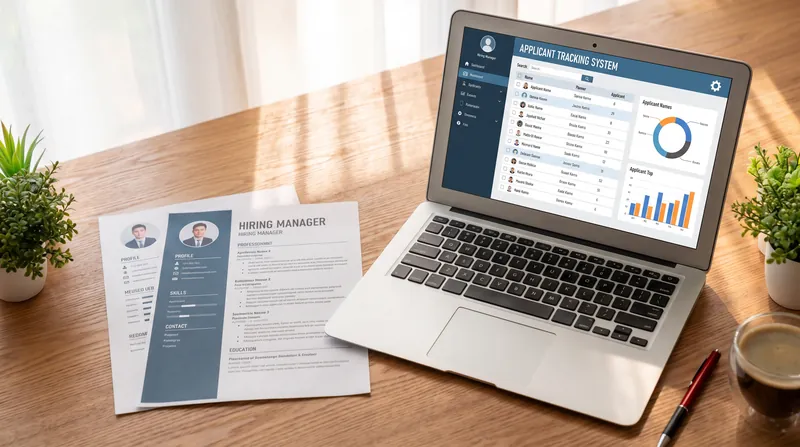
This structural shift is forcing a complete redesign of the resume itself. The traditional document, which buried skills at the bottom in a generic list of buzzwords, is being replaced by the skills-first resume.[3]
In this new format, a candidate's core competencies and measurable outcomes take center stage, often placed prominently at the top of the document. Bullet points that merely list responsibilities are no longer sufficient; they must be rewritten to highlight specific skills applied and the concrete results achieved.
Artificial intelligence is playing a dual role in this revolution. On one hand, generative AI has made it effortless for candidates to produce perfectly tailored, keyword-optimized resumes, rendering the traditional document less reliable as a signal of true capability.[3]
On the other hand, AI is the engine powering the skills-first transition for employers. Advanced talent analytics and AI-driven assessment platforms allow companies to evaluate thousands of candidates based on their actual problem-solving abilities, coding proficiency, or analytical thinking, rather than relying on human recruiters to manually scan resumes.[2]
The benefits of this approach extend well beyond the initial hire. Organizations that implement skills-based hiring report significantly higher employee retention rates. Workers hired for their specific competencies—especially those without traditional degrees—tend to stay in their roles up to 34% longer than their degreed counterparts.
This increased loyalty stems from better job alignment. When candidates are evaluated on the actual tasks they will perform, they enter the role with a clearer understanding of the expectations and a higher likelihood of success.
Despite the rapid adoption, the transition is not without friction. Many organizations struggle to rewrite decades-old job descriptions, often leaving legacy degree requirements in place even as their human resources departments champion skills-based hiring.
Additionally, there is an ongoing debate about how to effectively measure power skills—such as leadership, empathy, and complex communication—which are notoriously difficult to quantify through automated assessments.
Degrees are not disappearing from the hiring equation entirely. In fields requiring strict licensure, such as medicine and law, formal credentials remain non-negotiable. However, for the vast majority of corporate, technical, and administrative roles, the degree is transitioning from a mandatory entry ticket to a secondary verification layer.[1]
For job seekers in 2026, the mandate is clear: the ability to prove what you can do is now far more valuable than a piece of paper stating where you studied. The skills-first revolution is democratizing access to opportunity, rewarding capability, and fundamentally rewriting the rules of career advancement.[3]
Terms to know
- Skills-Based Hiring
- A recruitment approach that prioritizes a candidate's proven abilities and competencies over their formal education or past job titles.
- Power Skills
- Often referred to as soft skills, these include critical thinking, adaptability, leadership, and communication, which are increasingly valued as technical skills change rapidly.
- Learning Agility
- The ability and willingness to rapidly learn new skills and adapt to changing technological or business environments.
- Competency Mapping
- The process of identifying the specific skills, knowledge, and behaviors required to successfully perform a particular job.
- Structured Interview
- An interview format where all candidates are asked the same predetermined, scenario-based questions to objectively evaluate specific skills.
Questions readers ask
What is a skills-first resume?
A skills-first resume places your demonstrated competencies and measurable outcomes at the top of the document, rather than leading with a chronological list of past job titles and degrees.
Do I still need a college degree to get hired?
While degrees are still required for licensed professions like medicine or law, many major employers have dropped degree requirements for corporate and technical roles, prioritizing practical assessments instead.
How do employers test for skills?
Companies increasingly use automated coding tests, real-world case studies, work samples, and scenario-based structured interviews early in the hiring process to verify a candidate's abilities.
What if I have an employment gap?
Skills-based hiring benefits candidates with employment gaps, as employers care more about your current capabilities—which can be maintained through freelance work, bootcamps, or self-study—than a perfectly continuous work history.
Different angles
Corporate Hiring Managers
Focused on expanding talent pools and reducing the cost of mis-hires.
For corporate recruiters and hiring managers, the shift to skills-first hiring is primarily an economic necessity. Facing a historically tight labor market and a rapidly changing technological landscape, they argue that traditional degree requirements artificially constrain the talent pool. By implementing structured assessments, they can identify high-performing candidates who might have been filtered out by legacy applicant tracking systems, ultimately reducing turnover and lowering the cost per hire.
Non-Traditional Candidates
Advocating for equitable access to high-paying roles based on proven ability.
Workers without four-year degrees, career changers, and those returning to the workforce view the skills-first revolution as a major democratizing force. This camp emphasizes that talent is distributed equally, even if opportunity is not. They argue that practical assessments and portfolio reviews allow them to demonstrate their value directly, bypassing the systemic biases often embedded in pedigree-based screening.
Traditional Credentialists
Cautioning against the complete abandonment of formal educational markers.
While acknowledging the value of skills testing, some academic institutions and traditional HR professionals warn against entirely discarding degrees. They argue that a four-year university education provides a baseline of 'power skills'—such as long-term project management, critical thinking, and socialization—that are difficult to measure in a 45-minute coding test or case study. They advocate for a hybrid approach where degrees remain a strong signal of perseverance and broad capability.
- Workforce Strategists
- Argue that shifting to skills is necessary to close widening talent gaps and adapt to rapid technological change.
- Data & Assessment Providers
- Emphasize that skills-based hiring is mathematically superior, yielding better retention and a 6x larger talent pool.
- Independent Analysts
- Provides a neutral overview of how this structural shift changes the daily reality for job seekers.
Perspectives this story doesn't cover
- University Admissions Officers
- Labor Union Representatives
Sources
Source coverage
3 outlets
3 viewpoints surfaced



- [1]McKinsey & CompanyWorkforce Strategists
Taking a skills-based approach to building the future workforce
Read on McKinsey & Company → - [2]TestGorillaData & Assessment Providers
The State of Skills-Based Hiring 2025
Read on TestGorilla → - [3]Factlen Editorial TeamIndependent Analysts
Synthesis by Factlen editorial team
Read on Factlen Editorial Team →
More in Careers & Work
See all →Hiring Trends
AI-Driven Resume Inflation Forces 81% of Employers to Shift to Skills-First Hiring
4 sources

AI Hiring Law
Federal Judge Rules AI Screening Vendor Can Be Sued as Employer's Agent for Discriminatory Hiring
6 sources

Labor Law
NLRB Direct Control Standard Limits Joint-Employer Liability to Essential Working Terms
8 sources
Federal Hiring
The End of the 15-Page Federal Resume: How the New Two-Page Limit and Essay Mandate Work
8 sources
Comments
Every angle. Every day.
Get Careers & Work stories with full source coverage and perspective breakdowns, free every day.