
Lamborghini Posts Record Profit, Completes Hybrid Lineup, and Confirms Lanzador GT as PHEV
Lamborghini has achieved record Q1 2026 profitability after fully hybridizing its active lineup, prompting the automaker to pivot its upcoming Lanzador model from a pure EV to a plug-in hybrid.
By Adrien Caron

Share this story
The global automotive industry is currently navigating a precarious and highly scrutinized transition, caught between aggressive government electrification mandates and a consumer base that is increasingly hesitant to abandon the internal combustion engine. Amid this turbulence and shifting market sentiment, Automobili Lamborghini has deliberately carved out a highly profitable middle path.
By resisting the industry-wide rush to adopt full battery-electric vehicles (BEVs) and instead embracing high-performance plug-in hybrid electric vehicle (PHEV) technology, the Italian supercar manufacturer has successfully balanced strict regulatory compliance with the visceral, emotional demands of its ultra-wealthy clientele.[1]
The definitive financial validation of this measured strategy arrived with Lamborghini's first-quarter results for 2026, which set new benchmarks for the historic brand. The Sant'Agata Bolognese marque delivered a staggering 2,620 cars globally in just three months, generating €863 million in total revenue and an impressive €200 million in operating profit.
Crucially, the company maintained a robust operating margin of 23.1%, a figure that firmly cements its position among the most profitable and financially resilient brands in the global ultra-luxury sector, proving that its pricing power remains entirely intact despite macroeconomic headwinds.[2]
This stellar financial performance stands in stark contrast to broader, more troubling industry trends affecting legacy automakers. While direct competitors like BMW and Porsche have recently reported sharp profit declines—battered by a combination of U.S. import tariffs, aggressive Chinese EV competition, and the immense capital costs associated with rapid electric vehicle development—Lamborghini's core fundamentals remain exceptionally solid.
The company's record-breaking first quarter seamlessly follows a historic 2025 fiscal year, during which the automaker surpassed the 10,000-vehicle delivery milestone for the first time in its history, posting a massive €3.2 billion in annual revenue.[2]
The primary driving force behind this sustained financial momentum is a historic and meticulously executed product milestone: for the first time in the company's six-decade history, its entire active delivery lineup is fully hybridized. Rather than viewing emissions regulations as a death knell for performance, Lamborghini has systematically replaced its pure-combustion models with highly advanced plug-in hybrids. This approach has decisively proven to a skeptical customer base that electrification can actually enhance, rather than dilute, the extreme supercar experience they expect from the brand.
This newly electrified trifecta is anchored by the Revuelto, a flagship supercar featuring a naturally aspirated V12 engine paired with three electric motors to produce a staggering combined output of over 1,000 horsepower.
It is joined on the production line by the Urus SE, a plug-in hybrid iteration of the brand's best-selling super SUV, and the all-new Temerario, which officially replaces the beloved Huracán with a bespoke twin-turbo V8 and triple electric motors. Demand across the board is unprecedented, with Revuelto waiting lists stretching well beyond a year and the Urus SE nearly sold out for the entirety of 2026.[1]
However, the most significant and widely discussed strategic revelation of 2026 centers on Lamborghini's highly anticipated fourth model line, known as the Lanzador. Originally unveiled to massive fanfare at the Pebble Beach Concours d'Elegance in August 2023, the Lanzador concept was slated to become the brand's very first pure battery-electric vehicle, with a targeted global launch in 2028. It was initially positioned as Lamborghini's bold leap into a zero-emission future, designed to compete with the incoming wave of ultra-luxury electric grand tourers.[1][4]
That ambitious zero-emission plan has now been officially and publicly rewritten. Following more than a year of intense internal review, customer feedback sessions, and shifting market analysis, Lamborghini CEO Stephan Winkelmann confirmed that the Lanzador will not enter production as an all-electric model after all. Instead, the vehicle will be fundamentally re-engineered and developed as a plug-in hybrid 2+2 Grand Tourer (GT), perfectly aligning it with the rest of the brand's highly successful PHEV portfolio and abandoning the pure-EV strategy for the remainder of the decade.[1][3]
The core rationale behind this dramatic pivot is rooted in stark, undeniable market realities that luxury automakers can no longer ignore. Winkelmann explicitly cited near-zero buyer demand for pure EVs in the ultra-luxury sports car segment, noting a distinct "flattening curve" of EV adoption globally that is particularly pronounced among high-net-worth buyers. While Lamborghini possesses the vast technical capability and financial resources to produce a high-performance EV, the executive team ultimately concluded that the market is simply not ready to embrace a silent, battery-powered supercar.[1][4]
"We are not selling mobility—you don't buy a Lamborghini because you have to go from A to B every day," Winkelmann explained to automotive reporters during a recent media briefing. "We're selling dream cars, which maybe is something you wanted since you were a child." The absolute core of that dream, according to the company's extensive consumer research, remains the visceral sensory experience and deep emotional connection delivered by a high-revving internal combustion engine—a defining characteristic that current EV technology entirely struggles to replicate.[1][4]
By pivoting the Lanzador to a highly advanced PHEV architecture, Lamborghini aims to offer its discerning buyers the absolute best of both worlds without the range anxiety of a pure EV. The plug-in hybrid system will provide the immediate agility, low-end torque, and zero-emission city driving capabilities of an electric battery, seamlessly integrated with the raw power, mechanical engagement, and acoustic drama of a traditional combustion engine that defines the brand's heritage.[1]
While precise technical specifications for the new grand tourer remain closely guarded secrets, industry analysts widely expect the production Lanzador to utilize a bespoke derivative of the Volkswagen Group's most advanced hybrid systems. Positioned just below the Urus in the brand's pricing hierarchy, the new 2+2 GT will likely share vital architectural elements with the super SUV, potentially utilizing a highly tuned variant of its 4.0-liter twin-turbocharged V8 PHEV powertrain to deliver massive cross-country performance.[3]
The introduction of a hybrid 2+2 GT addresses a distinct and long-standing "blind spot" in Lamborghini's current product lineup. It offers a highly practical solution for buyers seeking a high-performance, long-distance cruiser with usable rear seats and a front-engine layout—a versatile vehicle capable of traversing entire continents in absolute comfort without suffering the inherent luggage and space compromises of a traditional mid-engine supercar cockpit, making it a true daily driver.[3]
Despite the high-profile cancellation of the Lanzador EV project, Lamborghini insists that it has not abandoned battery-electric technology entirely for the long term. Winkelmann recently clarified that his earlier, widely circulated comments characterizing EV development as an "expensive hobby" were taken slightly out of context, emphasizing that deep research and development into pure electric platforms will quietly continue in the background at Sant'Agata Bolognese.
The revised and highly flexible timeline for Lamborghini's first fully electric vehicle has now been officially pushed past the end of the current decade, with a tentative launch expected sometime after 2030. The company intends to closely and cautiously monitor the rate of EV acceptance among its traditional, combustion-loving customer base before committing the massive capital required to bring a pure electric model to the global production line, ensuring the market is truly ready.
In the interim, Lamborghini's steadfast commitment to plug-in hybrids appears to be one of the most sustainable, pragmatic, and highly profitable strategies in the entire premium automotive sector. By actively listening to its customer base and refusing to rush into a technology that its buyers do not yet want, the brand has successfully insulated itself from the heavy financial losses and bloated inventories currently plaguing rival automakers who bet far too aggressively on early EV adoption.[4]
As the second half of 2026 unfolds, Automobili Lamborghini finds itself in an incredibly enviable and dominant market position. With a fully hybridized and highly desirable lineup, a packed global order book, industry-leading profit margins, and a pragmatic product roadmap that prioritizes emotional engagement over fleeting regulatory trends, the iconic Italian automaker has successfully engineered a highly lucrative and sustainable bridge to the future.
Key points
- Lamborghini posted record Q1 2026 financials, including €863 million in revenue and a 23.1% operating margin.
- For the first time in history, Lamborghini's entire active delivery lineup is fully hybridized.
- The upcoming Lanzador 2+2 GT has been officially pivoted from a pure EV to a plug-in hybrid.
- CEO Stephan Winkelmann cited near-zero buyer demand for pure EVs in the ultra-luxury segment.
Open questions
- The exact technical specifications and power output of the upcoming Lanzador PHEV powertrain.
- The precise launch date and design language for Lamborghini's eventual post-2030 pure electric vehicle.
- How impending European zero-emission mandates will affect the long-term viability of Lamborghini's PHEV strategy.
Timeline
August 2023
Lamborghini unveils the Lanzador concept at Pebble Beach, initially billing it as a pure EV for 2028.
March 2024
The Revuelto launches as Lamborghini's first High-Performance Electrified Vehicle (HPEV), beginning the hybrid transition.
Late 2025
The Temerario and Urus SE complete the hybridization of Lamborghini's entire active delivery lineup.
February 2026
CEO Stephan Winkelmann officially confirms the Lanzador will pivot from an EV to a plug-in hybrid due to low market demand.
May 2026
Lamborghini reports record Q1 financials, validating the profitability of its hybrid-only strategy.
- Pragmatic Automakers
- Argue that plug-in hybrids are the necessary bridge technology to meet emissions regulations without alienating core customers.
- Traditional Supercar Purists
- Value the visceral emotion, acoustic drama, and mechanical engagement of internal combustion engines above all else.
- EV Transition Advocates
- Believe the ultra-luxury segment must eventually adopt full battery-electric architectures to remain relevant in a zero-emission future.
Perspectives this story doesn't cover
- Environmental Advocates
- Battery Supply Chain Manufacturers
Sources
Source coverage
4 outlets
3 viewpoints surfaced




- [1]Electric & Hybrid Vehicle Technology InternationalEV Transition Advocates
Lamborghini cancels Lanzador EV but doubles down on plug-in hybrids
Read on Electric & Hybrid Vehicle Technology International → - [2]Luxus Plus
BMW feels the impact of tariffs as Lamborghini confirms profitability in the first quarter
Read on Luxus Plus → - [3]LamboCarsTraditional Supercar Purists
Lamborghini's Fourth Model Will Be a Hybrid 2+2 GT, Not an EV, and That Tells You Everything About Its Strategy
Read on LamboCars → - [4]CarExpertPragmatic Automakers
Lamborghini ditches its first EV for new plug-in hybrid GT
Read on CarExpert →
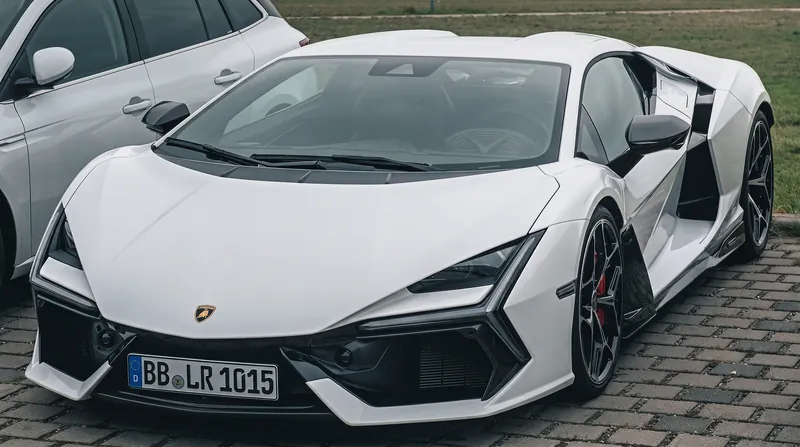
More in Automotive & Transportation
See all →EV Transition
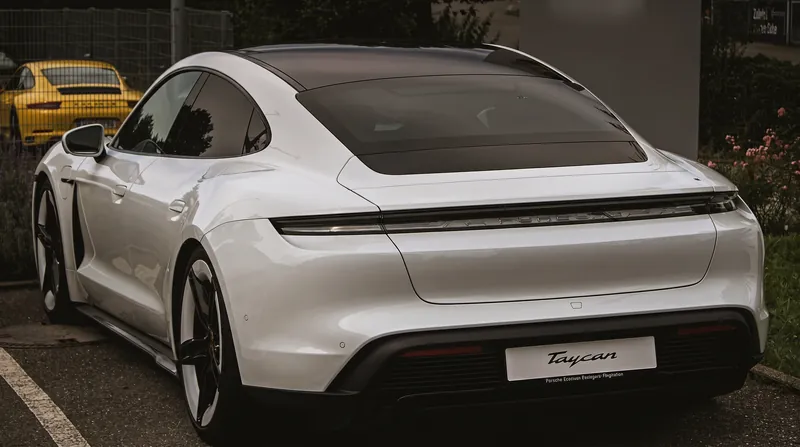
Porsche Delays Dedicated EV Platform, Extends Life of Combustion Engines on Flagship Models
10 sources
Luxury Auto Market
Mercedes-Benz Cuts 2026 Guidance as China's EV Price War Rewrites the Luxury Market
6 sources
EV Architecture
Mercedes-Benz Shifts Global Compact EV R&D to China, Taps Geely Tech for 'Phoenix' Platform
6 sources
Auto Industry Shift
The Great Realignment: Why German Luxury Auto Sales Just Plummeted 41% in China
5 sources
Comments
Every angle. Every day.
Get Automotive & Transportation stories with full source coverage and perspective breakdowns, free every day.