
2026 Sport Climbing Injury Report: Leonardo Strikes Gold in Chamonix as Köhler and Raboutou Prove the Power of Rehab
Indonesian speed star Veddriq Leonardo captured gold at the Chamonix World Cup despite a severe lack of training due to injury, headlining a weekend of triumphant returns that included Anja Köhler and Brooke Raboutou.
By Meera Iyer

Share this story
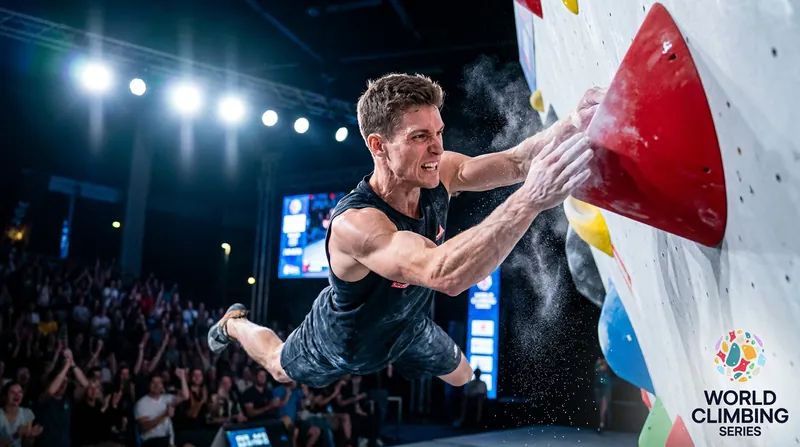
The iconic red climbing wall at Place du Mont Blanc in Chamonix, France, is traditionally a proving ground for the world's fittest athletes. But during the 2026 IFSC World Cup this past weekend, it served a different purpose: a grand stage for the science of the comeback. Several of the sport's top competitors arrived in the French Alps carrying the physical baggage of a grueling season, only to deliver performances that redefined what is possible post-injury.[1]
The most stunning return belonged to Indonesian speed climbing specialist Veddriq Leonardo. Plagued by persistent injuries over the past few months, the former world record holder arrived in Chamonix having barely touched a training wall. The explosive, high-impact nature of the 15-meter Speed route usually demands peak physical conditioning and relentless repetition, making Leonardo's prospects seem dim.[1][2]
Yet, muscle memory and competitive instinct took over. Leonardo surged through the qualification rounds and unleashed an outburst of emotion after clocking a 4.86-second run to reach the finals. In the gold-medal race, he faced off against his compatriot Antasyafi Robby Al Hilmi, tapping the buzzer at 4.89 seconds to secure the victory.[1][2]
“I haven't climbed properly because I haven't trained properly,” Leonardo admitted after the podium ceremony. “I tried my best and I think this is a real achievement. I haven't really touched a wall in training and then raced in Madrid and Krakow, and I just feel grateful for this achievement.” His victory underscored how elite athletes can occasionally substitute sheer experience for physical volume when managing chronic knocks.[1][2]
While Leonardo conquered the Speed wall, the Lead competition featured its own inspiring rehabilitation narratives. Brazil's Anja Köhler, in the midst of a breakthrough 2026 season, suffered a foot injury following the Innsbruck World Cup in June. Foot injuries are particularly devastating in Lead climbing, where microscopic adjustments in weight distribution on tiny footholds dictate success or failure.[1]
Köhler and her medical team executed an aggressive, highly targeted three-week recovery protocol. The rapid turnaround paid dividends in Chamonix, where she successfully advanced to the semi-finals, matching her career-best performances from earlier in the season. “In the three weeks between Innsbruck and Chamonix, I was able to recover well from my foot injury, and I've been feeling good in training,” Köhler noted, expressing relief that her upward trajectory remained intact.[1]
The urgency of effective injury management in climbing is backed by stark clinical data. A comprehensive study published in April 2026 by the BMJ Open Sport & Exercise Medicine journal revealed that 77% of climbers report sustaining at least one injury, with 70% of those affecting the fingers and hands. The sport's growing dynamic demands have forced a reckoning in how athletes approach physical therapy.[3]
For USA Climbing star Brooke Raboutou, that reckoning meant making a critical decision about her shoulder. Raboutou suffered a partial labrum tear during the semi-finals in Bern earlier this season—an injury she described as the most significant of her career. Labrum tears in climbers often lead to surgical intervention, which generally requires a minimum of six months of recovery and effectively ends a season.[1]
Instead, Raboutou opted for a conservative, non-surgical route. Working closely with specialized sports therapists, she committed to physical therapy twice a day while drastically reducing her actual time on the climbing wall. The strategy was a calculated gamble to stabilize the shoulder joint using surrounding musculature rather than invasive repair.[1]
The gamble worked. In Chamonix, Raboutou climbed with visible confidence, reaching hold 45+ in the Lead semi-finals. Though she finished 9th—just one spot shy of the eight-woman final—her primary victory was structural. “Rehab has been going really well... they said I don't need surgery and PT should work,” Raboutou explained. “It's been PT twice a day and not much training, but I felt safe.”[1]
The collective success of Leonardo, Köhler, and Raboutou in Chamonix signals a maturing era for sport climbing. As the competitive calendar expands and route-setting becomes increasingly acrobatic, the ability to triage, treat, and climb through the pain barrier without causing long-term damage has become the ultimate competitive advantage.
- Athlete Rehabilitation Focus
- Prioritizes conservative care, physical therapy, and mental confidence over rushing back to the wall.
- Speed Climbing Dynamics
- Focuses on managing explosive force injuries and relying on established muscle memory when physical training is limited.
- Sports Medicine Community
- Advocates for better climbing-specific injury data and evidence-based, non-surgical interventions.
Sources
Source coverage
3 outlets
3 viewpoints surfaced



- [1]IFSC ClimbingAthlete Rehabilitation Focus
World Climbing Series Chamonix 2026: What the Athletes Said
Read on IFSC Climbing → - [2]Antara NewsSpeed Climbing Dynamics
Indonesia secures gold, silver in men's speed at Chamonix World Cup
Read on Antara News → - [3]BMJ Open Sport & Exercise MedicineSports Medicine Community
Prevalence and characteristics of hand and finger injuries in rock climbers
Read on BMJ Open Sport & Exercise Medicine →
More in Sports
See all →Injury
2026 Sport Climbing Injury Report: Sarah Tetzlaff and Manuel Cornu Headline Triumphant Returns
6 sources
Standings
The Race for the Podium: Yannick Flohé and Taisei Homma Disrupt the Men's Lead Standings Ahead of Briançon
2 sources
Standings
Matteo Zurloni and Ludovico Fossali Propel Italy Into the Top Tier of the 2026 Men's Speed Standings
3 sources
Injury
Hannes Van Duysen Completes Gritty Return from Off-Season Elbow Surgery to Reach World Cup Finals
6 sources
Comments
Every angle. Every day.
Get Sports stories with full source coverage and perspective breakdowns, free every day.